A military expert said that the latest live-fire exercises around Taiwan Island, code-named "Justice Mission 2025," are marked by immediate engagement in live-fire drills, a multidimensional blockade strategy, and unified control over Taiwan and surrounding waters.
In an interview with China Central Television (CCTV), Meng Xiangqing, a professor at the National Defense University of the People's Liberation Army (PLA), outlined four significant highlights of the ongoing drills, which began on Monday.
"The most striking highlight is the immediate engagement in live-fire drills from the outset. In previous exercises, while we conducted live-fire drills, there were times when such drills were absent, which was normal depending on varying exercise requirements. In this exercise, our military, including Army, Navy, Air Force and Rocket Force troops, rapidly deployed capabilities around Taiwan's northern, southeastern, and eastern areas, followed by live-fire exercises. Our artillery featured simulated strikes on moving targets at sea and on land. This is a significant highlight, showcasing our troops' readiness for battle at all times, their capability for combat at all times, and their assurance of victory, and their capability to seamlessly transition from training to combat," he said.
"The second highlight, which is also a central theme of this exercise, is the multidimensional blockade and control strategy. All branches of our military, including the Coast Guard, implemented multidimensional blockade and control measures at crucial ports and regions of Taiwan. According to the latest updates from the Eastern Theater Command this morning, these measures continue be to a vital part of today's exercises. For instance, the designation of two areas in northern Taiwan aims to execute control around the important Keelung Port, while in the southeast, the blockade targets Kaohsiung and the Zuoying maritime and airspace routes, effectively cutting off key ports, areas and military bases critical to Taiwan separatist forces, thereby establishing a 'closing the door to beat the dog' strategy," Meng said.
"The third highlight is that, from yesterday to today, the Fujian Coast Guard has engaged in law enforcement operation near Taiwan Island and surrounding waters, including attached islets, establishing unified control over these areas. This represents a new breakthrough. I particularly noticed that the areas under control have expanded, according to several pieces of information released by the Coast Guard yesterday, including a poster depicting the extent of our multidimensional control yesterday. Under one-China principle, this reaffirms China's sovereignty and security while underscoring the inviolability of our territory," he said.
"The fourth highlight is the demonstration of coordinated operations among the various units participating in the exercises. This included maritime assaults, ground strikes, air defense and anti-submarine operations, validating the strong combat capabilities of our military," the expert added.
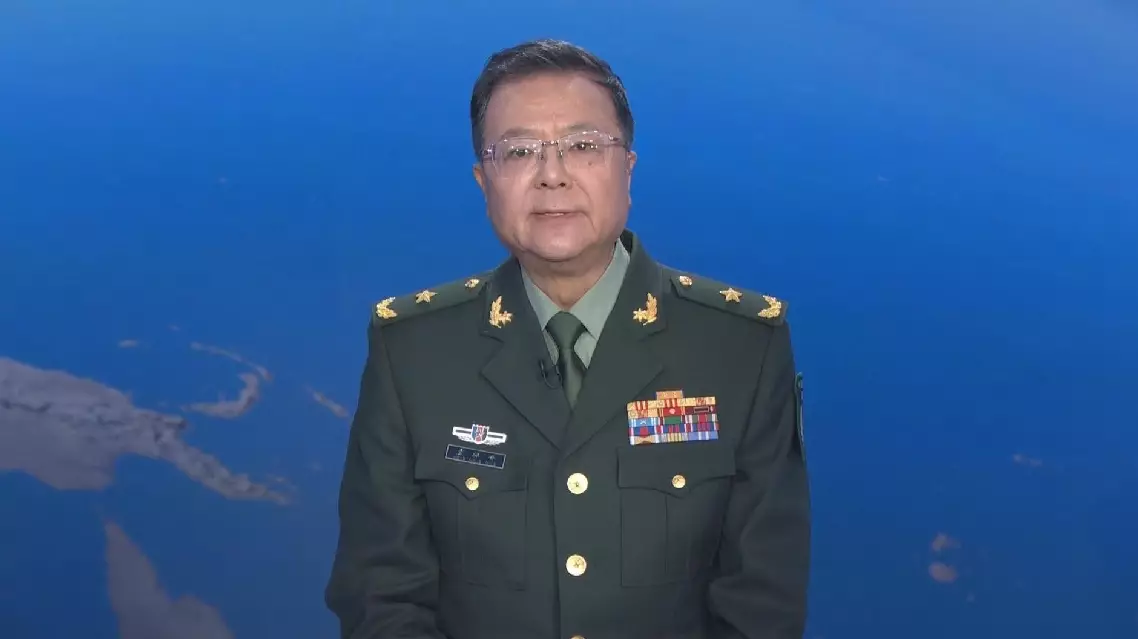
Military expert shares key highlights of PLA live-fire drills
Chinese Foreign Minister Wang Yi said on Thursday that UN Security Council actions must not provide legal cover for unauthorized military operations, nor should they heighten tensions or escalate conflict.
Wang, also a member of the Political Bureau of the Communist Party of China Central Committee, made the remarks in a phone conversation with Kaja Kallas, the High Representative for Foreign Affairs and Security Policy of the European Commission.
Kallas shared her views on the situation in the Middle East and commended China's active diplomatic mediation efforts to ease the situation, including the latest five-point joint initiative issued by China and Pakistan for restoring peace and stability in the Gulf and the Middle East.
The European side has not been involved in this war but has suffered from its spillover effects, she said, expressing hope for swiftly de-escalating the war and resuming dialogue and negotiations.
The European side supports UN humanitarian operations, the protection of civilians and non-military targets, and will make every effort to ensure the opening of navigation through the Strait of Hormuz, she said.
Wang said that amid the current international turmoil, it is the shared responsibility of China and Europe to step up communication and exchanges, and to uphold the UN-centered international system and the international order based on international law.
Wang elaborated on China's principled position on the Middle East situation, noting that the five-point initiative proposed by China and Pakistan reflects a broad international consensus, whose core elements include a cessation of hostilities, the start of peace talks as soon as possible, ensuring the security of non-military targets and security of shipping lanes, and safeguarding the primacy of the UN Charter.
A ceasefire and an end to hostilities are the strong call of the international community, and also the fundamental solution to ensuring safe navigation through the Strait of Hormuz, Wang said, adding that all parties should build greater consensus and create the necessary conditions to that end.
The UN Security Council actions should focus on cooling down the situation and de-escalating tensions, Wang said, adding that China stands ready to maintain communication and cooperation with the European side to promote an early end to hostilities and restore regional peace.
The two sides also exchanged views on China-EU relations. Wang said that China's development represents opportunities for Europe, and that the challenges Europe faces do not originate from China. Protectionism does not enhance competitiveness, and decoupling from China means decoupling from opportunities, Wang said, expressing hope that the European side will develop a comprehensive and objective perception of China and maintain the correct direction of China-EU relations.
Kallas said that the European side views China as an important cooperation partner, does not seek decoupling from China, and looks forward to maintaining dialogue and communication between the two sides.
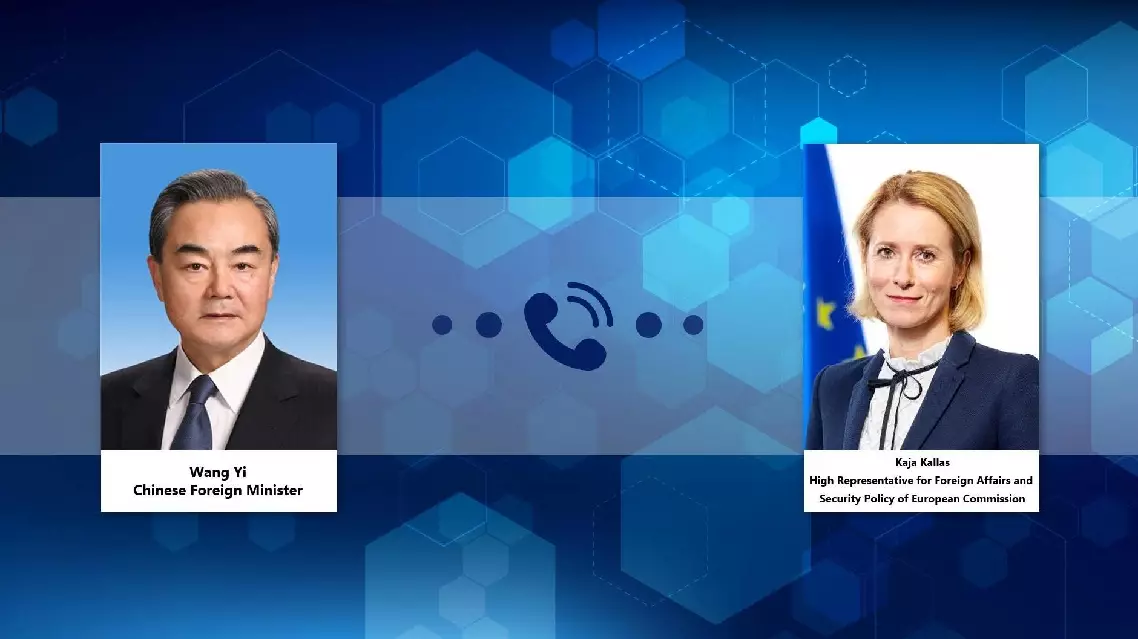
Chinese FM says UN Security Council actions should not legitimize unauthorized military operations