KYIV, Ukraine (AP) — Leaders from Europe and Canada held talks Tuesday on U.S.-led peace efforts to end the nearly four-year war between Russia and Ukraine, as Moscow and Kyiv sparred over Russian claims, denied by Ukraine, of a mass drone attack on a lakeside residence used by President Vladimir Putin.
The virtual meeting included European leaders as well as Canadian Prime Minister Mark Carney, heads of European institutions and NATO Secretary-General Mark Rutte, according to Polish Prime Minister Donald Tusk.
“Peace is on the horizon,” Tusk told a Polish Cabinet meeting. But he added: "It is still far from a 100% certainty.”
It was the first meeting of European leaders since U.S. President Donald Trump hosted Ukrainian President Volodymyr Zelenskyy at his Florida resort on Sunday. Trump insisted that Ukraine and Russia are “closer than ever before” to a peace settlement, although he acknowledged that outstanding obstacles could still prevent a deal.
“We are moving the peace process forward," German Chancellor Friedrich Merz, who attended the talks, said in a post on X. "Transparency and honesty are now required from everyone — including Russia.”
His pointed reference to Russia came after Russian and Ukrainian officials exchanged bitter accusations over Moscow’s allegations that Ukraine attempted to attack the Russian leader’s residence in northwestern Russia with 91 long-range drones almost immediately after Trump’s Sunday talks with Zelenskyy.
The claims and counterclaims threatened to derail peace efforts. “I don’t like it. It’s not good,” Trump said Monday after Putin told him by phone about the alleged attack.
Ukrainian Foreign Minister Andrii Sybiha noted Tuesday that Russia “still hasn’t provided any plausible evidence” to support its allegations.
Moscow won’t do so because “no such attack happened,” he wrote on X.
“Russia has a long record of false claims,” he added, referencing the Kremlin’s denials it intended to attack Ukraine ahead of its Feb. 24, 2022, all-out invasion of its neighbor.
Zelenskyy, speaking Monday, also branded the allegation as “another lie” from Moscow designed to sabotage peace efforts.
Kremlin spokesperson Dmitry Peskov countered Tuesday that the alleged Ukrainian attack is “aimed at thwarting President Trump’s efforts to promote a peaceful resolution” to the war.
Russia and Ukraine have throughout the war exchanged accusations about attacks that cannot be independently verified because of the fighting.
Peskov didn't say whether Moscow would present physical evidence of the attack, such as drone wreckage, saying that such a step would be a matter for Russia’s military. “I don’t think there needs to be any evidence here,” he said.
The rural Novgorod region is home to one of the Russian presidency’s official residences, Dolgie Borody, close to the town of Valdai, about 400 kilometers (250 miles) northwest of Moscow. The area has been used to host a vacation retreat for high-ranking government officials since the Soviet era.
The Institute for the Study of War, a Washington think tank, said that since Trump launched a diplomatic push at the start of the year to end the war, “the Kremlin has sought to delay and prolong peace negotiations in order to continue its war undisturbed, prevent the U.S. from imposing measures intended to pressure Russia into meaningful negotiations, and even to extract concessions about bilateral U.S.-Russian relations.”
Davies reported from Leicester, England. Jamey Keaten in Geneva contributed.
Follow AP’s coverage of the war in Ukraine at https://apnews.com/hub/russia-ukraine
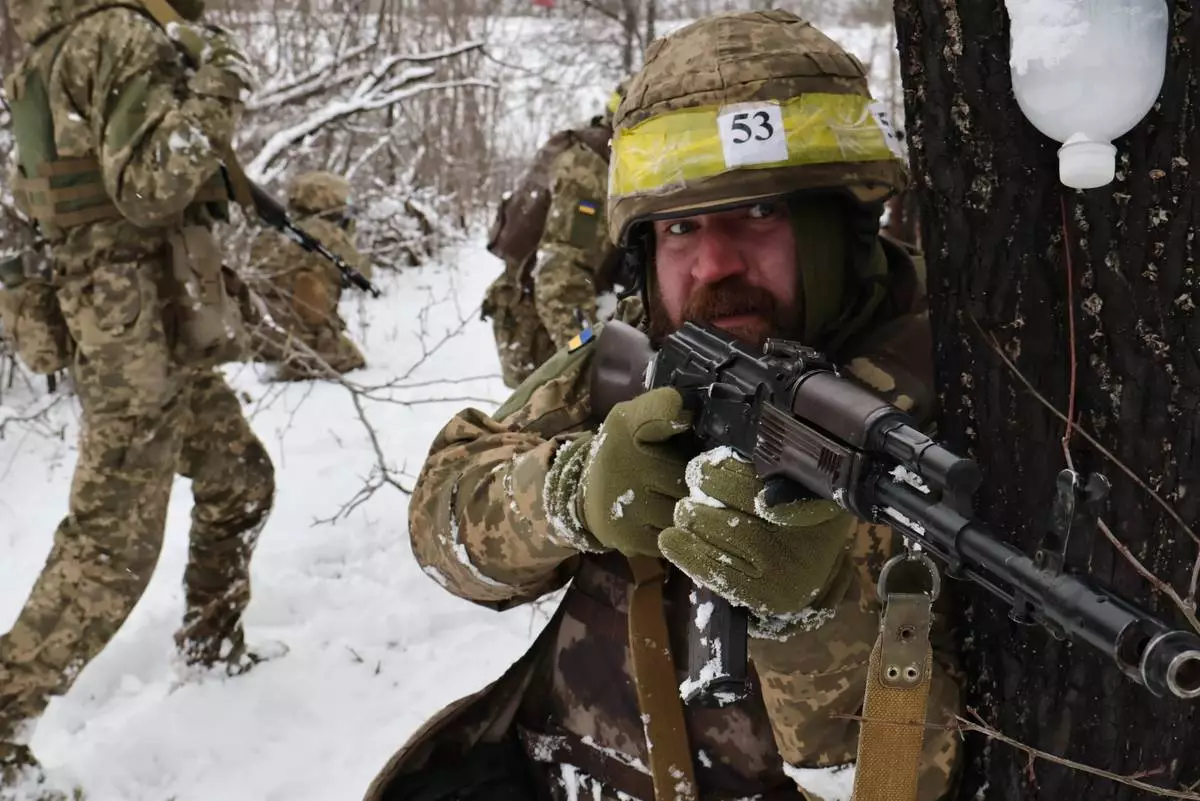
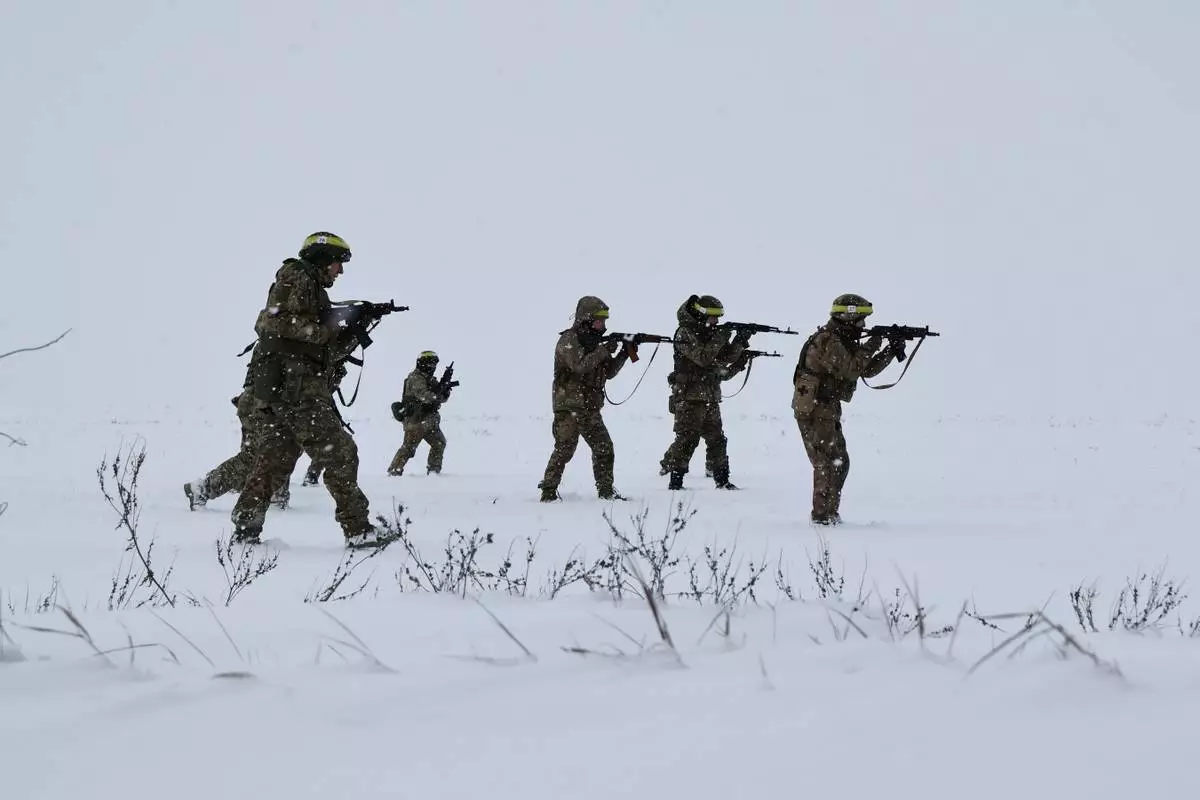
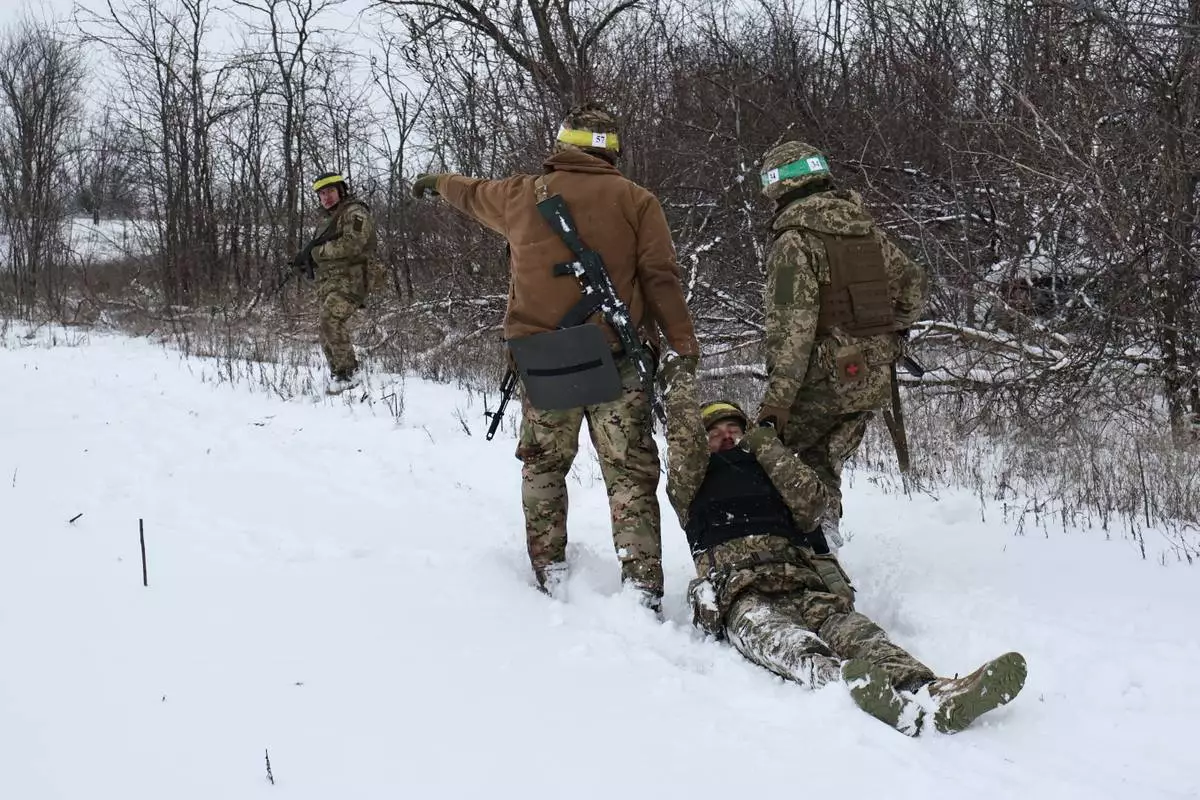
In this photo provided by Ukraine's 65th Mechanized Brigade press service, recruits attend drills at a training ground in the Zaporizhzhia region, Ukraine, Monday, Dec. 29, 2025. (Andriy Andriyenko/Ukraine's 65th Mechanized Brigade via AP)

DUBAI, United Arab Emirates (AP) — Saudi Arabia bombed Yemen's port city of Mukalla on Tuesday after a weapons shipment from the United Arab Emirates arrived for separatist forces in the war-torn country, and warned that it viewed Emirati actions as “extremely dangerous.”
The bombing followed tensions over the advance of Emirates-backed separatist forces known as the Southern Transitional Council. The council and its allies issued a statement supporting the UAE's presence, even as others allied with Saudi Arabia demanded that Emirati forces withdraw from Yemen in 24 hours' time.
The UAE called for “restraint and wisdom” and disputed Riyadh’s allegations against it. It did not say whether it would withdraw.
The confrontation threatened to open a new front in Yemen's decade-long war, with forces allied against the Iranian-backed Houthi rebels possibly turning their sights on each other in the Arab world's poorest nation.
It further strained ties between Saudi Arabia and the UAE, neighbors on the Arabian Peninsula that increasingly have competed over economic issues and regional politics, particularly in the Red Sea area. Tuesday’s airstrikes and ultimatum appeared to be their most serious confrontation in decades.
“I expect a calibrated escalation from both sides. The UAE-backed Southern Transitional Council is likely to respond by consolidating control,” said Mohammed al-Basha, a Yemen expert and founder of the Basha Report, a risk advisory firm.
“At the same time, the flow of weapons from the UAE to the STC is set to be curtailed following the port attack, particularly as Saudi Arabia controls the airspace.”
A military statement carried by the state-run Saudi Press Agency announced the strikes on Mukalla, which it said came after ships arrived there from Fujairah in the UAE.
“The ships’ crew had disabled tracking devices aboard the vessels, and unloaded a large amount of weapons and combat vehicles in support of the Southern Transitional Council’s forces,” the statement said.
“Considering that the aforementioned weapons constitute an imminent threat, and an escalation that threatens peace and stability, the Coalition Air Force has conducted this morning a limited airstrike that targeted weapons and military vehicles offloaded from the two vessels in Mukalla,” it added.
It wasn't clear if there were any casualties.
The Emirati Foreign Ministry hours later denied it shipped weapons but acknowledged it sent the vehicles “for use by the UAE forces operating in Yemen.” It also claimed Saudi Arabia knew about the shipment ahead of time. The UAE broadly withdrew its forces from Yemen years earlier.
The ministry called for “the highest levels of coordination, restraint and wisdom, taking into account the existing security challenges and threats.”
Yemen’s anti-Houthi forces not aligned with the separatists declared a state of emergency Tuesday and ended their cooperation with the UAE. They issued a 72-hour ban on border crossings in territory they hold, as well as entries to airports and seaports, except those allowed by Saudi Arabia. It remained unclear whether that coalition, governed under the umbrella of Yemen's Presidential Leadership Council, would remain intact.
The Southern Transitional Council’s AIC satellite news channel aired footage of the strike's aftermath but avoided showing damage to the armored vehicles.
“This unjustified escalation against ports and civilian infrastructure will only strengthen popular demands for decisive action and the declaration of a South Arabian state,” the channel said.
The attack likely targeted a ship identified as the Greenland, a vessel flagged out of St. Kitts. Tracking data analyzed by the AP showed the vessel had been in Fujairah on Dec. 22 and arrived in Mukalla on Sunday. The second vessel could not be immediately identified.
Mukalla is in Yemen's Hadramout governorate, which the council seized in recent days. The port city is some 480 kilometers (300 miles) northeast of Aden, which has been the seat of power for anti-Houthi forces after the rebels seized the capital, Sanaa, in 2014.
Yemen, on the southern edge of the Arabian Peninsula off East Africa, borders the Red Sea and the Gulf of Aden. The war there has killed more than 150,000 people, including fighters and civilians, and created one of the world's worst humanitarian disasters.
The Houthis, meanwhile, have launched attacks on hundreds of ships in the Red Sea corridor over the Israel-Hamas war in the Gaza Strip, disrupting regional shipping. The U.S., which earlier praised Saudi-Emirati efforts to end the crisis over the separatists, has launched airstrikes against the rebels under both Presidents Joe Biden and Donald Trump.
Tuesday's strike in Mukalla comes after Saudi Arabia targeted the council in airstrikes Friday that analysts described as a warning for the separatists to halt their advance and leave the governorates of Hadramout and Mahra.
The council had pushed out forces there affiliated with the Saudi-backed National Shield Forces, another group in the anti-Houthi coalition.
Those aligned with the council have increasingly flown the flag of South Yemen, which was a separate country from 1967-1990. Demonstrators have been rallying to support political forces calling for South Yemen to secede again.
A statement Tuesday from Saudi Arabia's Foreign Ministry directly linked the council's advance to the Emiratis for the first time.
“The kingdom notes that the steps taken by the sisterly United Arab Emirates are extremely dangerous,” it said.
Allies of the council later issued a statement in which they showed no sign of backing down.
This frame grab from video broadcast by Saudi state television on Tuesday, Dec. 30, 2025, shows what the kingdom describes as a shipment of weapons and armored vehicles coming from the United Arab Emirates, at Mukalla, Yemen. (Saudi state television via AP)