SEOUL, South Korea (AP) — South Korea said it will formally end its dwindling yet much-criticized bear bile farming industry this week, though about 200 bears are still kept in pens and raised for their gallbladders.
The Ministry of Climate, Energy and Environment announced Tuesday it will ban breeding and possession of bears and extraction of their bile beginning Jan. 1. The change is in line with a revised animal rights protection law that imposes up to two or five years of prison sentences to violators.
South Korea is one of the few countries that allow farming to extract bile from bears, mostly Asiatic black bears known as moon bears, for traditional medicine or as food believed to promote vitality and stamina.
But the popularity of the practice has nosedived in the past two decades in response to questions about its medicinal effects, the introduction of cheaper medical alternatives and public awareness of animal cruelty.
The ban is part of a broader 2022 agreement among officials, farmers and animal rights campaigners to prohibit bear bile farming beginning in 2026. Animal rights groups are responsible for handling purchases of bears from farmers and the government establishing facilities to hold them.
A total of 21 bears has been purchased and relocated to a government-run sanctuary in southern Jelloa province this year. But 199 bears are still raised in 11 farms across the country while disputes continue over the amount of money to be paid to farmers for giving up their bears, according to officials, activists and farmers.
The Environment Ministry said bear farmers will have a six-month grace period but will be punished by law if they extract bile from their animals. The ministry said it'll financially support farmers for keeping their bears until they are sold and moved.
“Our plan to end bear farming business is an implementation of our country's resolve to improve welfare of wild animals and fulfill our related international responsibility,” Environment Minister Kim Sungwhan said in a statement. “We will strive to protect bears until the last one.”
Kim KwangSoo, a farmer who raises 78 bears in the southern city of Dangjin, said other farmers sold their bears at extremely cheap prices because of economic difficulties, though he hasn't sold any of his animals.
“This is a very bad policy,” said Kim, who serves as the secretary-general of a bear farmers’ association. “I'll still observe the law."
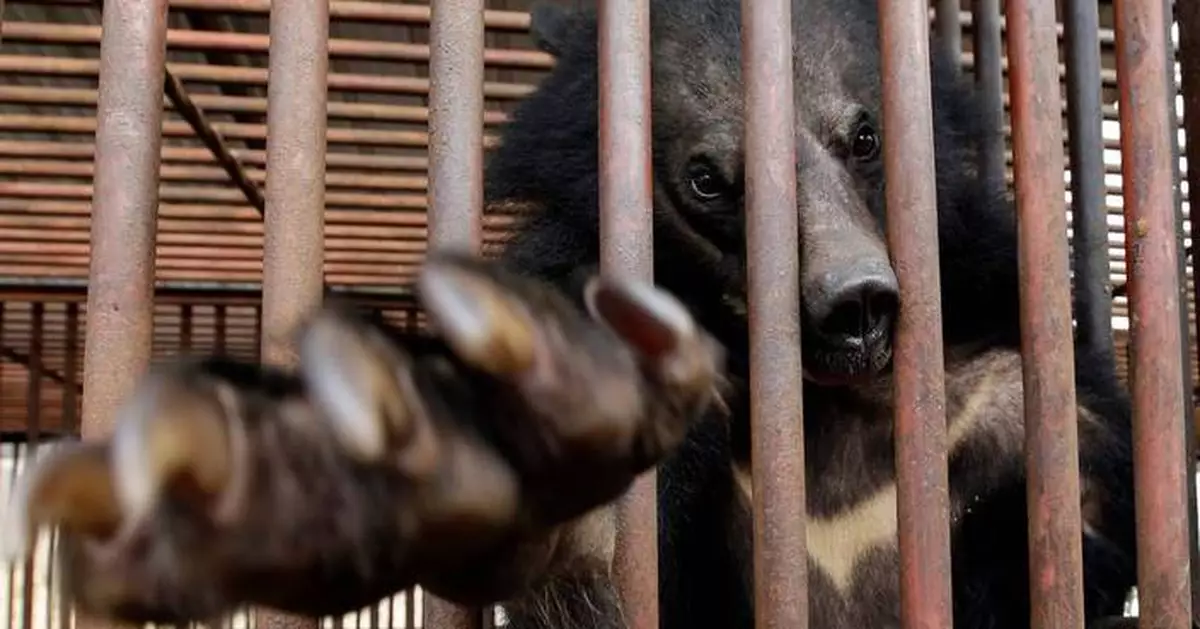
Bear farming began in South Korea in the early 1980s, with farmers importing bears from Malaysia and other Southeast Asian countries. The industry has since been condemned globally for keeping bears in small, barren cages their entire lives until they are slaughtered for their body parts.
About 1,000 bears were raised in farms in South Korea in 2014. Kim KwangSoo said many farmers had since sterilized their bears in return for government compensations. He said some bears died naturally while others have been slaughtered for their bile or killed after being attacked by other bears held in the same cages due to a lack of proper management.
Animal rights groups praised South Korea's government for pressing ahead with the 2022 agreement but urged it to establish bigger protection facilities to accept rescued bears.
The government says its Jeolla province sanctuary can carry up to 49 bears, but Kang Jae-won, an activist at the Korea Animal Welfare Association, said the number of bears should not exceed 30. A second government facility was to be established in April but the opening has been delayed until 2027 due to flooding.
Kang said that activists are discussing with foreign zoos to send some rescued bears there.
“It's really good (for the government) to reflect on bear bile industry and push to end it but it's regrettable that there aren't sufficient measures to protect bears,” said Cheon JinKyung, head of Korea Animal Rights Advocates in Seoul. “There aren't place where these bears can stay."
Sangkyung Lee, a campaign manager at Humane World for Animals Korea, also called for a greater government role in removing the remaining bears from captivity without further delay and supporting the creation of private sanctuaries "to give back these animals a life of peace and relative freedom in natural surroundings.”
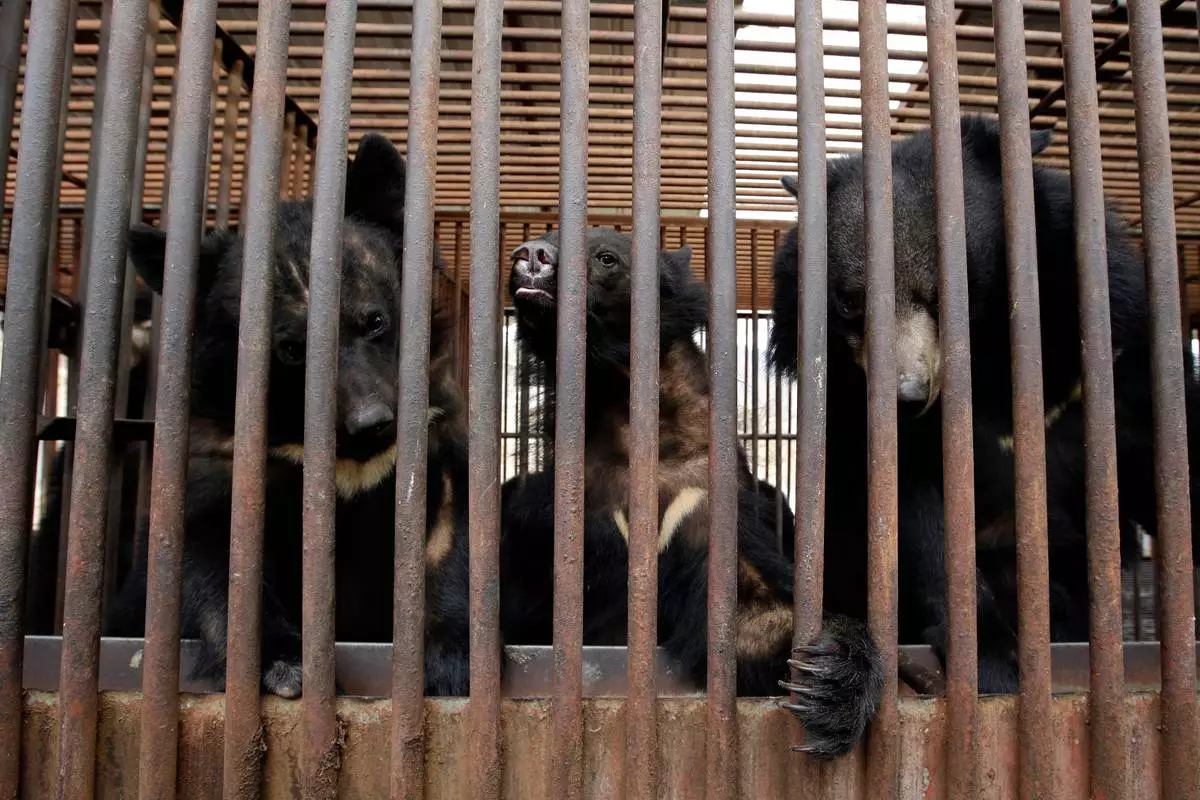
FILE - In this photo taken on Jan. 24, 2014, bears look out from a cage at a bear farm in Dangjin, South Korea. (AP Photo/Lee Jin-man, File)
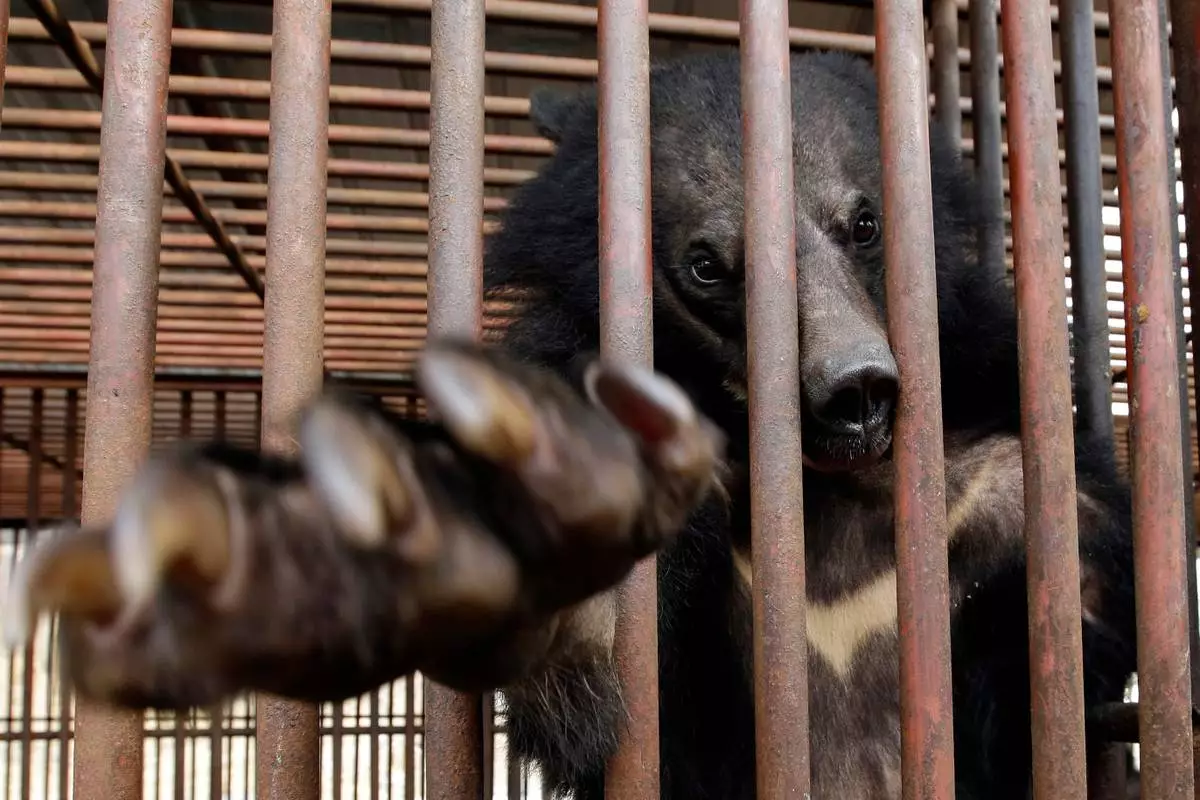
FILE - In this photo taken on Jan. 24, 2014, a bear looks out from a cage at a bear farm in Dangjin, South Korea. (AP Photo/Lee Jin-man, File)
DUBAI, United Arab Emirates (AP) — Saudi Arabia bombed Yemen's port city of Mukalla on Tuesday after a weapons shipment from the United Arab Emirates arrived for separatist forces in the war-torn country, and warned that it viewed Emirati actions as “extremely dangerous.”
The bombing followed tensions over the advance of Emirates-backed separatist forces known as the Southern Transitional Council. The council and its allies issued a statement supporting the UAE's presence, even as others allied with Saudi Arabia demanded that Emirati forces withdraw from Yemen in 24 hours' time.
The UAE called for “restraint and wisdom” and disputed Riyadh’s allegations against it. It did not say whether it would withdraw.
The confrontation threatened to open a new front in Yemen's decade-long war, with forces allied against the Iranian-backed Houthi rebels possibly turning their sights on each other in the Arab world's poorest nation.
It further strained ties between Saudi Arabia and the UAE, neighbors on the Arabian Peninsula that increasingly have competed over economic issues and regional politics, particularly in the Red Sea area. Tuesday’s airstrikes and ultimatum appeared to be their most serious confrontation in decades.
“I expect a calibrated escalation from both sides. The UAE-backed Southern Transitional Council is likely to respond by consolidating control,” said Mohammed al-Basha, a Yemen expert and founder of the Basha Report, a risk advisory firm.
“At the same time, the flow of weapons from the UAE to the STC is set to be curtailed following the port attack, particularly as Saudi Arabia controls the airspace.”
A military statement carried by the state-run Saudi Press Agency announced the strikes on Mukalla, which it said came after ships arrived there from Fujairah in the UAE.
“The ships’ crew had disabled tracking devices aboard the vessels, and unloaded a large amount of weapons and combat vehicles in support of the Southern Transitional Council’s forces,” the statement said.
“Considering that the aforementioned weapons constitute an imminent threat, and an escalation that threatens peace and stability, the Coalition Air Force has conducted this morning a limited airstrike that targeted weapons and military vehicles offloaded from the two vessels in Mukalla,” it added.
It wasn't clear if there were any casualties.
The Emirati Foreign Ministry hours later denied it shipped weapons but acknowledged it sent the vehicles “for use by the UAE forces operating in Yemen.” It also claimed Saudi Arabia knew about the shipment ahead of time. The UAE broadly withdrew its forces from Yemen years earlier.
The ministry called for “the highest levels of coordination, restraint and wisdom, taking into account the existing security challenges and threats.”
Yemen’s anti-Houthi forces not aligned with the separatists declared a state of emergency Tuesday and ended their cooperation with the UAE. They issued a 72-hour ban on border crossings in territory they hold, as well as entries to airports and seaports, except those allowed by Saudi Arabia. It remained unclear whether that coalition, governed under the umbrella of Yemen's Presidential Leadership Council, would remain intact.
The Southern Transitional Council’s AIC satellite news channel aired footage of the strike's aftermath but avoided showing damage to the armored vehicles.
“This unjustified escalation against ports and civilian infrastructure will only strengthen popular demands for decisive action and the declaration of a South Arabian state,” the channel said.
The attack likely targeted a ship identified as the Greenland, a vessel flagged out of St. Kitts. Tracking data analyzed by the AP showed the vessel had been in Fujairah on Dec. 22 and arrived in Mukalla on Sunday. The second vessel could not be immediately identified.
Jens Laerke, a spokesperson for the U.N. humanitarian office, urged combatants to protect civilians and civilian infrastructure, like the port, saying any disruption to its operations “risks affecting the already dire humanitarian situation and humanitarian supply chains.”
Mukalla is in Yemen's Hadramout governorate, which the council seized in recent days. The port city is some 480 kilometers (300 miles) northeast of Aden, which has been the seat of power for anti-Houthi forces after the rebels seized the capital, Sanaa, in 2014.
Yemen, on the southern edge of the Arabian Peninsula off East Africa, borders the Red Sea and the Gulf of Aden. The war there has killed more than 150,000 people, including fighters and civilians, and created one of the world's worst humanitarian disasters.
The Houthis, meanwhile, have launched attacks on hundreds of ships in the Red Sea corridor over the Israel-Hamas war in the Gaza Strip, disrupting regional shipping. The U.S., which earlier praised Saudi-Emirati efforts to end the crisis over the separatists, has launched airstrikes against the rebels under both Presidents Joe Biden and Donald Trump.
Tuesday's strike in Mukalla comes after Saudi Arabia targeted the council in airstrikes Friday that analysts described as a warning for the separatists to halt their advance and leave the governorates of Hadramout and Mahra.
The council had pushed out forces there affiliated with the Saudi-backed National Shield Forces, another group in the anti-Houthi coalition.
Those aligned with the council have increasingly flown the flag of South Yemen, which was a separate country from 1967-1990. Demonstrators have been rallying to support political forces calling for South Yemen to secede again.
A statement Tuesday from Saudi Arabia's Foreign Ministry directly linked the council's advance to the Emiratis for the first time.
“The kingdom notes that the steps taken by the sisterly United Arab Emirates are extremely dangerous,” it said.
Allies of the council later issued a statement in which they showed no sign of backing down.
Associated Press writer Jamey Keaten in Geneva contributed to this report.

This frame grab from video broadcast by Saudi state television on Tuesday, Dec. 30, 2025, shows what the kingdom describes as a shipment of weapons and armored vehicles coming from the United Arab Emirates, at Mukalla, Yemen. (Saudi state television via AP)