Skip to Content Facebook Feature Image

Defiant Venezuelans prepare to greet New Year amid mounting US pressure

HotTV

HotTV

HotTV

Defiant Venezuelans prepare to greet New Year amid mounting US pressure

2025-12-30 16:41 Last Updated At:12-31 15:04

With the year 2026 just around the corner, defiant Venezuelans are preparing to celebrate the new year despite the mounting U.S.pressure on the government of President Nicolas Maduro.

Over the past few months, U.S. President Donald Trump's administration has ramped up a pressure campaign against Maduro with a military buildup in the Caribbean off Venezuela's coast and more than two dozen U.S. strikes on boats in the region that Washington claims were trafficking drugs.

In addition, the United States has imposed sanctions and blockades against Venezuela and even threatened to launch military operations against the oil-rich South American nation.

President Maduro and his government have consistently denied any connections to drug trafficking, asserting that the United States is seeking a leadership change in Venezuela, so as to take control of the country's natural resources.

However, the escalating tensions have not dampened Venezuelans' enthusiasm for greeting the New Year. On the streets and in markets in central Caracas, the usual hustle and bustle continue, and stalls are filled with fresh produce and other foods for the holiday. People are now busy making purchases and merchants are stocking up on their supplies.

To welcome the New Year, Venezuelans usually eat 12 grapes for good luck, make and serve the hallacas dish, a festive symbol of Venezuelan culture, and deck out their homes with flowers, among other traditions.

According to Alicia, who has been selling fruits for many years at a local farmers' market, her business has barely been affected by the tensions with the United States. But she acknowledged that prices have gone up to some extent due to shipping disruptions from the U.S. blockades.

"The grapes we sell here mainly come from the United States and Peru. Due to the recent tense situation, the shipping time for imported fruits has significantly increased. Previously, it only took 15 days for them to arrive, but now it takes about a month. Also, the fruit prices have risen. For instance, oranges used to cost around 7 U.S. dollars per kilogram, but now the price has gone up to approximately 10 dollars," she said.

Jose Pacheco sells banana leaves used as the wrapping material for preparing the traditional hallacas, a bundled of corn dough stuffed with beef, pork, and chicken, and topped with many ingredients. He also said customers have kept coming to his stall to buy the leaves to make their beloved holiday dish.

"The United States is indeed attempting to overthrow our government, but they will not succeed. We are a free sovereign state. We will fight to the end. No matter how the situation gets, we will never give up our tradition of eating hallacas during the New Year. No matter how expensive the prices are, we will do our best to live a good life," he said.

Echoing Pacheco, others expressed their wishes for the New Year despite the uncertainties ahead.

"I hope all my family will be in good health and everything will go well in the New Year. As for my country, I hope everything can become better," said another female merchant at the farmers' market.

"In the New Year, I hope we will all be healthy and our families live in happiness and peace," said a Caracas resident.

Defiant Venezuelans prepare to greet New Year amid mounting US pressure
Defiant Venezuelans prepare to greet New Year amid mounting US pressure
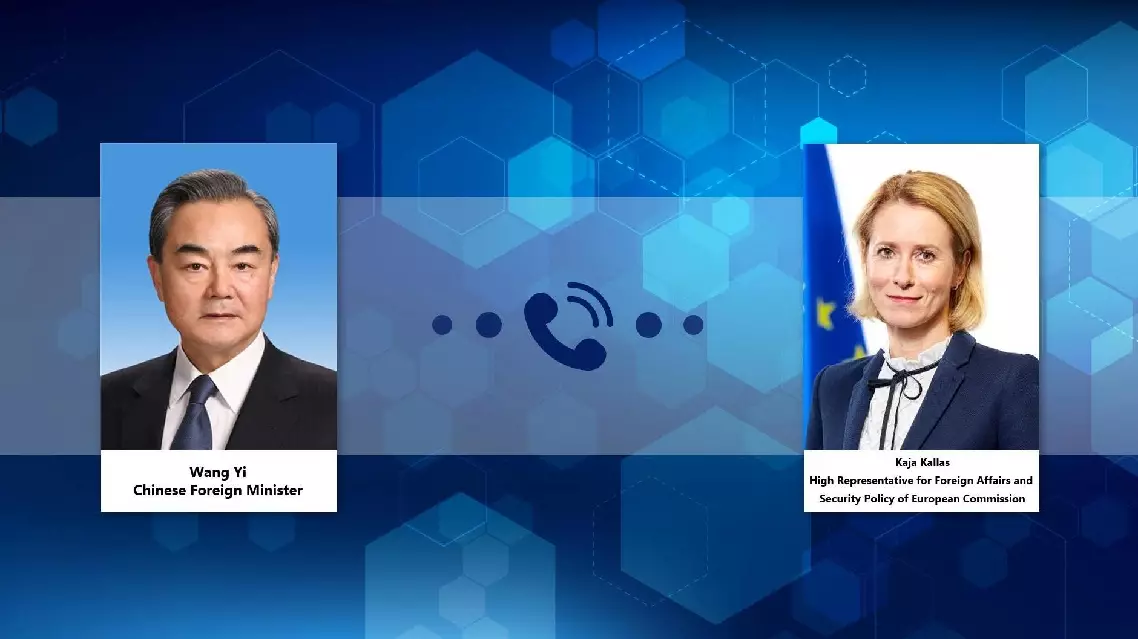
Chinese Foreign Minister Wang Yi said on Thursday that UN Security Council actions must not provide legal cover for unauthorized military operations, nor should they heighten tensions or escalate conflict.

Wang, also a member of the Political Bureau of the Communist Party of China Central Committee, made the remarks in a phone conversation with Kaja Kallas, the High Representative for Foreign Affairs and Security Policy of the European Commission.

Kallas shared her views on the situation in the Middle East and commended China's active diplomatic mediation efforts to ease the situation, including the latest five-point joint initiative issued by China and Pakistan for restoring peace and stability in the Gulf and the Middle East.

The European side has not been involved in this war but has suffered from its spillover effects, she said, expressing hope for swiftly de-escalating the war and resuming dialogue and negotiations.

The European side supports UN humanitarian operations, the protection of civilians and non-military targets, and will make every effort to ensure the opening of navigation through the Strait of Hormuz, she said.

Wang said that amid the current international turmoil, it is the shared responsibility of China and Europe to step up communication and exchanges, and to uphold the UN-centered international system and the international order based on international law.

Wang elaborated on China's principled position on the Middle East situation, noting that the five-point initiative proposed by China and Pakistan reflects a broad international consensus, whose core elements include a cessation of hostilities, the start of peace talks as soon as possible, ensuring the security of non-military targets and security of shipping lanes, and safeguarding the primacy of the UN Charter.

A ceasefire and an end to hostilities are the strong call of the international community, and also the fundamental solution to ensuring safe navigation through the Strait of Hormuz, Wang said, adding that all parties should build greater consensus and create the necessary conditions to that end.

The UN Security Council actions should focus on cooling down the situation and de-escalating tensions, Wang said, adding that China stands ready to maintain communication and cooperation with the European side to promote an early end to hostilities and restore regional peace.

The two sides also exchanged views on China-EU relations. Wang said that China's development represents opportunities for Europe, and that the challenges Europe faces do not originate from China. Protectionism does not enhance competitiveness, and decoupling from China means decoupling from opportunities, Wang said, expressing hope that the European side will develop a comprehensive and objective perception of China and maintain the correct direction of China-EU relations.

Kallas said that the European side views China as an important cooperation partner, does not seek decoupling from China, and looks forward to maintaining dialogue and communication between the two sides.

Chinese FM says UN Security Council actions should not legitimize unauthorized military operations

Chinese FM says UN Security Council actions should not legitimize unauthorized military operations

Recommended Articles