Skip to Content Facebook Feature Image

2nd power generation unit of Zhangzhou nuclear power project begins commercial operation

China

China

China

2nd power generation unit of Zhangzhou nuclear power project begins commercial operation

2026-01-01 17:19 Last Updated At:21:17

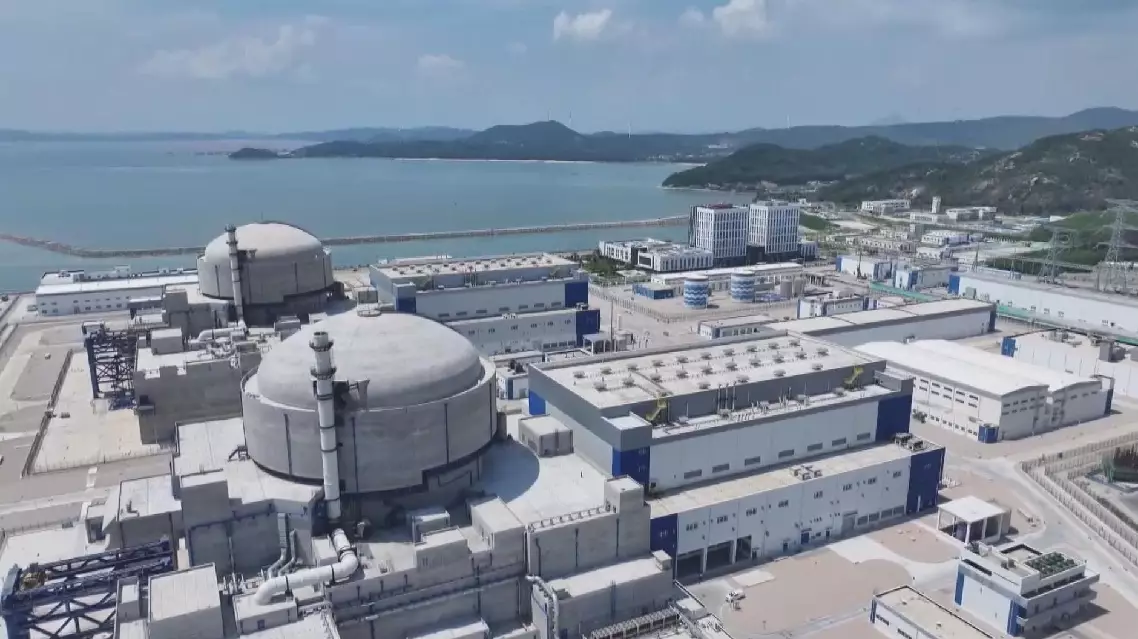
The second power generation unit of China National Nuclear Corporation (CNNC)'s Zhangzhou nuclear power project in east China's Fujian Province went into commercial operation on Thursday, marking full commissioning of the first phase of the project.

At 00:07, the second power generation unit of the project officially began commercial operation after undergoing 168 hours of full-power continuous operation assessment.

"Construction of the Zhangzhou nuclear power project marks the beginning of mass installation of 'Hualong One' nuclear reactors. The entry into operation of the second power generation unit of the Zhangzhou nuclear power project marks the full commissioning of the first phase of the Zhangzhou nuclear power project," said Wu Yuanming, chairman of CNNC-Guodian Zhangzhou Energy Company.

"Hualong One" is China's domestically developed third-generation nuclear reactor. The technology is considered vital in the country's pursuit of improving its energy mix and meeting its dual carbon targets of peaking carbon emissions by 2030 and achieving carbon neutrality by 2060.

The Zhangzhou nuclear power project is designed to have six "Hualong One" nuclear power units, each of which can produce about 10 billion kilowatt-hours of electricity per year.

With the full commissioning of the two units in the first phase of the project, the Zhangzhou nuclear power project can generate some 20 billion kilowatt-hours of electricity per year, which is the equivalent of reducing carbon dioxide emissions by around 16 million tons annually.

"Once its construction is fully completed, the base is expected to provide approximately 60 billion kilowatt-hours of clean energy annually, which is of great significance to optimizing the energy structure and promoting realization of 'dual carbon' goals of China. During the construction of the first phase of the Zhangzhou nuclear power project, we accumulated a wealth of experience in the mass installation and operation of 'Hualong One' nuclear reactors. By fully utilizing the experience to continuously optimize and upgrade our facilities, we are working in a safe, high-quality manner to make each unit better than the last for the second phase of the Zhangzhou nuclear power project," Wu said.

As the first phase of the Zhangzhou nuclear power project has been completed, construction is in full swing for the second phase.

Experts said that once all six planned units become operational, the project can generate 60 billion kilowatt-hours of electricity annually.

"The power generated by the Zhangzhou nuclear power project is mainly supplied to the State Grid, and then delivered from the State Grid to homes. Each unit can produce enough electricity to meet the annual production and living needs of one million people," said Yang Yahui, a senior engineer of CNNC-Guodian Zhangzhou Energy Company.

"The Zhangzhou nuclear power project is adjacent to Guangdong Province neighboring Fujian. With the commissioning of the Fujian-Guangdong power grid interconnection project, the Zhangzhou nuclear power project will also become capable of transmitting clean energy to Guangdong. In addition, the 'Hualong One' nuclear reactors can not only generate electricity, but also provide zero-carbon steam to the nearby Gulei Petrochemical Base, providing energy security for green development of the petrochemical industry," said the engineer.
2nd power generation unit of Zhangzhou nuclear power project begins commercial operation
2nd power generation unit of Zhangzhou nuclear power project begins commercial operation
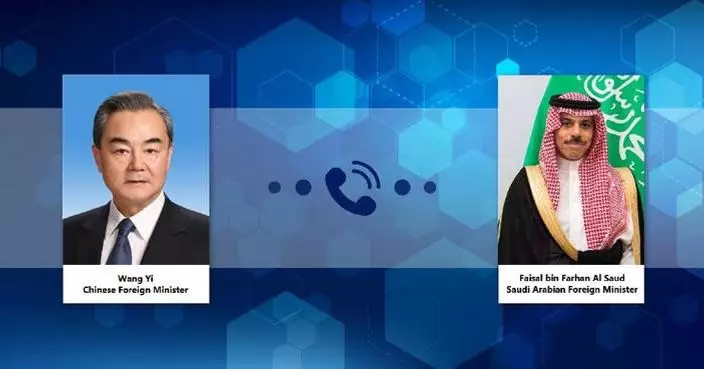
Chinese Foreign Minister Wang Yi said on Thursday that UN Security Council actions must not provide legal cover for unauthorized military operations, nor should they heighten tensions or escalate conflict.

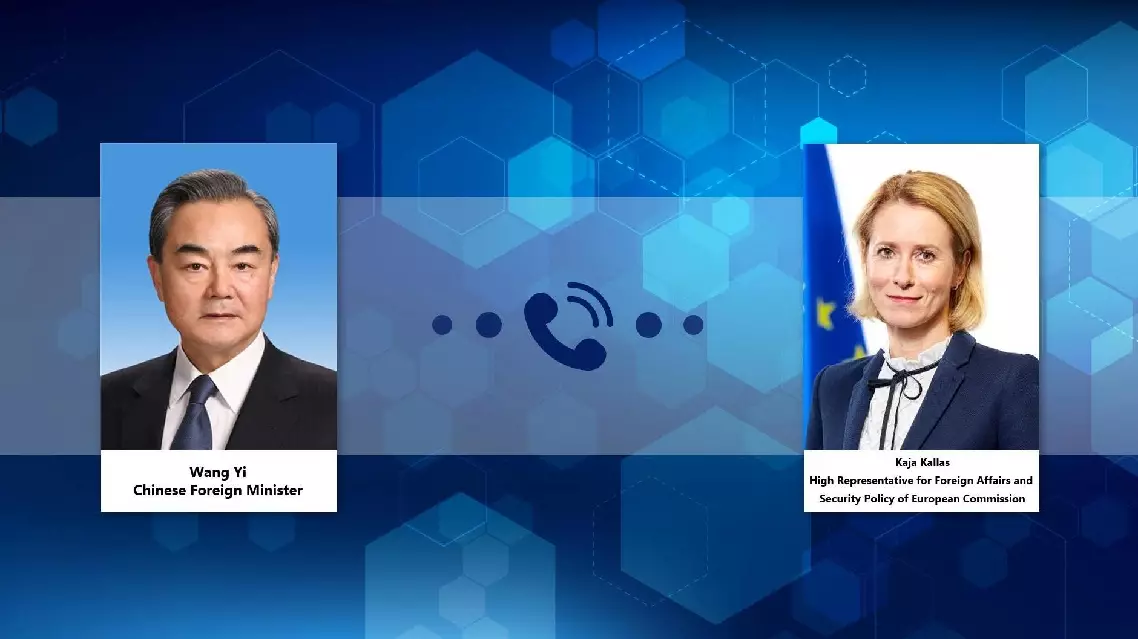
Wang, also a member of the Political Bureau of the Communist Party of China Central Committee, made the remarks in a phone conversation with Kaja Kallas, the High Representative for Foreign Affairs and Security Policy of the European Commission.

Kallas shared her views on the situation in the Middle East and commended China's active diplomatic mediation efforts to ease the situation, including the latest five-point joint initiative issued by China and Pakistan for restoring peace and stability in the Gulf and the Middle East.

The European side has not been involved in this war but has suffered from its spillover effects, she said, expressing hope for swiftly de-escalating the war and resuming dialogue and negotiations.

The European side supports UN humanitarian operations, the protection of civilians and non-military targets, and will make every effort to ensure the opening of navigation through the Strait of Hormuz, she said.

Wang said that amid the current international turmoil, it is the shared responsibility of China and Europe to step up communication and exchanges, and to uphold the UN-centered international system and the international order based on international law.

Wang elaborated on China's principled position on the Middle East situation, noting that the five-point initiative proposed by China and Pakistan reflects a broad international consensus, whose core elements include a cessation of hostilities, the start of peace talks as soon as possible, ensuring the security of non-military targets and security of shipping lanes, and safeguarding the primacy of the UN Charter.

A ceasefire and an end to hostilities are the strong call of the international community, and also the fundamental solution to ensuring safe navigation through the Strait of Hormuz, Wang said, adding that all parties should build greater consensus and create the necessary conditions to that end.

The UN Security Council actions should focus on cooling down the situation and de-escalating tensions, Wang said, adding that China stands ready to maintain communication and cooperation with the European side to promote an early end to hostilities and restore regional peace.

The two sides also exchanged views on China-EU relations. Wang said that China's development represents opportunities for Europe, and that the challenges Europe faces do not originate from China. Protectionism does not enhance competitiveness, and decoupling from China means decoupling from opportunities, Wang said, expressing hope that the European side will develop a comprehensive and objective perception of China and maintain the correct direction of China-EU relations.

Kallas said that the European side views China as an important cooperation partner, does not seek decoupling from China, and looks forward to maintaining dialogue and communication between the two sides.

Chinese FM says UN Security Council actions should not legitimize unauthorized military operations

Chinese FM says UN Security Council actions should not legitimize unauthorized military operations

Recommended Articles