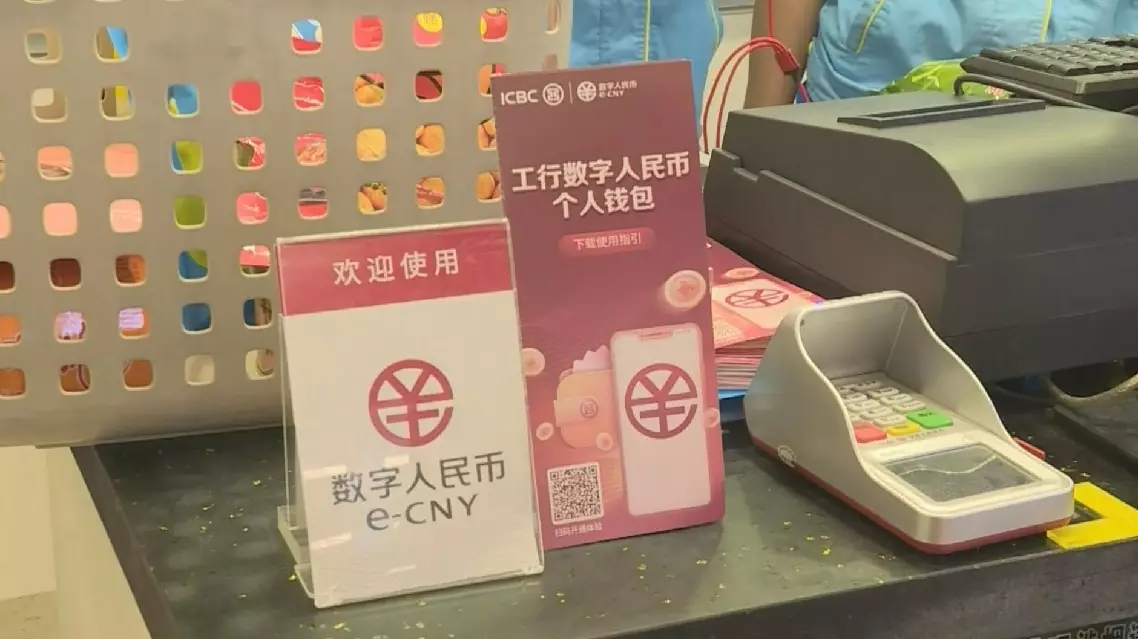
China has announced plans to introduce interest-bearing features for the digital yuan starting 2026, which an expert said will broaden the currency's application and strengthen its role in cross-border transactions.
The foundation for this upgrade was laid in late 2025, when the People's Bank of China (PBOC), the central bank, unveiled an upgraded framework for managing the digital currency. The new rules, which came into effect at the start of 2026, turn the Digital Currency Electronic Payment (DCEP) from a cash-like instrument to a form of digital deposit money.
Consequently, funds in digital yuan wallets will earn interest at demand deposit rates, making the RMB one of the world's first interest-bearing central bank digital currencies.
"Before, the digital yuan was positioned as M0 -- digital cash equivalent to banknotes. It is now classified primarily as M1, or deposit money, meaning banks will treat it as deposits that can be used for lending and accrue interest," said Dong Ximiao, chief researcher of the Merchants Union Consumer Finance Company.
Dong noted that the move will broaden the digital yuan's use cases and strengthen its role in cross-border settlements, advancing the currency's internationalization.
The PBOC first began testing a digital fiat currency in 2014, and in 2020, it launched the pilot Digital Currency Electronic Payment (DCEP) projects in the Guangdong-Hong Kong-Macao Greater Bay Area, the Beijing-Tianjin-Hebei region and the Yangtze River Delta.
Since then, the digital yuan has seen significant growth, both in its range of applications and in overall usage.
"The digital yuan supports both online payments through mobile apps and offline transactions. It comes with hard wallets like mobile, NFC or physical cards, so payments can be made even without a network connection. In the next phase, smart contracts could be added, enabling conditional payments such as installment plans," said Dong.
Currently, there are 10 designated institutions authorized to operate the digital yuan. These include six state-owned commercial banks, two joint-stock banks, and two internet banks, with more banks actively applying to join.
By the end of November 2025, China had recorded around 3.5 billion digital yuan transactions, totaling 16.7 trillion yuan.
China's digital yuan to broaden currency's application: expert