Skip to Content Facebook Feature Image

Damascus faces severe water shortage as crucial spring dries up

HotTV

HotTV

HotTV

Damascus faces severe water shortage as crucial spring dries up

2026-01-06 16:17 Last Updated At:01-07 12:20

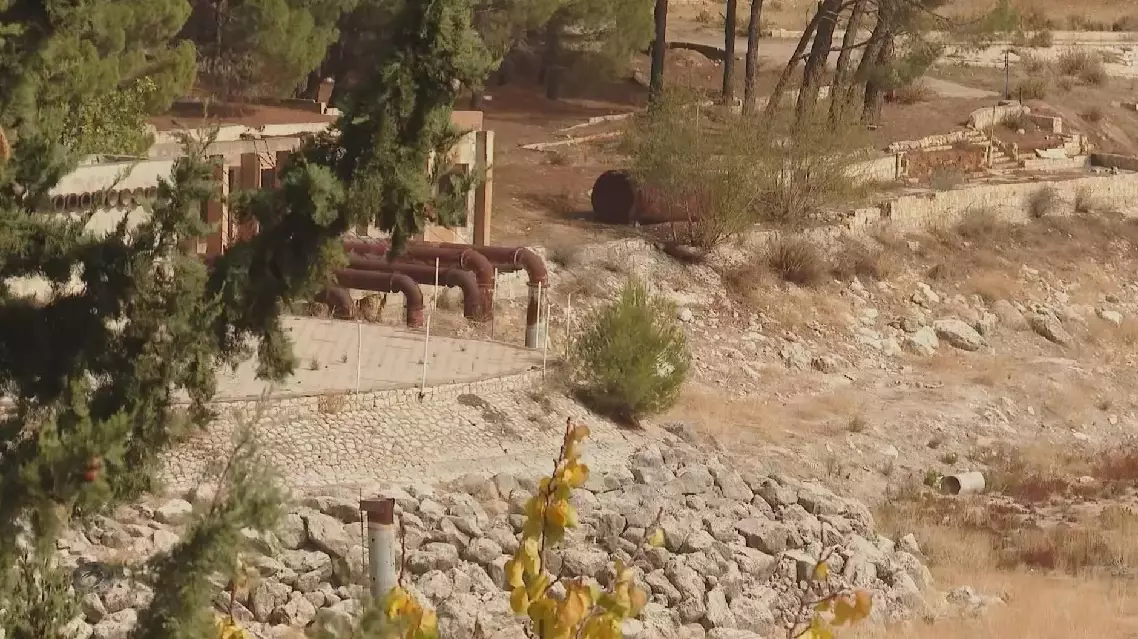
Damascus is facing a severe water crisis as one of the Syrian capital's main water sources, the Ain Barada spring, has dried up due to lack of rainfall.

Weekly water cuts are forcing local residents to find ways to store water to ensure they can complete basic tasks like washing and cooking. Even when water is restored, supply remains limited, forcing residents to buy bottled water.

According to the United Nations' Food and Agriculture Organization (FAO), the 2024-25 season was the driest in nearly 40 years for Syria.

The historic drought caused by climate change has led to the evaporation of the Ain Barada spring, threatening Damascus' water security.

"The water supply to the Barada valley relies primarily on rainwater and snowmelt from the mountains. The severe lack of rainfall nationwide this year has directly impacted the water levels in the Ain Barada spring, the Ain al-Fijeh spring, and other places," said Mohammed Awad, director of the Ain Barada Spring Station.

In addition to climatic factors, the collapse of the city's water supply system also results from the lack of necessary maintenance of infrastructure, according to Mohammed Namou, director of the Ain Barada Water Resources Management Office.

"Water production from the Barada pumping station has decreased significantly, partly due to the continuous drop in water levels and partly due to the age and inefficiency of the existing pumps. In the meantime, several major pumping stations in Damascus have experienced mechanical or electrical malfunctions. To address the water shortage, we are proceeding with a project to replace 50 water pumps to restore the basic capacity of the water supply," Namou said.
Damascus faces severe water shortage as crucial spring dries up

Damascus faces severe water shortage as crucial spring dries up

The Global Mayors Dialogue opened in Harbin, capital of northeast China's Heilongjiang Province on Tuesday, bringing together mayors and senior city officials from across Europe, Asia, and North America to have in-depth exchanges on practical approaches to developing the ice and snow economy.

Held under the theme "Connecting the World with Ice and Snow, Win-Win Cooperation for a Shared Future", the three-day event gathered mayors, deputy mayors, and mayoral representatives from cities across the globe, including Canada, Finland, Germany, Greece, the Republic of Korea, Thailand, and Türkiye, focusing on the ice and snow economy, cultural integration, smart city development, heritage preservation, and urban governance.

The event featured a main dialogue and a scenario-based dialogue salon to foster in-depth exchanges and spark new ideas. Guests are invited to visit iconic sites such as the Harbin Ice and Snow World and attend the opening ceremony and trade events of the Harbin Ice and Snow Economy Expo, which are showcasing Harbin's achievements in building an ice and snow economy brand, strengthening international exchanges and cooperation, and inheriting ice and snow culture.

Harbin, called China's "ice city", has turned its long, cold winters into a major tourist attraction. Last winter, it welcomed a record 90.36 million visitors, generating 137.22 billion yuan (about 19.44 billion U.S. dollars) in revenue, a year-on-year increase of 16.6 percent.

International mayors gather in Harbin to explore ice and snow economy

International mayors gather in Harbin to explore ice and snow economy

Recommended Articles