China has recently achieved a breakthrough in hydrogen sulfide treatment, providing a new solution for a more sustainable chemical industry.
The technology, developed by researchers at the Dalian Institute of Chemical Physics (DICP) of the Chinese Academy of Sciences, was validated on Tuesday.
Hydrogen sulfide is a highly toxic compound commonly produced as a byproduct in natural gas extraction, refining, and coal chemical production processes. The complete removal of hydrogen sulfide and resource utilization has long posed a challenge for the chemical industry.
After more than 20 years of research, the team has explored photolysis and electrochemical methods to decompose hydrogen sulfide, addressing the scaling issue associated with large-scale hydrogen sulfide decomposition engineering.
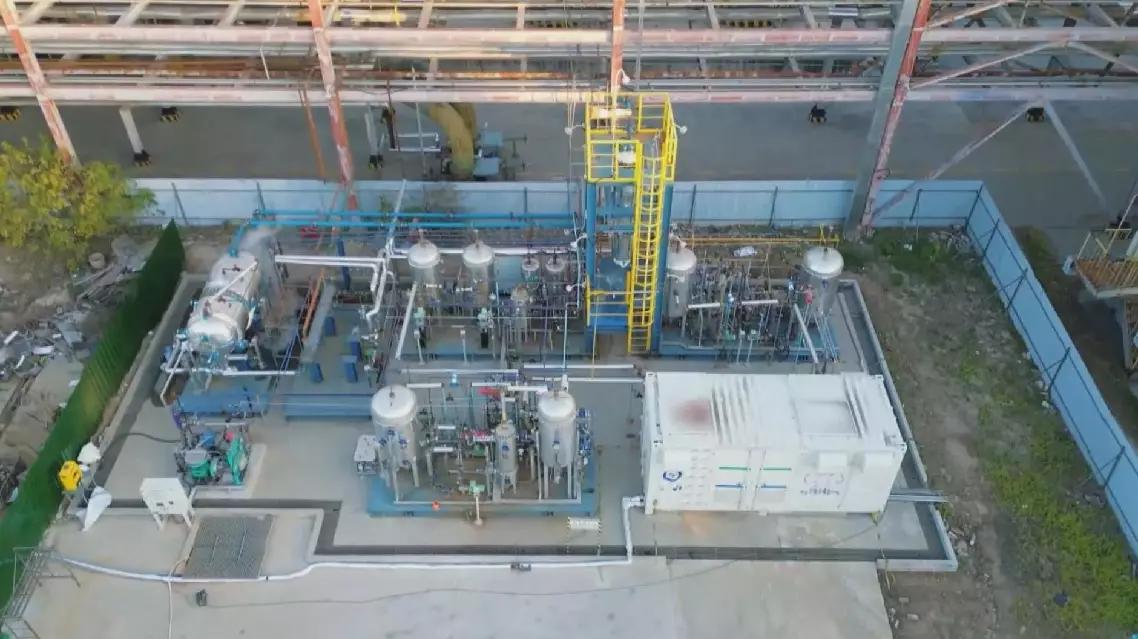
This technology is currently being applied in a coal chemical demonstration project that targets the annual elimination and resource utilization of 100,000 cubic meters of hydrogen sulfide. Data indicates that the conversion rate of hydrogen sulfide is nearly 100 percent, resulting in the production of high-quality sulfur and high-purity hydrogen.
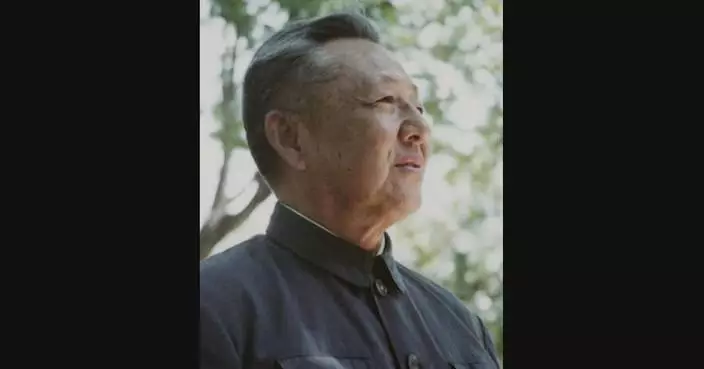
"Many natural gas wells in China cannot be exploited due to high hydrogen sulfide content. With this technology, we can address environmental and ecological issues while also producing hydrogen and sulfur. In particular, hydrogen can be produced safely, at low cost, and on a large scale. It can be directly used in fuel cells and even in industries such as aerospace," said Li Can, an academician of the Chinese Academy of Sciences and a researcher at the DICP.
China achieves breakthrough in hydrogen sulfide treatment