A Texas teachers union sued the state's education department on Tuesday, accusing it of an improper “wave of retaliation” against public school employees over their social media comments following the assassination of conservative political activist Charlie Kirk.
The lawsuit says the free speech rights of teachers and other school staff were violated by the Texas Education Agency and its commissioner, Mike Morath, because they directed local school districts to document what the education agency described as “vile content” posted online after Kirk was fatally shot in September.
Despite calls for civility, some people who criticized Kirk after his assassination faced a backlash from Republicans who saw them as dishonoring him, leading to firings by universities, sports teams and media companies. Florida's education commissioner also promised to investigate teachers over objectionable comments.
The lawsuit says the Texas agency has received more than 350 complaints about individual educators, and the agency said Tuesday that 95 investigations remain open.
Zeph Capo, president of the Texas American Federation of Teachers, alleged that the state clearly demonstrated it is trying to police speech that offends Morath because it hasn't given similar directives after mass shootings or other violence, such as the killing of actor-director Rob Reiner.
“It was in fact a witch hunt,” Capo said during a news conference in Austin.
The education agency said it could not comment “on outstanding legal matters.”
The lawsuit cites the cases of four unnamed teachers — one in the Houston area and three in the San Antonio area — who were investigated over social media posts critical of Kirk or of the reaction to his death. According to the lawsuit, the Houston-area teacher was fired, while the three San Antonio-area teachers remain under investigation.
Texas AFT, which represents about 66,000 teachers and other school employees, filed the lawsuit in U.S. District Court in Austin. The four teachers were anonymous because of concerns about their safety, Capo said.
The lawsuit comes less than month after Texas Gov. Greg Abbott and Lt. Gov. Dan Patrick, both conservative Republicans, announced a partnership with Turning Point USA, the right-wing group Kirk founded, to create chapters on every high school campus in the state.
The Associated Press sent emails seeking comment from the governor's office and Turning Point USA, which are not named as defendants in the suit.
Morath told school superintendents in a Sept. 12 letter that social media posts could violate Texas educators' code of ethics and promised that “each instance will be thoroughly investigated.”
The lawsuit argues that Morath's letter represents a state policy that is too broad and too vague to be enforced fairly and without squelching protected speech.
The U.S. Supreme Court has ruled that agencies can limit public employees' speech if it deals with their official duties or if it could disrupt the workplace, but Randi Weingarten, the union's national president, said neither is an issue in the Texas lawsuit.
"We’re talking about schoolteachers when they were not in classrooms — in private, on their own social media, commenting on a matter that everyone in the country and the world saw,” she said during the news conference.
The lawsuit said none of their posts celebrated or promoted violence, which Morath said wouldn't be protected speech.
Kirk was an unabashed Christian conservative who often made provocative statements about politics, gender and race. He founded Turning Point USA in 2012 and built it into one of the country’s largest political organizations, shaping a generation of young people by taking his conservative message onto college campuses. He was shot during such an appearance at a university in Utah.
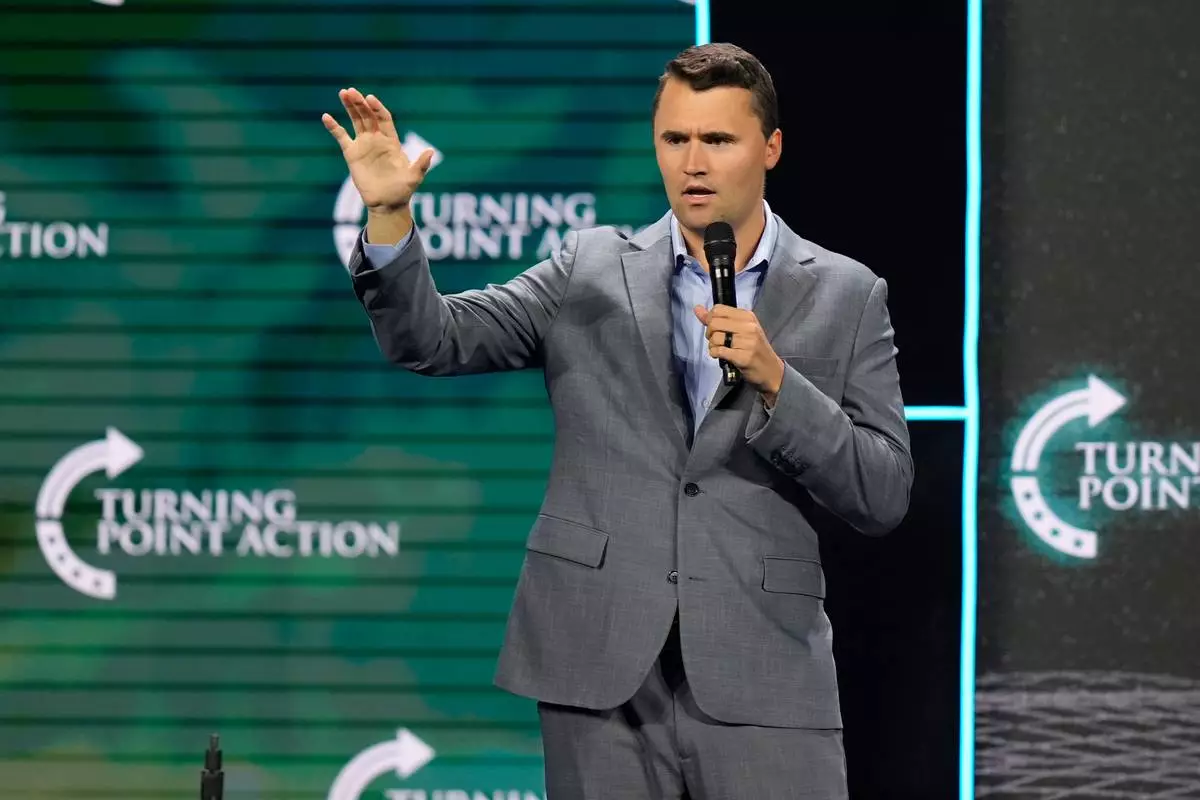
FILE - Turning Point USA Founder Charlie Kirk speaks at The Believers' Summit 2024 at a Turning Point Action event in West Palm Beach, Fla., July 26, 2024. (AP Photo/Lynne Sladky, File)
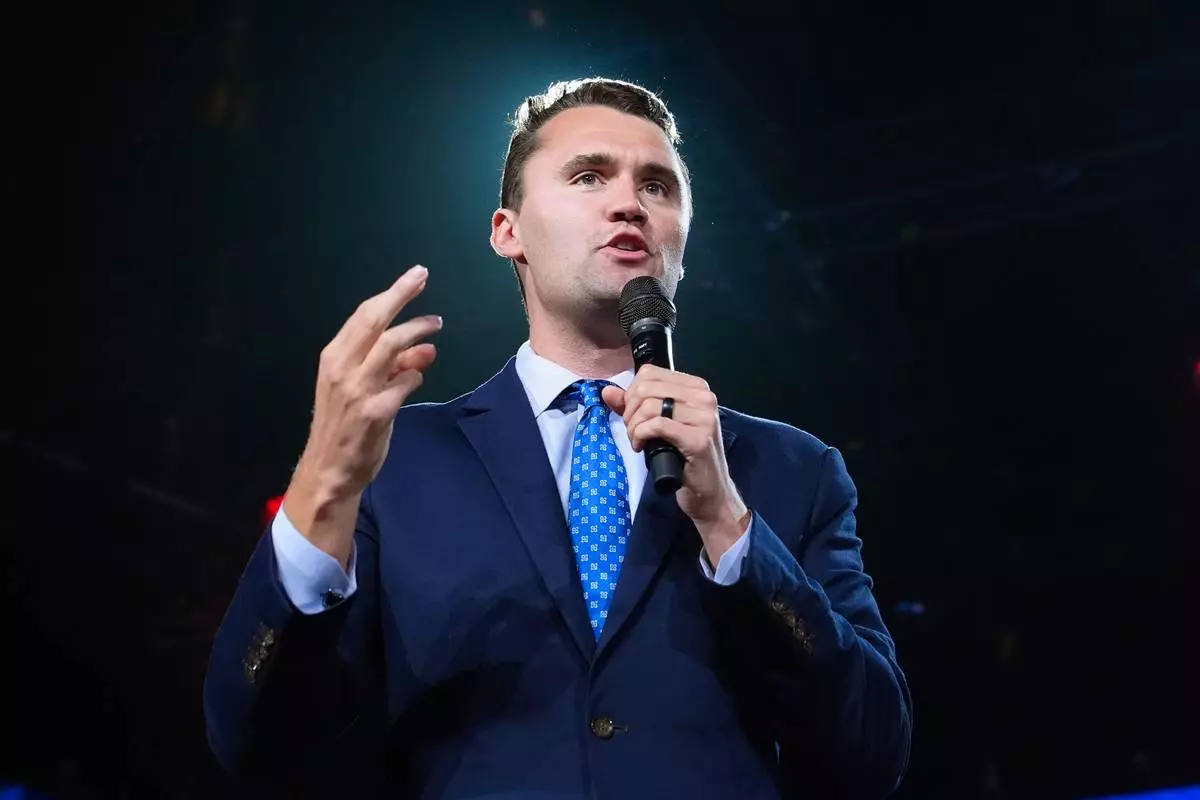
FILE - Turning Point USA Founder Charlie Kirk speaks at a Turning Point event prior to Republican vice presidential nominee Sen. JD Vance, R-Ohio, speaking, Sept. 4, 2024, in Mesa, Ariz. (AP Photo/Ross D. Franklin, File)
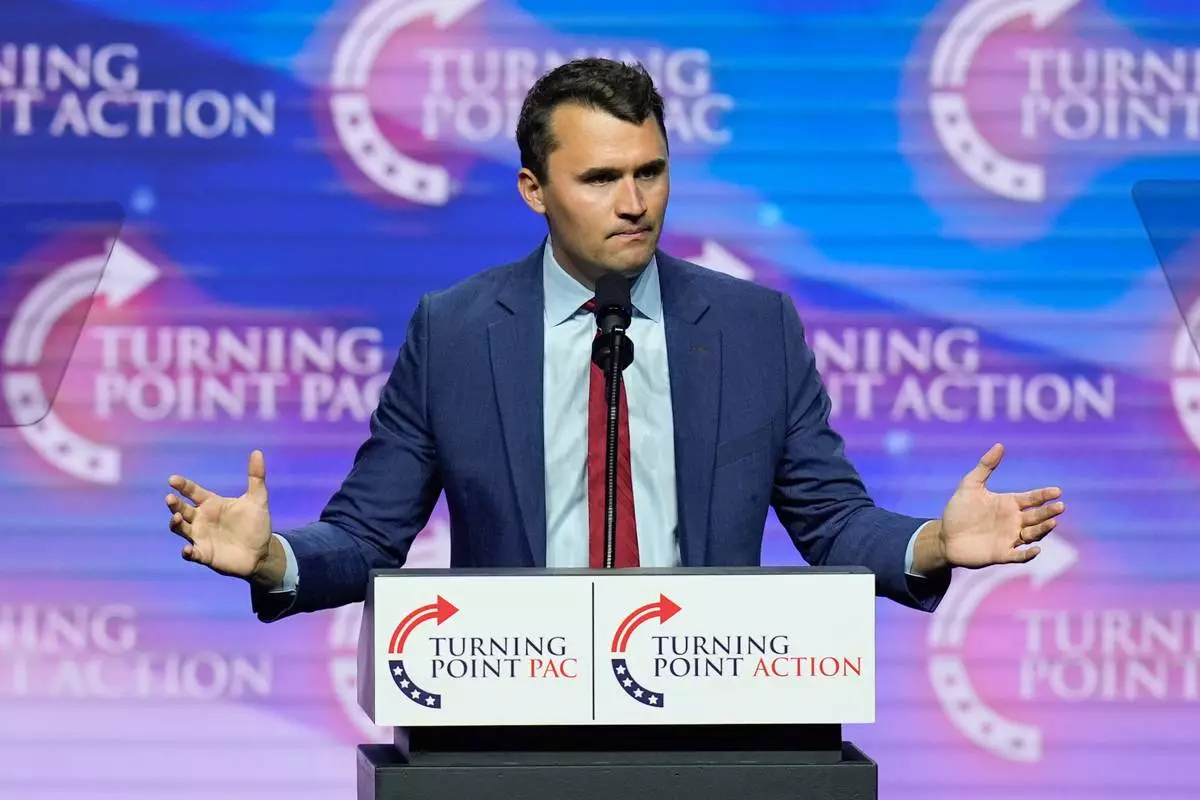
FILE - Turning Point USA Founder Charlie Kirk speaks during a campaign rally, Oct. 24, 2024, in Las Vegas. (AP Photo/John Locher, File)
NEW YORK (AP) — On hot afternoons, DeAnna Brandon’s three dogs zag around while she splashes in a backyard kiddie pool with her grandkids. These are the moments the 48-year-old blood cancer survivor cherishes — and wonders if she’ll get to have in the years to come.
Brandon, who lives in Rockwell, North Carolina, is worried that new Medicaid work requirements starting next year could jeopardize her health coverage. She had expected to qualify for a medical frailty exemption, but new guidance introduced by President Donald Trump's administration last week has thrown that into question.
The interim final rule released by the Centers for Medicare and Medicaid Services means being sick with extreme exhaustion and memory challenges related to her treatments may not be enough for Brandon to evade the new work requirements. She’ll have to attest and later prove that those symptoms “significantly impair” her ability to fulfill the new mandates.
If the government doesn’t accept her case, she could lose her coverage — and the twice-monthly maintenance chemotherapy that keeps her multiple myeloma in remission. Working is “outside of the realm of possibility for me,” she said in an interview.
“I was always a push-through-it person — you know, ‘Oh, you’re tired. Push through,’” Brandon said. “It’s hard to explain to people you can’t push through it.”
Health analysts have sounded the alarm about the Republican Trump administration’s newest guidance, which differs from what states had been expecting. Experts said it will put more Americans at risk of losing their health insurance and force states to scramble in their already harried efforts to implement the changes on time.
“This will mean more paperwork for Medicaid patients — specifically for the sickest Medicaid patients,” said Adrianna McIntyre, a professor at Harvard University’s school of public health. That, she said, "is going to push in the direction of more people needlessly losing coverage.”
The new Medicaid restrictions, which Democrats have criticized, were part of Trump’s big tax and policy law in 2025. The change affects those covered through an expansion, which most states chose to make, that gave more lower-income people access to the government’s safety net healthcare program.
Expansion enrollees aged 19 to 64 will have to show that they work or do community service at least 80 hours a month or are in school at least half the time. There are exceptions for those considered medically frail or in addiction treatment programs, among others.
Last week’s announcement from CMS caught states off guard with a new definition of medical frailty. The law had said medically frail people include those who have substance use disorders, disabilities or serious medical conditions. But the CMS rule last week went further, saying someone’s condition must “significantly impair” their ability to work, volunteer or attend school at the rates required in the law for them to be granted an exemption.
In 2027 and once in 2028, the patient can attest that they meet this definition. But when they try to renew coverage in 2028, they’ll need to prove it.
Advocates said it’s unclear what kind of documentation could prove that point. They said doctor notes may be required — something some providers don’t feel comfortable writing. Medicaid enrollees fighting disease may carry the bureaucratic burden.
Brandon, who tried to prove she couldn’t work to access disability benefits during her active cancer treatment and failed, said she’s worried about the hoops she and other patients may need to jump through.
“It’s not that easy — you may have to go through four doctors,” Brandon said. “If you’re already battling an illness like this, you don’t have the physical or the mental or the emotional energy to do that all the time.”
States have been planning to use Medicaid claims data and other data sources to automatically exempt eligible enrollees whenever possible.
CMS Administrator Dr. Mehmet Oz on a call with reporters last week endorsed that approach, saying he hoped most people would be helped "without ever having to talk to anybody.”
Asked to clarify how the rule should be implemented, CMS told The Associated Press in an emailed statement that the agency “chose not to allow states to categorically exclude individuals from work requirements based solely on a diagnosis or condition type.” For renewal in 2028, it said, “verification through claims data or other documentation will generally be required.”
But state Medicaid officials and consultants said Medicaid claims data doesn’t prove someone is significantly impaired from working, and they don’t know of any existing data that does. That has left them confused about how to honor the government's rule.
“States are going to be asked to make a determination using information that doesn’t exist in their systems,” said Kinda Serafi, a partner at the consulting firm Manatt Health who is working with states to make the changes.
One state, Nebraska, started the new Medicaid work requirements ahead of schedule. But it used diagnostic codes to identify people who are medically frail, and it therefore will likely have to rework its system, said Sarah Maresh, healthcare access program director at the advocacy group Nebraska Appleseed.
Maresh said she was concerned doctors in the rural state who are already reluctant to take Medicaid patients may decide to stop.
“They’re already drowning in paperwork, so to require them to do an additional step of certifying whether someone is able to work, I think is concerning,” she said.
Preparing for the Jan. 1 kickoff of the new policies is an immense and expensive task. A $200 million federal allotment is flowing to states to help, and CMS has partnered with technology companies to provide free and discounted services, but the tab for the additional technology requirements and more staff is likely to exceed $1 billion, according to an AP analysis. That extra cost will be borne by a mix of federal and state tax dollars.
Democrats have slammed the Medicaid work requirements as attacks on healthcare coverage for struggling Americans.
Republicans promoting the new rules, though, say they are commonsense measures to eliminate government freeloading and preserve benefits for people who need them most. Oz last week, citing a report by the conservative American Enterprise Institute think tank, said able-bodied people on Medicaid spend an average of 6.1 hours a day “watching TV or just hanging out.”
“This is a concern, not a criticism,” he said. “Work requirements are going to turn this around, we hope."
But current enrollees who don’t meet the work requirement threshold said that’s a misrepresentation of their experience.
Mids Meinberg, a 42-year-old freelance writer from New Jersey who lives with chronic depression and diabetes, said that even with his health issues, he’s proud to have found a meaningful career. But his conditions make him unable to work 80 hours a month. He said he thinks there are many people with disabilities who are “too disabled to work but not disabled enough for the state to think they can’t work.”
Brandon, in North Carolina, said she wants the government to understand that she’s “not just sitting around wasting time or being a drain on society.”
“I’m pouring into my grandchildren,” she said. “We’re valuable, and we can still contribute to our communities even if it’s not working.”

FILE - Workers at a Medicaid call center in Jefferson City, Mo., field questions and review information regarding eligibility determinations on Aug. 16, 2023. (AP Photo/David A. Lieb, FIle)
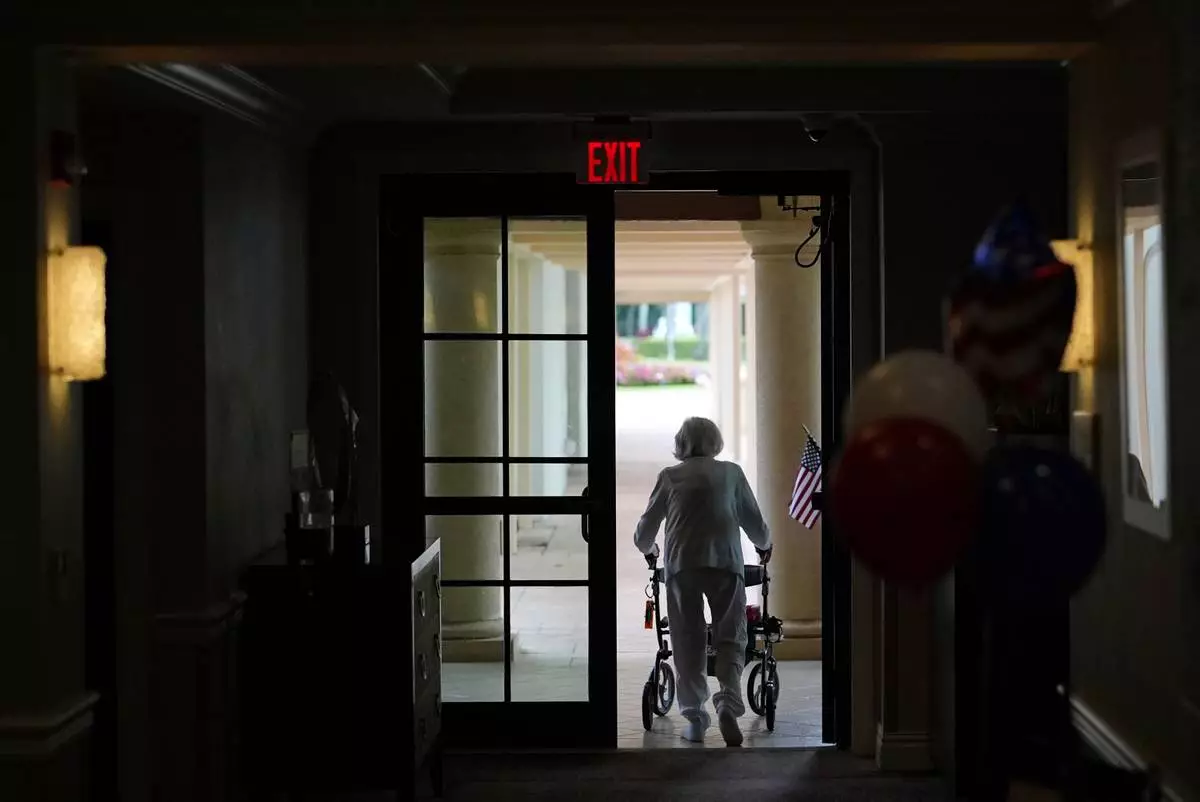
FILE - A woman uses a walker as she exits an assisted living building, July 4, 2025, in Boca Raton, Fla. (AP Photo/Rebecca Blackwell, File)