COLORADO SPRINGS, Colo.--(BUSINESS WIRE)--Jan 6, 2026--
Summit Wealth Group (“Summit”), a growing registered investment advisor serving individuals and families nationwide, today announced two senior leadership appointments that position the firm to accelerate growth while preserving the strong sense of community that has long defined its culture. These appointments underscore Summit’s commitment to delivering better outcomes for clients and creating an advisor experience rooted in collaboration, trust, and shared values. As Summit enters its next phase of expansion, the firm is investing in leadership that strengthens its platform to support its vision to attract like-minded advisors, including those from the Commonwealth community.
This press release features multimedia. View the full release here: https://www.businesswire.com/news/home/20260106279813/en/
Chelsea Ganey, CFA Joins as Chief Investment Officer
Summit Wealth Group welcomes Chelsea Ganey, CFA as Chief Investment Officer. Ganey brings extensive experience in wealth management and investment strategy, most recently serving as Chief Strategy Officer at Moran Wealth Management, where she played a pivotal role in shaping the firm’s investment platform and long-term growth strategy, including the thoughtful build out of the alternative investment platform.
A highly engaged leader in the industry, Ganey is a frequent speaker at national conferences, sharing insights on portfolio construction, market dynamics, and investment strategy. She is also deeply involved in professional and community leadership, contributing her expertise through a range of industry and civic roles, including service on the Vista Equity Partners RIA Advisory Board, Vice President of CFA Society Naples, Co-Founder of Southwest Florida Women in Investment Management, and as a member of the Florida Gulf Coast University Foundation Board of Directors, where she chairs the Investment Committee and serves as Treasurer. This breadth of involvement reflects Ganey’s belief that strong investment leadership extends beyond portfolio management to education, mentorship, and community impact, an approach that closely aligns with Summit’s culture.
In her new role, Ganey will lead portfolio management, trading, and investment research, while partnering closely with advisors and clients to deliver scalable, high-performing investment solutions. She will play a key role in advancing Summit’s investment platform, supporting advisor growth, enhancing client outcomes, and building the infrastructure needed to support the firm’s continued expansion.
“Chelsea’s appointment reflects our commitment to investing in top-tier leadership as we scale,” said Randy Morris, CEO of Summit Wealth Group. “Her experience building investment platforms at scale will be instrumental as we attract advisors who share our community-driven culture.”
Ganey added, “Summit has built an exceptional platform focused on advisor empowerment and long-term client success. I’m excited to help grow and evolve the firm’s investment capabilities, support advisors as they scale their practices, and build portfolios designed to perform across market cycles.”
Seamus O’Brien, CFP Named Head of Advisor Success
Summit also announced the creation of a new leadership role, appointing Seamus O’Brien as Head of Advisor Success. In this role, O’Brien will oversee advisor success across the firm, including mergers and acquisitions, advisor recruitment, strategic partnerships, and organic growth initiatives, all while ensuring alignment with Summit’s culture and long-term strategy.
O’Brien’s deep experience supporting RIAs and custodial relationships at BNY Pershing and SEI uniquely positions him to help Summit attract advisors seeking a growth partner that values community and collaboration. His focus will be on creating a seamless experience for advisors joining Summit, from transition to long-term success.
“As we continue to grow, it became clear we needed a dedicated leader focused on advisor success across the full lifecycle, from recruitment and integration to long-term scale,” said Morris. “Seamus brings a rare combination of industry perspective, operational discipline, and advisor-first leadership. His experience working alongside RIAs and custodial partners makes him uniquely suited to lead this next chapter for our firm.”
O’Brien commented: “I’m excited to support Randy and the team in bringing Summit’s vision to life. My focus is on empowering advisors to grow and thrive, and I’m excited to collaborate with Summit’s advisors, a community of professionals who consistently raise the bar for excellence. In today’s environment, advisors are looking beyond platforms to partners who truly understand their culture and values.”
Strengthening Leadership for Summit 2.0
These appointments follow last month’s addition of Scott Wilkinson as Chief Compliance Officer, reinforcing Summit’s commitment to building a durable, growth-ready organization. Wilkinson’s experience at Commonwealth Financial Network reflects Summit’s dedication to carrying forward the Commonwealth community culture while creating new opportunities for advisors and clients.
“We’re proud to welcome Chelsea, Seamus, and Scott to our leadership team,” added Morris. “Their expertise and shared commitment to fiduciary excellence will help us attract advisors who value community and deliver exceptional outcomes for clients. We’re building a leadership team that reflects where our firm is going—not where it’s been.
About Summit Wealth Group
Founded in 2002, Summit Wealth Group helps clients gain clarity and confidence in their financial lives. With offices across Colorado, Mississippi, Arizona, South Dakota and Tennessee, the firm offers comprehensive financial planning and investment management grounded in a relationship-first philosophy. Summit is a fee-based fiduciary, committed to always acting in the best interests of its clients. Learn more at www.summitwealthgroup.com. Advisory services offered through Summit Wealth Group LLC; an Investment Adviser registered with the U.S. Securities & Exchange Commission.
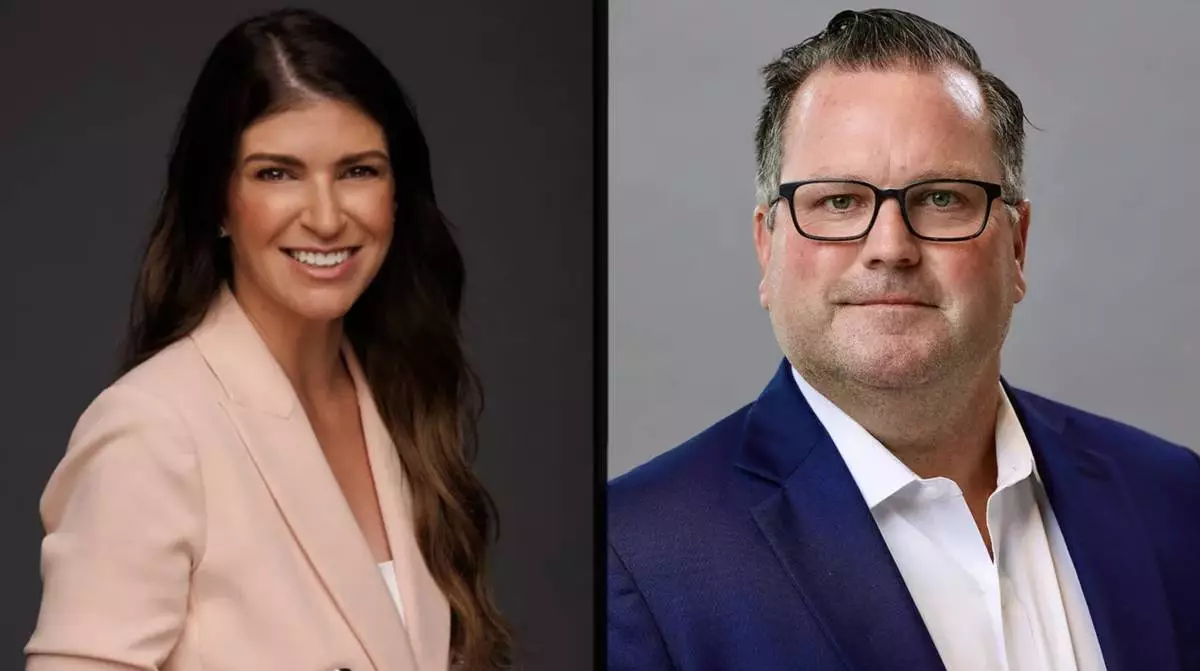
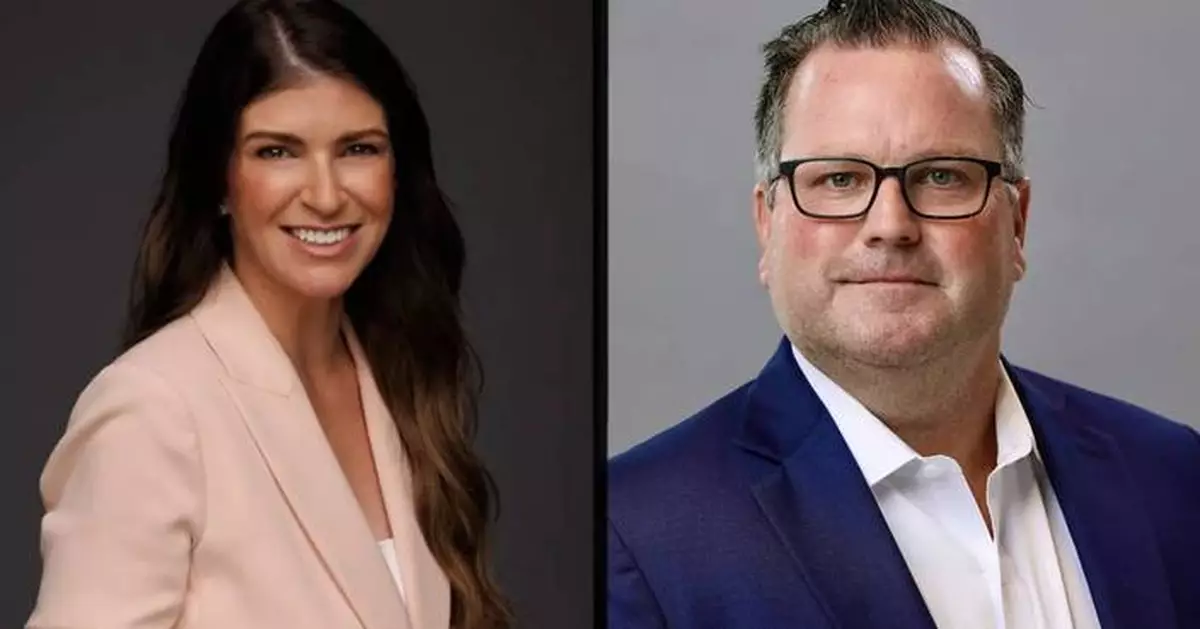
Chelsea Ganey (left) and Seamus O’Brien
NEW YORK (AP) — Venezuela's oil industry has been in the spotlight since President Donald Trump used military force to capture the country's leader, President Nicolas Maduro.
In the days that followed, Trump said the U.S. would run Venezuela and tap its oil reserves. He said Venezuela stole U.S. oil, a reference to former Venezuelan President Hugo Chavez's move decades ago to nationalize hundreds of foreign-owned assets, including those owned by American oil companies.
Trump floated a plan for those companies to return and rebuild Venezuela's beleaguered oil industry. He later announced Venezuela would provide 30 to 50 million barrels of oil to the U.S. Then the administration “selectively” removed sanctions to enable the shipping and sale of Venezuelan oil to markets worldwide, saying the proceeds would settle in U.S.-controlled accounts and be disbursed to the American and Venezuelan populations, according to the Energy Department.
The moves may be part of a long-term strategy to gain a foothold in a nation with vast oil reserves.
Venezuela has one of the largest oil reserves in the world, and some energy analysts predict there won’t be enough oil to meet global demand in coming years.
The South American nation has an estimated 303 billion barrels of crude oil in the ground, which is about 17% of the world’s supply, according to the U.S. Energy Information Administration. Unlike other parts of the world, where geologists have to search for untapped oil, the reserves under Venezuela’s soil are largely mapped and known, experts say. But because of dilapidated infrastructure, the country only produces about 1% of the world's oil.
“Venezuela has enormous reserves,” said Claudio Galimberti, global market analysis director and chief economist at Rystad Energy. “If you ask any oil company around the world, go to their exploration team, their geologists, and ask them where is oil going to come from in the 2030’s and 2040’s, their answer is a rather scary, ‘We don’t know.’ So there is going to be a problem of finding oil in the next few years.”
In the short term, the global supply of oil exceeds demand, so increased production from Venezuela isn’t critically needed. But the International Energy Agency estimates that under current policies approximately 25 million barrels per day of new oil supply projects will be needed by 2035 to keep markets in balance.
The oil in Venezuela is heavy, sour crude, which is what refineries on the U.S. Gulf Coast process, and there are only a handful of countries that produce it. By contrast, most oil produced in the U.S. is light, sweet crude. If Venezuelan oil flows freely, it could potentially reduce the price of oil and gasoline.
American refineries could benefit financially from processing more crude oil, and it could increase the availability of diesel and jet fuel, said Kevin Book, managing director of ClearView Energy Partners.
“There seem to be two objectives. The first is to overall lower energy prices by adding to global supply, and second is to produce more of the heavy, sour crude that is currently in short supply relative to other grades,” Book said. “The first generally benefits end-users everywhere because lower prices reduce transportation and energy costs.”
More Venezuelan crude wouldn’t necessarily help U.S. oil producers, though, because having more oil on the market can lower oil prices, discouraging production and making it harder for those companies to remain profitable.
After Chavez nationalized hundreds of private businesses and foreign-owned assets in 2007, including oil projects run by Exxon Mobil and ConocoPhillips, international arbitration panels ordered Venezuela to repay billions of dollars to both companies, but the debts have yet to be collected.
In theory, if sanctions were lifted and Venezuela was under new leadership, major oil companies could invest in infrastructure and profit from the sale of oil.
Trump said he thinks Venezuela’s decimated oil industry could be rebuilt in less than 18 months with U.S. support. He envisions major oil companies returning to Venezuela to make those investments and profit from its oil industry.
But given the unrest and decades of badly damaged infrastructure, it’s unlikely to top the list of places oil companies would choose to invest, experts said.
“Imagine you are Exxon and you have global operations. Where are you going to put your money? Where it’s going to give you most return,” Galimberti said.
Companies also need assurance that assets won’t be taken again by a future government, said Daniel Sternoff, senior fellow at Columbia University’s Center on Global Energy Policy.
“You need to start with basic political stability before you’re going to have companies that are interested in making those kinds of investments,” Sternoff said. “We have more questions than answers over what the government of Venezuela will be."
A ConocoPhillips spokesman said the company is monitoring developments in Venezuela and their potential implications for global energy supply and stability. “It would be premature to speculate on any future business activities or investments” he said.
Exxon Mobil did not respond to a request for comment.
Infrastructure and equipment that the oil industry needs to maintain and increase production has been badly damaged in recent years.
“There was a lot of chaos and looting, and so therefore there’s a tremendous amount of damage to the surface equipment for producing oil all around the country,” said Amy Myers Jaffe, director of the Energy, Climate Justice and Sustainability Lab at New York University. “There are a lot pipelines that are leaking, and it requires a massive cleanup, there’s just a lot of physical devastation.”
There are also massive fuel shortages and electricity blackouts frequently across the country, and “to really produce oil, you need to have a stable grid,” Jaffe said.
In addition, many workers with technical expertise have left the country. Millions of Venezuelans fled as a consequence of Chavez and Maduro, and “there has been tremendous brain drain,” Sternoff said.
Rystad Energy estimates it would take $54 billion of oil and gas investment over the next 15 years to keep Venezuela’s oil production flat at around 1.1 million barrels per day, and that with additional investment over two to three years an additional 300,000 barrels per day could be added. Going beyond 1.4 million barrels per day would require an additional $8 billion to $9 billion per year, the group said.
There's also no precedent where a regime change in a major oil producing country has led to a rapid increase in output, Sternoff said. In most cases, such as Iraq, Iran, Libya and the Soviet Union, oil output fell significantly, often for years, before returning to prior peaks, he said.
“One of the lessons from Iraq is that the companies did go back, but that it was very difficult to operate when there was a difficult political and local backdrop that can range from insurgency to governance issues and corruption to infrastructure challenges,” Jaffe said.
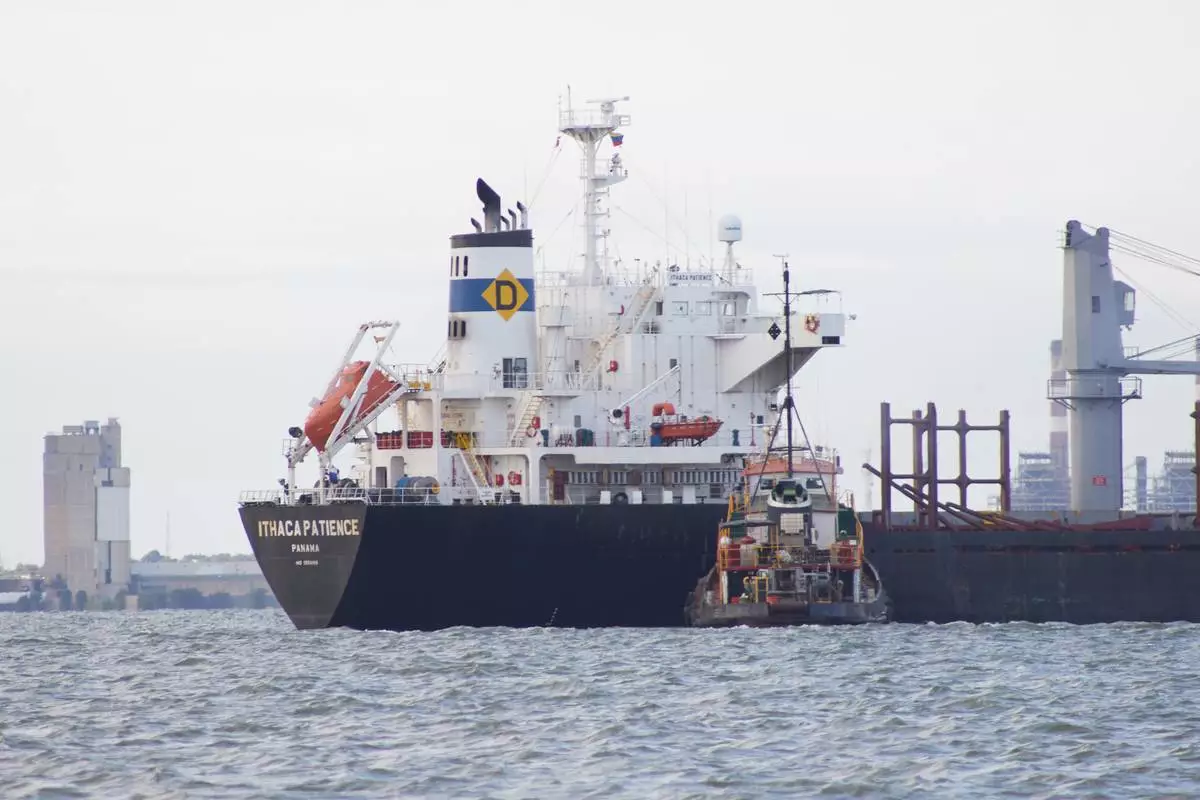
A ship named Ithaca Patience, Panama, is docked on Lake Maracaibo, Venezuela, Wednesday, Jan. 7, 2026. (AP Photo/Edgar Frias)
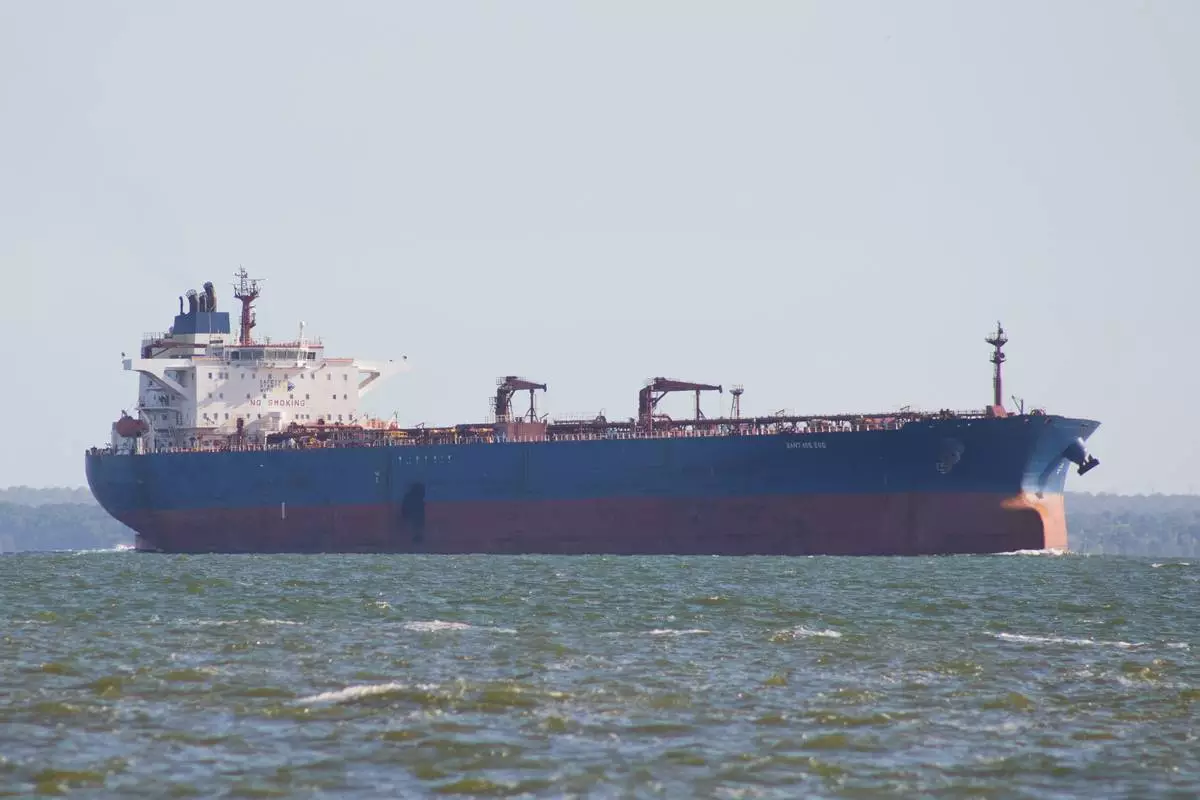
The oil tanker named Xanthos Eos steam on Lake Maracaibo, Venezuela, Wednesday, Jan. 7, 2026. (AP Photo/Edgar Frias)A