KATHMANDU, Nepal (AP) — Mukesh Awasti was all set to leave for Australia to pursue a degree in civil engineering on a sunny day in September, but instead he joined a youth revolt against corruption in Nepal and lost his leg after being shot by security forces.
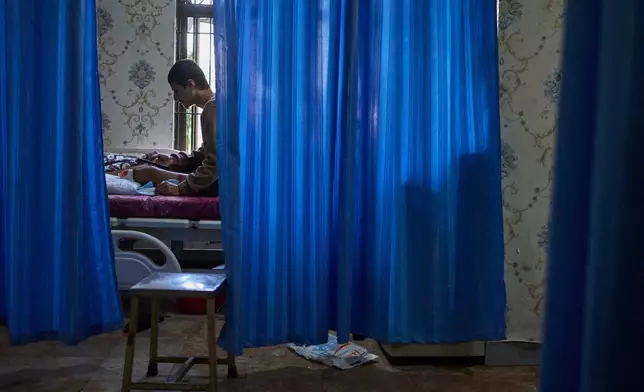
Lying on a hospital bed at the National Trauma Center in the capital Kathmandu where his leg was amputated, 22-year-old Awasti said he regrets giving up so much for the little that has been achieved after the sacrifices of so many people.
Click to Gallery
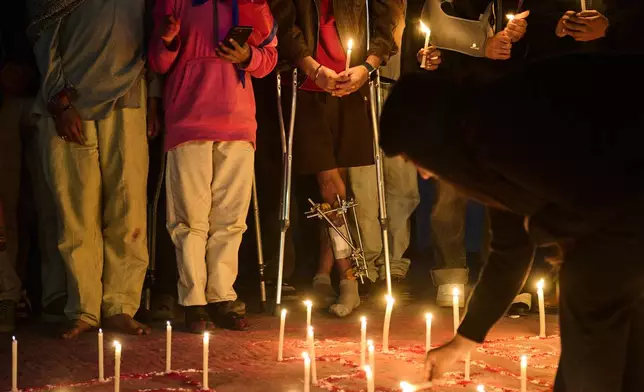
Members of Gen Z protest groups are joined by injured victims and family members of those who died during September protests at a candlelight vigil outside the Parliament building in Kathmandu, Nepal, on Dec. 9, 2025. (AP Photo/Niranjan Shrestha)
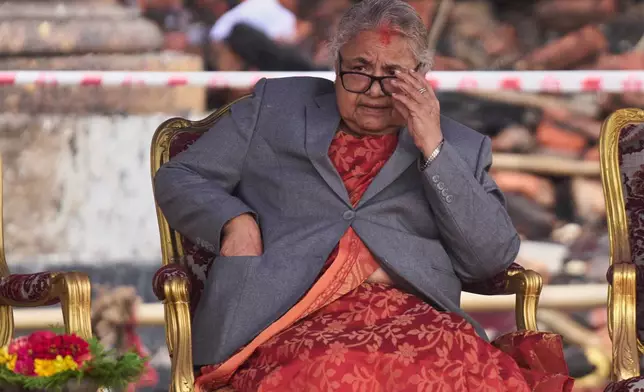
FILE - Nepal's new Prime Minister Sushila Karki waits as ministers prepare to take the oath of office administered by Nepali President Ram Chandra Poudel at the presidential building in Kathmandu, Nepal, on Sept. 15, 2025. (AP Photo/Niranjan Shrestha, File)
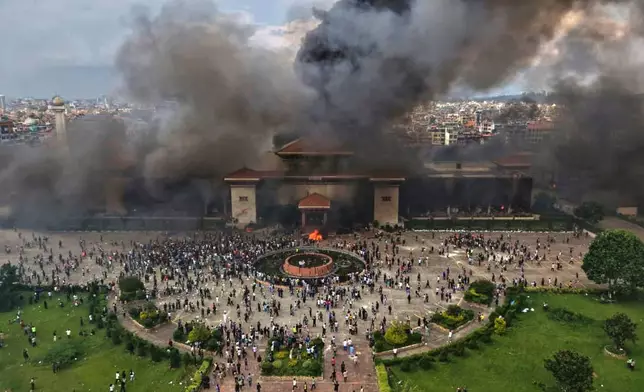
FILE - Protesters celebrate at the parliament building after it was set on fire during a protest against social media ban and corruption in Kathmandu, Nepal, on Sept. 9, 2025. (AP Photo/Prakash Timalsina, File)
Mukesh Awasti, 22, who took part in September protests against corruption in Nepal and lost his leg after being shot by security forces, lies on a hospital bed during treatment in Kathmandu, Nepal, on Dec. 8, 2025. (AP Photo/Niranjan Shrestha)
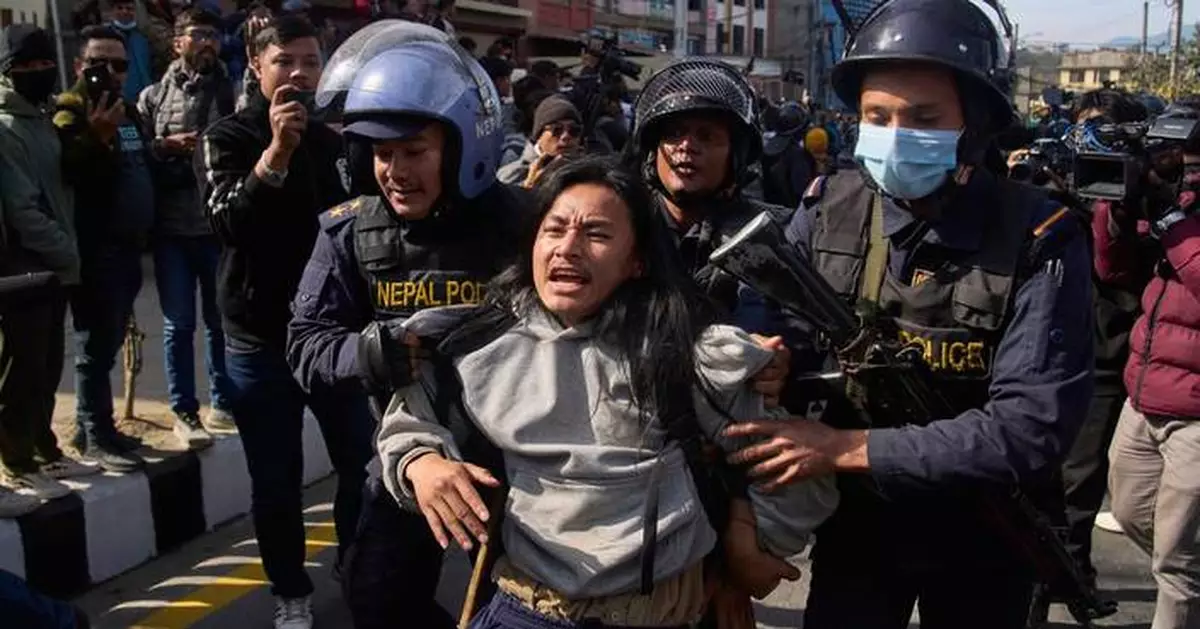
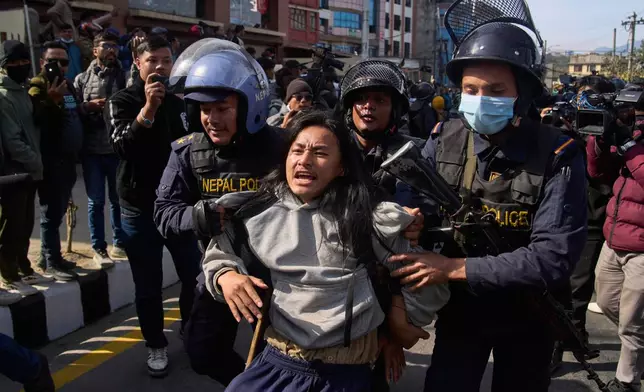
Nepalese police detain a young protester during an anti-government rally in Kathmandu, Nepal, on Dec. 22, 2025. (AP Photo/Niranjan Shrestha)
Violent protests in Kathmandu that began Sept. 8 left 76 people dead and more than 2,300 injured before the demonstrations fueled by “Gen Z” activists forced the appointment on Sept. 12 of Nepal's first female prime minister, Sushila Karki, a retired Supreme Court judge who has promised fresh elections in March.
Since then, the interim government and its leader have come under criticism from many of the people who took part in the protests and expected major changes in the Himalayan nation.
“I am regretting my decision to take part in the protest because they have been zero achievement from the new government we brought which has failed us,” Awasti said. “There should be end to corruption which has not happened and the people who opened fire on the demonstrations should have been arrested but that that has also not happened either.”
So far the government's anti-graft agency has filed one significant corruption case that does not include key political figures. The politicians accused of corruption by protesters are preparing to contest upcoming elections and there has been no case filed against leaders who were in power when protesters were injured in September.
Dozens of demonstrators, including some who were injured in September, recently have protested against the government they brought to power. These protests outside the prime minister's office has been held in the past few weeks with police forced to break some of them.
“We are back here in the street because the government has failed to live up to their promise. There are so many families of those who lost their lives and many who were injured but what has the government done? Nothing," said Suman Bohara, who walks with crutches on a shattered right foot. "We are here because we are compelled to.”
Tens of thousands of mostly young demonstrators first gathered in Kathmandu on Sept. 8 to protest widespread corruption, lack of opportunities, employment and poor governance, which was triggered by a ban on social media. They broke through police barricades and attempted to enter parliament, only to be shot by security forces.
A day later, the protests spread across the country. Angry mobs burned down the offices of the prime minister and president, police stations and the homes of top politicians who were forced to flee on army helicopters. The army eventually stepped in to restore control and negotiations ended with Karki's appointment and the key task of conducting parliamentary elections.
The government has said it is determined to meet that goal.
“As the world is looking forward to a smooth change in government through our elections on March 5, I want to assure that we will deliver these elections,” Karki said. “Our preparations are almost complete, and the security environment has improved a lot with our security apparatus is assured enough.”
Different demands have emerged from separate groups among the young protesters including direct election of prime ministers, scrapping the present constitution and jailing all previous politicians. There is no single leader or group but rather several individuals who have claimed to represent Nepal’s voice in the Gen Z movement.
The lack of clarity among the protesters since September has been a key hurdle in Nepal, according to analysts.
“All the confusion right now in Nepal is because of the lack of clarity among the Gen Z groups on what they are demanding and how the government was formed,” said Abeeral Thapa, principal of Polygon College of Journalism and Mass Communications in Kathmandu.
Some are beginning to oppose the planned elections in March, saying their protest was not intended only to bring about elections for a new Parliament, while their demands to end corruption and arrest all the corrupt politicians should be fulfilled immediately.
Other groups seek elections that would bring new lawmakers who would perform all these tasks.
It has not been clear how powerful the government is and the limitations on a mandate to fulfill all the demands from the people who brought the interim leaders to office. When appointing the interim government, the president mentioned that the key purpose was to conduct elections for Parliament.
Thapa noted Nepal’s constitution does not have a specific provision for forming an interim government. A line in the document reads, “The main duty of the President shall be to abide and protect the constitution.”
“The protests were not well planned to begin with, they began with controlling corruption and end the ban on social media,” Thapa said. “But in reality what happened was like they had gone deer hunting but ended up killing a tiger, with the protest taking a major turn with the government collapsing.”
It remains doubtful the promised election in March can be held, but there are no alternatives to polls, Thapa said.
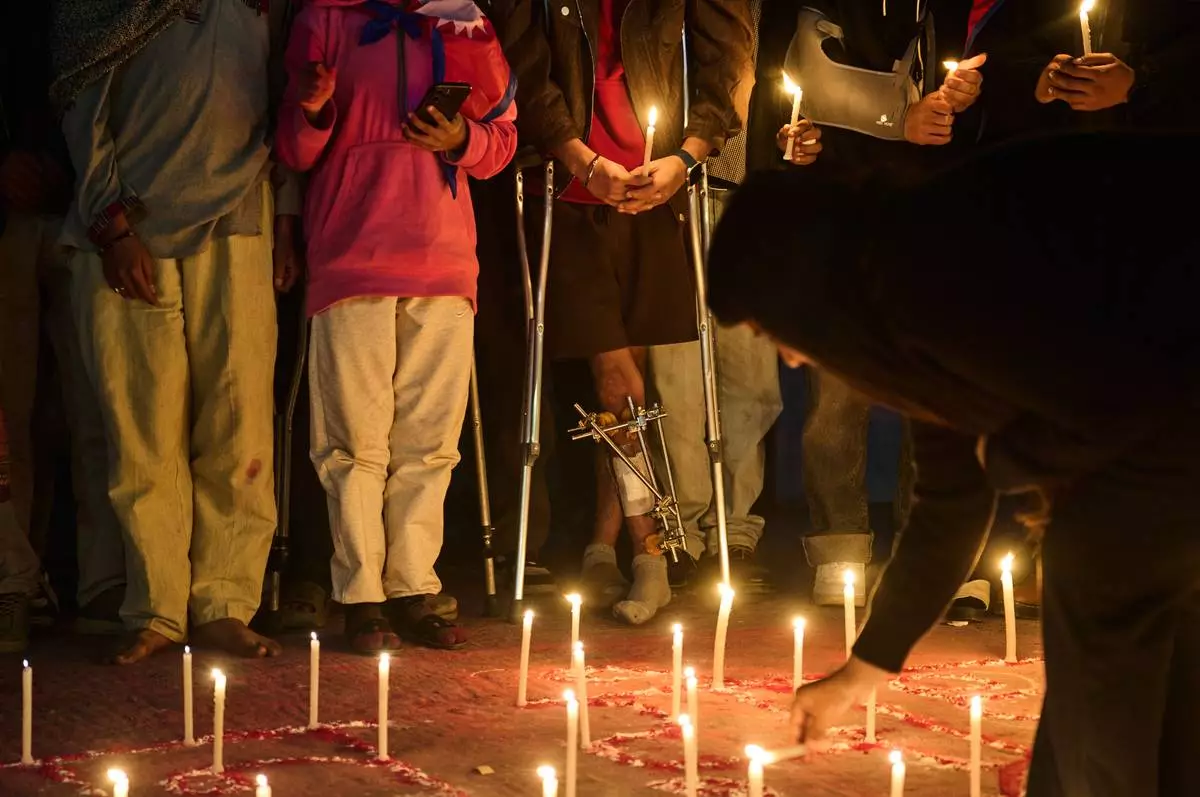
Members of Gen Z protest groups are joined by injured victims and family members of those who died during September protests at a candlelight vigil outside the Parliament building in Kathmandu, Nepal, on Dec. 9, 2025. (AP Photo/Niranjan Shrestha)
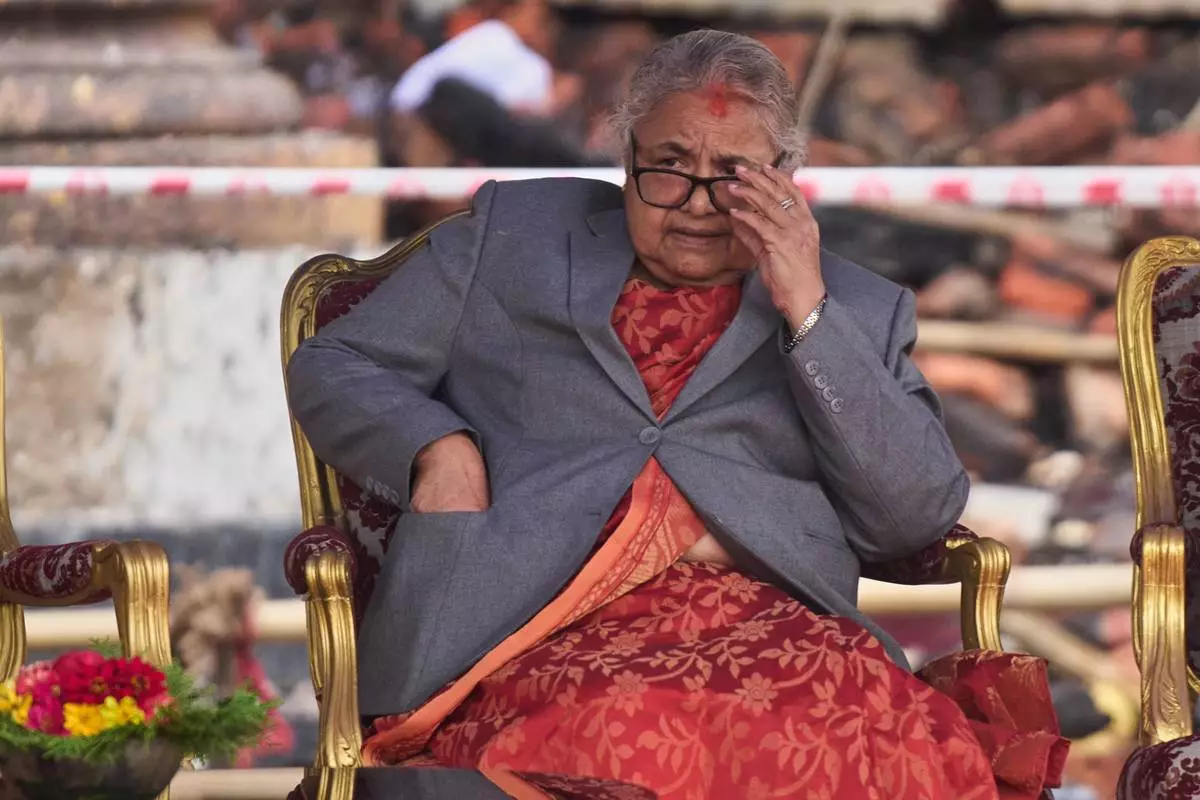
FILE - Nepal's new Prime Minister Sushila Karki waits as ministers prepare to take the oath of office administered by Nepali President Ram Chandra Poudel at the presidential building in Kathmandu, Nepal, on Sept. 15, 2025. (AP Photo/Niranjan Shrestha, File)
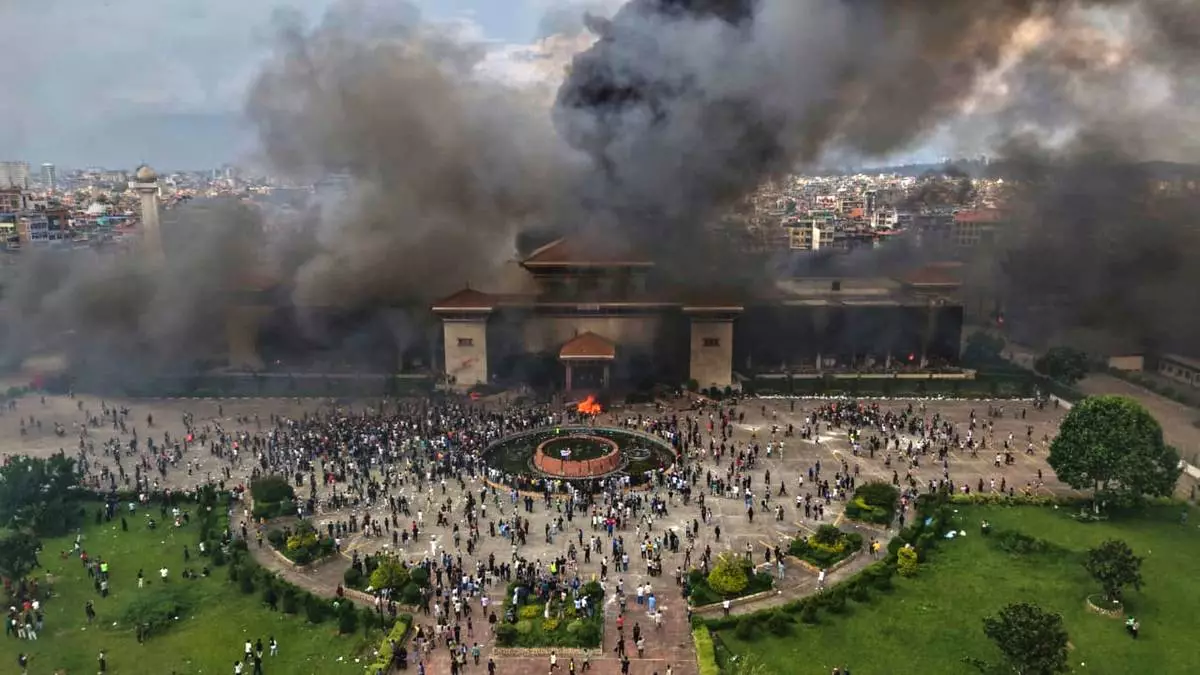
FILE - Protesters celebrate at the parliament building after it was set on fire during a protest against social media ban and corruption in Kathmandu, Nepal, on Sept. 9, 2025. (AP Photo/Prakash Timalsina, File)
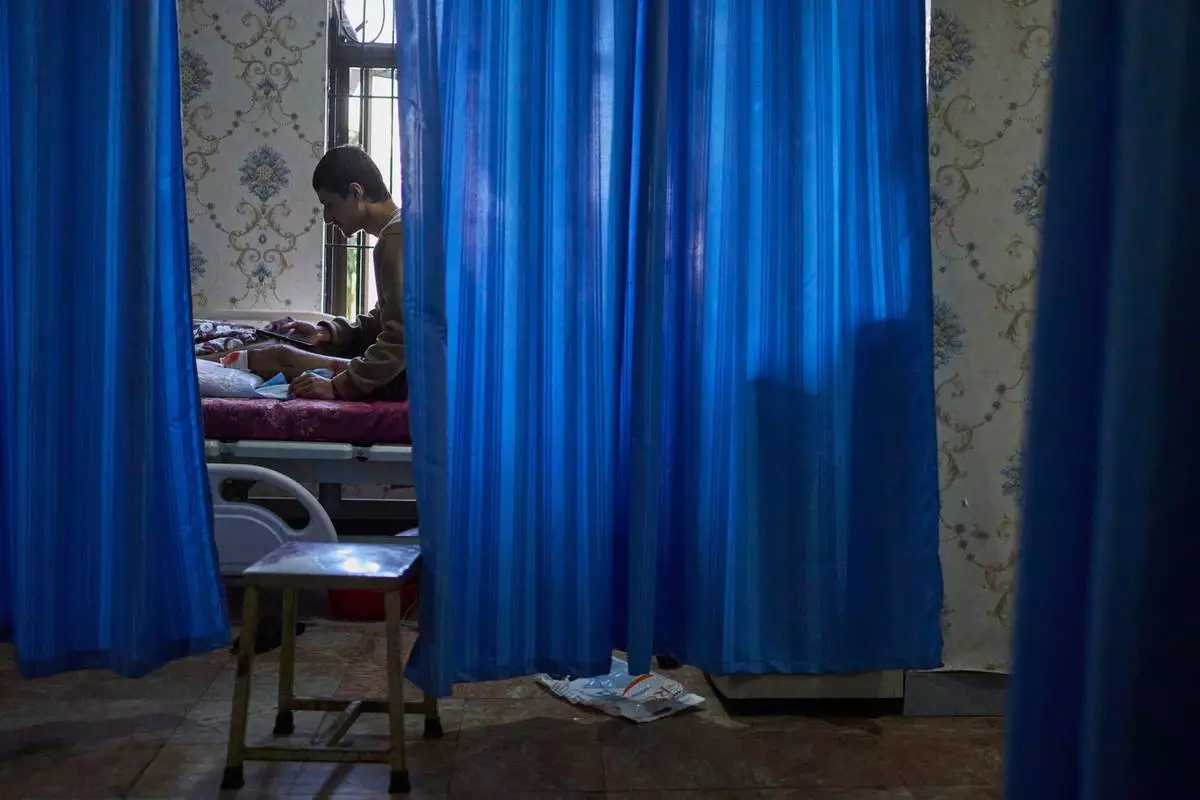
Mukesh Awasti, 22, who took part in September protests against corruption in Nepal and lost his leg after being shot by security forces, lies on a hospital bed during treatment in Kathmandu, Nepal, on Dec. 8, 2025. (AP Photo/Niranjan Shrestha)
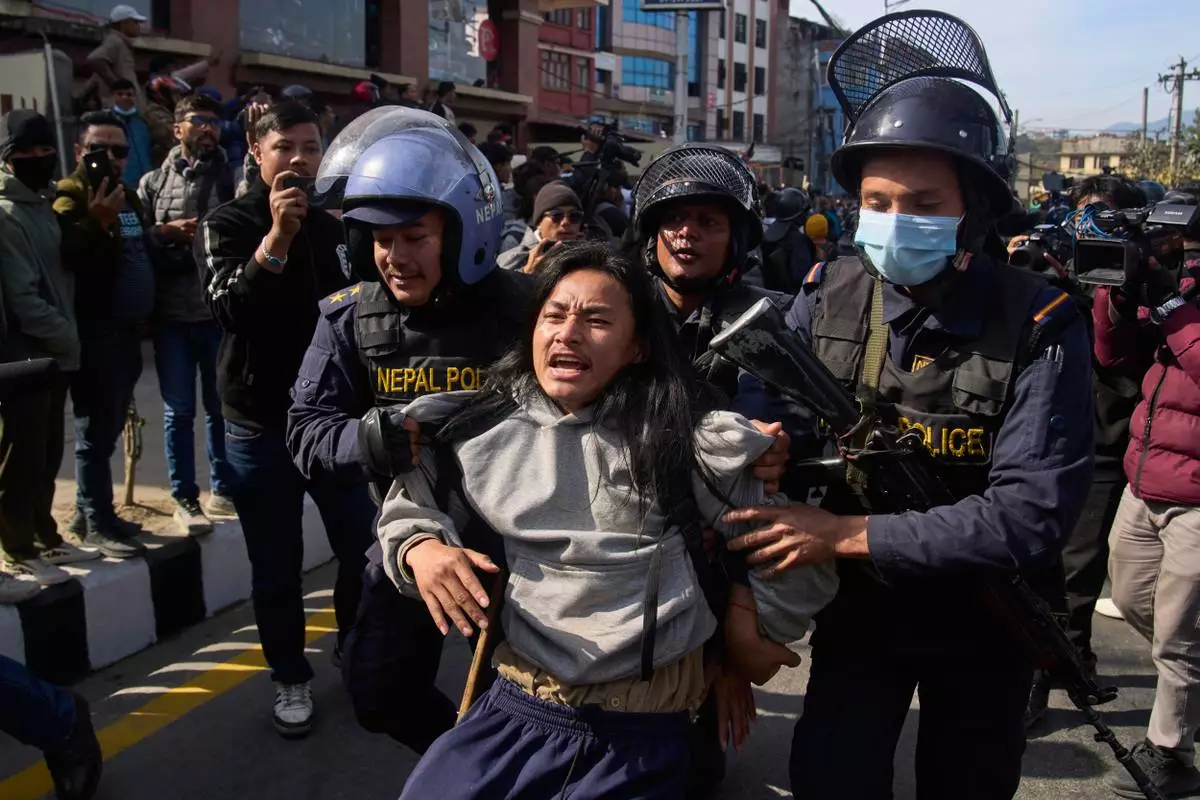
Nepalese police detain a young protester during an anti-government rally in Kathmandu, Nepal, on Dec. 22, 2025. (AP Photo/Niranjan Shrestha)
President Donald Trump said Thursday Pam Bondi is out as his attorney general.
Trump in a social media post named Deputy Attorney General Todd Blanche as the acting attorney general, though three people familiar with the matter have said he has privately discussed Lee Zeldin, the head of the Environmental Protection Agency, as a permanent pick.
It marks the end of a contentious tenure of a loyalist who upended the Justice Department’s culture of independence from the White House, oversaw large-scale firings of career employees and moved aggressively to investigate the Republican president’s perceived enemies.
Here is the latest:
Trump picked Deputy Attorney General Todd Blanche to be acting attorney general, but three people familiar with the matter have said he has privately discussed Zeldin as Bondi’s permanent replacement.
Zeldin, before Trump tapped him to lead the environmental agency, was a Republican congressman from New York. A staunch ally of the president, he worked on Trump’s defense team during his first impeachment and voted against certifying Trump’s 2020 election loss to President Joe Biden.
Under his leadership, the EPA has rolled back climate change regulations and proposed including microplastics and pharmaceuticals on the list of drinking water contaminates.
Fields said Pam Bondi’s firing was “deeply troubling — not because of who is leaving, but because of why.”
Fields said in a statement that he has been critical of Bondi’s handling of the Jeffrey Epstein files but “here is what should alarm every American: reports indicate that Trump’s frustration stemmed not from Bondi’s failure to uphold the law — but from his belief that she didn’t weaponize the Justice Department aggressively enough against his political enemies.”
He said politically motivated cases against former FBI-Director James Comey and New York Attorney General Letitia James had been thrown out.
“The Justice Department is not the President’s personal law firm and shouldn’t be used as a tool for retribution.” Fields said the issues of the files and the independence of the department should be addressed before anyone else is confirmed.
The Kentucky Republican previously broke with his party to push legislation forcing the release of the Epstein files, and accused Bondi on X in January of making “illegal redactions and withholding key documents.”
On Thursday, Massie said on X that he supported Trump’s decision, adding that “I hope the next AG will release all the Epstein files according to the law and follow up with investigations, prosecutions, and arrests.”
Bondi released a statement Thursday, which read:
“Over the next month I will be working tirelessly to transition the office of Attorney General to the amazing Todd Blanche before moving to an important private sector role I am thrilled about, and where I will continue fighting for President Trump and this Administration.
Leading President Trump’s historic and highly successful efforts to make America safer and more secure has been the honor of a lifetime, and easily the most consequential first year of the Department of Justice in American history.
Since February 2025, we have secured the lowest murder rate in 125 years, secured first-ever terrorism convictions against members of Antifa, shattered domestic and transnational gangs across the country, taken custody of more than 90 key cartel figures, and won 24 favorable rulings at the Supreme Court.
I remain eternally grateful for the trust that President Trump placed in me to Make America Safe Again.”
Democrats in Congress were celebrating the firing of the attorney general, whose appearance on Capitol Hill often featured bitter exchanges with Democratic lawmakers. But they also said that new leadership alone would not be enough to halt the Trump administration’s efforts to remake the Department of Justice to do his bidding.
House Democratic leader Hakeem Jeffries said in a statement that under Bondi’s leadership, the Justice Department “has lost centuries of professional experience, willfully violated federal law and judicial orders alike” and added that her firing is “not enough to restore the credibility of the Justice Department.”
Sen. Dick Durbin, the top Democrat on the Senate Judiciary Committee, said that Bondi’s “legacy will be the weaponization of the world’s preeminent law enforcement agency for Donald Trump’s personal benefit, but apparently even she didn’t go far enough to appease him.”
The Republican had only nice things to say about Bondi in an emailed statement, noting a drop in violent crime during her tenure and her Justice Department’s responsiveness to congressional oversight requests.
“The Judiciary Committee stands ready to advance President Trump’s next Attorney General nominee,” Grassley said.
The attorney general was facing a subpoena to appear before the House Oversight Committee on April 14 as lawmakers look into how the Department of Justice handled the release of the case files on Jeffrey Epstein.
The chair of the committee, Rep. James Comer, said in a statement that he would survey Republicans on the committee on whether they still wanted to enforce the subpoena.
Democrats quickly called on the committee to follow through on the subpoena. Rep. Robert Garcia, the top Democrat on the committee, said in a statement that Bondi “will not escape accountability and remains legally obligated to appear before our Committee under oath.”
Bondi was subpoenaed last month to appear before the Republican-led Committee on Oversight and Government Reform and face questions over the Justice Department’s sex trafficking investigation into Jeffrey Epstein and release of the related files.
Mace, who sits on the committee, said in a statement Thursday that Bondi “will be appearing” in two weeks because the “DOJ still hasn’t complied with the Epstein Files Transparency Act.”
Past attorney generals generally took pains to maintain an arm’s-length distance from the White House to protect the impartiality of investigations and prosecutions.
But Bondi postured herself as Trump’s chief supporter and protector, praising and defending him in congressional hearings and placing a banner with his face on the exterior of Justice Department headquarters.
She called for an end to the “weaponization” of law enforcement that she said occurred under the Biden administration, though her critics said she was the one who had politicized the agency to do the president’s bidding.
The Justice Department’s review and release of Epstein files frustrated members of Congress, who accused the department of hiding certain documents, over-redacting files and, in other cases, failing to redact sensitive information about the victims.
The department denied that it redacted documents in order to protect people and that it improperly withheld certain material. Still, it caused a series of headaches for the Trump administration.
“Thank you to President Trump for the trust and the opportunity to serve as Acting Attorney General,” Blanche wrote in a post on X, after saying that Bondi led the department with “strength and conviction.”
“We will continue backing the blue, enforcing the law, and doing everything in our power to keep America safe,” Blanche said.
Blanche is a former federal prosecutor who worked as Trump’s criminal defense attorney in two cases brought by the department under President Joe Biden’s administration.
He was also a key figure on the president’s defense team in the hush money case against Trump in New York.
Blanche became second in command behind Bondi at the Justice Department last year.
“We love Pam, and she will be transitioning to a much needed and important new job in the private sector,” Trump said in a post on Truth Social, after saying she’s been a “loyal friend.”
Trump said Deputy Attorney General Todd Blanche will serve as acting attorney general.
Republican Rep. Nancy Mace, in response to earlier reports that President Donald Trump was considering ousting Attorney General Pam Bondi, said in a statement Thursday: “I welcome it.”
“Bondi handled the Epstein Files in a terrible manner and seriously undermined President Trump,” said Mace in the statement, whose long been critical of the justice department over the release and review of the Jefferey Epstein files.
President Donald Trump said Thursday that Pam Bondi is out as his attorney general, ending the contentious tenure of a loyalist who upended the Justice Department’s culture of independence from the White House, oversaw large-scale firings of career employees and moved aggressively to investigate the Republican president’s perceived enemies.
The announcement follows months of scrutiny over the Justice Department’s handling of files related to Jeffrey Epstein’s sex trafficking investigation that made Bondi the target of angry conservatives even with her close relationship with Trump. She also struggled to satisfy Trump’s demands to prosecute his political rivals, with multiple investigations rejected by judges or grand juries.
The former Florida attorney general came into office last year pledging that she would not play politics with the Justice Department, but she quickly started investigations of Trump foes, sparking an outcry that the law enforcement agency was being wielded as a tool of revenge to advance the president’s political and personal agenda.
▶ Read more
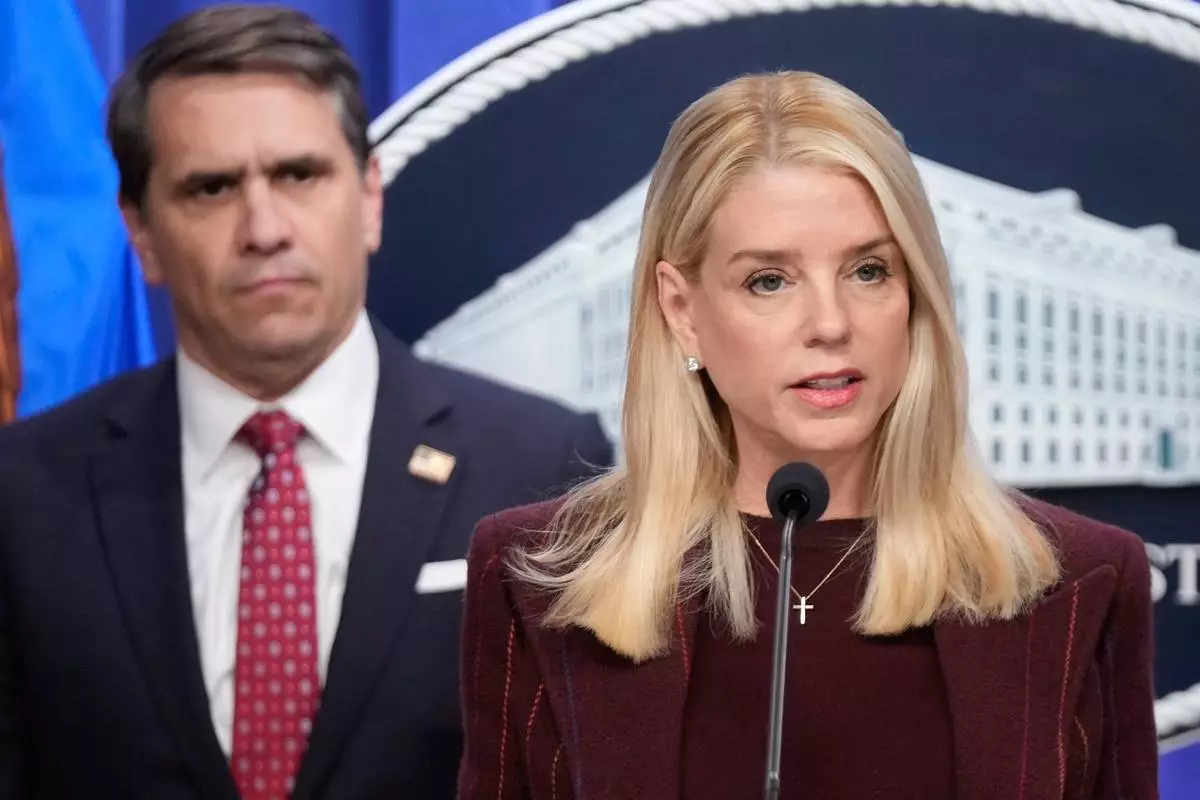
FILE - Attorney General Pam Bondi speaks with reporters during a news conference at the Department of Justice, Nov. 19, 2025, in Washington, as Deputy Attorney General Todd Blanche, listens. (AP Photo/Mark Schiefelbein, file)
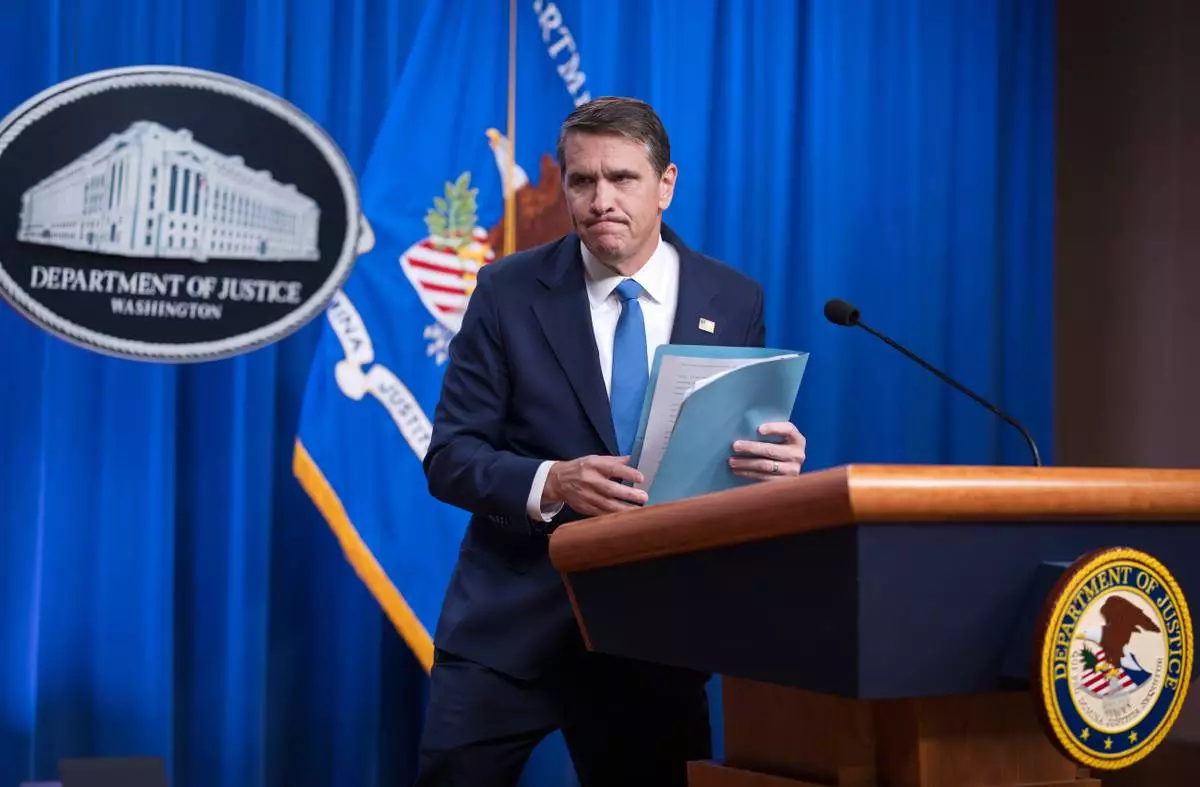
FILE - Deputy Attorney General Todd Blanche meets with reporters in Washington, Jan. 30, 2026. (AP Photo/J. Scott Applewhite, file)
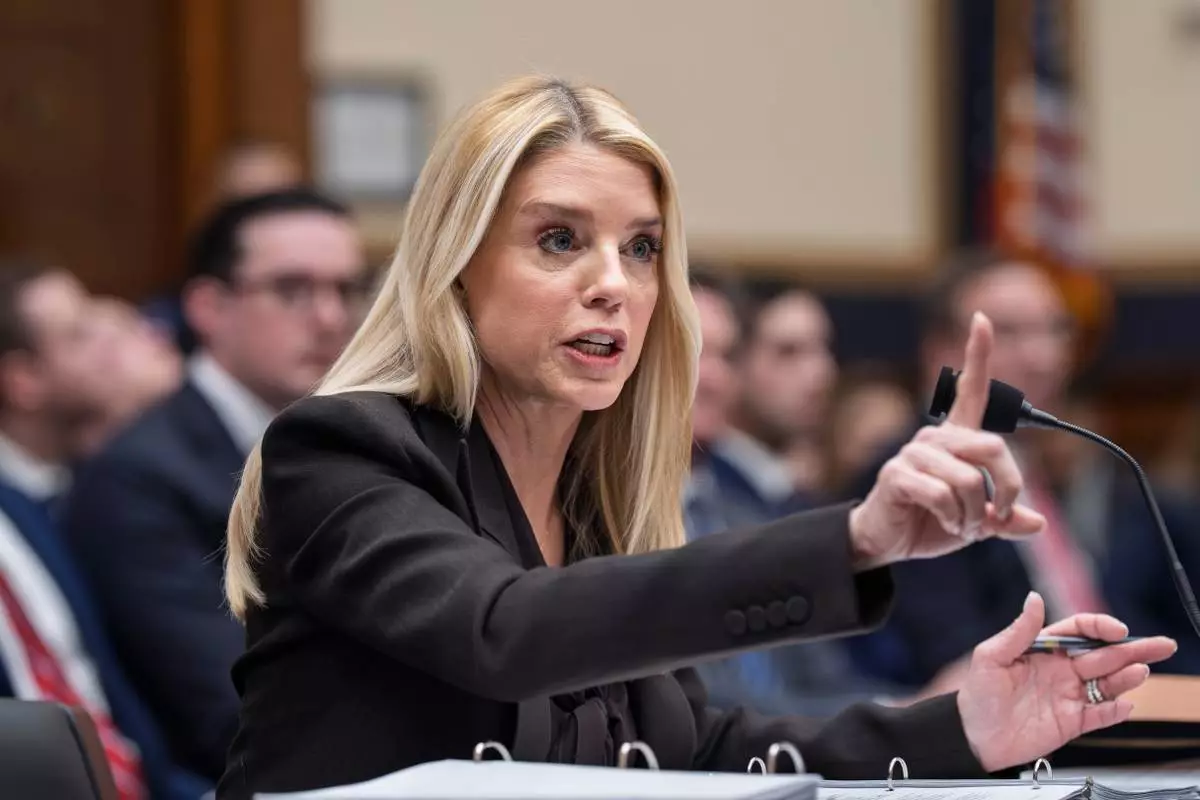
FILE - Attorney General Pam Bondi testifies before a House Judiciary Committee oversight hearing on Capitol Hill in Washington, Feb. 11, 2026, in Washington. (AP Photo/J. Scott Applewhite, File)