DUBAI, United Arab Emirates (AP) — Iran faces a new round of protests challenging the country's theocracy, but it seems like the only thing people there want to talk about is half a world away: Venezuela.
Since the U.S. military seized Venezuelan President Nicolás Maduro, a longtime ally of Tehran, over the weekend, Iranian state media headlines and officials have condemned the operation. In the streets and even in some official conversations, however, there's a growing question over whether a similar mission could target the Islamic Republic's top officials including the supreme leader, 86-year-old Ayatollah Ali Khamenei.
The paranoia feeds into wider worries among Iranians. Many fear that close U.S. ally Israel will target Iran again as it did during the 12-day war it launched against Tehran in June. Israel killed a slew of top military officials and nuclear scientists, and the U.S. bombed Iranian nuclear enrichment sites. Khamenei is believed to have gone into hiding for his protection.
“God bless our leader, we should be careful too," said Saeed Seyyedi, a 57-year-old teacher in Tehran, worried the U.S. could act as it did in Venezuela.
"The U.S. has always been after plots against Iran, especially when issues like oil, Israel are part of the case. In addition, it can be complicated when it is mixed with the Russia-Ukraine war, the Lebanese (group) Hezbollah and drug accusations.”
The U.S. long has accused the Iranian-backed Hezbollah of running drug-smuggling operations to fund its operations, including in Latin America, which the group denies.
Immediately after Maduro’s seizure, an analyst on Iranian state television claimed, without offering evidence, that the U.S. and Israel had plans during the war last year to kidnap Iranian officials with a team of dual-national Iranians. Even for conspiracy-minded Iranian television, airing such a claim is unusual.
Then on Sunday night, the prominent Ayatollah Mohammad Ali Javedan warned an audience at prayers in Tehran University that Khamenei's life was in danger.
“Someone said he had a bad dream that the leader’s life is in danger," Javedan said, without elaborating. "Please pray.”
However, Iran is roughly twice the size of Venezuela and has what analysts consider to be a much stronger military and robust security forces. The memory of Operation Eagle Claw, a failed U.S. special forces mission to rescue hostages held after the 1979 U.S. Embassy takeover in Tehran, also haunts Washington.
Then there's the political situation in Iran, with its theocracy protected by hard-liners within the paramilitary Revolutionary Guard, who answer only to Khamenei. They could launch assassinations, cyberattacks and assaults on shipping in the Mideast, warned Farzin Nadimi, senior fellow at the Washington Institute for Near East Policy who studies Iran’s military.
And crucially, Iran also still has fissile nuclear material.
“In the grand-strategy scheme of things, they need to think about the day after,” Nadimi said of anyone considering a Venezuela-style raid. “Iran is a much more complex political situation. They have to calculate the costs and benefits.”
Others wonder what part of the world the U.S. might take interest in next, while critics have warned about setting a dangerous precedent.
“The regime in Iran should pay close attention to what is happening in Venezuela,” Israeli opposition leader Yair Lapid posted on social media on Saturday.
Israeli Prime Minister Benjamin Netanyahu did not directly link Maduro's detention to Iran but acknowledged the protests sweeping Tehran and other cities, saying: “It is very possible that we are standing at the moment when the Iranian people are taking their fate into their own hands.”
Hours before the U.S. action in Venezuela, U.S. President Donald Trump warned Iran that if Tehran “violently kills peaceful protesters” the U.S. “will come to their rescue.”
On Monday, Iranian Foreign Ministry spokesman Esmail Baghaei denounced the comments by Trump and Netanyahu as an “incitement to violence, terrorism and killing.”
U.S. Rep. Marjorie Taylor Greene, a Republican who had been close to Trump but resigned Monday after a falling-out with the president, directly linked the Venezuela operation to Iran.
“The next obvious observation is that by removing Maduro this is a clear move for control over Venezuelan oil supplies that will ensure stability for the next obvious regime change war in Iran," Greene wrote on social media.
U.S. Sen. Lindsey Graham, a Republican, put on a “Make Iran Great Again” hat during a Sunday segment on Fox News. He later posted an image showing him and Trump smiling after the president autographed a similar-looking hat.
“I pray and hope that 2026 will be the year that we make Iran great again," Graham said.
Even Saudi Arabia, Iran’s longtime rival that reached a Chinese-mediated détente with Tehran in 2023, appeared to be thinking about a possible U.S. intervention in Tehran.
“By dragging Maduro before a U.S. court, Trump sent a message more brutal than the massive bombs his aircraft dropped on Iran’s nuclear facilities,” Ghassan Charbel, editor-in-chief of the Saudi-owned, London-published Asharq Al-Awsat newspaper, wrote Sunday.
“How devastating it must be for Iran’s supreme leader to hear of Maduro’s abduction at the hands of American forces.”
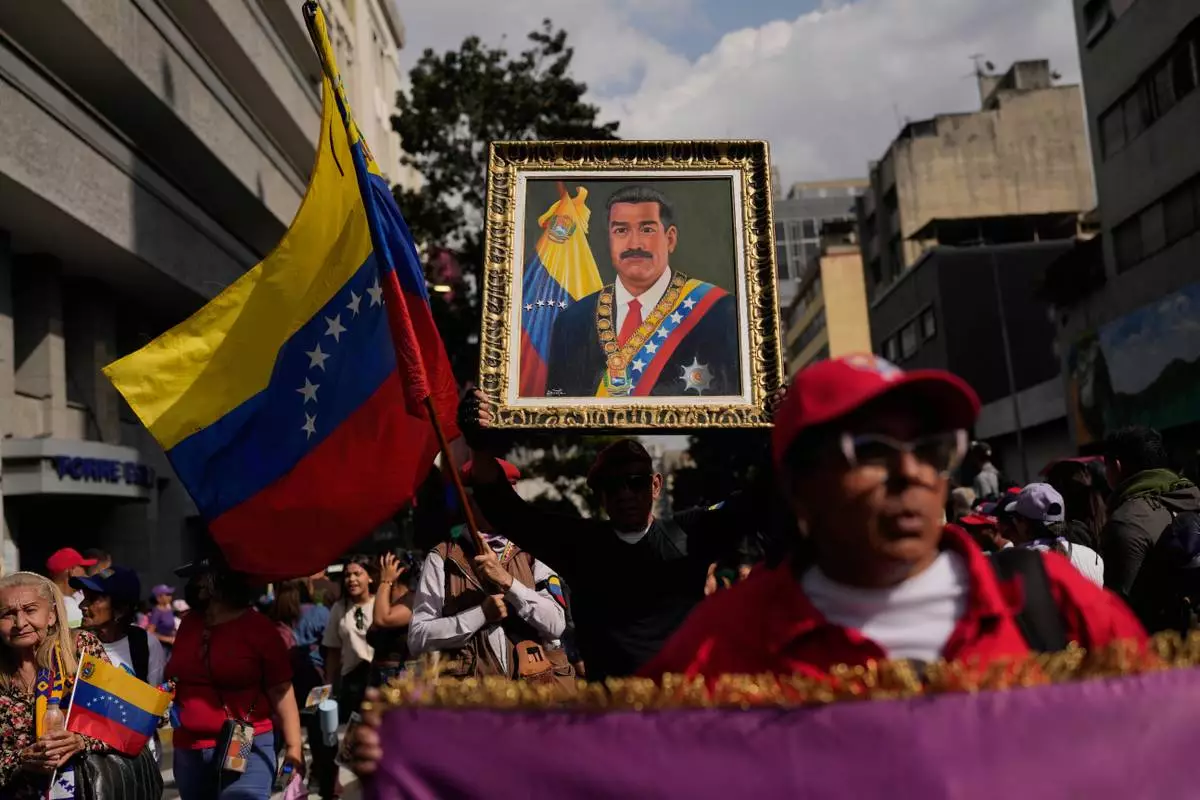
A government supporter holds an image of President Nicolas Maduro during a women's march to demand his return in Caracas, Venezuela, Tuesday, Jan. 6, 2026, three days after U.S. forces captured him and his wife. (AP Photo/Matias Delacroix)
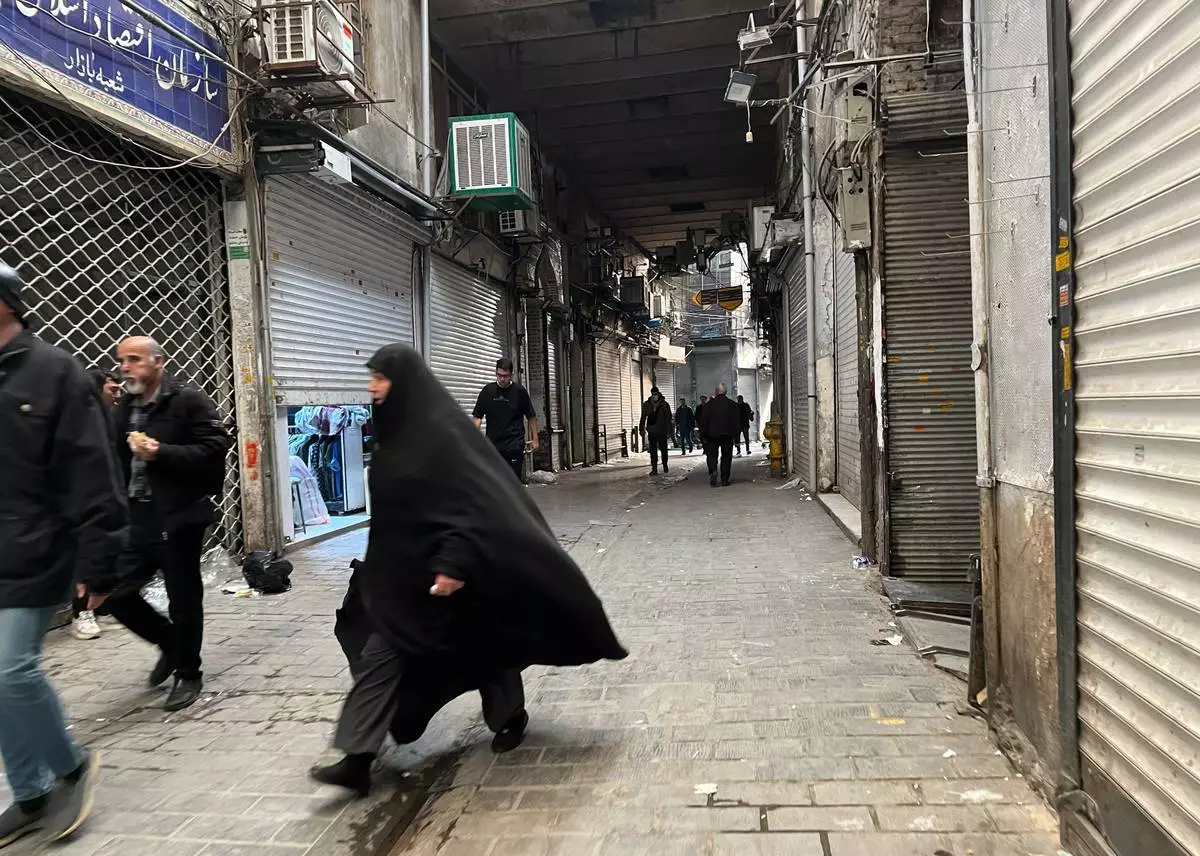
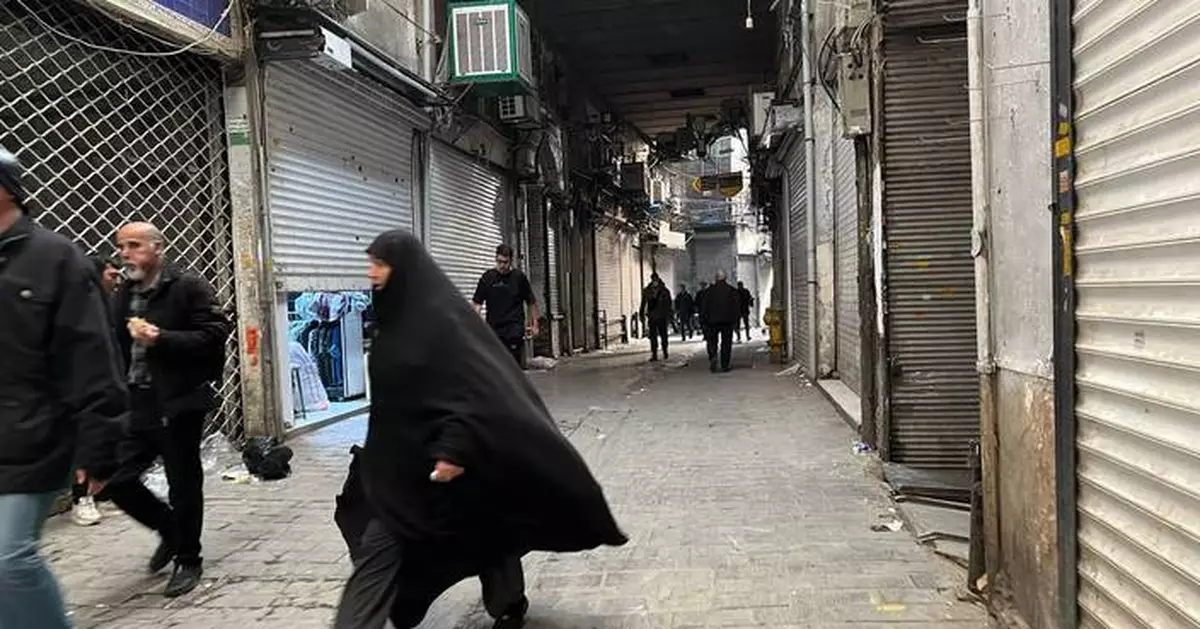
People walk as shops are closed during protests in Tehran's centuries-old main bazaar, Iran, Tuesday, Jan. 6, 2026. (AP Photo/Vahid Salemi)
KUALA LUMPUR, Malaysia (AP) — Cambodia’s arrest and extradition of a powerful tycoon accused of running a vast online scam network marks a rare strike against an industry that has stolen tens of billions of dollars worldwide. U.S. and U.K. authorities say Chen Zhi led a transnational criminal enterprise that exploited trafficked workers and defrauded victims worldwide.
For victims, the scams often start small: a text offering a part-time job, asking about weekend availability or simply saying “hello.” On the other end is often a laborer halfway around the world, forced to work 12- to 16-hour days, sending message after message until someone responds.
That human toll is immense. Hundreds of thousands of people are believed to be trapped in forced labor, housed in sprawling compounds across Southeast Asia and compelled to run scams whose sole purpose is to take your money.
Even with a high-profile arrest, dismantling the industry remains extraordinarily difficult. Here’s why:
The Myanmar military last October moved into one of the most well-known scam compounds — the massive KK Park, along the border with Thailand — and announced it had shut the operation down. However, work has continued uninterrupted at other scam centers in Myanmar, where people trafficked from around the world still wait to be rescued.
The raid triggered a mass flight of workers. About 1,500 laborers crossed into Thailand, including hundreds from India as well as citizens from China, the Philippines, Vietnam, Ethiopia and Kenya. Thai military officials said troops later demolished several structures within the massive complex.
KK Park was only one of dozens of such centers along the Thai-Myanmar border — and hundreds more scattered across Southeast Asia — underscoring how difficult it is to dismantle an industry that can quickly shift operations when under pressure.
Scam compounds are often sprawling complexes in rural areas, complete with sleeping quarters, shops and entertainment venues for workers. Developers typically build a single property and lease space inside to multiple companies, allowing numerous operations to run side by side.
Many operate with the protection of local elites. Smaller setups also exist, tucked into a single floor of a legitimate office building or even a rented house in an urban neighborhood.
The centers trace their roots to casinos — both physical and online — that proliferated across Southeast Asia over the past decade. The United Nations Office on Drugs and Crime counted more than 340 licensed and unlicensed casinos in the region in 2021 alone.
Those casinos, often paired with junket tours, catered to high-rollers from China, where gambling is illegal, and were frequently run by Chinese criminal groups.
When the COVID-19 pandemic and strict travel restrictions cut off customers, some online casinos pivoted. With revenue drying up, operators shifted to a new model: using the same infrastructure and labor to defraud targets around the world through digital scams.
An estimated 120,000 people in Myanmar are being forced to work in online scam operations, along with another 100,000 in Cambodia, according to a 2023 report by the U.N. Office of the High Commissioner for Human Rights.
Those figures are rough estimates, but investigators say scam centers rely on a mix of trafficked victims and workers who arrive willingly — lured by false promises of relatively high pay and easy office jobs.
Early on, most workers came from China and Chinese-speaking countries. Today, the U.N. Office on Drugs and Crime says laborers are recruited from at least 56 countries, ranging from Indonesia to Liberia.
For many, the reality is far harsher than advertised. Workers say their passports are often confiscated to prevent them from leaving the compounds. Only senior managers and trusted lieutenants are allowed to move freely. Those who fail to meet targets risk beatings or other physical punishment.
Scammers cast a wide net, targeting victims around the world and increasingly relying on artificial intelligence-powered translation tools to overcome language barriers.
In the Philippines, authorities raided a compound in March 2024 where workers were targeting Chinese nationals with a fake investment scheme. Using scripted messages, scammers posed as senior employees of the state-owned China National Petroleum Corp. and persuaded victims to invest in crude oil futures, according to a script seen by The Associated Press.
Elsewhere, the impact has been just as far-reaching. Last year, about 50 South Koreans were repatriated from Cambodia after being arrested over several months on allegations they worked for online scam operations.
U.S. prosecutors have also targeted the networks behind the schemes. Prosecutors in an indictment against Chen Zhi last year said his organization had scammed at least 250 Americans out of millions of dollars, including one victim who lost $400,000 in cryptocurrency. Americans lost at least $10 billion to scams tied to Southeast Asia in 2024 alone, according to the U.S. Treasury Department.
Cambodian authorities said Wednesday that Chen Zhi and two other Chinese citizens were extradited to China on Tuesday. Chen has dual nationality and his Cambodian citizenship was revoked in December, it said.
The scams take many forms, ranging from cryptocurrency investment schemes to so-called “task scams,” in which victims are asked to pay to unlock the next assignment. In some cases, small amounts of real money are paid out early on to build trust before losses escalate.
Scammers often manufacture urgency, warning targets they will miss out on an opportunity unless they invest by a specific deadline.
Despite government crackdowns and raids that have freed some workers and shut down individual compounds, activists say the people behind the operations largely remain untouched. New scam centers continue to surface across Southeast Asia and beyond.
A United Nations report last year said scammers have extracted billions of dollars from victims using fake romantic relationships, bogus investment pitches and illegal gambling schemes, with operations reported as far away as Africa and Latin America.
“If we only rescue the victims and don’t arrest anybody — especially the Chinese mafia and transnational syndicates — then there will be no point,” said Jay Kritiya, coordinator of the Civil Society Network for Victim Assistance in Human Trafficking.
“They can get more victims. They can scam anytime,” Kritiya said.
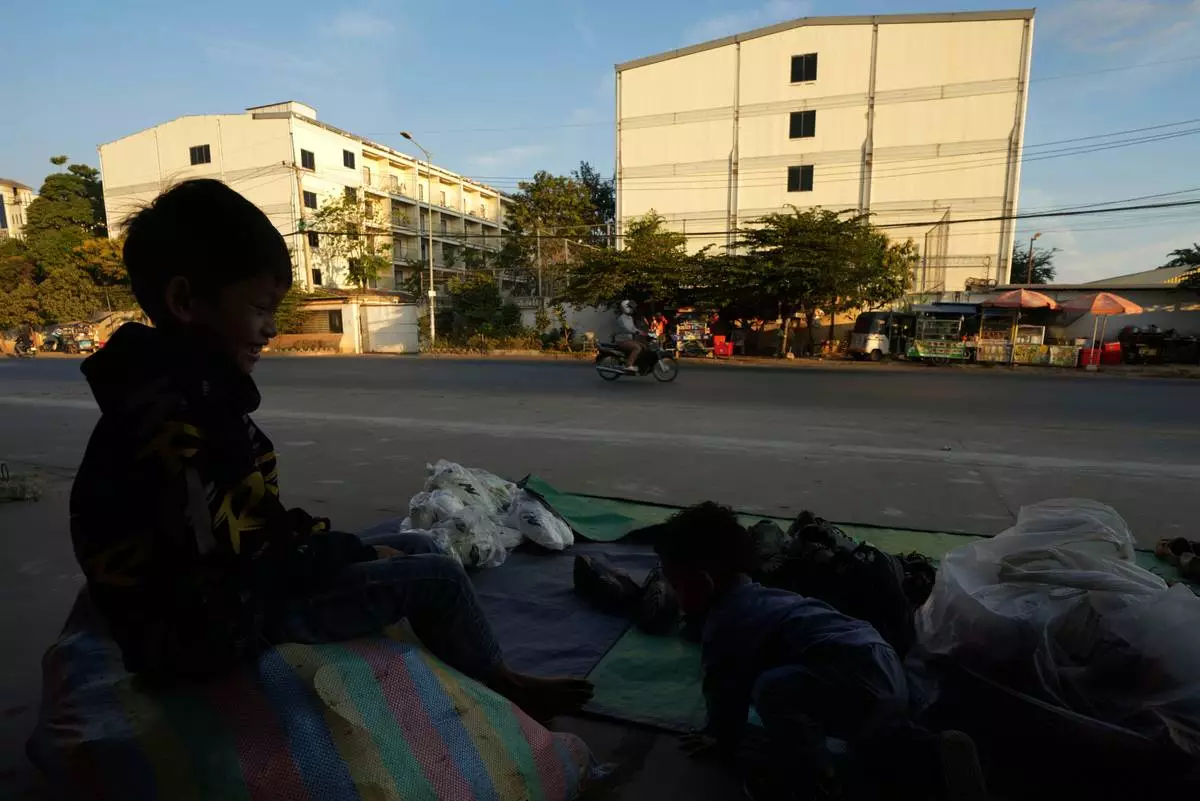
FILE - A boy plays near a building, where some people trafficked under false pretenses are being forced to work in online scams targeting people all over the world, in Phnom Penh, Cambodia, Feb. 9, 2025. (AP Photo/Heng Sinith, File)
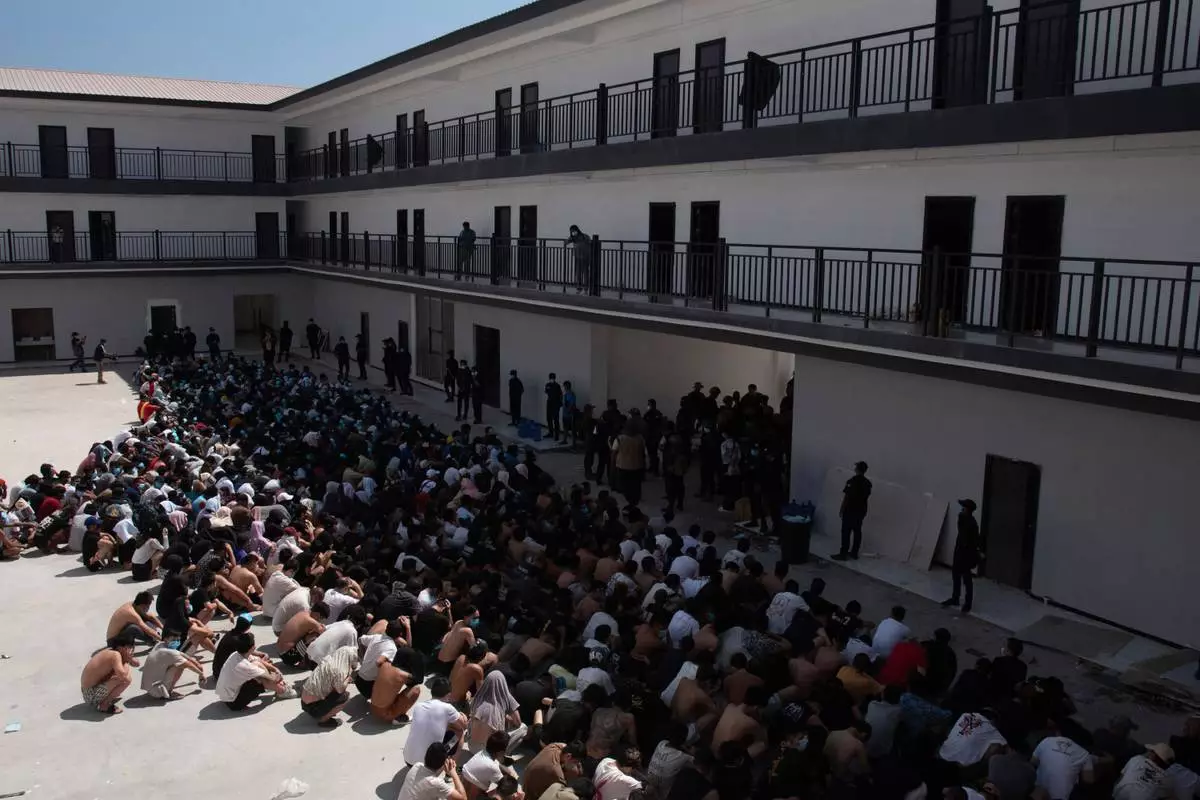
FILE - People from China, Vietnam and Ethiopia, believed to have been trafficked and forced to work in scam centers, sit with their faces masked while in detention after being released from the centers in Myawaddy district in eastern Myanmar, Feb. 26, 2025. (AP Photo/Thanaphon Wuttison, File)
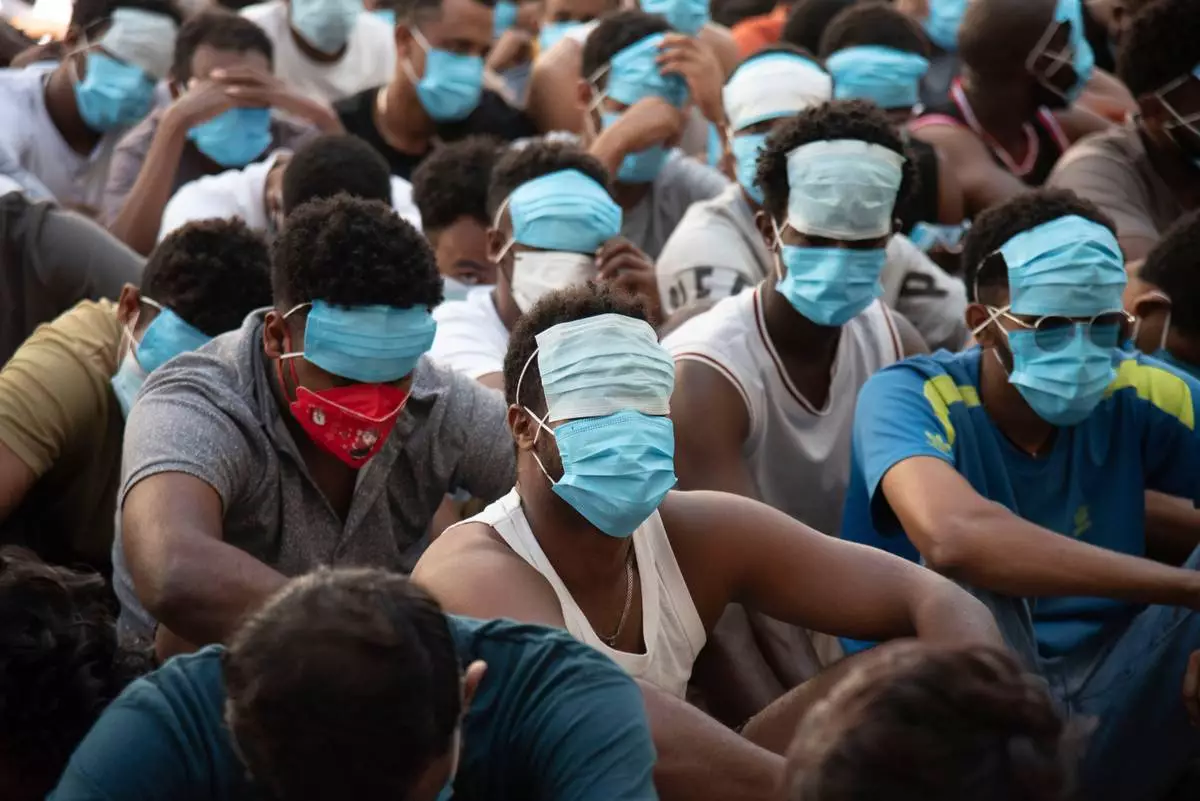
FILE - People from China, Vietnam and Ethiopia, believed to have been trafficked and forced to work in scam centers, sit with their faces masked while in detention after being released from the centers in Myawaddy district in eastern Myanmar, Feb. 26, 2025. (AP Photo/Thanaphon Wuttison, File)
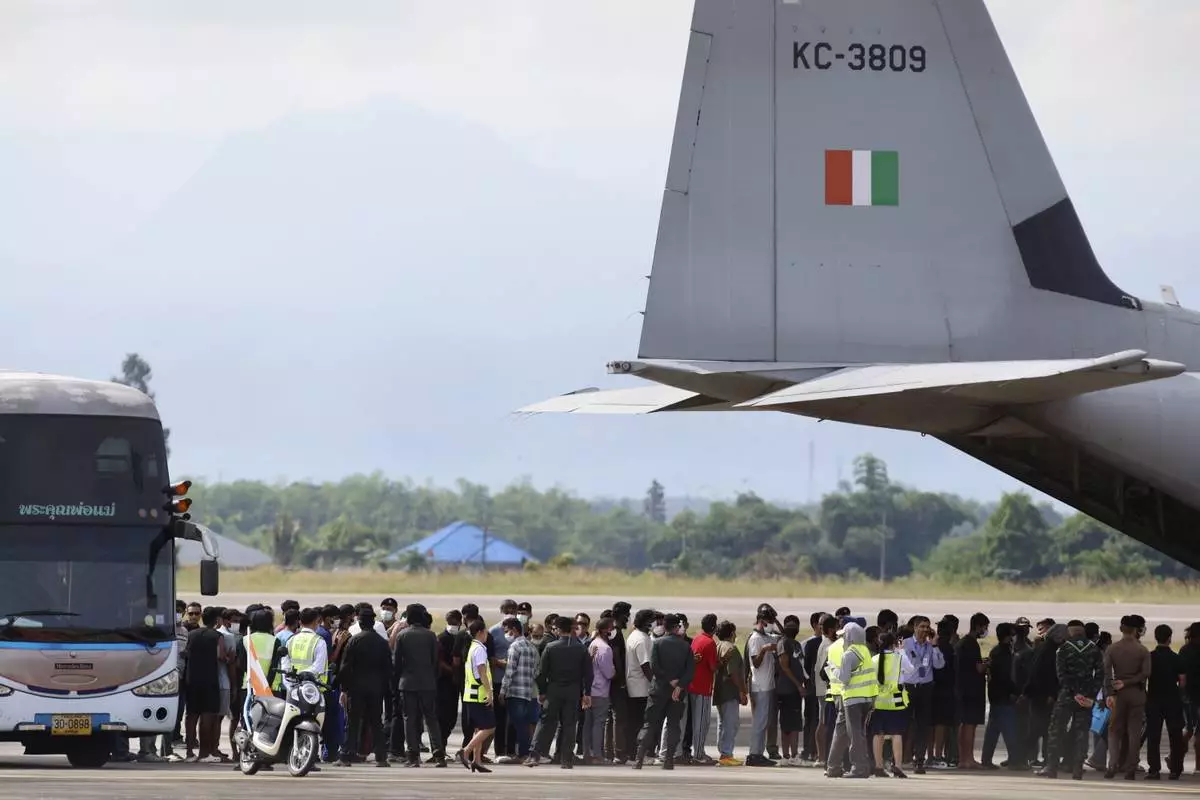
FILE -India nationals, believed to have worked at scam center in Myanmar, board a plane at Thailand's Mae Sot International Airport in Tak, before being sent back to India Nov. 6, 2025. (AP Photo/Sarot Meksophawannakul, File)