SAN DIEGO--(BUSINESS WIRE)--Jan 7, 2026--
Pioneering medical technology company Xenco Medical today announced the expansion of its international distribution hubs across the United Arab Emirates, the Kingdom of Saudi Arabia, Singapore, and the Sultanate of Oman, marking a significant milestone in the company’s mission to deliver advanced surgical solutions to healthcare systems around the world. The strategic expansion strengthens Xenco Medical’s presence across key global healthcare markets, bringing its next-generation biomimetic implants, regenerative biomaterials, and composite polymer surgical technologies to leading hospitals and surgeons throughout the Middle East and Southeast Asia.
This press release features multimedia. View the full release here: https://www.businesswire.com/news/home/20260107117557/en/
Through its newly established regional partnerships, Xenco Medical will support a growing number of orthopedic and surgical centers with its comprehensive portfolio of logistics-optimized, single-use implant and instrument systems designed to enhance procedural efficiency, reduce hospital overhead, and improve patient outcomes. The expansion reflects accelerating global demand for Xenco Medical’s innovative technologies that integrate regenerative science, advanced materials, and AI-driven software to redefine the continuum of surgical care.
“A testament to the universal resonance of our breakthrough technologies, we have been immensely excited by the enthusiastic embrace of Xenco Medical across global markets, demonstrating the ability of scientific advancements to traverse continents. We look forward to translating our growing presence in the Middle East and Southeast Asia into transformative patient outcomes,” said Xenco Medical Founder and CEO Jason Haider.
Inspired by the principles of mechanotransduction, Xenco Medical’s proprietary TrabeculeX Continuum platform harmonizes regenerative biomaterials with AI-powered post-surgical rehabilitation, enabling clinicians to monitor pain scores, patient adherence, and motion recovery through remote, AI-driven pose assessment. The introduction of this integrated ecosystem into new international markets underscores Xenco Medical’s commitment to advancing value-based healthcare worldwide.
The Middle East and Southeast Asia represent some of the fastest-growing healthcare markets globally, driven by investments in hospital infrastructure, medical tourism, and digital health transformation. Xenco Medical’s expansion into these regions positions the company to support these evolving healthcare ecosystems with scalable, sustainable, and clinically differentiated solutions that reduce waste, streamline logistics, and elevate the standard of surgical care. With its logistics-optimized, single-use implant systems eliminating the need for sterilization and reprocessing between procedures, Xenco Medical’s technologies significantly reduce surgical turnover times while improving consistency and safety in operating rooms. These advantages are expected to deliver immediate operational and economic value to healthcare facilities across the newly established Xenco Medical distribution hubs.
As Xenco Medical continues to rapidly grow its global footprint, the company remains focused on translating the promise of biomimetic implants, regenerative medicine, and artificial intelligence into meaningful outcomes for patients and providers alike, bringing its vision of a more longitudinally connected, efficient, and patient-centered surgical ecosystem to healthcare systems around the world. In recognition of its commitment to delivering breakthroughs in global healthcare, Xenco Medical was named one of the World’s Most Innovative Companies by Fast Company Magazine for the second time in 2025, the winner of the World Economic Forum’s 2025 Award for Excellence in Governance and Leadership for Global Challenges, and the 2025 Medical Device/Diagnostics Company of the Year at the prestigious Trailblazer Awards in New York City.

Xenco Medical has scaled its global distribution hubs to the UAE, Saudi Arabia, Singapore, and Oman.
Yemen is threatening to fracture even further, exposing a growing rift between Middle East powers Saudi Arabia and the United Arab Emirates. The latest friction is among members of the Saudi-led coalition based in Yemen’s south that for years has been fighting Iranian-backed Houthi rebels based in the north.
Here’s a look at the forces involved as Saudi Arabia pursues dialogue among all the players in the south of Yemen, the Arab world’s poorest nation:
A collection of forces led by neighboring Saudi Arabia have assembled to counter the Iran-backed Houthis over the past decade in Yemen's civil war. Their professed goal has long been to restore Yemen's internationally recognized government.
The civil war began in September 2014, when the Houthis seized the capital, Sanaa, and much of northern Yemen. A Saudi-Emirati–led coalition backed by the United States intervened in 2015, but by 2022 the conflict had reached a stalemate, with the Houthis controlling the country’s most populous areas, including Sanaa, while a loose regional coalition supported the internationally recognized government in the south.
Recent developments have been a sharp reminder that the coalition's members are a loose grouping with very different motivations. The latest friction arose in December when one member of the coalition moved to take parts of southern Yemen as part of its separatist aspirations, breaking an uneasy ceasefire among coalition members.
The separatist Southern Transition Council is the most powerful group in southern Yemen and one of a number of UAE-supported groups that control most of that region, including crucial port cities and islands. The STC wants South Yemen to be an independent nation.
Last month, the STC seized an oil-rich area as it advanced in two governorates, Hadramout and Mahra, that were once held by Saudi-backed forces. Tensions soared when a shipment of arms from the UAE for the STC arrived in the Yemeni port city of Mukalla. Saudi Arabia swiftly targeted Mukalla with airstrikes and created regional alarm around Saudi-UAE relations. Those airstrikes, and pressure from a Saudi-backed armed group, pushed the STC back.
Meanwhile, the anti-Houthi coalition told the UAE to withdraw its forces from Yemen, and over the weekend it said it had.
The STC is being led by Aidarous al-Zubaidi who had reportedly declined Wednesday to attend de-escalation talks in Riyadh and instead sent a delegation to take part. The Presidential Leadership Council expelled al-Zubaidi and charged him with treason.
The STC maintained that al-Zubaidi remained in Aden, the interim capital, to carry out his duties. However, the Saudi military said in a statement Thursday that al-Zubaidi fled Yemen by boat to Somalia, where he was later flown out by the UAE to Abu Dhabi.
The southern group also said Wednesday it had lost contact with its delegates in Riyadh for talks. On Thursday, an STC member and head of the negotiation and reconciliation committee said he had met the Saudi ambassador to Yemen, calling the meeting “fruitful.”
The Saudi-backed Hadramout Tribes Confederacy seized the PetroMasila oil facility in November as it sought a bigger share of oil revenues and the improvement of services for Hadramout residents. The STC apparently used the seizure as a pretext for advancing in Hadramout and taking the oil facilities for itself.
The Saudi-backed National Shield Forces helped to push back the STC's latest advances in Yemen and regained control of areas seized by the southern separatists. They are aligned with the Saudi-led coalition in fighting the Iran-backed Houthi rebels.
The NSF has since retaken most of the lands seized by the STC, most recently deploying across Aden and oil-rich regions of Hadramout and al-Mahra.
Salem al-Khanbashi, the governor of Hadramout, was appointed by the government to command the Saudi-led forces.
The head of Yemen’s Presidential Leadership Council, Rashad al-Alimi, said the NSF achieved “record success” in taking back all military and security sites.
Yemen's internationally recognized government is the Presidential Leadership Council, which was formed in 2022 to fight against the Houthis.
But the once allies now have a fractured relationship as PLC members have competing interests and backers. This recent dispute has highlighted the strained ties between Saudi Arabia and the UAE.
Associated Press writer Fatma Khaled in Cairo contributed to this report.
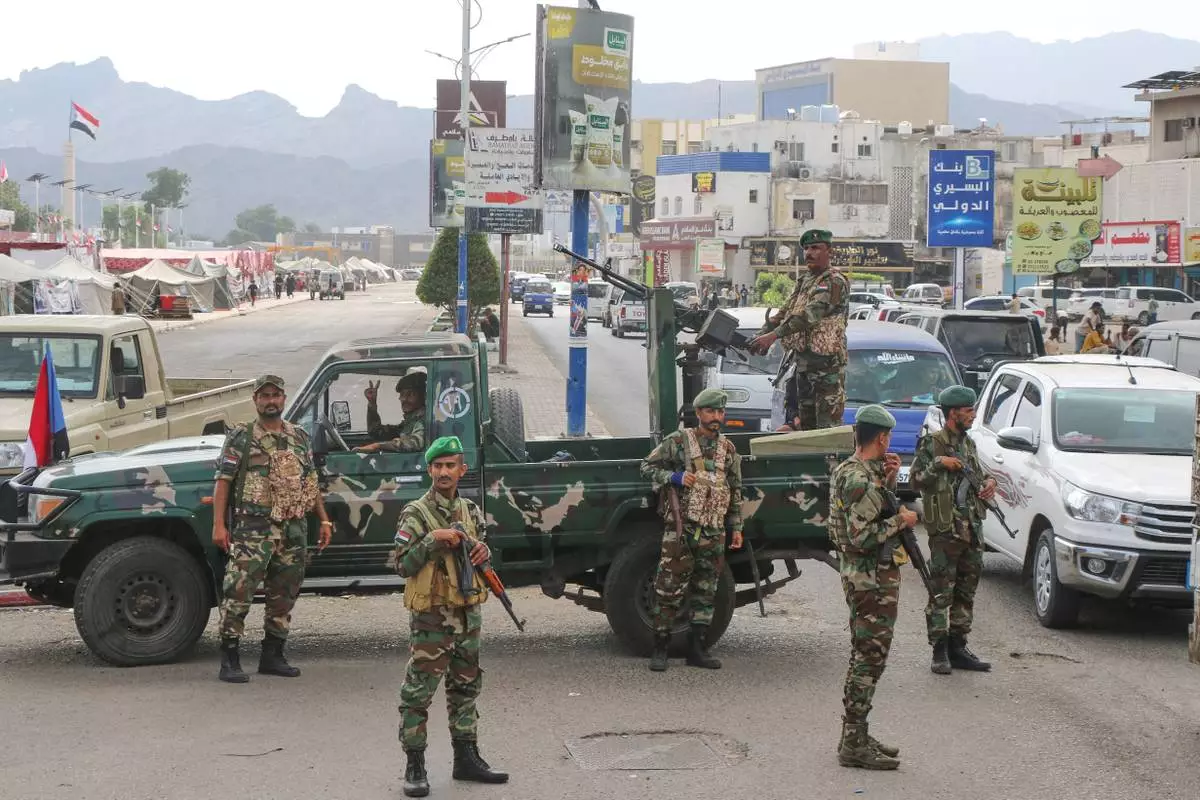
Southern Yemen soldiers of Southern Transitional Council (STC) at a check point, in Aden, Yemen, Wednesday, Dec. 31, 2025. (AP Photo)
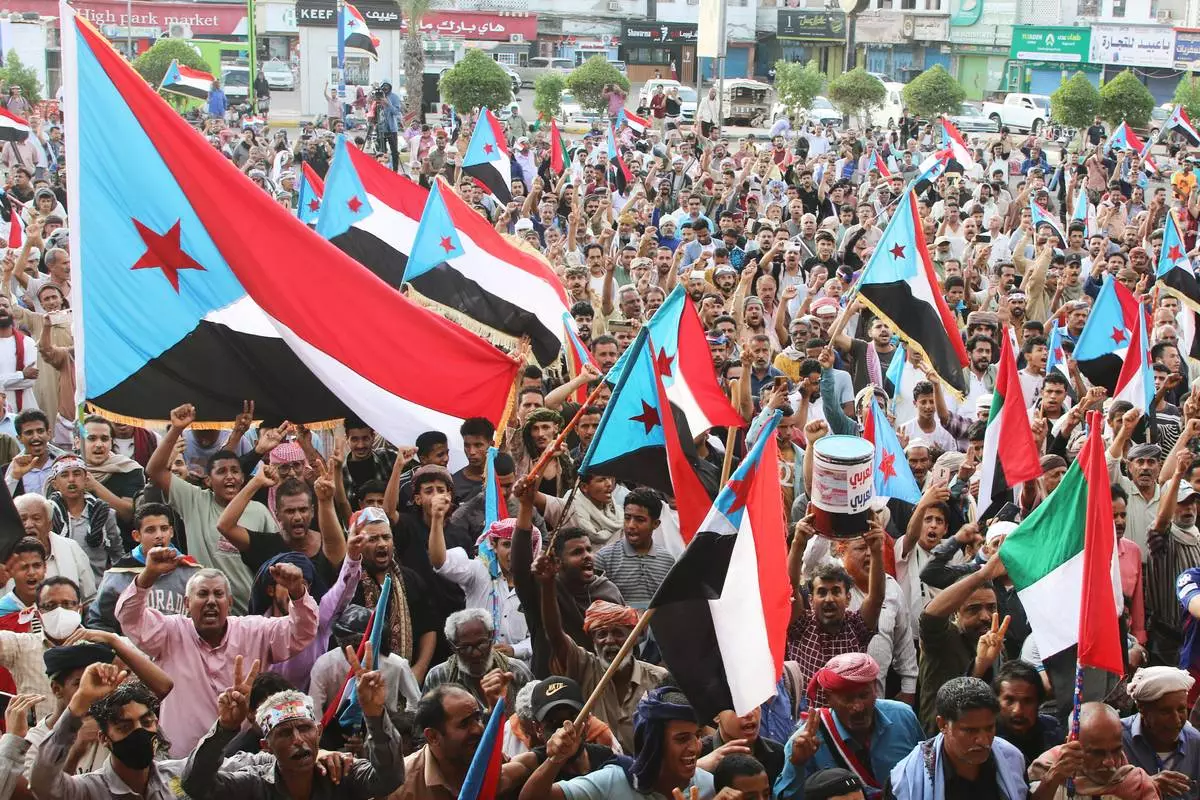
Supporters of the Southern Transitional Council (STC), a coalition of separatist groups seeking to restore the state of South Yemen, hold South Yemen flags during a rally, in Aden, Yemen, Friday, Jan. 2, 2026. (AP Photo)
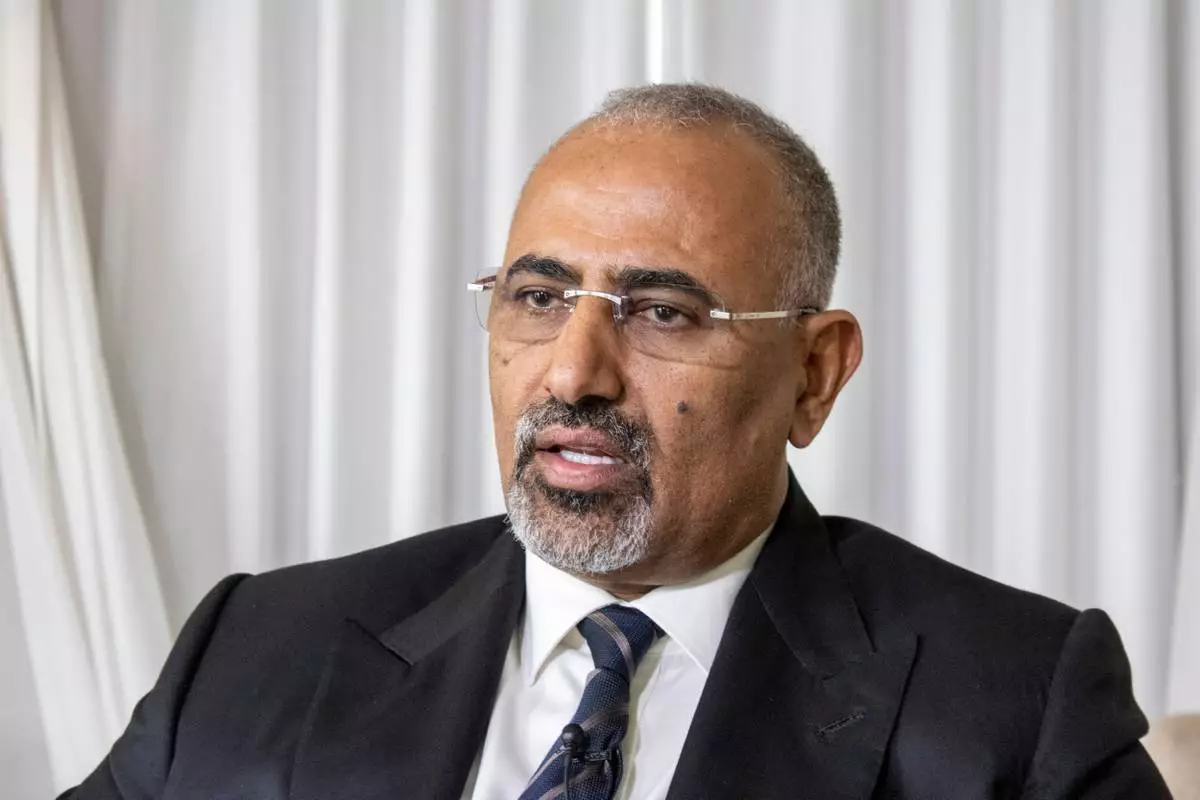
FILE - The president of the Yemen's Southern Transitional Council Aidarous Al-Zubaidi sits for an interview, Sept. 22, 2023, in New York, while attending the United Nations General Assembly's annual high-level meeting of world leaders. (AP Photo/Ted Shaffrey, File)