
LAS VEGAS (AP) — CES 2026 offered a glimpse of a future that feels straight out of a sci-fi movie: bendable screens, paper-thin TVs and cars and gadgets that can think for themselves as they get to know you and your family's wants and needs.
As Nvidia CEO Jensen Huang put it, “The ChatGPT moment for physical AI is here.”
And everywhere you looked, robots. They roamed the show floor, assisted workers and entertained crowds — from humanoid helpers and furry “cyber pets” to task-specific machines.
Here's a recap of some of the attention-grabbing gadgets at CES 2026, the annual technology trade show in Las Vegas:
Lego leaned heavily into fan nostalgia this week to unveil its latest innovation, enlisting Lucasfilm Chief Creative Officer David Filoni and a lineup of familiar Star Wars characters, including Chewbacca, R2-D2, C-3PO and X-wing pilots.
On Monday, the company introduced Lego Smart Play, a new platform built around connected bricks, tags and specially designed minifigures in partnership with Star Wars. These smart bricks are equipped with sensors that detect light and distance, triggering coordinated lights and sounds when used together to bring builds to life.
The platform allows fans to build interactive scenes, like space battles or lightsaber duels.
Another point for nostalgia: Clicks Technology is reviving the physical phone keyboard with its magnetic QWERTY model that clips onto phones.
Co-founder Jeff Gadway said the company's Power Keyboard “is one keyboard for all your smart devices."
It features a full QWERTY layout, with directional keys and a number row, in a callback to the Blackberry-era of smartphones for those who miss real buttons. The company said it also doubles as a wireless power bank.
If you're not familiar with CES, just know that new TV announcements are ubiquitous to the show — some big, some small, some even transparent. But LG brought something distinct to CES this year: an OLED TV that's only 9mm thick.
The South Korean tech company announced the OLED evo W6 model from its Wallpaper line just ahead of CES but reporters and industry representatives were able to see it for the first time at the show.
As advertised, the screen displays video nearly edge-to-edge and is ridiculously thin (though it doesn't roll up like its name implies). Like the previous models in its Wallpaper line, the TV's inputs are housed in a box that sits nearby. LG representatives claim you can seamlessly stream 4K video and audio to the screen. No pricing was available but the new TV will be available in 77- and 83-inch sizes.
Chinese robovac maker Roborock introduced a vacuum that literally sprouts chicken-like legs to navigate up and down stairs. There are vacuums out there capable of this feat (and there were even a few others at CES), but this one actually cleans the steps along the way.
The newly introduced Saros Rover took its time in its ascent and descent during the demo on the showroom floor, but Roborock said it will be able to traverse almost any style of stairwell, including spiraled and curved. Unfortunately, no release date was given for the Rover, which the company says is still in development.
Gaming tech company Razer brought a very interesting concept to CES, a set of over-ear headphones that can largely replicate the capabilities of currently available smart glasses (think Meta's Ray Ban glasses).
During the demo, Razer's host asked the AI-powered headset — dubbed Project Motoko — to translate a Japanese restaurant menu into English and even asked it to search up information on The Associated Press.
The headphones see using built-in cameras and take audio inputs from microphones. What AI model serves as the base of the headphones is up to the user, and it sounded like the usual suspects were supported — ChatGPT, Gemini, Claude.
While it's being developed largely as a consumer product, Razer did mention that it could be sold to businesses to gather data to train AI models. Razer said consumer data retrieved from the headphones wouldn't be sold for training purposes and that enterprise sales would be siloed from consumer sales.
Do you wish you could speak one more time with a loved one who died unexpectedly? Or sit down for a conversation with your younger self? One company is exploring how immersive technology might make something like that possible, at least in part.
VHEX Lab showcased its SITh.XRaedo, an immersive extended-reality grief therapy platform that creates a virtual avatar from a single photo and, according the company, is guided in real time by a trained XR therapist. Wearing a virtual reality headset, users can speak with the avatar, which responds through speech, nods, smiles and other gestures.
The company, which won a digital health innovation award at CES, said the platform is designed to help people process grief and find closure, offering an alternative way to mourn.
Sit back, relax and enjoy the ride — that’s exactly what some conference attendees did at Strutt’s booth. Curious volunteers sat blindfolded in the robotics company’s new self-driving personal mobility chair called the EV1, which senses its surroundings and navigates on its own. With the push of a button and a forward lever, the chair guided riders through a small course, looping them around without requiring any active control.
Tony Hong, CEO and founder of the Singapore-based Strutt, told AP that the chair has a full suite of sensors that helps it avoid bumps, walls, people and other obstacles, adjusting in real time as it drives.
Allergic to dogs or cats but still craving a furry sidekick? Chinese tech brand Ollobot pitched a futuristic alternative: a rolling, purple “cyber pet” named OlloNi. Part plush toy, part AI robot, OlloNi is designed to feel warm and expressive, unlike the stiff, humanoid home robots that often dominate robotics, the company said.
OlloNi uses a screen mounted at its neck, making eye contact and cycling through thousands of animated expressions meant to mirror human emotion and interaction.
Scratch behind its fuzzy “ears,” and OlloNi’s wide digital “eyes” pop open in apparent delight, which drew attention and laughs from passersby on the show floor.
Uber used CES to pull back the curtain on its upcoming robotaxi, offering the public a first look at a self-driving vehicle developed with luxury EV maker Lucid Motors and autonomous technology company Nuro.
Uber called it the most premium robotaxi yet, with cameras, sensors and radar for full 360-degree awareness, along with a sleek, low-profile roof “halo” fitted with LED screens that display a rider’s initials and ride status. Inside, passengers can tailor the temperature, seat heating and music, while on-screen visuals show what the vehicle sees and the route it plans to follow in real time.
The companies said on-road testing, led by Nuro, began in the San Francisco area last month, as they work toward launching the service before the end of the year.
Associated Press journalists Aya Diab, Jessica Hill and Ty ONeil contributed to this report from Las Vegas.
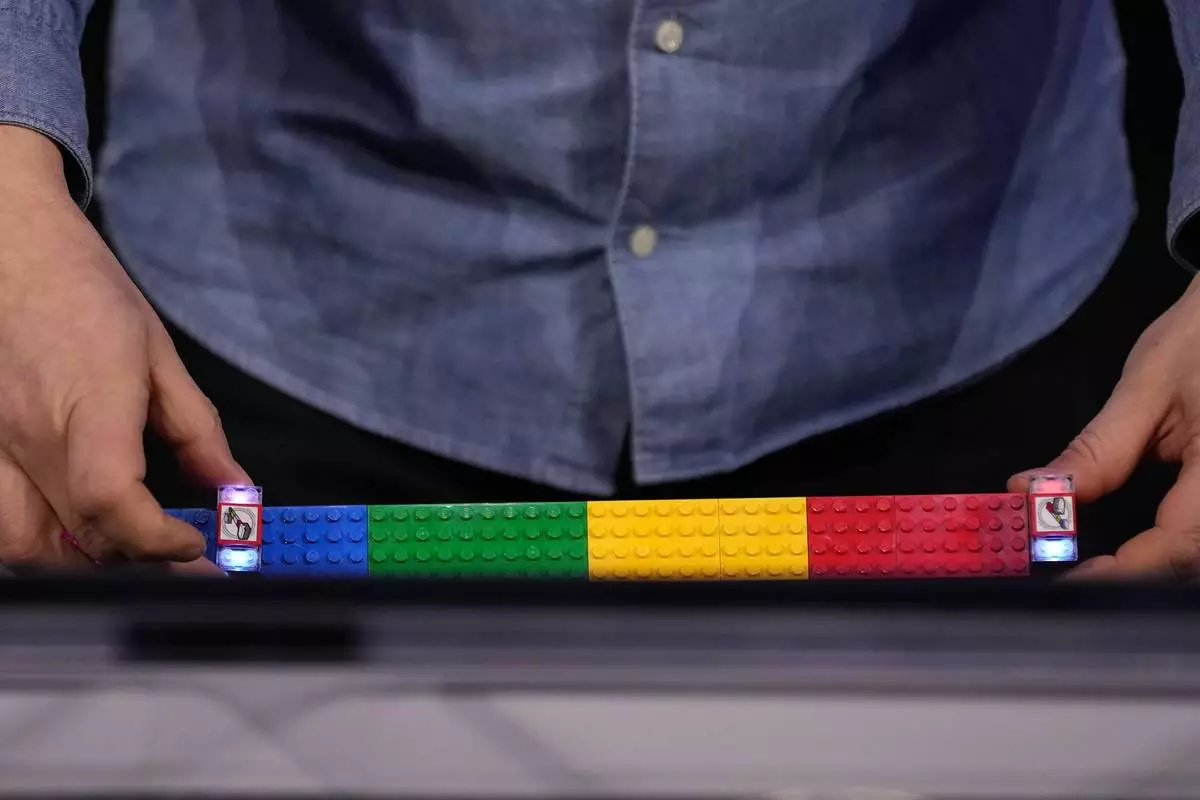
LEGO smart bricks are shown during a LEGO news conference ahead of the CES tech show Monday, Jan. 5, 2026, in Las Vegas. (AP Photo/Abbie Parr)
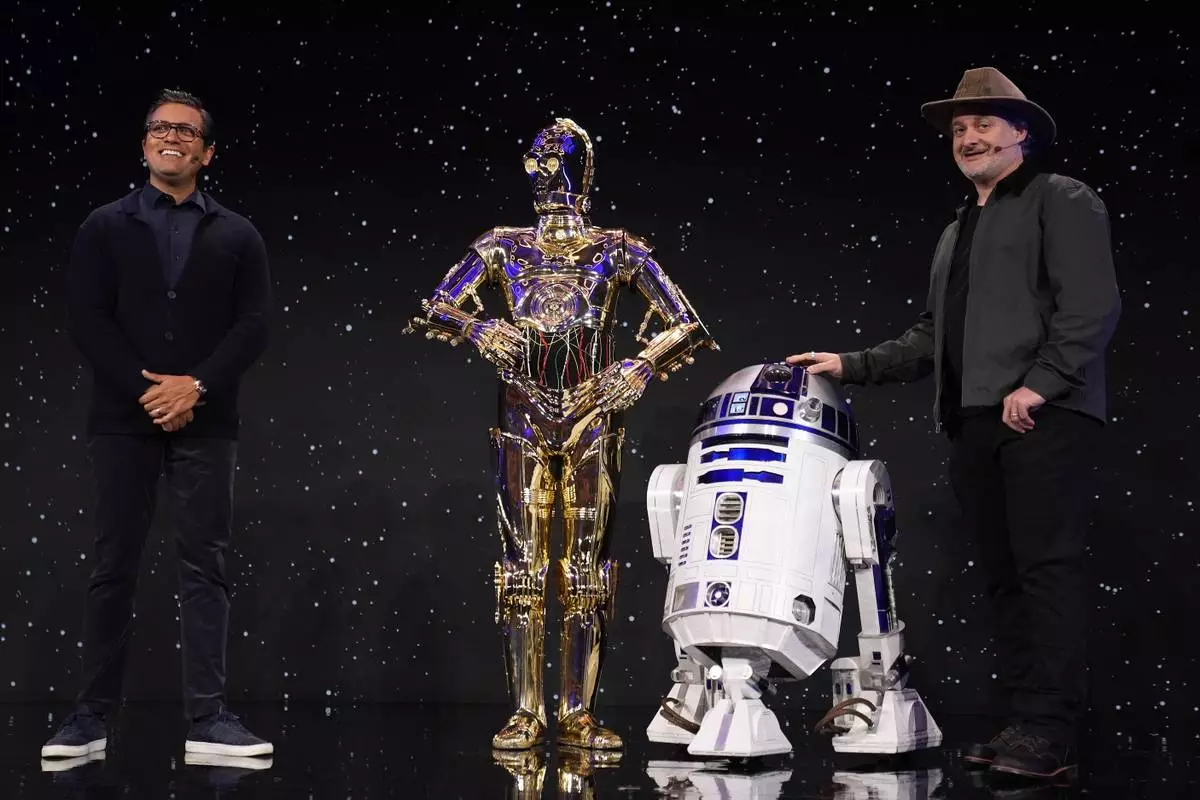
Asad Ayaz, left, and Dave Filioni stand on stage with C-3PO and R2-D2 during an LEGO news conference ahead of the CES tech show Monday, Jan. 5, 2026, in Las Vegas. (AP Photo/Abbie Parr)
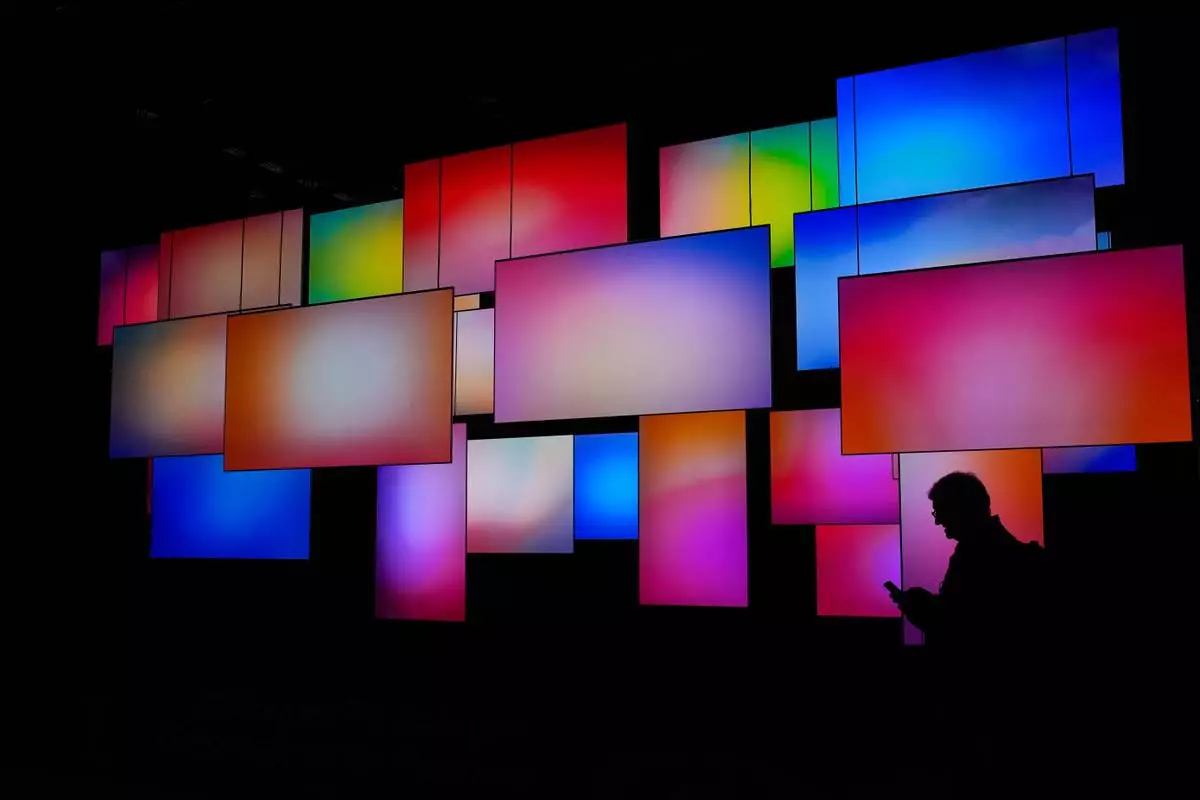
A Person walks past a wallpaper TV display at the LG booth during the CES tech show Wednesday, Jan. 7, 2026, in Las Vegas. (AP Photo/John Locher)