NEW YORK (AP) — Colten Ellis had never played at Madison Square Garden before, so the 25-year-old Buffalo Sabres goaltender got there a little early Thursday morning so he could look around “The World’s Most Famous Arena.”
“It was unbelievable," Ellis said. "Just tried to kind of take it in all day and just enjoy every part of it.”
When the lights were bright at night, Ellis shined in his first NHL game action in roughly a month. He stopped 30 of the 32 shots he faced to beat the New York Rangers 5-2 and give the Sabres 12 victories in their past 13 games.
“Made some huge saves,” said teammate Mattias Samuelsson, who scored. "He played unreal all game.”
Ellis had not played since getting concussed Dec. 9 against Edmonton. He was called upon by veteran coach Lindy Ruff and his staff after Alex Lyon got injured and an opportunity presented itself.
In net for just his ninth game in the league after Buffalo claimed him off waivers from St. Louis prior to the start of the season, Ellis shook off the rust early and was dialed in. But the heat was really on when he allowed a bad goal early in the third period to Vincent Trocheck.
“It’s one I definitely want back, but we were still up by one at that point, so you’ve just got to kind of find a way to get through it,” Ellis said. "I just tried to do whatever I could to not let in any more.”
Ellis succeeded, turning aside the final 12 shots he faced to improve to 5-3.
“A-plus game, for sure," Ruff said. “But we know when we put him in, he’s been ready to play. He gave us a great game. He worked hard to get back and be ready, and I thought did an excellent job.”
Lyon and Ukko-Pekka Luukkonen had split the goaltending duties over the past month, during which Ellis went to the rink every day focused on working on his game and avoiding complacency. But practice can only do so much.
“I was very excited to get back,” Ellis said.
His teammates were glad to get him back after admiring Ellis' work ethic even when he wasn't getting rewarded with starts.
“He’s a real competitor," winger Josh Doan said. "He battles with us every day, and he’ll be out there till the last guy’s off the ice. He’s a guy you know what you’re going to get out of him every night, and when he makes some big saves like that in the third period, it just continues to build the confidence that we already have in him. And he showed up big for us in a big game.”
AP NHL: https://apnews.com/hub/nhl
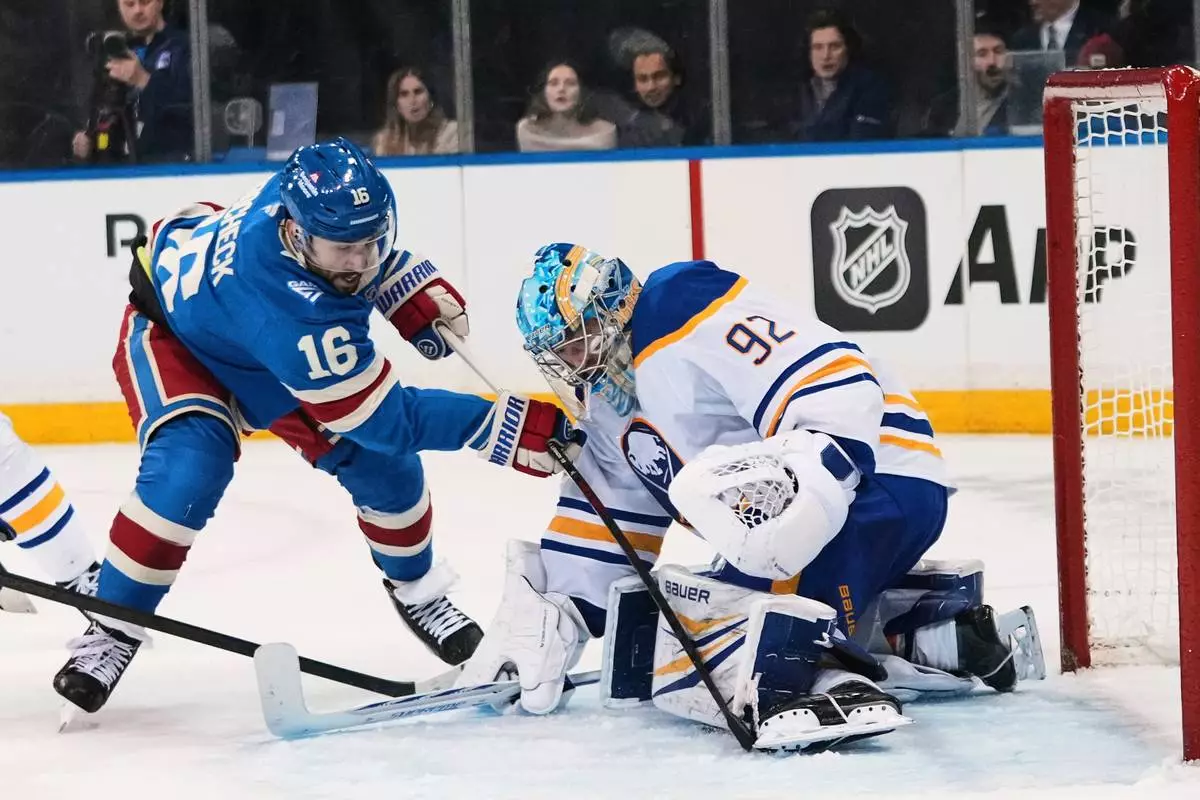
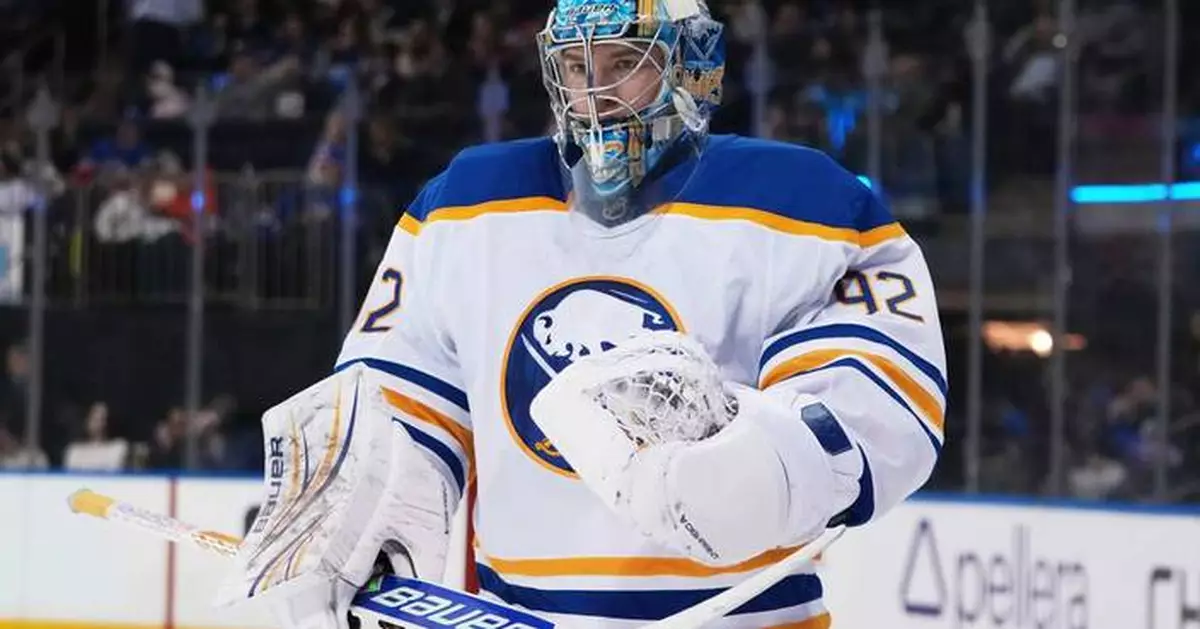
Buffalo Sabres goaltender Colten Ellis (92) stops a shot by New York Rangers' Vincent Trocheck (16) during the second period of an NHL hockey game Thursday, Jan. 8, 2026, in New York. (AP Photo/Frank Franklin II)
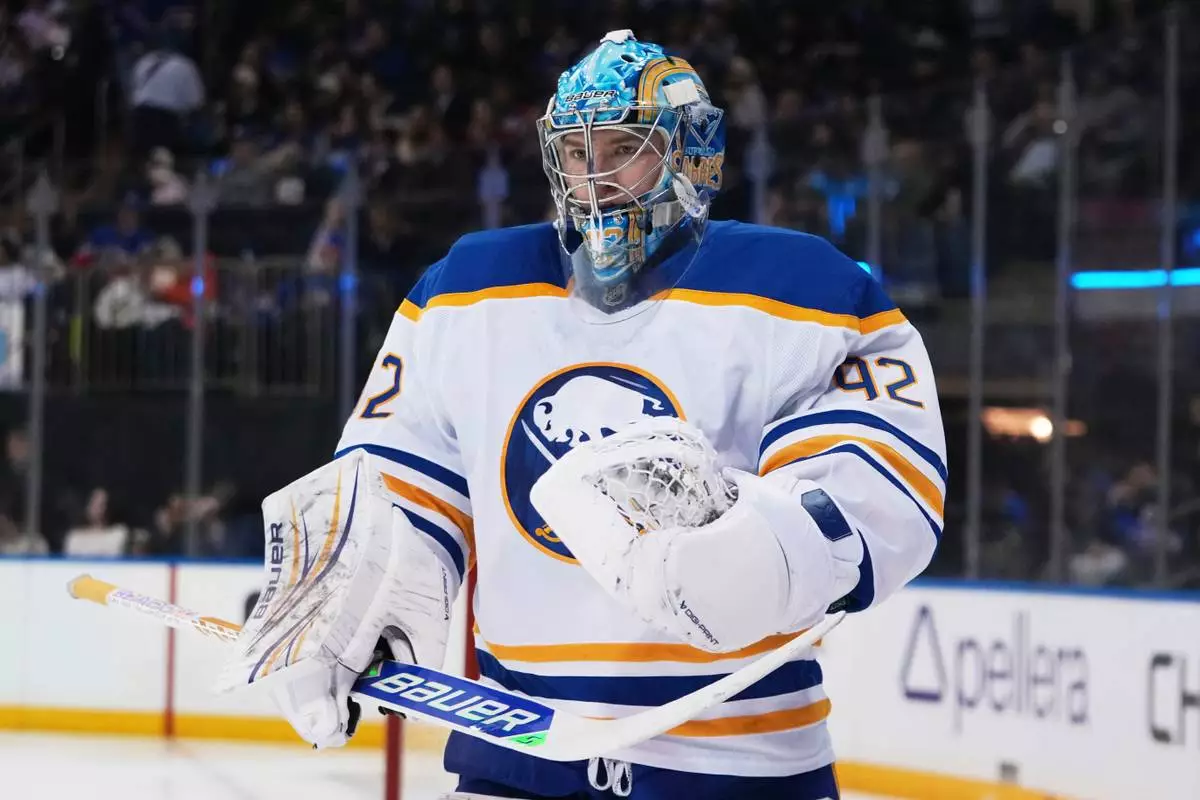
Buffalo Sabres goaltender Colten Ellis (92) skates during a pause in play during the second period of an NHL hockey game against the New York Rangers Thursday, Jan. 8, 2026, in New York. (AP Photo/Frank Franklin II)
WASHINGTON (AP) — Defense Secretary Pete Hegseth said Thursday that he will allow service members to carry personal weapons onto military installations, citing the Second Amendment and recent shootings at bases across the country.
In a video posted to X, Hegseth said he is signing a memo that will direct base commanders to allow requests for troops to carry privately owned firearms “with the presumption that it is necessary for personal protection.”
He said any denial of a service member's request must be explained in detail and in writing.
“Effectively, our bases across the country were gun-free zones,” Hegseth said. “Unless you're training or unless you are a military policeman, you couldn't carry, you couldn't bring your own firearm for your own personal protection onto post.”
Questions about why service members lacked access to weapons have often emerged following shootings on the nation's military bases. Such shootings have ranged from isolated events between service members to mass casualty events, such as the shootings by an Army psychiatrist at Texas’ Ford Hood in 2009 that left 13 people dead.
Hegseth cited some of the events in his video, including a shooting that injured five soldiers at Fort Stewart in Georgia last year. Officials said the shooter, an Army sergeant who worked at the base, used his personal handgun before he was tackled by fellow soldiers and arrested.
“In these instances, minutes are a lifetime,” Hegseth said. “And our service members have the courage and training to make those precious, short minutes count.”
Defense Department policy has prohibited military personnel from carrying personal weapons on base without permission from a senior commander, with strict protocol for how the firearms must be stored.
Typically, military personnel must officially check their guns out of secure storage to go to on-base hunting areas or shooting ranges, then check all firearms back in promptly after their sanctioned use. Military police are often the only armed personnel on base, outside of shooting ranges, hunting areas or in training, where soldiers can wield their service weapons without ammunition.
Tanya Schardt, senior counsel at the Brady gun violence prevention organization, said in a statement that Defense Department leaders and the military’s top brass have opposed relaxing the current policy, which was originally enacted under President George H.W. Bush.
Schardt noted that most active duty service members who die by suicide do so with a weapon they own personally, not one military-issued, and argued that there will “undoubtedly be an increase in gun suicide and other gun violence.”
While fewer American service members died by suicide in 2024, the suicide rates among active duty troops overall still have gradually increased between 2011 and 2024, according to a Pentagon report released Tuesday.
“Our military installations are among the most guarded, protected properties in the world, and they’ve never been ‘gun-free zones,’” Schardt said. “If there is a problem with violent crime on these installations, then the Secretary of Defense has an obligation to alert the American people and describe how he’s working to prevent that crime.”
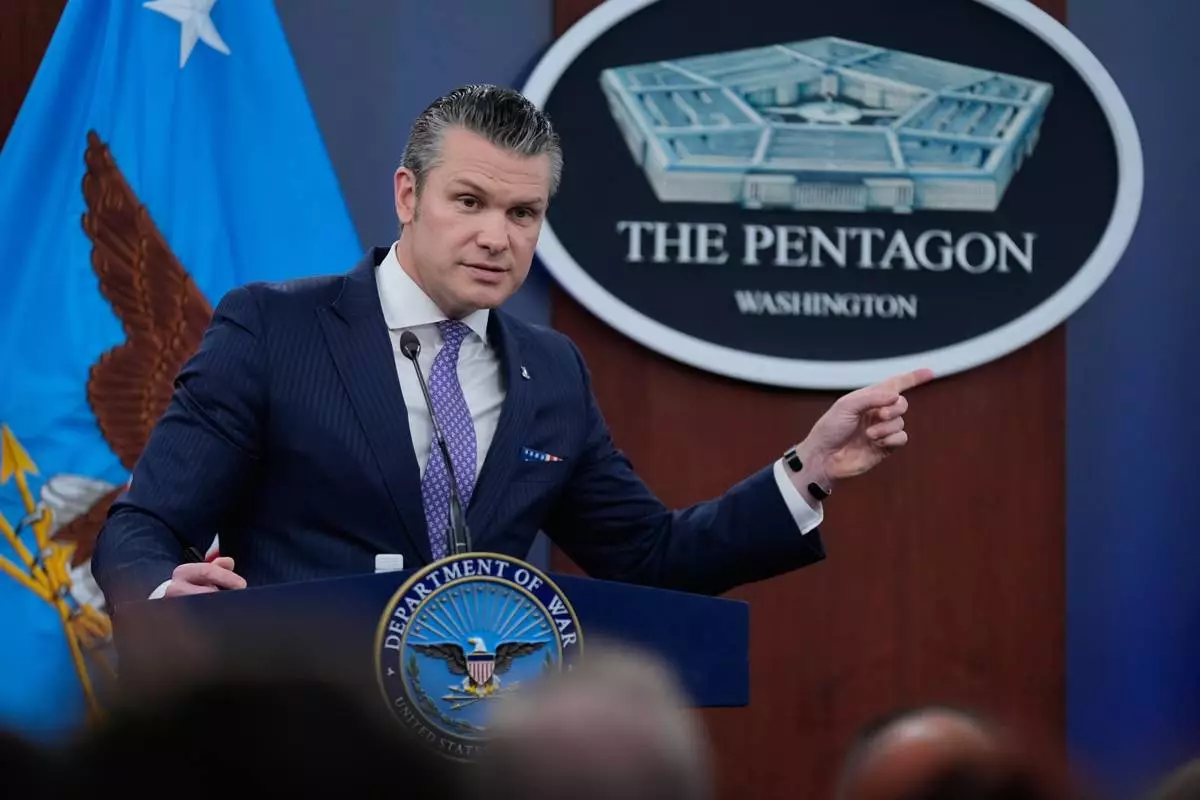
Defense Secretary Pete Hegseth speaks to members of the media during a press briefing at the Pentagon in Washington, Tuesday, March 31, 2026. (AP Photo/Manuel Balce Ceneta)