WASHINGTON (AP) — The head of the FBI's New York field office has been named co-deputy director of the bureau, replacing Dan Bongino following his recent departure, an FBI spokesperson said Friday.
Christopher Raia, who helped lead the response to the deadly truck attack in New Orleans on New Year's Day last year, was picked to run the New York office in April after having served as a top counterterrorism official at FBI headquarters. A former Coast Guard officer, Raia joined the FBI in 2003 and during the course of his two-decade career has investigated violent crime, drugs and gangs as well as overseen counterterrorism and national security investigations.
As a career FBI agent, Raia is a more conventional selection for the FBI's No. 2 job than was Bongino, a popular conservative podcaster who had previously served as a Secret Service agent but had never worked for the FBI until being selected by the Trump administration last year.
Raia is expected to serve as co-deputy director alongside Andrew Bailey, the former Missouri attorney general who was named to the job last August. He is scheduled to start next week.
He became the head of the New York field office after his predecessor, James Dennehy, who was reported to have resisted Justice Department efforts to scrutinize agents who participated in politically sensitive investigations, was forced to retire.
Bongino announced last month that he was departing the bureau following a brief and tumultuous tenure. He officially ended his tenure last week.
No immediate successor was named for Raia in New York.
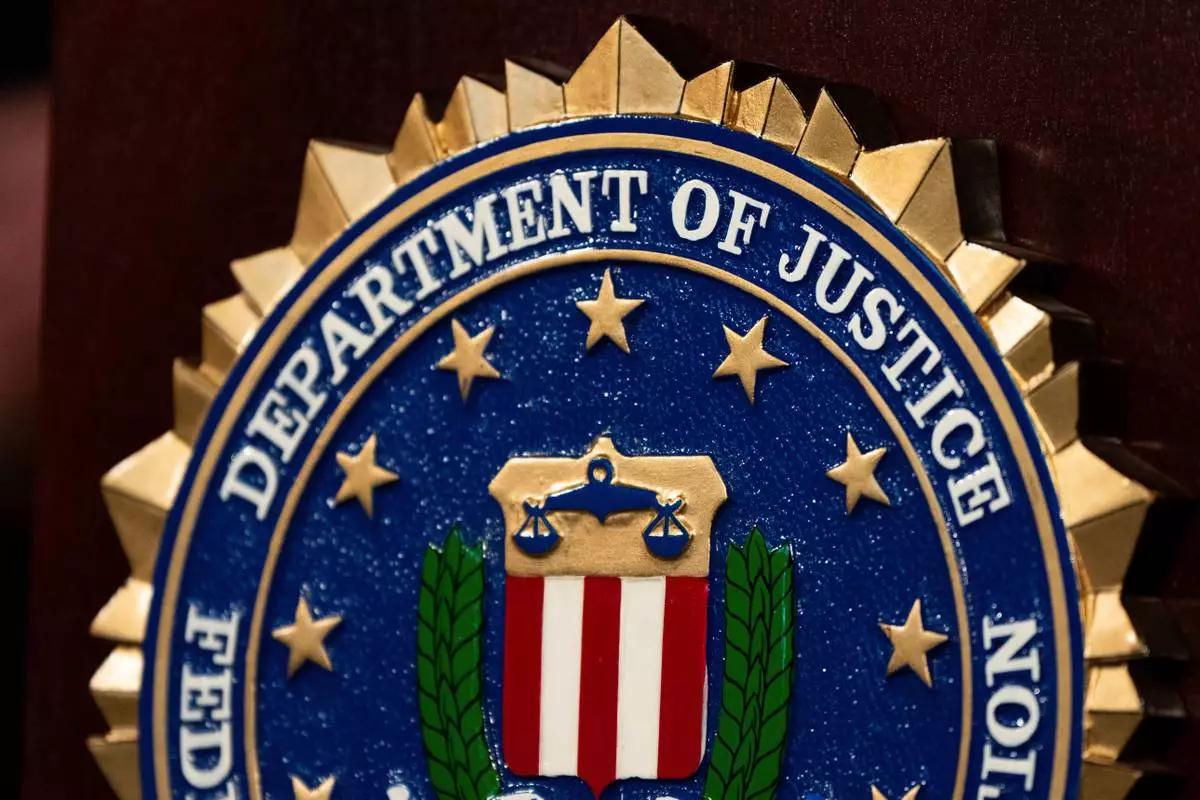
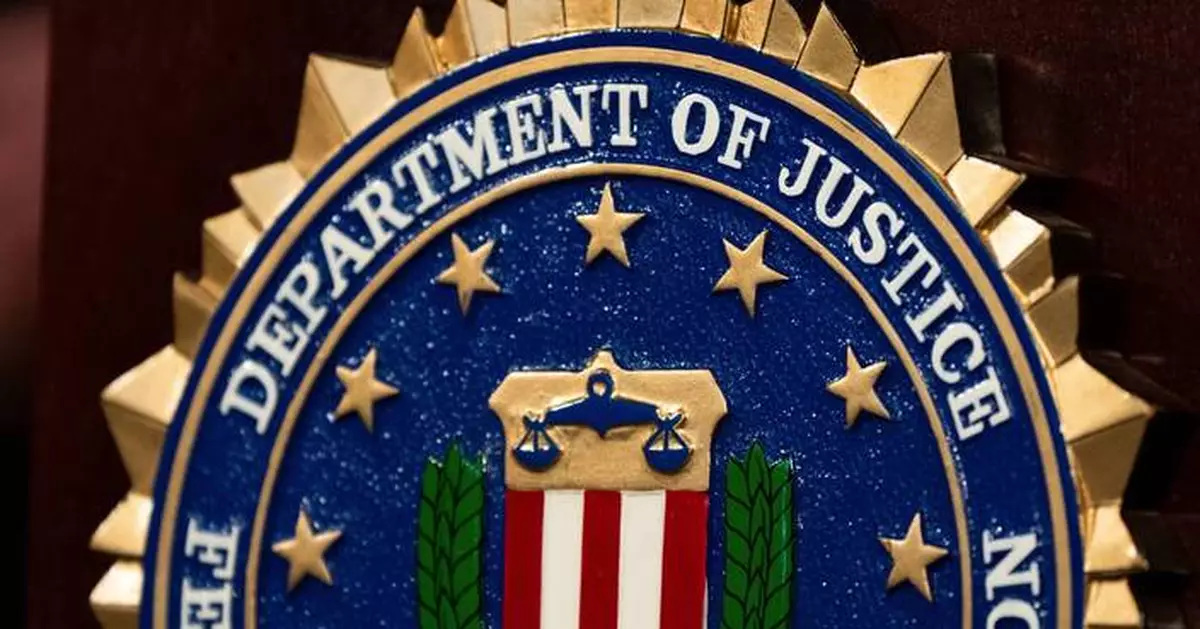
FILE - An FBI seal is displayed on a podium before a news conference at the field office in Portland, Ore., Thursday, Jan. 16, 2025. (AP Photo/Jenny Kane, File)
WASHINGTON (AP) — Defense Secretary Pete Hegseth said Thursday that he will allow service members to carry personal weapons onto military installations, citing the Second Amendment and recent shootings at bases across the country.
In a video posted to X, Hegseth said he is signing a memo that will direct base commanders to allow requests for troops to carry privately owned firearms “with the presumption that it is necessary for personal protection.”
He said any denial of a service member's request must be explained in detail and in writing.
“Effectively, our bases across the country were gun-free zones,” Hegseth said. “Unless you're training or unless you are a military policeman, you couldn't carry, you couldn't bring your own firearm for your own personal protection onto post.”
Questions about why service members lacked access to weapons have often emerged following shootings on the nation's military bases. Such shootings have ranged from isolated events between service members to mass casualty events, such as the shootings by an Army psychiatrist at Texas’ Ford Hood in 2009 that left 13 people dead.
Hegseth cited some of the events in his video, including a shooting that injured five soldiers at Fort Stewart in Georgia last year. Officials said the shooter, an Army sergeant who worked at the base, used his personal handgun before he was tackled by fellow soldiers and arrested.
“In these instances, minutes are a lifetime,” Hegseth said. “And our service members have the courage and training to make those precious, short minutes count.”
Defense Department policy has prohibited military personnel from carrying personal weapons on base without permission from a senior commander, with strict protocol for how the firearms must be stored.
Typically, military personnel must officially check their guns out of secure storage to go to on-base hunting areas or shooting ranges, then check all firearms back in promptly after their sanctioned use. Military police are often the only armed personnel on base, outside of shooting ranges, hunting areas or in training, where soldiers can wield their service weapons without ammunition.
Tanya Schardt, senior counsel at the Brady gun violence prevention organization, said in a statement that Defense Department leaders and the military’s top brass have opposed relaxing the current policy, which was originally enacted under President George H.W. Bush.
Schardt noted that most active duty service members who die by suicide do so with a weapon they own personally, not one military-issued, and argued that there will “undoubtedly be an increase in gun suicide and other gun violence.”
While fewer American service members died by suicide in 2024, the suicide rates among active duty troops overall still have gradually increased between 2011 and 2024, according to a Pentagon report released Tuesday.
“Our military installations are among the most guarded, protected properties in the world, and they’ve never been ‘gun-free zones,’” Schardt said. “If there is a problem with violent crime on these installations, then the Secretary of Defense has an obligation to alert the American people and describe how he’s working to prevent that crime.”
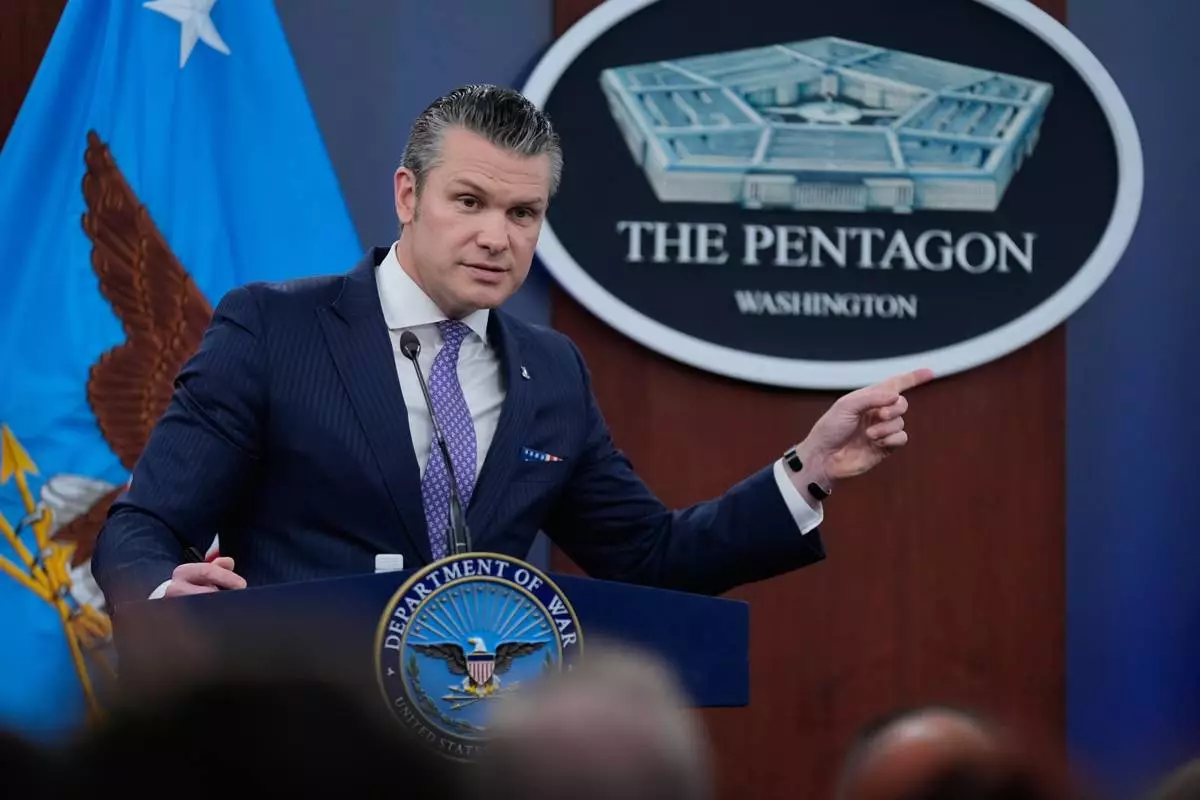
Defense Secretary Pete Hegseth speaks to members of the media during a press briefing at the Pentagon in Washington, Tuesday, March 31, 2026. (AP Photo/Manuel Balce Ceneta)