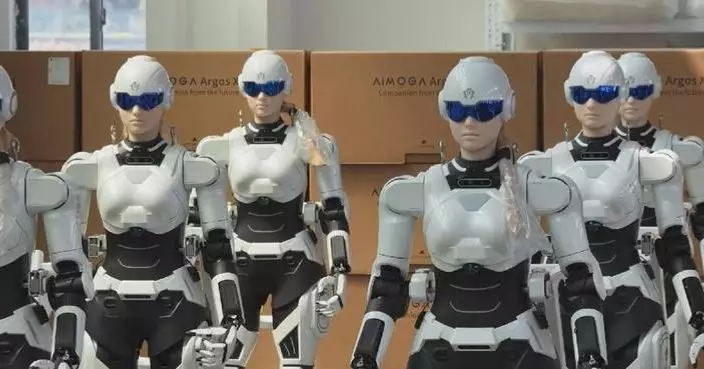
Chinese consumer electronics brands dominated the 2026 Consumer Electronics Show (CES) in Las Vegas, showcasing cutting-edge robotics and smart technology displays.
CES, first held in 1967, is a bellwether for the global consumer electronics industry. It annually presents cutting-edge innovations from tech companies in fields including artificial intelligence (AI), robotics, smart home systems, and autonomous vehicles.
This year's event was held from January 6-9, featuring product launches, exhibitions, business meetings, and industry forums.
Multiple robotics products have been on display, from industrial-grade humanoids which can play a big role in the future of manufacturing, to home cleaning and companion robots which can bring much needed domestic help to people's homes.
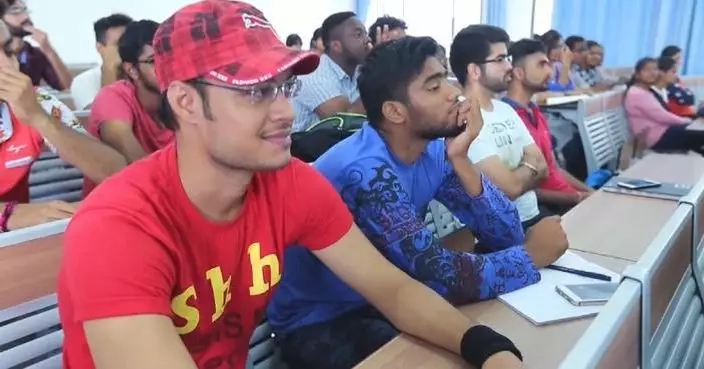
The diverse range of Chinese robotic products, each with clearly defined applications, attracted the attention of many international participants during the four-day event. Many international visitors expressed their excitement about the event, highlighting their amazement at the impressive developments in Chinese products, which exceeded their expectations and left them eager to explore more. "I think it's really good. I think it has been developing. This exceeded my expectation. It's going through the roof. It's like a lot of amazing things. We walked in a little while ago, so we only went to like three booths. We're amazed. I can't wait to finish seeing everything. It's like, wow," said a visitor.
"I'm really surprised by them today. It's one thing seeing them on pictures and videos. I've done some research, and it's another thing seeing them in real life. I think China is absolutely killing it and the rest of the industry should start paying attention," said another visitor.
"This is one of the brands that is innovating constantly because I see one robot but then I see another one and another one and another one, and they are always trying to make the life easier for people," said a visitor.
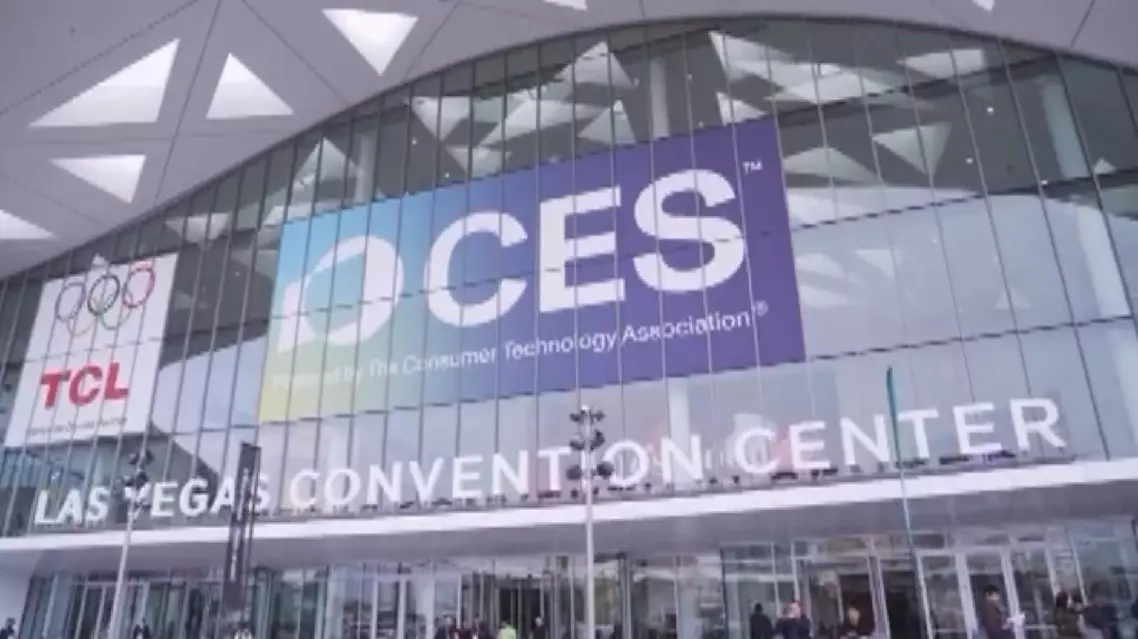
Chinese tech innovations shine at CES 2026 in Las Vegas
Chinese tech innovations shine at CES 2026 in Las Vegas
Honor's humanoid robot, Lightning, which swept the 2026 Beijing E-Town Humanoid Robot Half-Marathon on Sunday, is a natural extension of years of accumulation in consumer electronics technology, said its developers.
A leading smart device provider in China, Honor independently developed the model, which dominated the podium at the event as it was used by all three teams whose autonomous navigating robots ran the fastest times.
At the Honor factory in Pingshan District in Shenzhen City, south China's Guangdong Province, where robotics engineers developed Lightning. They said the robot's body design incorporates a simulation system that, through artificial intelligence algorithms, can iterate nearly 30,000 design schemes of varying sizes over three months. Complete and mature systems are also in place for battery, communication, and reliability verification.
"We built a simulation lab from scratch. For the robots, we digitize the entire design and put it into a computer. We have our own material library, which can meet the force, thermal, and chemical property demands for each component, under different environments and speeds. We've accumulated about 1000 kinds of materials. For example, if there's a risk with the robot's neck, we just need to change the material code from 001 to 002. Now, through our simulations, we only need one day to perform parallel calculations on 10 different designs, before creating a mold and verifying it in the lab," said Li Zheng, a senior engineer at Honor.
An autonomous robot capable of completing a half-marathon involves a complete industry chain, with core components including high-precision sensors, LiDAR, motors, operating systems, and control algorithms. The development of robotic marathoners have driven an increasing number of component enterprises to get involved.
Manifold, a tech firm established by newly-graduated PhDs, has developed a 3D spatial memory module, which can model an environment in real time and transform it into images that robots can understand. They said several robots running the half-marathon this year adopted their solution.
"Our device can operate within a one-kilometer tunnel with an error margin of only tens of centimeters. For robots, especially in the absence of GPS, this allows them to accurately determine their location. The underlying technology is a multi-sensor fusion technology that we developed in-house," said Qin Youming, CEO and founder of Manifold.
The Beijing Humanoid Robotics Innovation Center set up a training camp for the marathon event. Many university students came a month ahead of the event to develop and debug their technologies and algorithms based on open-source robot bodies, databases, and training platforms.
"These high-quality databases and highly open-source control algorithms are actually very helpful to us. We no longer need to build the house from the ground up, but can skip the most basic part," said Sun Jingyu, a student from Shandong University.
"Through this racing event, I believe we can make our robots more reliable and stable, while also supporting high-dynamic, high-load movements. This is crucial for robots' future application in both industrial, commercial and domestic scenarios," said Guo Yijie, head of the innovative humanoid department and the Marathon project of Beijing Humanoid Robot Innovation Center.
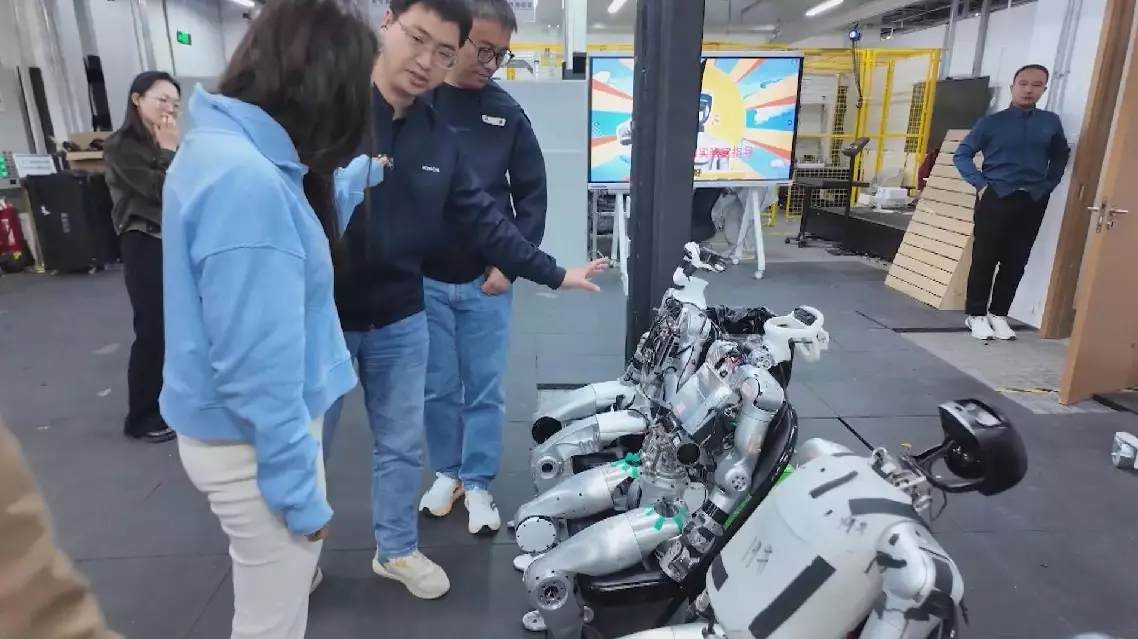
Engineers share development story behind Beijing humanoid half-marathon champion model