Chinese tourists are increasingly seeking unique, tailor-made experiences rather than participating in one-size-fits-all group activities when they travel to Switzerland to engage in immersive winter travel around the Alps.
One of the draws for Chinese tourists is the iconic Matterhorn Mountain, and an increasing number of visitors choose to see this famous peak from the air and experience an adrenaline rush in a tandem paragliding flight.
Guo Mu is from Jilin Province in northeast China, and she was on a holiday to Switzerland with her husband.
Visiting Zermatt for the first time, she had decided to do a tandem paragliding flight to get close to the Matterhorn.
"I want to see the country. I want to see, you know, the mountains, the forest, and just look around from the height. So, I'm actually very excited, just yeah, let's see how it goes, and if it goes well, perhaps I do a training course, and I'd like to do the paragliding on my own," she said.
With her fear of heights, the 10-minute flight is a memory for a lifetime, said Guo, adding that she was inspired to take the flight after seeing others paragliding on a previous vacation to Switzerland.
According to Switzerland Tourism, Chinese visitors have been seeking tailor-made, unique experiences rather than one-size-fits-all group activities, and for many, tandem paragliding is a must-do when travelling to Switzerland.
Bruno Schmidt is a Swiss pilot with over 40 years of flying experience. He said that almost half of his clients are tourists from China.
"It's more younger people, for sure, more younger people, but I think that's a question about the language. Because the younger people speak English, and the older not so much. So, I think, it's about the language because we have to communicate with them. We have to explain the take-off. We have to explain to them what they could do wrong," he said.

Chinese tourists increasingly seek tailor-made experiences in Switzerland's winter tourism boom
The ongoing conflict in the Middle East is seeing UK insurance firms hike up premiums for seaborne traders and shipping companies as a cloud of uncertainty hangs over the region amid the escalating crisis.
While the U.S.-Israel-Iran conflict continues, much attention is focusing on the severe disruption to shipping through the Strait of Hormuz -- a vital passageway which typically carries around one-quarter of global seaborne oil trade.
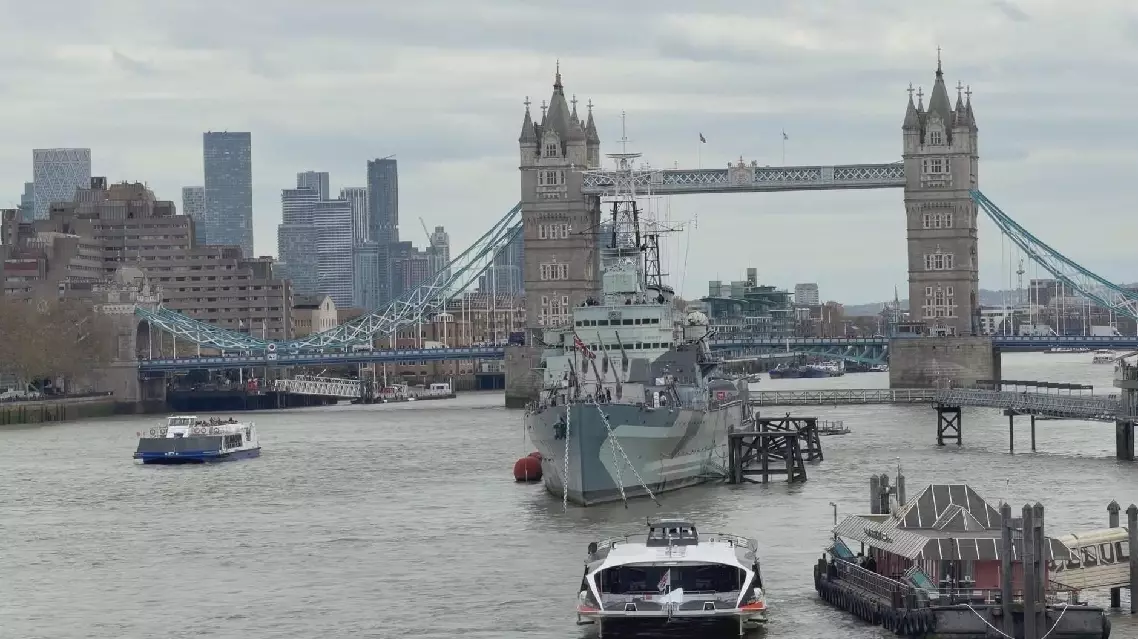
The economic implications of the war are already being seen in the City of London, the financial hub of the British capital and one of the world's foremost insurance centers, which is also an important trading place for global shipping, energy and war risk insurance.
Everyday, brokers and underwriters from all over the world gather in the financial district which is known simply as 'The City' to assess risks and negotiate premiums.
The London insurance market is often the first to feel the impact of any geopolitical turmoil in the Middle East, as war risk premiums for ships tend to rise rapidly whenever tensions escalate, particularly when shipping risks in the Strait of Hormuz increase to their current levels.
It can be a snowball effect, as these steeper insurance prices will eventually be passed on to other areas of the shipping sector, energy transportation, and even in global trade costs.
Before the United States and Israel launched their joint military operations against Iran on Feb. 28, the general quotations of shipping insurance brokers on the London market were approximately valued at between 0.2 percent to 0.3 percent, which meant the war risk premium for a single passage through the Strait of Hormuz for a container ship worth 150 million U.S. dollars was approximately 375,000 to 450,000 U.S. dollars.
However, since the escalation, insurance premiums for related vessels have skyrocketed, while shipping prices have also soared sharply, hampering shipping operations for vessels which may already be reluctant to travel through the war-torn waterway.
Industry insiders say that while prices will fluctuate depending on individual cases, these insurance hikes may be seen as a barometer of the bigger picture impact of the conflict.
"How much depends on the vessel, it depends on the circumstances. But you can see prices in the press have been given between one and three percent, but it will vary. It's possible, you heard that, and it may be true in some cases. But insurance is only one small part of their operating expenses (opex), so they'll be factoring in the freight rates, which have gone up by a factor of 11 or 12, and obviously, fuel costs and delay," said Neil Roberts, head of Marine and Aviation at the Lloyd's Market Association, a leading insurance and reinsurance firm.
The current crisis along the Strait of Hormuz came as part of Iran's response to U.S.-Israeli operations, which saw it restricting navigation through the strait and targeting any vessels associated with the U.S. or Israel.
As the war drags on, Iran has been leveraging its grip on the Strait of Hormuz, reducing shipping traffic through one of the world's most crucial waterways to historical lows as concerns about the wider global economic impact continue to mount.
London insurance market sees surging shipping costs amid Mideast tensions