WASHINGTON (AP) — The Environmental Protection Agency on Tuesday proposed limiting states’ and Native American tribes’ power to wield the Clean Water Act to block major projects like natural gas pipelines, advancing the Trump administration's goal of accelerating the construction of new fossil fuel infrastructure and data centers.
The agency said new constraints on local water quality reviews for federally regulated projects will still allow states to protect their environment while preventing unnecessary delays. Successive administrations have seesawed on the scope of states' power. President Donald Trump's first administration reduced it, the Biden administration restored it and now the Trump administration is once again adding constraints to what's called Section 401 of the Clean Water Act.
“When finalized, the proposed rule will increase transparency, efficiency and predictability for certifying authorities and the regulated community," said Jess Kramer, EPA's assistant administrator for water. “It will also ensure states and authorized tribes adhere to their Section 401 role.”
The Clean Water Act allows states and some authorized tribes to review what effect pipelines, dams and other federally regulated projects have on water quality within their borders. Pipelines, for example, might cross rivers, streams and wetlands — disruptions that states can scrutinize and that have caused holdups before. In 2017, for example, New York regulators rejected a permit for a pipeline, saying there weren't sufficient protections for hundreds of streams and wetlands.
The proposed change is similar to EPA’s rule in Trump's first term. They proposed a clear description of what applicants need to submit to states, strict deadlines for reviews and a requirement that states fully explain why any conditions were placed on a developer or why their permit was rejected.
In 2023, the Biden administration strengthened states’ and tribes' authority to conduct water quality reviews. Activists at the time praised the change, saying it would help protect the local environment. The agency said then that states should be able to look beyond pollution that’s released directly into waters and instead “holistically evaluate" the impact of a project on local water quality.
The Trump administration wants to do away with that broader authority to focus reviews on direct releases to federally regulated waters. They are doing so at a time when fewer waters are federally regulated by the Clean Water Act. In 2023, the Supreme Court in Sackett v. EPA limited the federal government's power to regulate millions of acres of wetlands.
Congress has said that when federally backed projects like oil pipelines or nickel mines affect water quality, fishing and drinking water, states and tribes get to review them and reject proposals that will do too much damage, according to Moneen Nasmith, director of national climate, fossil fuel infrastructure at the nonprofit Earthjustice.
“EPA’s claims that states and tribes are overreaching are baseless," she said. “This proposed rule is trying to solve for a problem that does not exist.”
Under Administrator Lee Zeldin, the EPA expanded its traditional focus on the environment and public health to include several economic “pillars" like restoring America's energy dominance — Trump's shorthand for fossil fuels — and making the U.S. “the artificial intelligence capital of the world.” As demand for new data centers increases, some of these projects will need state water quality permits. Kramer said the update will make the rules for these reviews clear.
“This makes what we are doing in the 401 space crucial, right? Those projects, they need to be able to move forward with certainty,” said Kramer.
A final rule is expected in the spring after a public comment period.
Associated Press writer Matthew Daly contributed.
The Associated Press receives support from the Walton Family Foundation for coverage of water and environmental policy. The AP is solely responsible for all content. For all of AP’s environmental coverage, visit https://apnews.com/hub/climate-and-environment
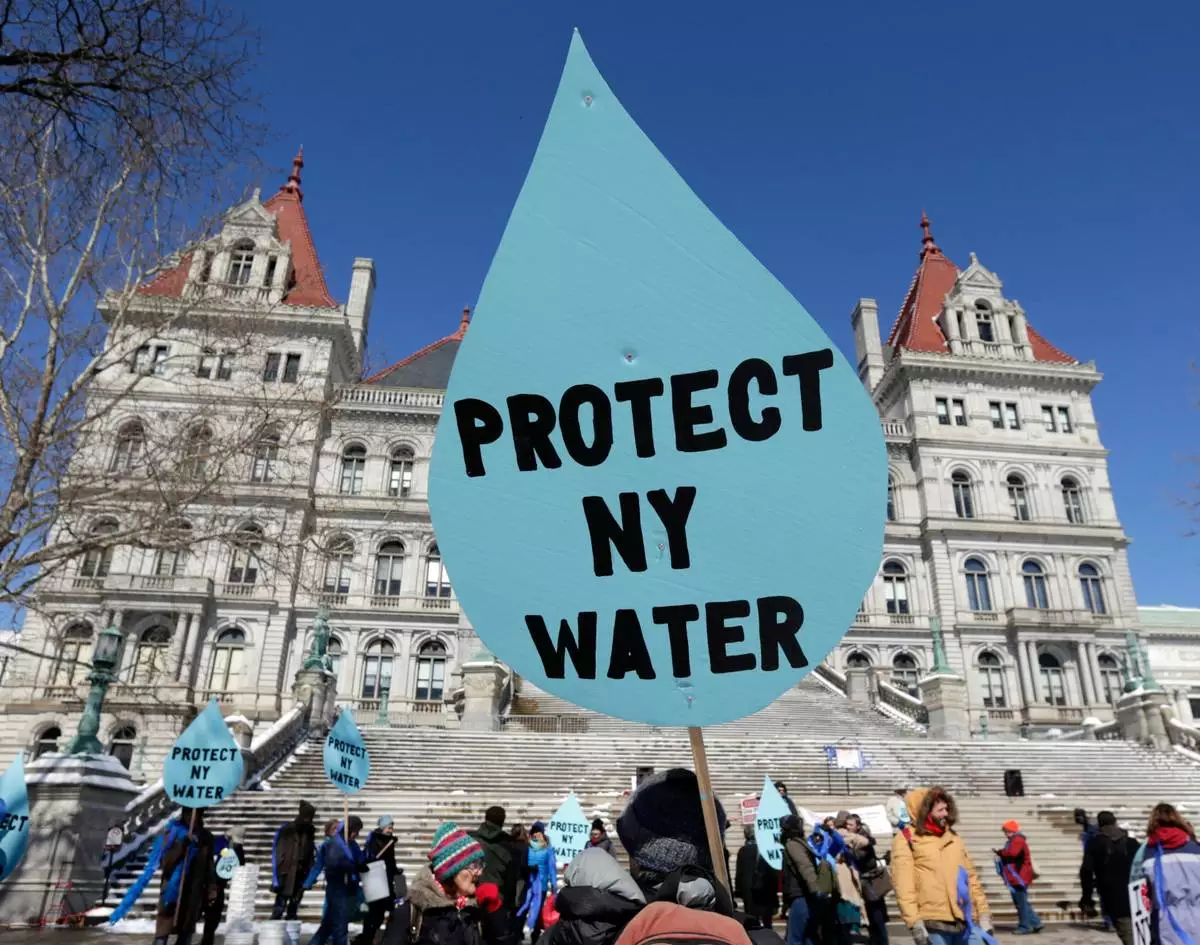
FILE - A man carries a sign before a rally opposing the Constitution Pipeline outside the state Capitol in Albany, N.Y., April 5, 2016. (AP Photo/Mike Groll, File)
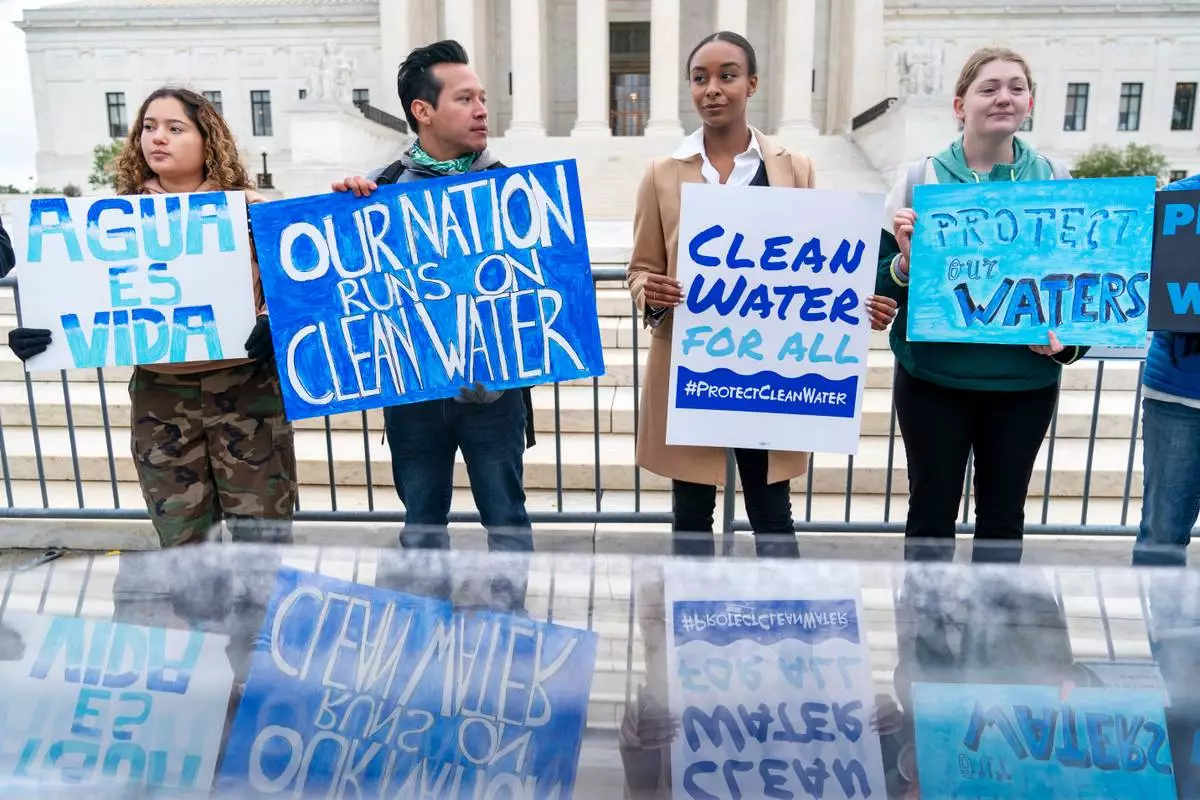
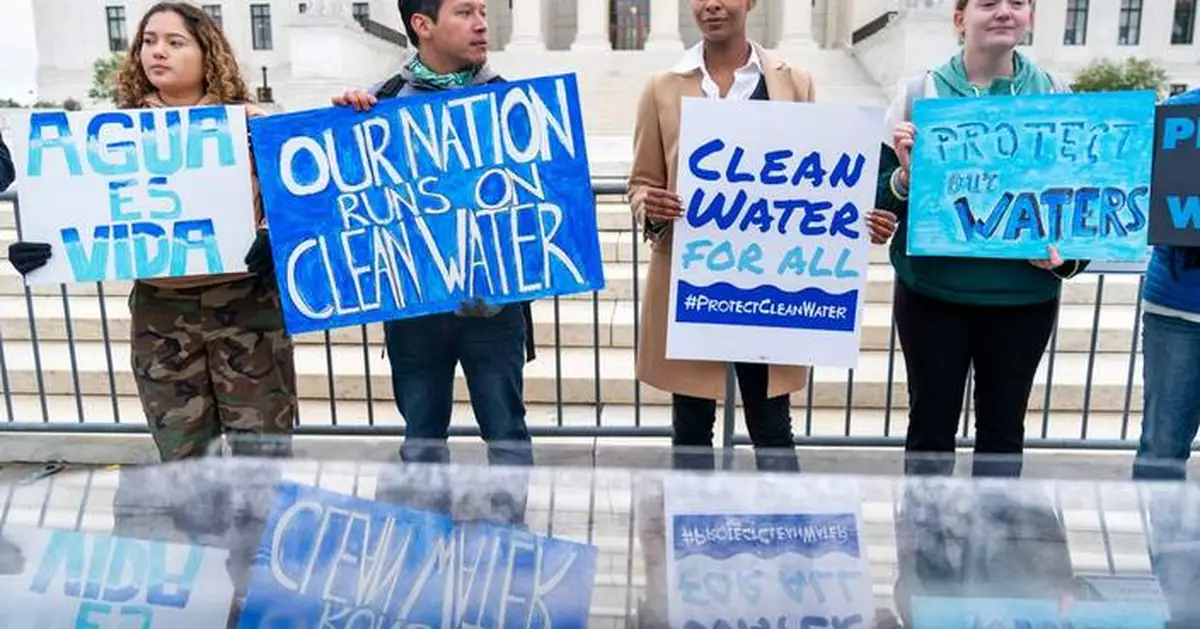
FILE - Bethsaida Sigaran, left, of Baltimore, her brother Jaime Sigaran, with American Rivers, and Thea Louis, with Clean Water Action, join other supporters of the Clean Water Act as they demonstrate outside the Supreme Court, Oct. 3, 2022, in Washington, as the court begins arguments in Sackett v. Environmental Protection Agency (EPA). (AP Photo/Jacquelyn Martin, File)
WASHINGTON (AP) — Former President Bill Clinton and former Secretary of State Hillary Clinton said Tuesday that they will refuse to comply with a congressional subpoena to testify in a House committee's investigation of Jeffrey Epstein.
The Clintons, in a letter released on social media, slammed the House Oversight probe as “legally invalid” even as Republican lawmakers prepared contempt of Congress proceedings against them. The Clintons wrote that the chair of the House Oversight Committee, Republican Rep. James Comer, is on the cusp of a process “literally designed to result in our imprisonment.”
“We will forcefully defend ourselves,” wrote the Clintons, who are Democrats. They accused Comer of allowing other former officials to provide written statements about Epstein to the committee, while selectively enforcing subpoenas against them.
The intensifying clash adds another dimension to the fight over Epstein, raising new questions about the limits of congressional power to compel testimony. It also comes when Republicans are grappling with the Justice Department’s delayed release of the Epstein files after a bipartisan push for their release.
Comer said he’ll begin contempt of Congress proceedings next week. It potentially starts a complicated and politically messy process that Congress has rarely reached for and could result in prosecution from the Justice Department.
“No one’s accusing the Clintons of any wrongdoing. We just have questions," Comer told reporters after Bill Clinton did not show up for a scheduled deposition at House offices Tuesday.
He added, “Anyone would admit they spent a lot of time together.”
Clinton has never been accused of wrongdoing in connection with Epstein but had a well-documented friendship with the wealthy financier throughout the 1990s and early 2000s. Republicans have zeroed in on that relationship as they wrestle with demands for a full accounting of Epstein's wrongdoing.
Epstein was arrested in 2019 on federal sex trafficking and conspiracy charges. He killed himself in a New York jail cell while awaiting trial.
“We have tried to give you the little information we have. We've done so because Mr. Epstein's crimes were horrific,” the Clintons wrote in the letter.
Multiple former presidents have voluntarily testified before Congress, but none has been compelled to do so. That history was invoked by President Donald Trump in 2022, between his first and second terms, when he faced a subpoena by the House committee investigating the deadly Jan. 6, 2021, riot by a mob of his supporters at the U.S. Capitol.
Trump's lawyers cited decades of legal precedent they said shielded an ex-president from being ordered to appear before Congress. The committee ultimately withdrew its subpoena.
Comer also indicated that the Oversight committee would not attempt to compel testimony from Trump about Epstein, saying that it could not force a sitting president to testify.
Trump, a Republican, also had a well-documented friendship with Epstein. He has said he cut off that relationship before Epstein was accused of sexual abuse.
Meanwhile, the congressional co-sponsors of legislation that forced the public release of investigative documents in the sex trafficking probe of Epstein and British socialite Ghislaine Maxwell asked a New York judge in a letter to appoint a neutral expert to oversee release of the materials. The letter, dated Jan. 8, was delivered to the judge Monday night.
U.S. Rep. Ro Khanna, a California Democrat, and Rep. Thomas Massie, a Kentucky Republican, told U.S. District Judge Paul A. Engelmayer they had “urgent and grave concerns” that the Justice Department has failed to comply with the Epstein Files Transparency Act, which required the files to be released last month. They said they believed “criminal violations have taken place” in the release process.
Engelmayer presides over the Maxwell case. Maxwell, a former Epstein girlfriend, is serving a 20-year prison sentence after her 2021 sex trafficking conviction for recruiting girls and women to be abused by Epstein and for sometimes joining in the abuse. Last month, Maxwell sought to set aside her conviction, saying new evidence had emerged proving constitutional violations spoiled her trial.
Justice Department officials, who did not immediately respond to a request for comment Tuesday, have said the files' release was slowed by redactions required to protect the identities of abuse victims.
In their letter, Khanna and Massie wrote that the Department of Justice's release of 12,000 documents out of more than 2 million documents being reviewed was a “flagrant violation” of the law's release requirements and had caused “serious trauma to survivors.”
“Put simply, the DOJ cannot be trusted with making mandatory disclosures under the Act,” the congressmen said as they asked for the appointment of an independent monitor to ensure all documents and electronically stored information are immediately made public.
They also recommended that a court-appointed monitor be given authority to notify and prepare reports about the true nature and extent of the document production and whether improper redactions or conduct have taken place.
Engelmayer directed the Justice Department and Maxwell, if she wishes, to respond to the allegations from the congressmen by Friday.
Associated Press writers Michael R. Sisak and Larry Neumeister in New York contributed to this report.
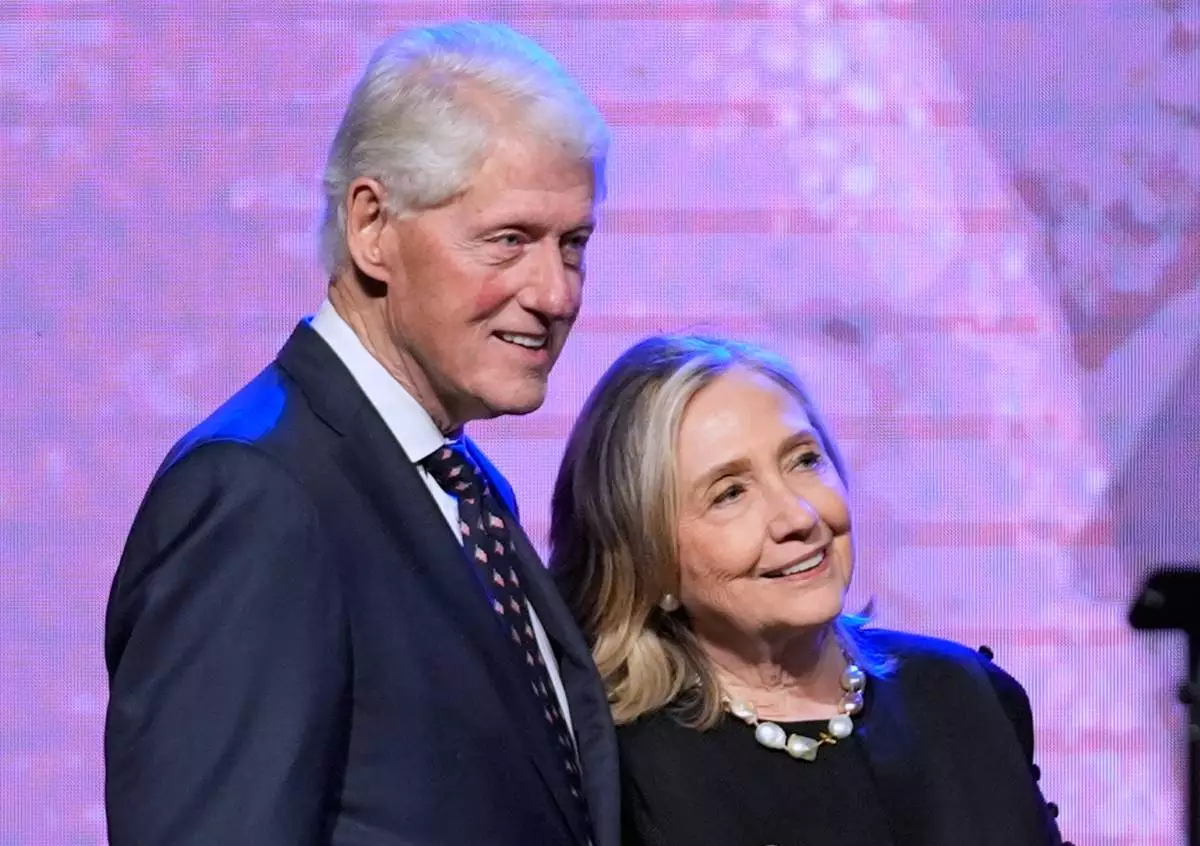
FILE - Former President Bill Clinton, left, and former Secretary of State Hillary Clinton listen as Vice President Kamala Harris delivers a eulogy for U.S. Rep.†Sheila Jackson Lee, Aug. 1, 2024, in Houston. (AP Photo/LM Otero, File)
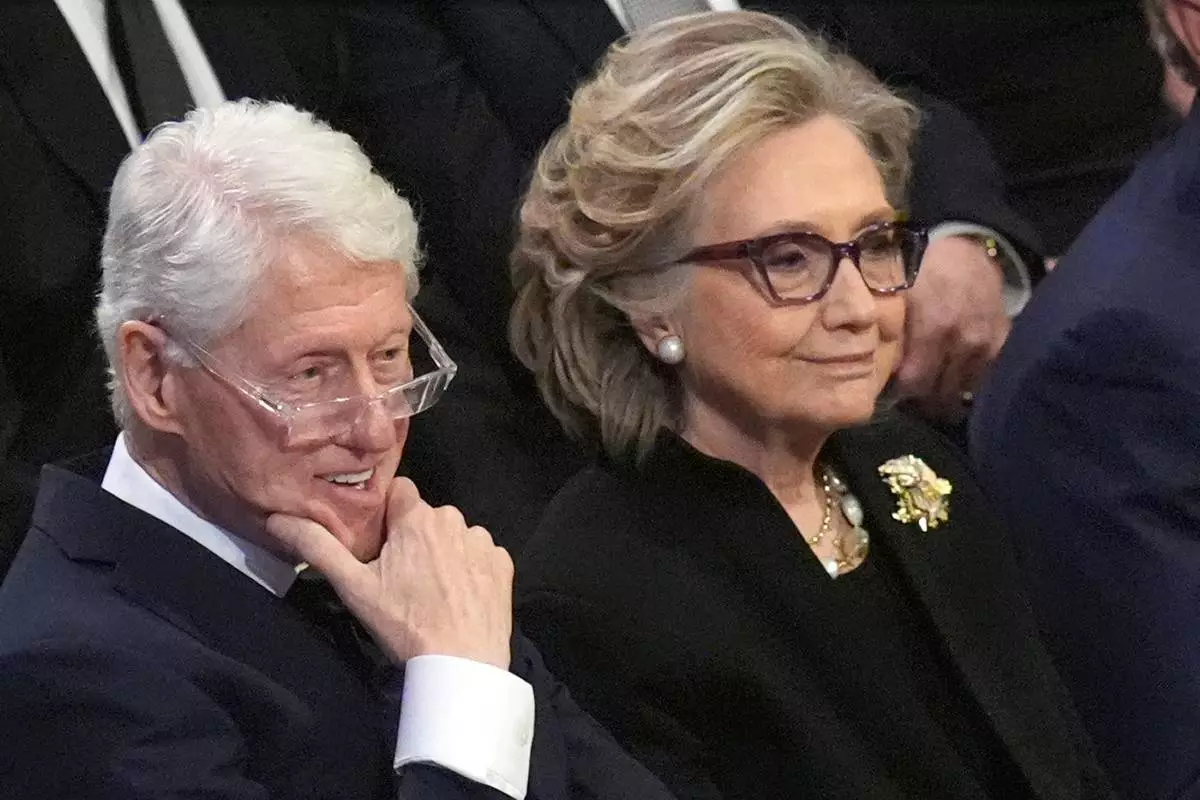
FILE - Former President Bill Clinton and former Secretary of State Hillary Clinton listen during the state funeral for former President Jimmy Carter at Washington National Cathedral in Washington, Jan. 9, 2025. (AP Photo/Jacquelyn Martin, File)
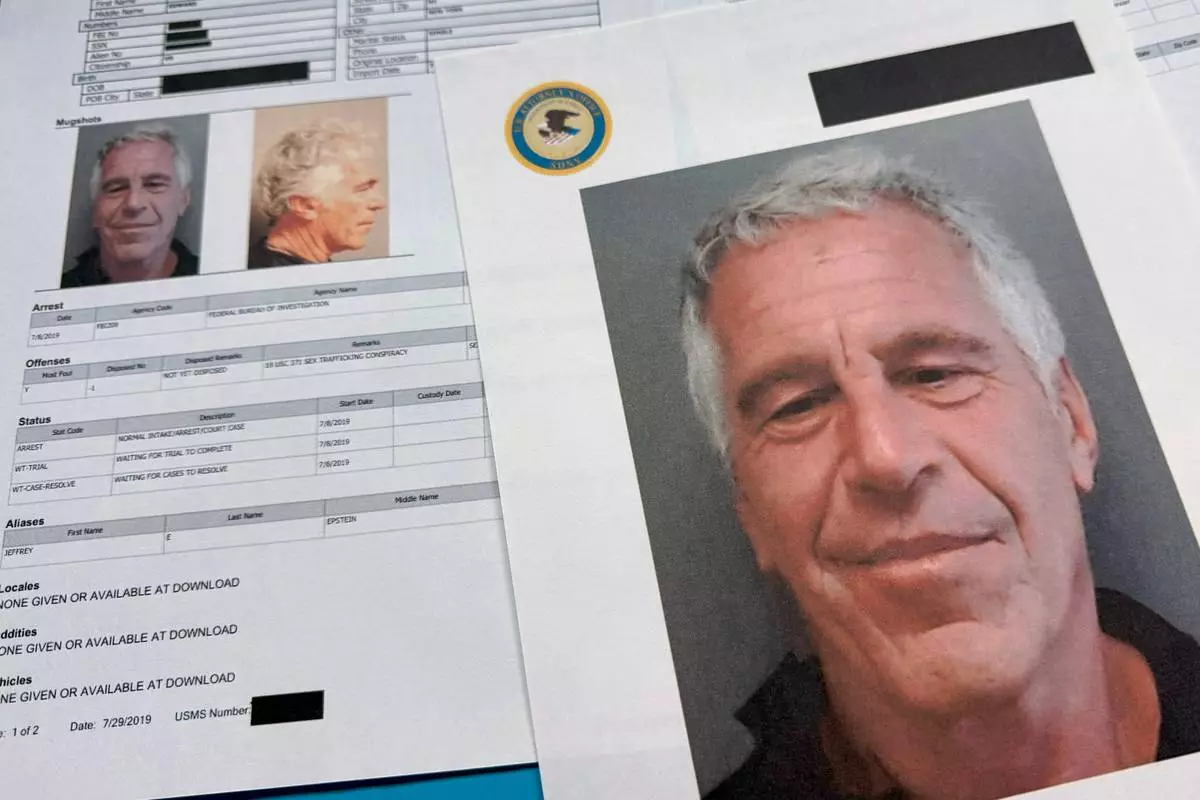
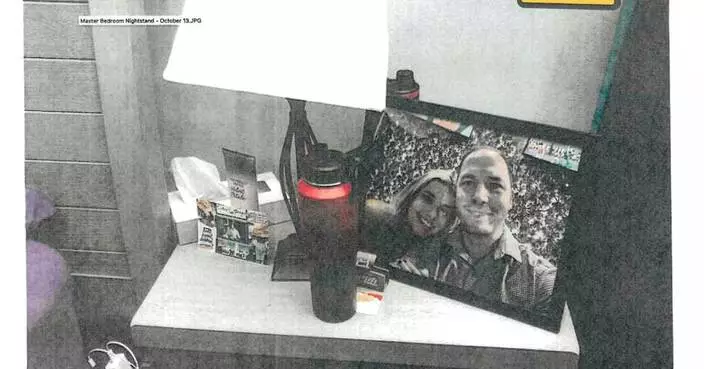
Documents that were included in the U.S. Department of Justice release of the Jeffrey Epstein files are photographed Friday, Jan. 2, 2026. (AP Photo/Jon Elswick)