The Japanese financial market experienced a double whammy with declines in both bonds and the yen on Tuesday, showing rising market concerns about Japan's deteriorating fiscal situation.
According to Japanese media, this was triggered by Prime Minister Sanae Takaichi's decision to dissolve the House of Representatives and call a snap election on Jan. 23, the Diet's opening day.
On Tuesday, the Tokyo bond market saw a sharp rise in yields on long-term Japanese government bonds as investors dumped them, with Japan's benchmark 10-year government bond yield surging to 2.16 percent, its highest level since February 1999.
Since Takaichi took office in October 2025, the Japanese government's aggressive expansionary fiscal policies have fueled fears of an accelerating deterioration in public finances, leading to a sell-off of long-term government bonds.
This has triggered lower long-term bond prices and rising yields, even breaking historical highs. In the foreign exchange market, Japanese yen's exchange rate against the U.S. dollars once fell to 158.97 yen to one U.S. dollar.
In early October 2025, Japanese yen's exchange rate was hovering around 147 yen to one U.S. dollar. With Takashi's election as prime minister of Japan, the yen's exchange rate has returned to a downward trend.
Analysts believe that as the Liberal Democratic Party (LDP) does not currently hold a majority of seats in the House of Representatives, investors are concerned that if the LDP wins a re-election, it will further promote Takashi's expansionary fiscal policies, exacerbating the fiscal risks. Therefore, the market remains highly vigilant about the dissolution of the House of Representatives.
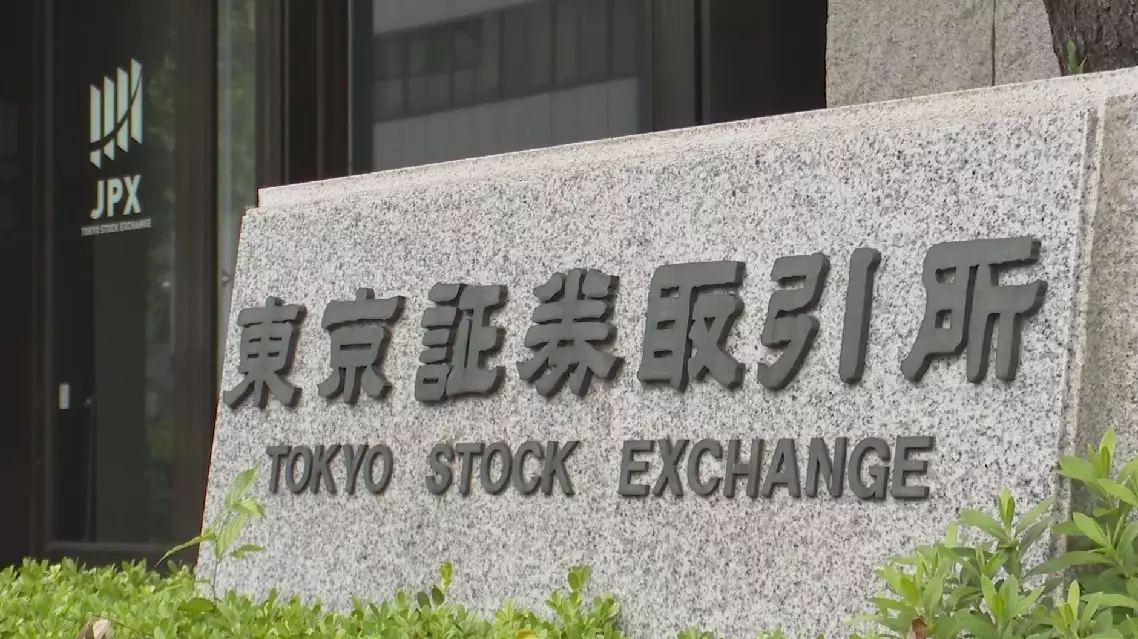
Japan hit by double whammy with declines in bonds, yen

Residents living in Canada's biggest city of Toronto have expressed optimism that Canadian Prime Minister Mark Carney's official visit to China can unlock new economic opportunities, particularly in key fields such as artificial intelligence and infrastructure.
Carney is set to arrive in China on Wednesday to begin a four-day visit at the invitation of Chinese Premier Li Qiang, marking the first trip by a Canadian prime minister to China since 2017.
A Chinese foreign ministry spokesperson confirmed Chinese President Xi Jinping will meet with Carney during his stay to provide new strategic guidance for further improving and developing China-Canada relations.
Giving their assessment of the significance of the visit and the outcomes they hope to see achieved, local people in Toronto pointed to the importance of deepening cooperation and view the high-tech sector as one of the most pivotal areas where ties can be enhanced.
"I think, of course, China is probably the leader in AI and new technologies. So, I think Canada can really benefit from Chinese expertise on some of the chip manufacturing or just the use of AI in the medical field, in every other finance field and everything. So, I think this can be very important for Canada to learn from China," said Raman, the provincial liaison manager at the Canadian Federation of Independent Business.
"I think it is a good idea to strengthen relations with other countries and other trade partners that have been probably more consistent. And especially with things going on in electronics right now and chip manufacturing, I do think that it makes sense at this point in time to be reaching out to China," said Jen, a local nurse.
Some see Carney's visit as an opportunity to broaden the economic agenda in various other key areas.
"I'm actually pretty looking forward to it because they could talk a lot about trade. That could be a good opportunity for Canada and China to explore some other export opportunities on energy, and also, maybe pipeline building, infrastructure building, and also, real estate investment and agriculture," said Xiong Lulu, an equity research analyst.
Looking ahead, many residents emphasize that much depends on whether Carney's visit can translate into concrete agreements.
"It would be nice. I hope there's some kind of good relationship between China and Canada. That would be like a great opportunity that we would miss if we didn't create that relationship with them. So, hopefully, in hindsight, [in] 2026 it does happen," said John, a software developer.
"I think if they can settle some trade deals, that will be great. So, I think it will be great for the Canadian economy," said Xiong.
President Xi and Carney last met on the sidelines of the 32nd APEC Economic Leaders' Meeting in the Republic of Korea (ROK) in October, with both sides agreeing to resume exchanges and cooperation in various fields and jointly advance the development of the China-Canada strategic partnership.
Toronto residents optimistic about Canada-China cooperation prospects