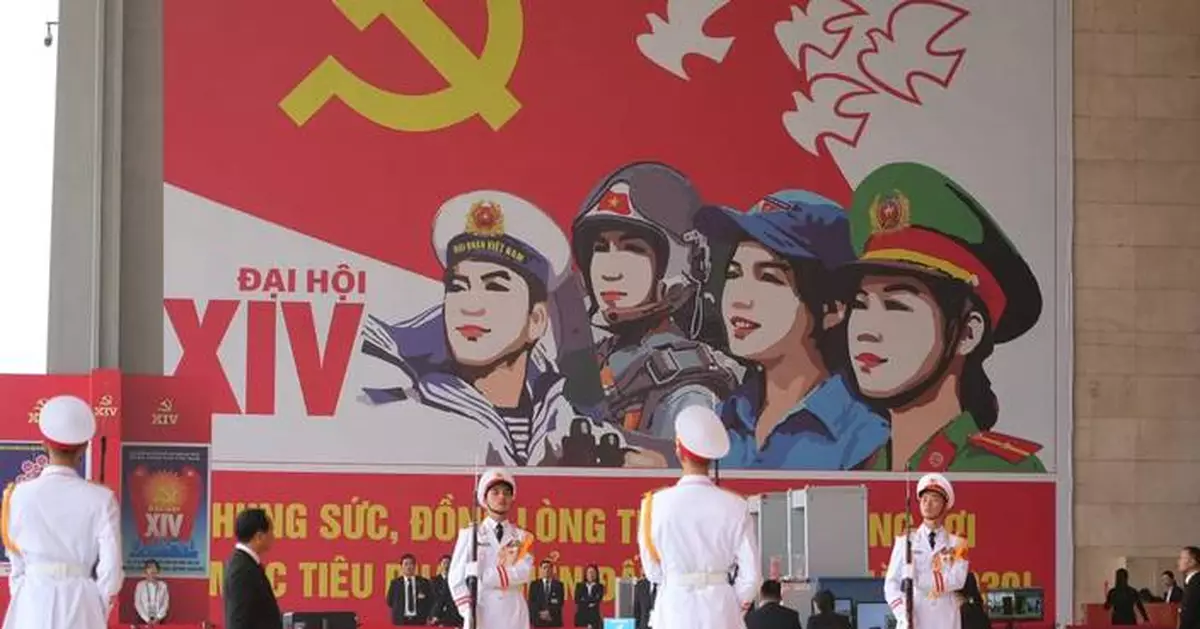
HANOI, Vietnam (AP) — Vietnam’s most important political conclave began Monday, as the ruling Communist Party convened to decide the country’s leadership and broad policy course for the next five years.
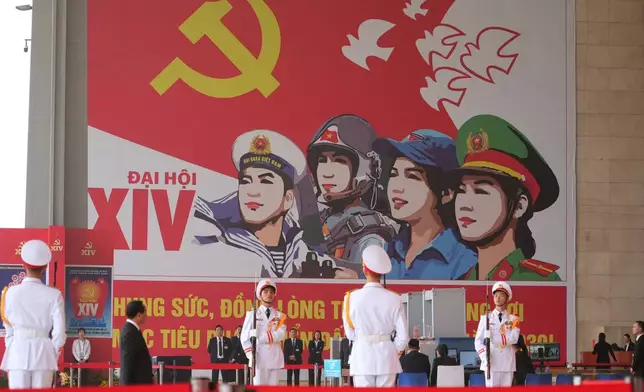
A total of 1,586 delegates from across Vietnam gathered in the capital, Hanoi, for the National Congress, the party’s highest decision-making body, which meets every five years to elect its top leadership and set priorities shaping the country’s political and economic direction.
Click to Gallery
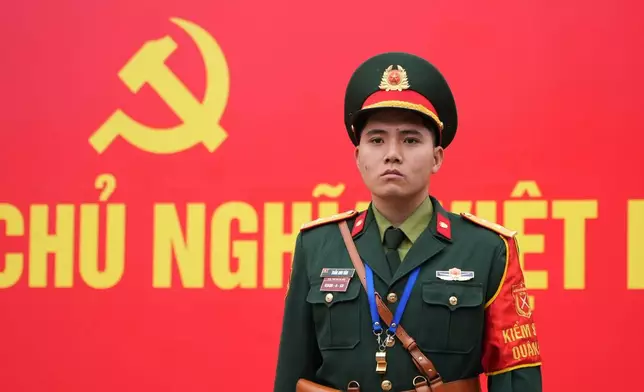
A security officer guards the entrance ofthe National Convention Center during the week-long Congress of the Communist Party of Vietnam in Hanoi, Vietnam, Monday, Jan. 19, 2026. (AP Photo/Hau Dinh)
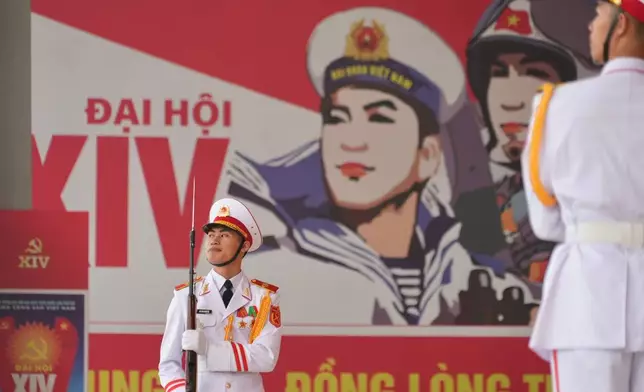
Honor guards stand in position at the National Convention Center for the week-long Congress of the Communist Party of Vietnam in Hanoi, Vietnam, Monday, Jan. 19, 2026. (AP Photo/Hau Dinh)
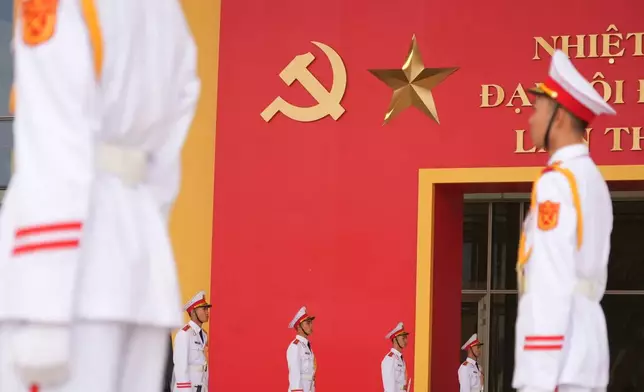
Honor guards salute the arrival of delegation at the National Convention Center for the week-long Congress of the Communist Party of Vietnam in Hanoi, Vietnam, Monday, Jan. 19, 2026. (AP Photo/Hau Dinh)
Delegates arrive at the National Convention Center for the week-long Congress of the Communist Party of Vietnam in Hanoi, Vietnam, Monday, Jan. 19, 2026. (AP Photo/Hau Dinh)
Delegates will elect about 200 members to the party’s Central Committee, which in turn appoints 17 to 19 members to the powerful Politburo in a tightly choreographed process.
Beyond settling the question of who will lead Vietnam through 2031, the Congress will also determine how the country’s single-party system responds to far more turbulent world, as the Southeast Asian export powerhouse pursues its ambitious goal of becoming a high-income economy by 2045 amid intensifying U.S.–China rivalry and a splintering global economy.
Here is what to expect.
Communist Party General Secretary To Lam is expected to be confirmed to a full five-year term.
A crucial question is whether he will also move to combine the roles of party chief and state president, as many diplomats and analysts expect. This will concentrate power in an echo of the political model of China under Xi Jinping and neighboring Laos.
Vietnam has traditionally been governed through a “four pillars” system, in which the party chief, president, prime minister and National Assembly chair balance one another. Collapsing those roles would weaken that arrangement and make To Lam the most powerful leader in Vietnam in decades.
He has overseen the most ambitious round of bureaucratic and economic reforms since the late 1980s, when Vietnam liberalized its economy, including cutting tens of thousands of public-sector jobs, redrawing administrative boundaries to speed decision-making, and initiating dozens of major infrastructure projects.
Lam spent decades in the Ministry of Public Security before becoming its minister in 2016. He led the anti-corruption campaign championed by his predecessor, Nguyen Phu Trong. His rise took place while Vietnam’s Politburo lost of six of its 18 members during an anti-corruption campaign, including two former presidents and Vietnam’s parliamentary head.
His faction within the party is aligned with the ministry while the other main grouping is close to the more conservative military, said Nguyen Khac Giang, a visiting fellow in the Vietnam Studies Program at Singapore’s ISEAS–Yusof Ishak Institute.
He said conservatives were uneasy about Lam’s reform agenda, fearing the “Vietnamese socialist system could go astray,” and want conservative voices to remain within the leadership as a check on power concentration and to keep the country on a socialist path.
Hanging over the Congress is a defining national ambition: whether Vietnam can transform itself into a high-income country by 2045, a goal that will shape its politics, economy and its place in the world.
Delegates will finalizes a resolution of a draft released in October that aimed for an average annual GDP growth of 10% or more from 2026 to 2030, after falling short of the 6.5% to 7.0% growth target set for the first half of the decade. The country's 2025 GDP grew at 8%.
To do this, the draft calls for changing how the economy grows, with a focus on upgrading industry, modernizing production, and relying more on science, technology and digital tools to drive growth.
For instance, the military-run Viettel broke ground on its first semiconductor chipmaking plant in January. The project aims to begin trial production by 2027 and is part of Hanoi’s broader strategy to build high-tech capacity and reduce reliance on foreign suppliers.
The draft also describes the private sector as “one of the most important driving forces of the economy,” underscoring To Lam’s emphasis on business-led growth and a shift away from the dominance of state-owned companies in the communist country.
Giang said To Lam may seek to deepen that approach by giving large private conglomerates a greater role in major projects across Vietnam.
The document also places “foreign affairs and international integration” on the same footing as national defense and security, underscoring how dependent Vietnam’s export-driven economy is on global markets and geopolitics.
The document also elevates environmental protection to a “central” task alongside economic and social development, a notable shift in Vietnam, where rapid growth has fueled worsening air pollution and other environmental pressures.
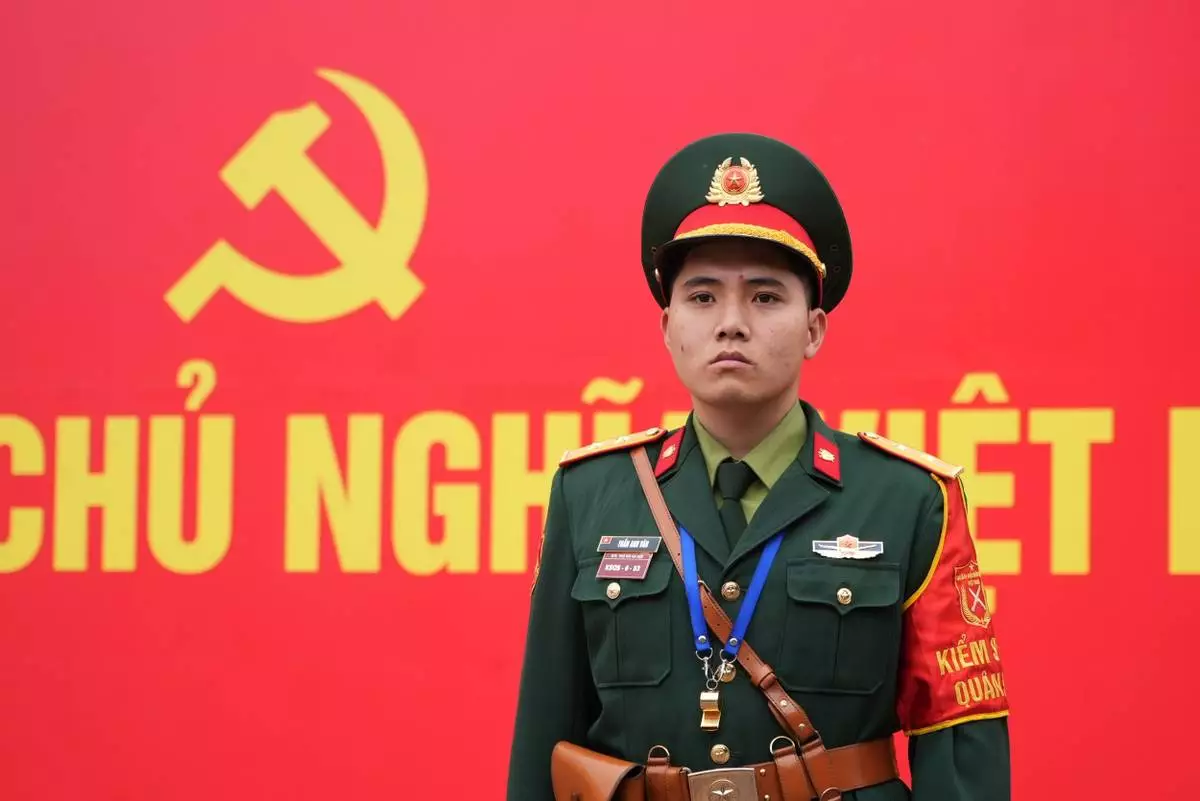
A security officer guards the entrance ofthe National Convention Center during the week-long Congress of the Communist Party of Vietnam in Hanoi, Vietnam, Monday, Jan. 19, 2026. (AP Photo/Hau Dinh)
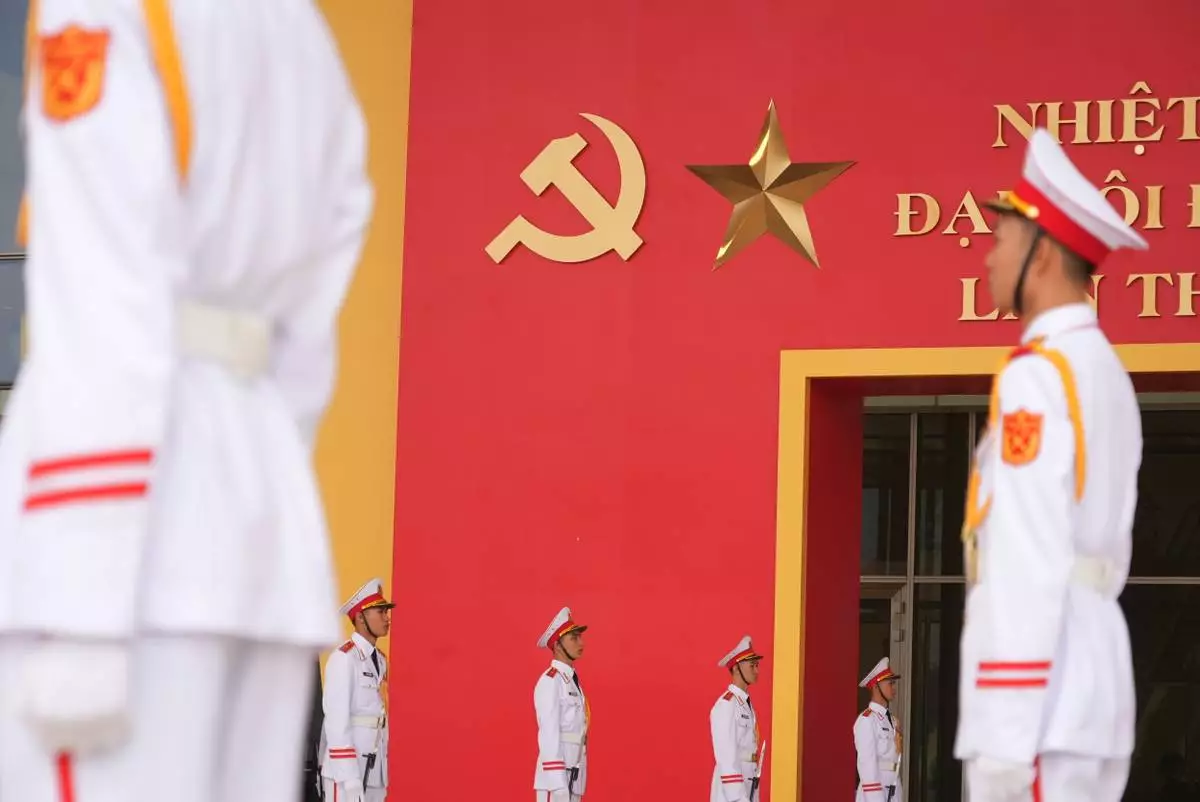
Honor guards stand in position at the National Convention Center for the week-long Congress of the Communist Party of Vietnam in Hanoi, Vietnam, Monday, Jan. 19, 2026. (AP Photo/Hau Dinh)
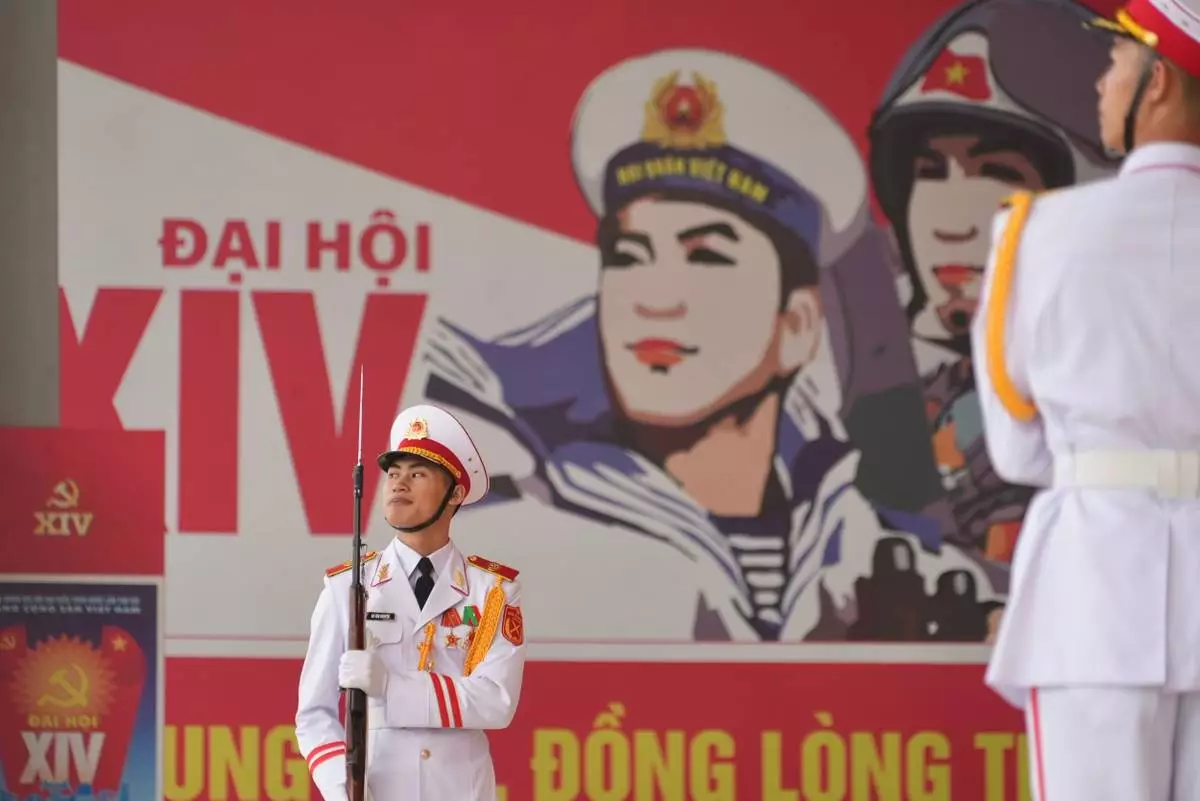
Honor guards salute the arrival of delegation at the National Convention Center for the week-long Congress of the Communist Party of Vietnam in Hanoi, Vietnam, Monday, Jan. 19, 2026. (AP Photo/Hau Dinh)
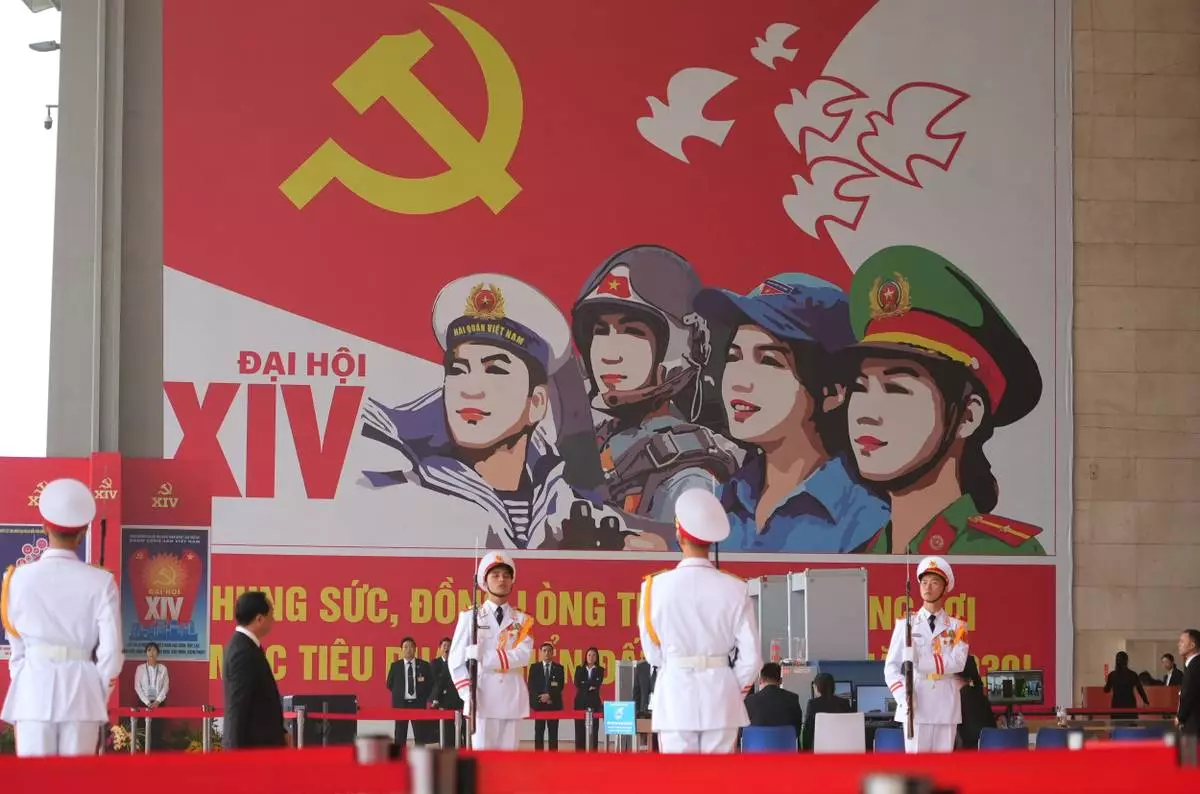
Delegates arrive at the National Convention Center for the week-long Congress of the Communist Party of Vietnam in Hanoi, Vietnam, Monday, Jan. 19, 2026. (AP Photo/Hau Dinh)
Gulf countries reported new attacks Sunday morning, a day after Iran called for the evacuation of three major ports in the United Arab Emirates, threatening for the first time a neighboring country’s non-U.S. assets.
Tehran accused the United States of using “ports, docks and hideouts” in the UAE to launch strikes on Kharg Island, home to the main terminal handling Iran’s oil exports, without providing evidence, as the war showed no signs of ending.
U.S. President Donald Trump said he hoped allies would send warships to secure the vital Strait of Hormuz.
Meanwhile, Israeli strikes have deepened Lebanon's humanitarian crisis, with more than 800 people killed and over 850,000 displaced.
Here is the latest:
Collapsed concrete, exposed rebar and sheets of plastic spilled onto the streets of southern Beirut Sunday morning. Smoke rose into the air and small fires burned.
That was the scene in the city’s suburb of Haret Hreik, after a night of continued Israeli airstrikes.
In just 10 days, more than 800,000 people in Lebanon have been displaced by war, just over a year since the last conflict uprooted over a million Lebanese from their homes. Israeli strikes have killed 826 people, including 106 children and 65 women, since the conflict between Hezbollah and Israel reignited on March 2, according to the Health Ministry.
Pope Leo XIV on Sunday escalated his appeal for peace by directly addressing the leaders who launched the war.
“On behalf of the Christians of the Middle East and all women and men of good will, I appeal to those responsible for this conflict,” Leo said. “Cease fire so that avenues for dialogue may be reopened. Violence can never lead to the justice, stability, and peace that the people are waiting for.”
While Leo didn’t mention the United States or Israel by name, he mentioned the bombings that targeted a school — an apparent reference to the missile strike on an elementary school in Iran in the opening days of the war that killed over 165 people, many of them children.
The Vatican has highlighted the carnage of the Minab strike, running a photo of the mass grave for the victims on the front page of its official newspaper, L’Osservatore Romano, under the headline “The Face of War.” U.S. officials have said outdated intelligence likely led to the United States launching the strike, and that an investigation is ongoing.
Norwegian Prime Minister Jonas Gahr Støre said it should be the responsibility of the countries involved to “find ways of ending the hostilities that now have great impact around the world.”
Speaking alongside the leaders of Canada and the other Nordic nations on Sunday, Støre said “it seems to us that the plan for how it will develop is pretty unclear.” He added: “That’s the danger with initiating wars, that they rarely follow a script.”
He said that “we are concerned to see that there is still an escalation.”
South Korea’s Foreign Ministry said in a statement that it “takes note” of Trump’s comments. It said that South Korea and the U.S. “will closely coordinate and carefully review” the situation.
The ministry said South Korea closely monitors developments in the Middle East and explores various options to secure safe energy supply routes and protect South Korean nationals.
The Korea International Trade Association says it gets around 70% of its crude oil and 20% of its LNG from the Middle East.
Asked whether Britain is considering sending minesweepers or mine-hunting drones to the strategic waterway to help shipping return to normal, U.K. Energy Secretary Ed Miliband told Sky News: “We are talking to our allies.”
“We are intensively looking with our allies at what can be done, because it’s so important that we get the strait reopened,” he said.
Miliband told the BBC on Sunday that “any options that can help to get the strait reopened are being looked at.” He added: “We don’t want a nuclear Iran but ending this conflict is the best and surest way to get the strait reopened.”
Expectations are high that U.S. President Donald Trump could ask Japan to send warships to the Persian Gulf when Prime Minister Sanae Takaichi meets him on Thursday at the White House.
Public opinion in Japan is divided about getting involved. Foreign Ministry sources told Japanese public broadcaster NHK that Japan makes its own decisions and won’t dispatch ships just because Trump asked. Defense Ministry sources told NHK that deploying Japan’s Self-Defense Forces would be difficult, involving the assessment of the legality of U.S. and Israeli actions. NHK did not identify the sources.
The sites include museums and bazaars, historic government buildings and mosques, Iran’s Cultural Heritage Ministry said Sunday.
Among the damaged sites are the ornate Qajar-era Golestan Palace in Tehran and the Shah Abbas Mosque and the 17th-century Chehel Sotoun palace in Isfahan.
The damage isn’t limited to Tehran and Isfahan. The ministry said sites in Kurdistan, Lorestan and Kermanshah were also affected.
Israel’s rescue service Magen David Adom said two men were lightly wounded in central Israel from an Iranian missile attack.
Video released by the service showed a large hole in a city street and shrapnel damage to an apartment building.
The Israeli rescue service United Hatzalah said it was aware of 23 damaged sites.
Israeli police said authorities were inspecting the scenes. Magen David Adom, another rescue service, posted pictures of a car partially set on fire after the barrage.
Iran’s top diplomat says his country is ready to consider any proposal that includes “a complete end” to the U.S.-Israeli war on the Islamic Republic, according to an interview with an Arab daily.
Iranian Foreign Minister Abbas Araghchi was quoted as saying by the London-based Al-Araby al-Jadeed that mediations by Iran’s neighbors were underway to de-escalate and present “ideas to end the war.” He gave no indication on whether progress has been made.
Araghchi also insisted that Iran’s attacks on its Arab neighbors were limited to U.S. bases and assets. He said Tehran is ready to establish a joint committee with its neighbors to investigate such attacks.
A tanker was seen loading oil Sunday on Iran’s Kharg Island, two days after the U.S. struck military facilities there.
The vessel-tracking platform TankerTrackers said seven more tankers are seen at the anchorage. Five had already loaded fuel oil, while two are waiting to load, according to satellite imagery. It wasn’t immediately clear who the tankers belong to.
Bahrain said Sunday its air defenses have intercepted 125 missiles and 211 drones since the Iran war began.
The small island nation — home to the U.S. Navy’s Fifth Fleet — has been among the most affected by Iranian strikes, which have hit ports, a hotel, a refinery and a water desalination plant. Similar in size to Singapore and less than one-third the size of Rhode Island, it relies on U.S.-made air defense systems. At least one person has been killed in the attacks.
The International Organization for Migration said Sunday that deteriorating conditions in Iranian cities were “driving increasingly complex mobility patterns.” It says the destruction of homes and facilities that provide basic services are pushing many Iranians to northern provinces, where they think they could be safer.
The U.N. agency said people have been displaced to more than 20 provinces and that shelters were facing strain throughout Iran. Iranians are also fleeing to neighboring states, the agency said, including nearly 32,000 to Afghanistan and nearly 4,000 to Pakistan, even though airports and most border crossings — especially to Iraq — are closed.
Iran’s Health Ministry says U.S. and Israeli strikes have killed 223 women and 202 children since the start of the war on Feb. 28, according to Mizan, the official Iranian judiciary news agency.
The Iranian Red Crescent has said that more than 1,300 people have been killed.
A U.S.-Israeli attack early Sunday morning targeted an impoverished residential neighborhood in the southern city of Shiraz, Iran’s state-run news agency IRNA said.
The strike, which occurred southeast of the city, destroyed several housing units belonging to workers and people supported by the state welfare organization, the report said. It said a number of homes were destroyed and several people were injured. There were no reports of fatalities.
There was no immediate comment from Israel or the U.S. On Friday, Israel said it targeted a missile facility in Shiraz. It also has gone after what it says are checkpoints erected by Iran’s paramilitary Basij force.
Neutral Switzerland says it refused permission for two overflights by U.S. reconnaissance planes “in the context of the war in Iran.”
The government said late Saturday that Switzerland’s neutrality law forbids overflights by parties to a conflict that have a military purpose in connection with that conflict. But it does allow humanitarian and medical transit, as well as flights unconnected with the conflict.
Switzerland said it did give clearance for two U.S. transport aircraft to fly over the country on Sunday and for a newly serviced plane to transit on Tuesday.
Iran’s Revolutionary Guard vowed Sunday to hunt down Israeli Prime Minister Benjamin Netanyahu, according to the state-run IRNA news agency.
“If the criminal Zionist prime minister is still alive, we will continue to pursue and kill him with full force,” the IRGC said in a statement.
The Israeli military says Iran has launched a new barrage of missiles toward Israel.
It says sirens are alerting residents in areas under attack and air defenses have been activated.
“This reflects a confused policy that missed the point, lost its direction, and lacked wisdom,” Anwar Gargash, adviser to the president of the United Arab Emirates, wrote on social media late Saturday.
Gargash was referring to Iranian Foreign Minister Abbas Araghchi’s comments in which he accused the U.S. of using the UAE as a base for its attacks on Iran's Kharg Island.
Sirens sounded in Bahrain ahead of an assault on Sunday, while the United Arab Emirates reported a missile attack, urging residents to shelter in safe locations.
Saudi Arabia’s Defense Ministry said its systems intercepted and destroyed 10 drones over the capital, Riyadh, and the kingdom’s eastern region.
Iran’s joint military command accused in a statement Sunday "the enemy” of using copycat Iranian drones to attack neighboring countries and pin the blame on Tehran, state media reported.
Tehran usually uses “the enemy” as a reference to the United States and Israel.
The statement said copies of Iran's Shahed-136 drone, known as LUCAS, were used to hit “irrelevant targets in the regional states," including attacks on Turkey, Iraq and Kuwait. No evidence was provided.
The military command also said Iran openly shares its targets, which it describes as U.S. and Israeli interests, and urged trust and cooperation from regional countries.
The United Arab Emirates reported a missile attack Sunday morning.
Authorities urged residents to remain in safe locations.
The U.S. Department of Defense on Saturday identified six service members who died when the military refueling aircraft they were aboard crashed Thursday while supporting operations against Iran.
The service members were Maj. John A. Klinner, 33; Capt. Ariana G. Savino, 31; Tech. Sgt. Ashley B. Pruitt, 34; Capt. Seth R. Koval, 38; Capt. Curtis J. Angst, 30; and Tech. Sgt. Tyler H. Simmons, 28, according to U.S. officials.
The crash in western Iraq followed an unspecified incident involving two aircraft in “friendly airspace,” according to U.S. Central Command. The other plane landed safely.
Israel’s military said early Sunday that Iran launched another round of missiles toward Israel.
Sirens sounded in Tel Aviv and loud booms were heard.
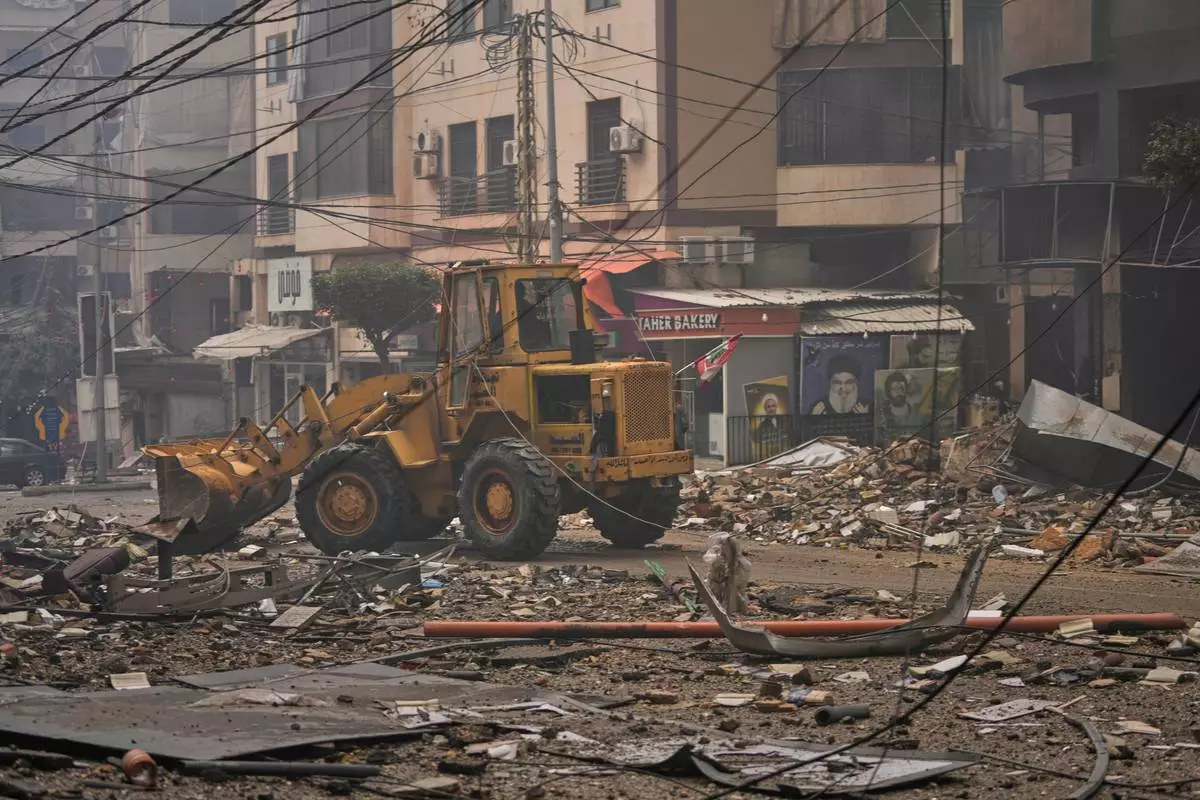
A bulldozer clears debris from the rubble of buildings destroyed in an Israeli airstrike in Dahiyeh, Beirut's southern suburbs, Lebanon, Sunday, March 15, 2026. (AP Photo/Hassan Ammar)
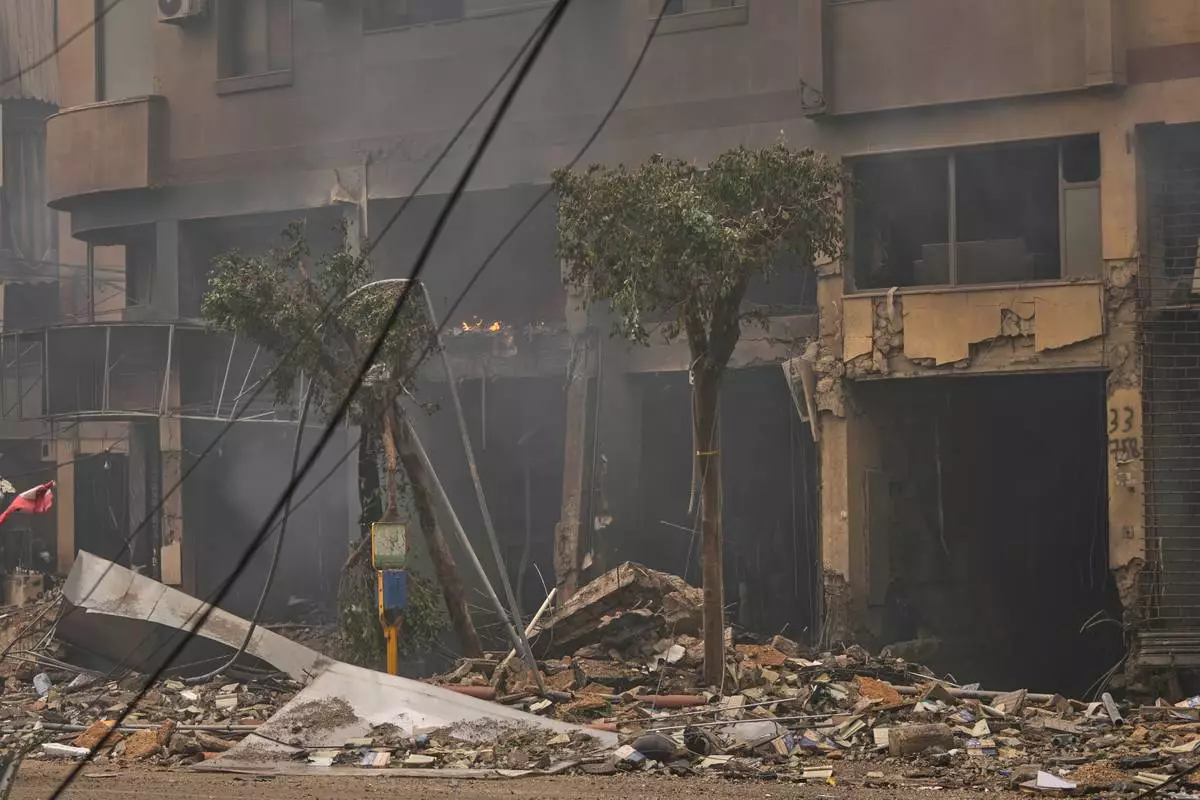
Debris litters the street as smoke rises from buildings damaged in an Israeli airstrike in Dahiyeh, Beirut's southern suburbs, Lebanon, Sunday, March 15, 2026. (AP Photo/Hassan Ammar)
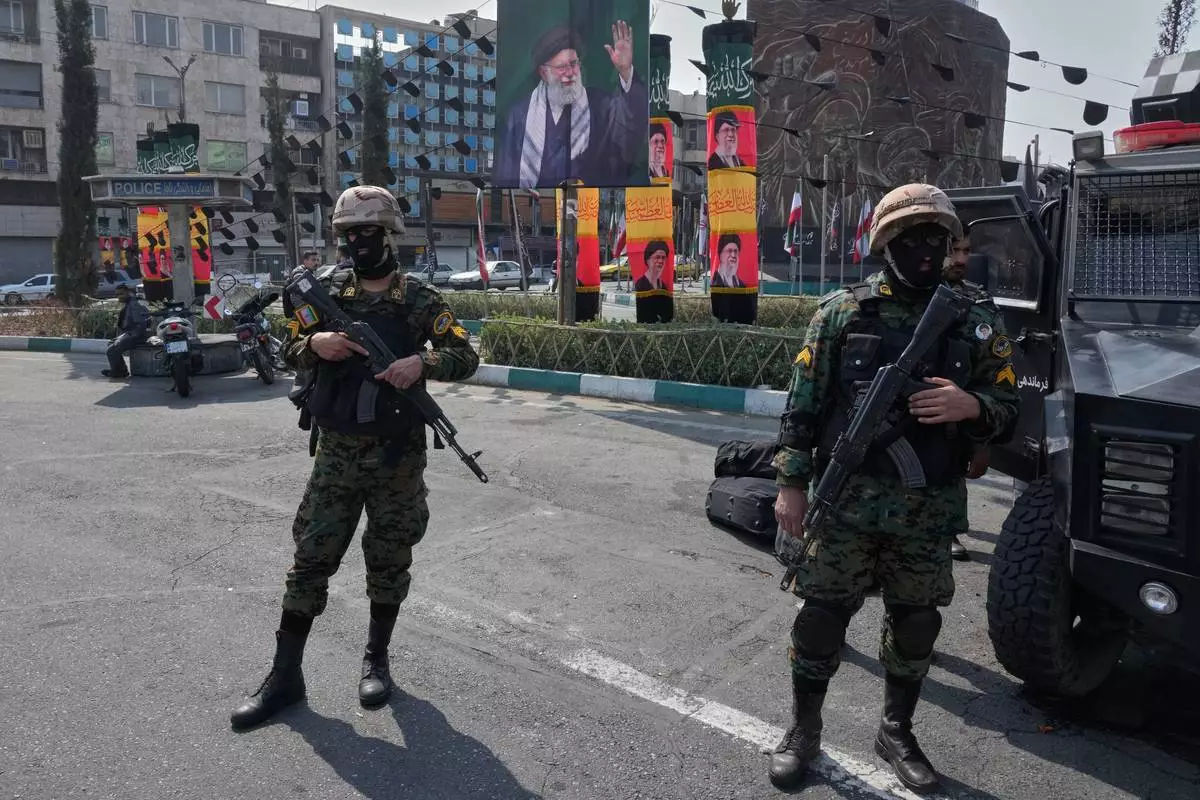
Policemen stand guard next to the banners showing portraits of the late Iranian Supreme Leader Ayatollah Ali Khamenei at the Enqelab-e-Eslami, or Islamic Revolution, square in downtown Tehran, Iran, Saturday, March 14, 2026. (AP Photo/Vahid Salemi)
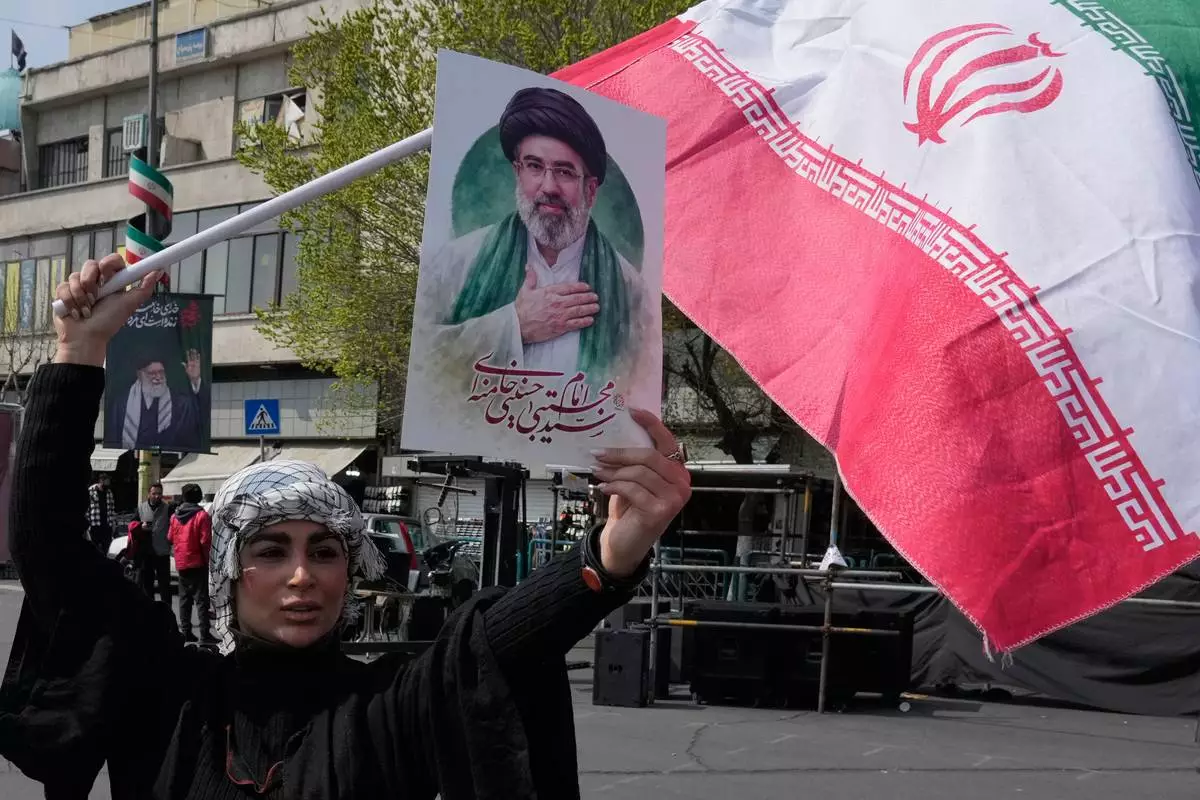
A woman displays a poster of the Iranian Supreme Leader Ayatollah Mojtaba Khamenei as she waves her country's flag during a campaign in support of the government at the Enqelab-e-Eslami, or Islamic Revolution, square in downtown Tehran, Iran, Saturday, March 14, 2026. (AP Photo/Vahid Salemi)

Israeli security forces inspect damage at the site of an Iranian missile strike in Holon, central Israel, Sunday, March 15, 2026. (AP Photo/Ohad Zwigenberg)
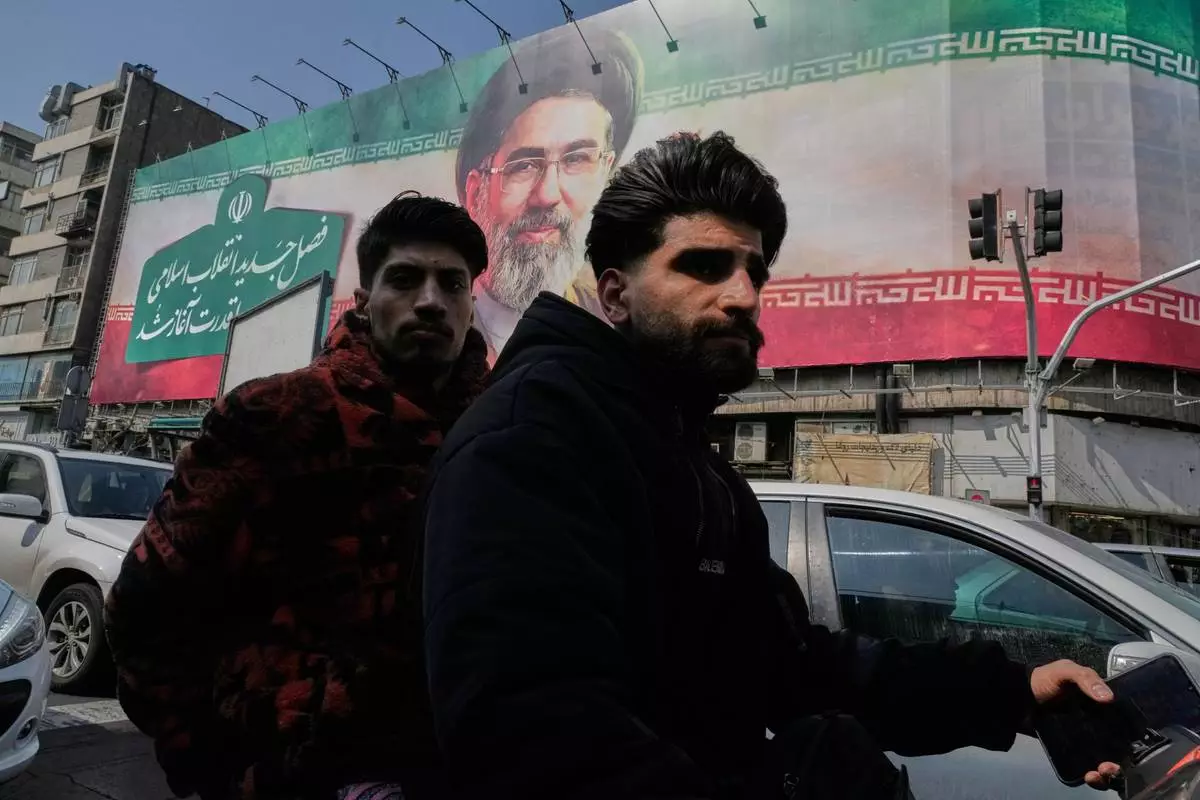
Two men ride their motorbike past a billboard of the Iranian Supreme Leader Ayatollah Mojtaba Khamenei in downtown Tehran, Iran, Saturday, March 14, 2026. (AP Photo/Vahid Salemi)
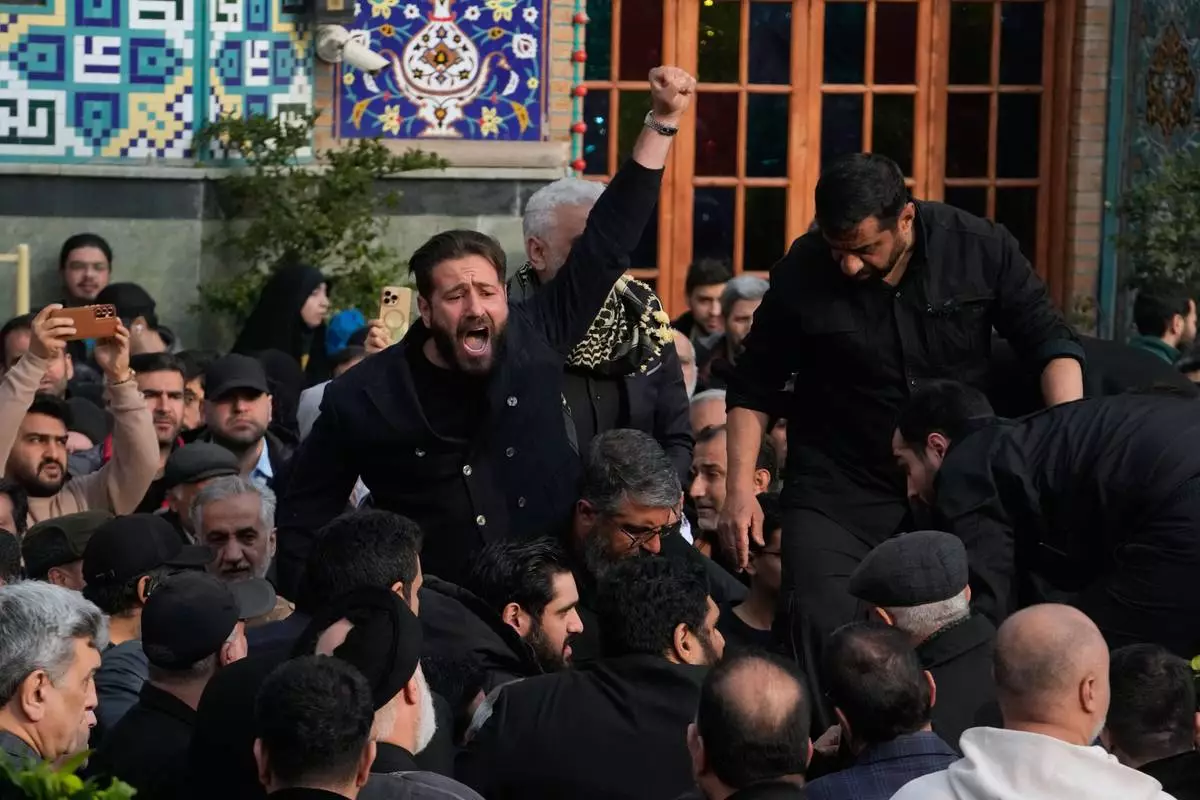
A man chants slogan while the body of Gen. Ali Shamkhani, secretary of Iran's Defense Council and a senior adviser to the Supreme Leader who was killed in a strike, is being buried at the courtyard of the Imamzadeh Saleh shrine in Tehran, Iran, Saturday, March 14, 2026. (AP Photo/Vahid Salemi)
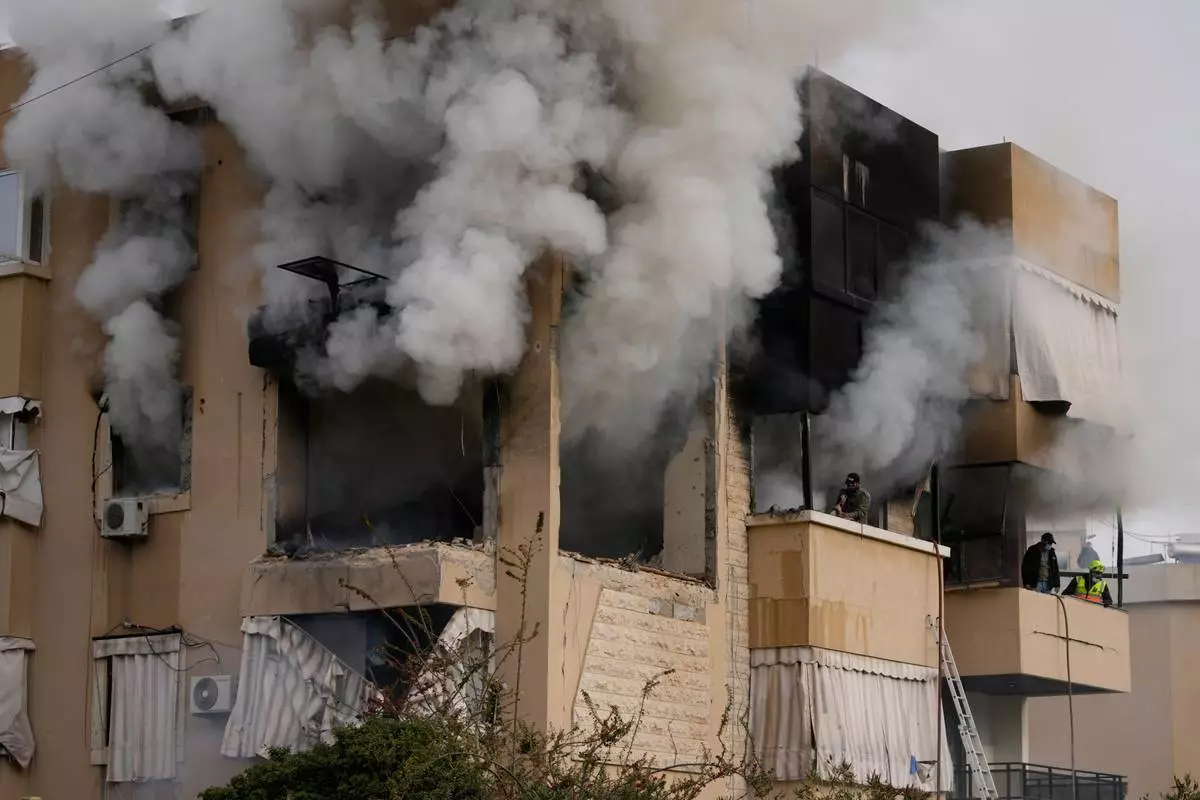
Rescue workers inspect an apartment damaged in an Israeli airstrike as thick smoke fills the building in the southern port city of Sidon, Lebanon, Saturday, March 14, 2026. (AP Photo/Mohammad Zaatari)
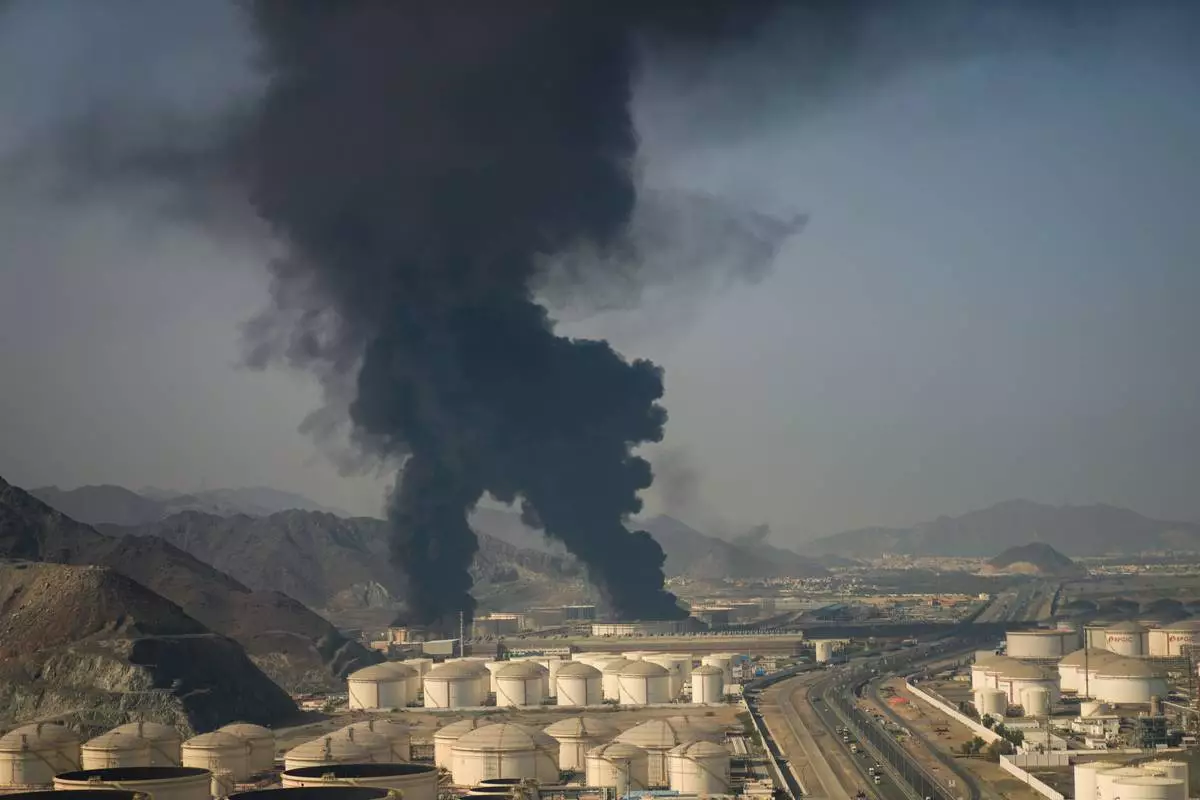
Fire and plumes of smoke rise from an oil facility in Fujairah, United Arab Emirates, Saturday, March 14, 2026. (AP Photo/Altaf Qadri)