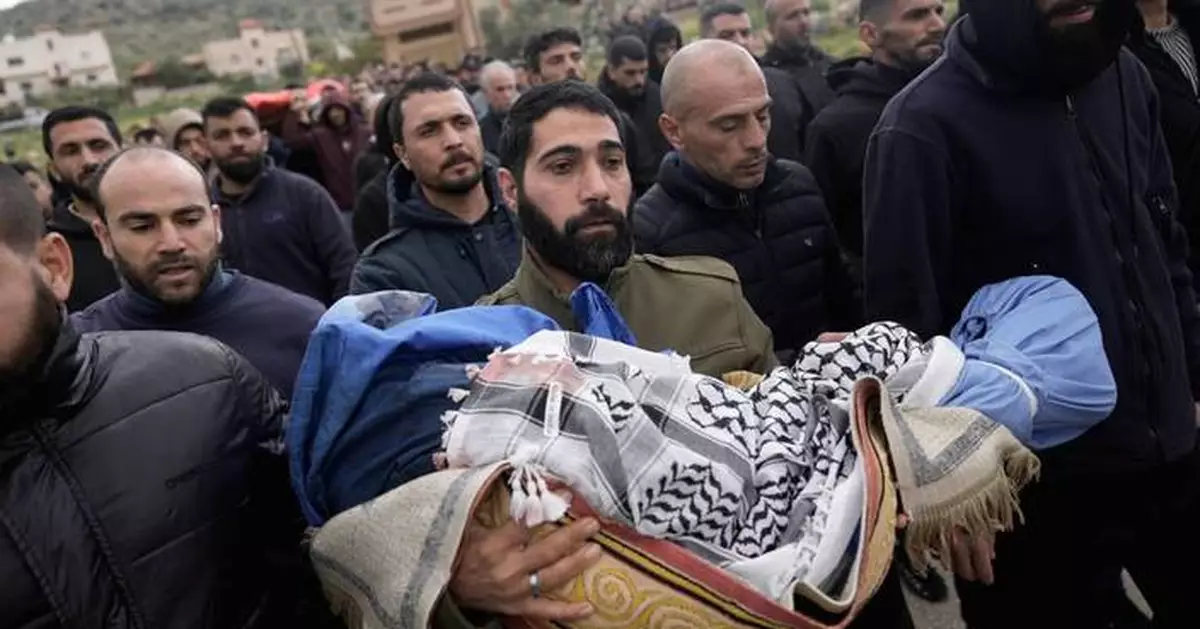
TAMMUN, West Bank (AP) — Israeli soldiers fired on a car carrying a family in the northern West Bank, killing four people including two children, the Palestinian Authority’s Health Ministry said.
The Palestinian Red Crescent rescue service said that Ali and Waed Odeh, and two of their four children, were shot in the head. The Odehs’ two surviving children had shrapnel wounds that were examined by first responders once they were granted access, the group said, accusing Israel of delaying ambulances dispatched to the scene.
Israel’s military and police said in a joint statement Sunday that forces opened fire after a car accelerated toward them in Tammun. They said the forces were pursuing suspects accused of “terrorist activity” and that the shooting was under investigation.
Najah al-Subhi, who lost her son and grandchildren, told The Associated Press the family had gone to a mall in Nablus to buy clothes for Eid al-Fitr, the holiday marking the end of the Muslim holy month of Ramadan this week. She said the two surviving children sustained shrapnel wounds in the eye and the head.
Sameer Basharat, Tammun's mayor, said he heard about what happened to the Odeh family in the middle of the night, noting that their car was shot in the town's center, where the Israeli army maintains a daily military presence.
The town is among several that Israel has remained in for more than a year after launching an offensive in parts of the northern West Bank last year as part of an effort to confront militants.
Beyond the shooting, Basharat said that over the past year residents have been evicted by the army and denied access to the town’s farmland, while Israel has been seizing land in preparation for the anticipated construction of a new fence that would divide the Jordan Valley. Additionally, Tammun has faced frequent raids and road closures, affecting life and livelihoods of people in the town who on Sunday “are experiencing deep sorrow over what happened to the family," Basharat said.
The Israeli rights group B'tselem said the Odeh family's car was riddled with bullets and Israeli forces had “violently interrogated” one of the surviving children who was wounded.
“No effective mechanism exists to hold those responsible to account,” the group said.
Israeli soldiers accused of harming Palestinians are rarely penalized and were indicted in fewer than 1% of cases based on 2,427 complaints alleging wrongdoing between 2016 and 2024, according to Israeli rights group Yesh Din.
The members of the Odeh family were the latest casualties in the occupied West Bank, where Israeli settlers and soldiers had previously shot and killed at least eight Palestinians since the start of the Iran war.
Since Israel and the U.S. attacked Iran on Feb. 28, Israeli authorities have restricted movement across the West Bank, intermittently closing hundreds of gates and checkpoints on roads used by residents, ambulances and commercial traffic. The barriers have tightened movement and made emergency response significantly more difficult, the Red Crescent told AP last week.
Yesh Din said on Wednesday that it had documented 109 incidents of settler violence in the occupied West Bank in dozens of Palestinian communities since the start of the war.
Metz reported from Ramallah, West Bank.
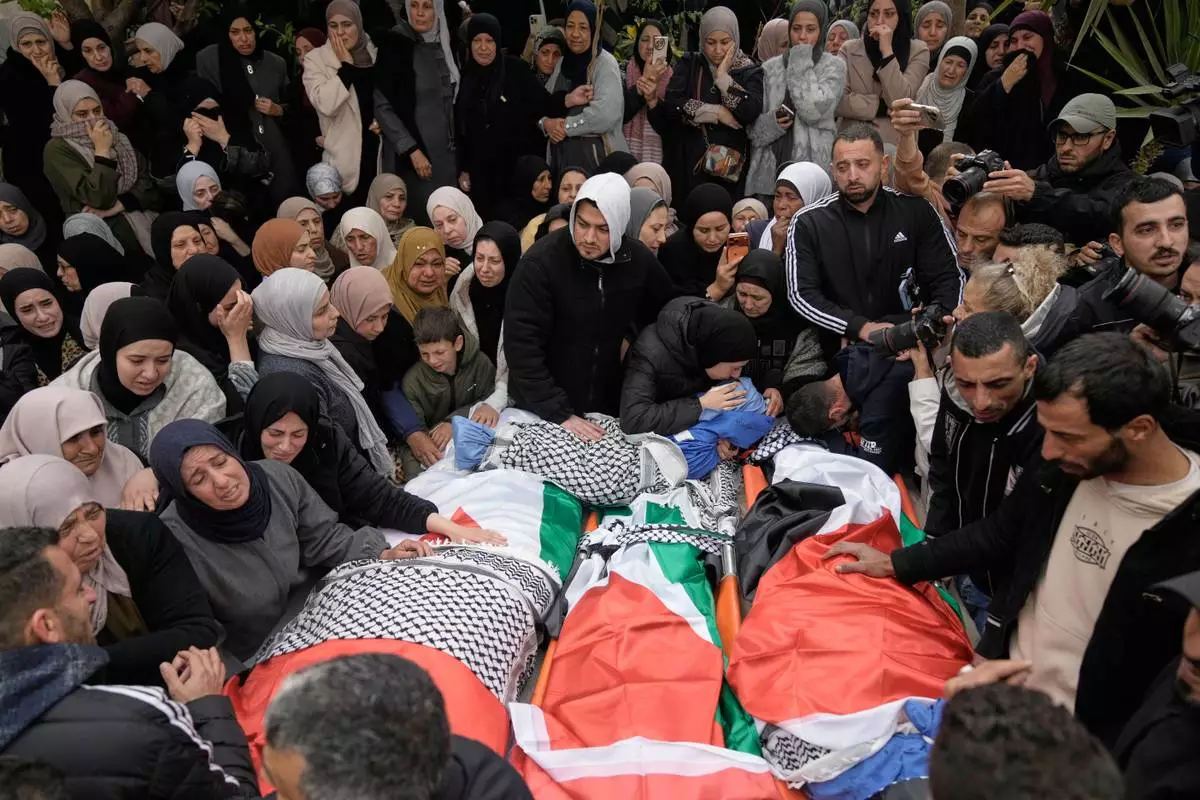
Palestinians mourn at the funeral of four members of the Odeh family who were killed in their car by Israeli security forces during an army operation in Tammun, West Bank, Sunday, March 15, 2026. (AP Photo/Majdi Mohammed)
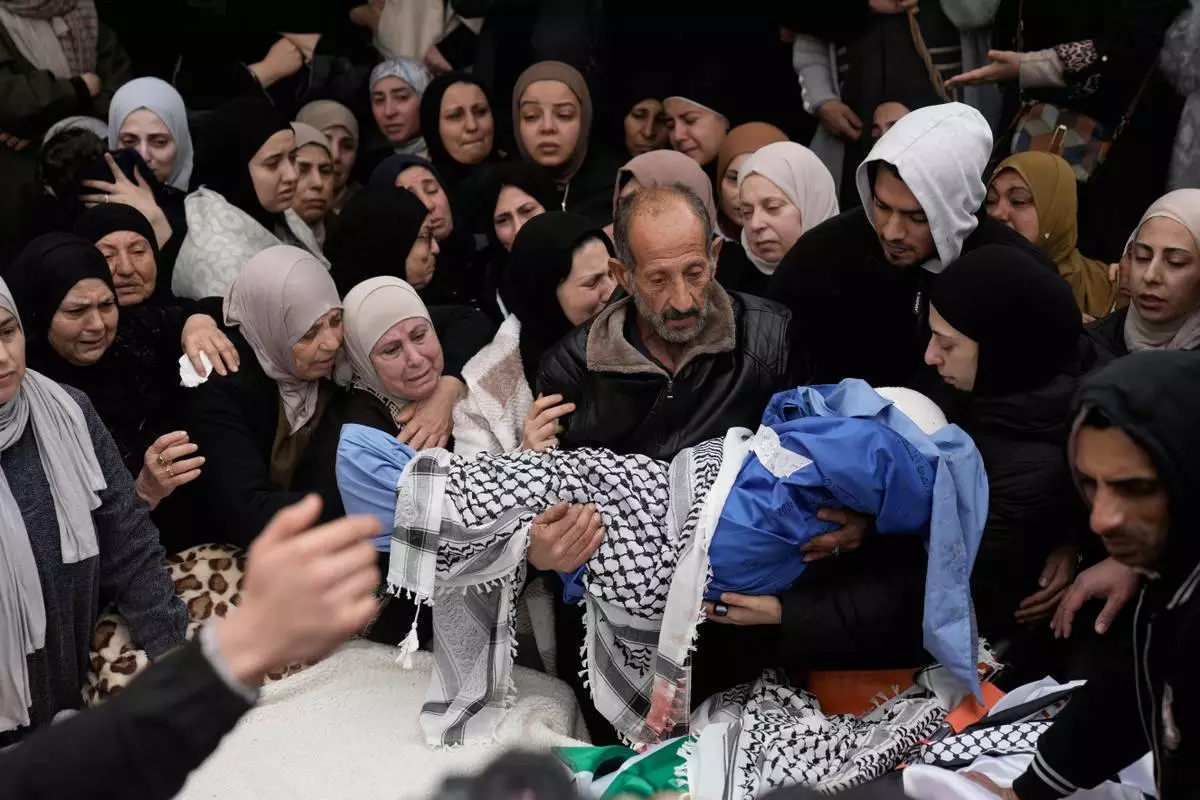
Palestinians mourn at the funeral of four members of the Odeh family who were killed in their car by Israeli security forces during an army operation in Tammun, West Bank, Sunday, March 15, 2026. (AP Photo/Majdi Mohammed)
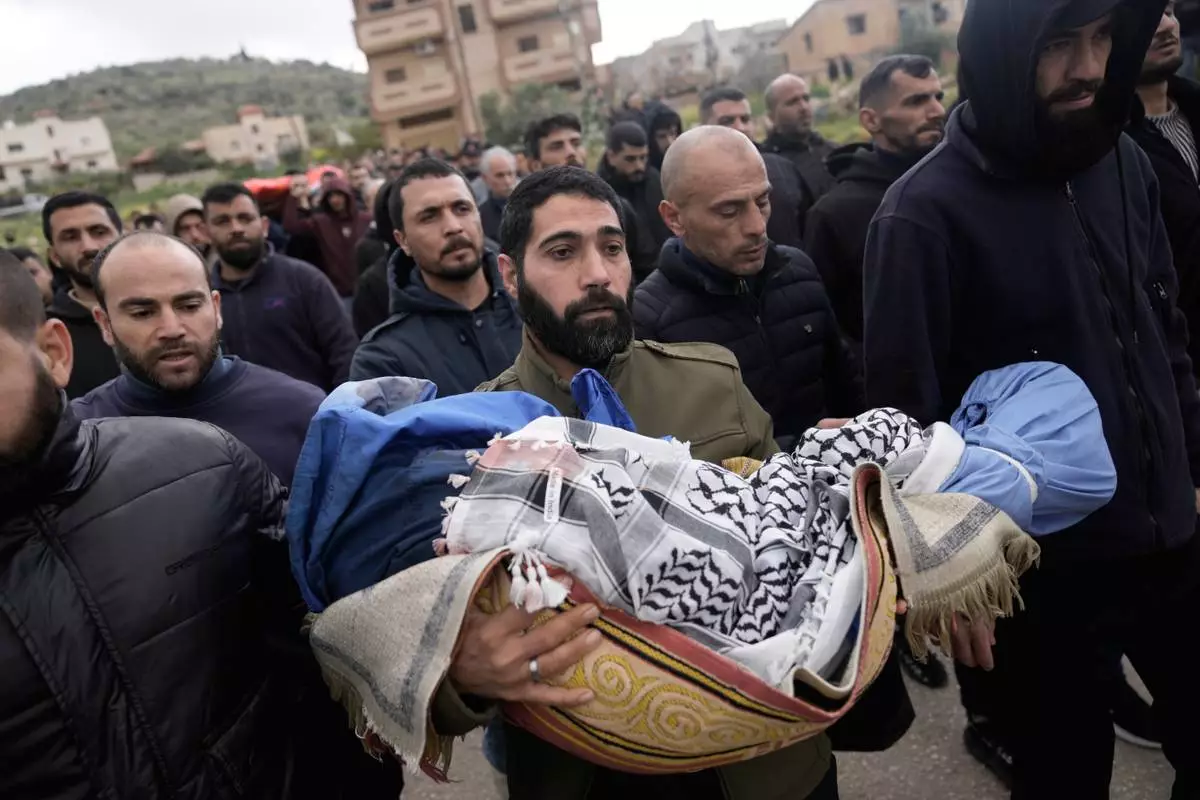
A Palestinian man carries Muhammad Bani Odeh, 5, at the funeral of four members of the Odeh family who were killed in their car by Israeli security forces during an army operation in Tammun, West Bank, Sunday, March 15, 2026. (AP Photo/Majdi Mohammed)
President Donald Trump's administration is arguing that the war in Iran has already ended because of the ceasefire that began in early April, an interpretation that would allow the White House to avoid the need to seek congressional approval.
The statement furthers an argument laid out by Defense Secretary Pete Hegseth during testimony in the Senate on Thursday, when he said the ceasefire effectively paused the war. Under that rationale, the administration has not yet met the requirement mandated by a 1973 law to seek formal approval from Congress for military action that extends beyond 60 days.
While the ceasefire has since been extended, Iran maintains its chokehold on the Strait of Hormuz, and the U.S. Navy is maintaining a blockade to prevent Iran’s oil tankers from getting out to sea.
Here's the latest:
When Homeland Security Secretary Markwayne Mullin was questioned by senators during his confirmation hearing about his vision for implementing President Trump’s mass deportation agenda, he said his goal was to keep his department off the front pages of the news.
To some degree, he has. Gone are the social media video clips of now-retired Border Patrol commander Greg Bovino clashing with protesters. Mullin’s predecessor, Kristi Noem, made her first trip as secretary to New York City to make arrests with Immigration and Customs Enforcement. In contrast, Mullin went to North Carolina to review hurricane recovery efforts.
The Republican administration appears to be recalibrating its approach to a centerpiece policy that helped bring Trump back to the White House, moving in many ways away from aggressive, public-facing tactics toward a quieter approach to enforcement. Despite that shift, the administration insists it’s not backing down from its lofty deportation goals.
▶ Read more
Many Republicans who have been uneasy with Trump’s war in Iran emphasized that there would be a May 1 deadline for Congress to intervene. But the date is now set to pass with no action from GOP lawmakers who continue to defer to the White House.
Under the War Powers Resolution of 1973, Congress must declare war or authorize the use of force within 60 days — a deadline that falls on Friday — or within 90 days if the president asks for an extension. But Congress made no attempt at enforcing that requirement, leaving town for a week on Thursday after the Senate rejected a Democratic attempt to halt the war for a sixth time.
The Trump administration has shown no interest in seeking congressional approval at all. It is arguing that the deadlines set by the law don’t apply because the war in Iran effectively ended when a ceasefire began in early April.
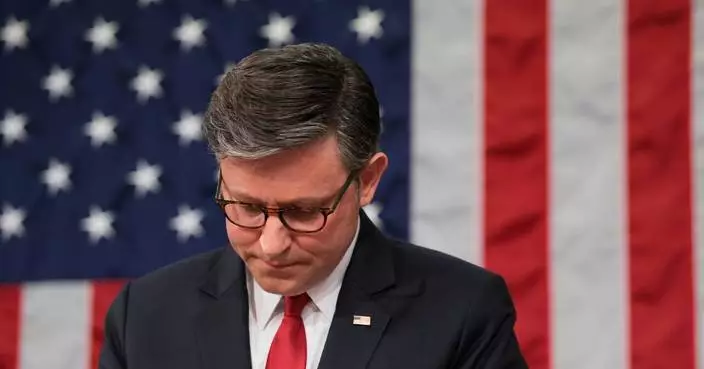
Senate Majority Leader John Thune, R-S.D., said Thursday he doesn’t plan on a vote to authorize force in Iran or otherwise weigh in.
▶ Read more
President Donald Trump granted a key approval Thursday for a major new oil pipeline from Canada into the U.S. that’s been dubbed “Keystone Light” over its similarities to a contentious project blocked by the Biden administration.
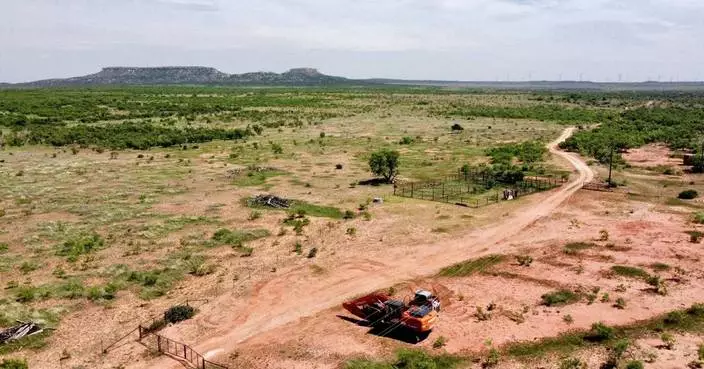
The three-foot-wide (1 meter) Bridger Pipeline Expansion would carry up to 550,000 barrels (87,400 cubic meters) of oil a day from Canada through Montana and Wyoming, where it would link with another pipeline.
The pipeline needs additional state and federal environmental approvals before construction, which company officials expect to start next year. Environmentalists hope to stop the project over worries that the pipeline could break and spill.
At peak volume, the 650-mile (1,050-kilometer) pipeline would move two-thirds as much oil as the better-known Keystone XL pipeline that got partially built before President Joe Biden, citing climate change, canceled its permit on the day he took office in 2021.
▶ Read more
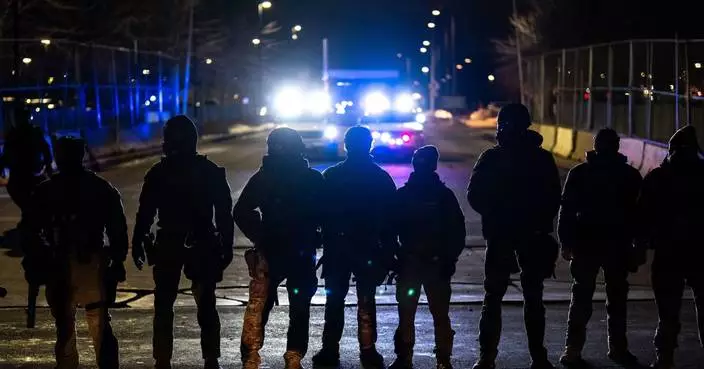
Federal prosecutors released a video Thursday showing the moment authorities say a man armed with guns and knives tried to storm the White House Correspondents’ Association dinner and attempt to kill Trump.
Jeanine Pirro, the U.S. attorney for Washington, posted the video on social media amid questions over whose bullet struck a Secret Service officer as Cole Tomas Allen ran through security with a long gun toward the hotel ballroom packed with journalists, administration officials and others.
Prosecutors had previously claimed the agent was shot in the bullet-resistant vest during the melee, but had not confirmed it was Allen who shot the agent. Pirro, however, said Thursday that there is no evidence that the officer was hit by friendly fire.
Allen was injured but was not shot during the Saturday night attack at the Washington Hilton, which disrupted one of the highest-profile annual events in the nation’s capital.
▶ Read more
The Trump administration is arguing that the war in Iran has already ended because of the ceasefire that began in early April, an interpretation that would allow the White House to avoid the need to seek congressional approval.
The statement furthers an argument laid out by Defense Secretary Pete Hegseth during testimony in the Senate earlier Thursday, when he said the ceasefire effectively paused the war. Under that rationale, the administration has not yet met the requirement mandated by a 1973 law to seek formal approval from Congress for military action that extends beyond 60 days.
A senior administration official, who spoke on condition of anonymity to discuss the administration’s position, said for purposes of that law, “the hostilities that began on Saturday, Feb. 28 have terminated.” The official said the U.S. military and Iran have not exchanged fire since the two-week ceasefire that began April 7.
While the ceasefire has since been extended, Iran maintains its chokehold on the Strait of Hormuz, and the U.S. Navy is maintaining a blockade to prevent Iran’s oil tankers from getting out to sea.
▶ Read more
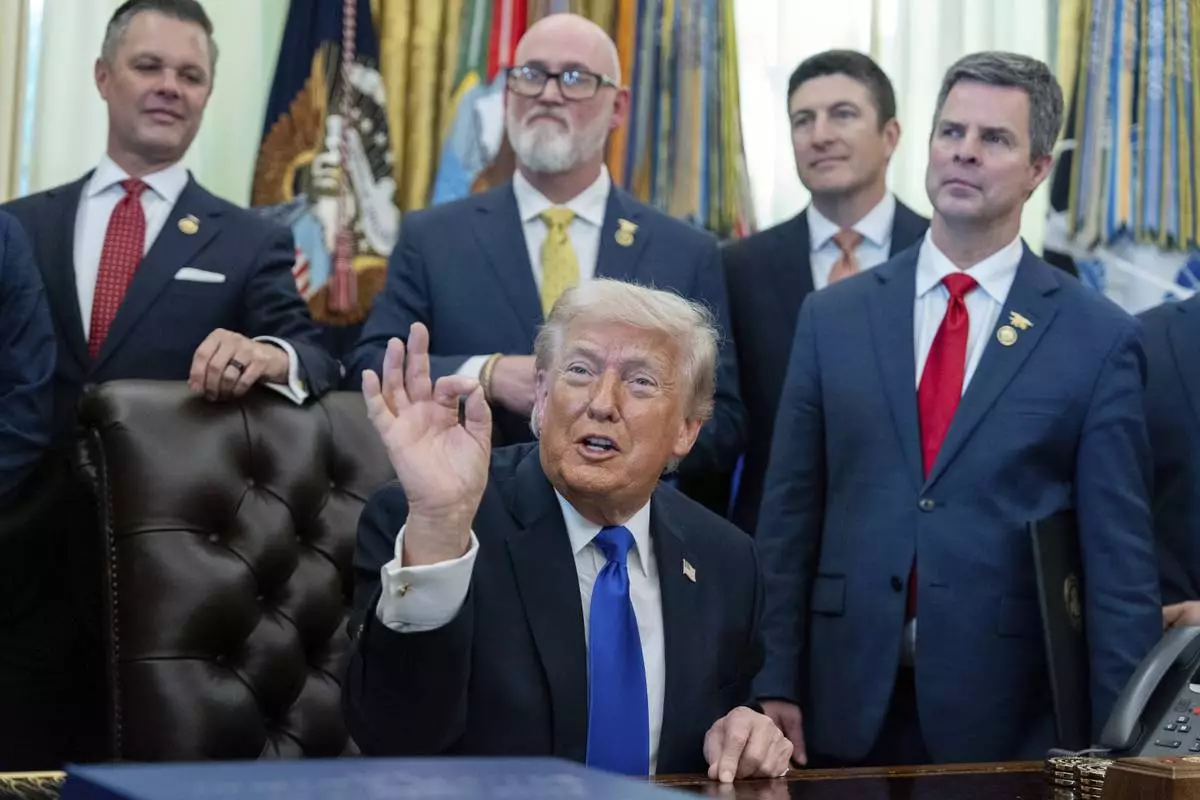
President Donald Trump speaks in the Oval Office of the White House, Thursday, April 30, 2026, in Washington. (AP Photo/Alex Brandon)
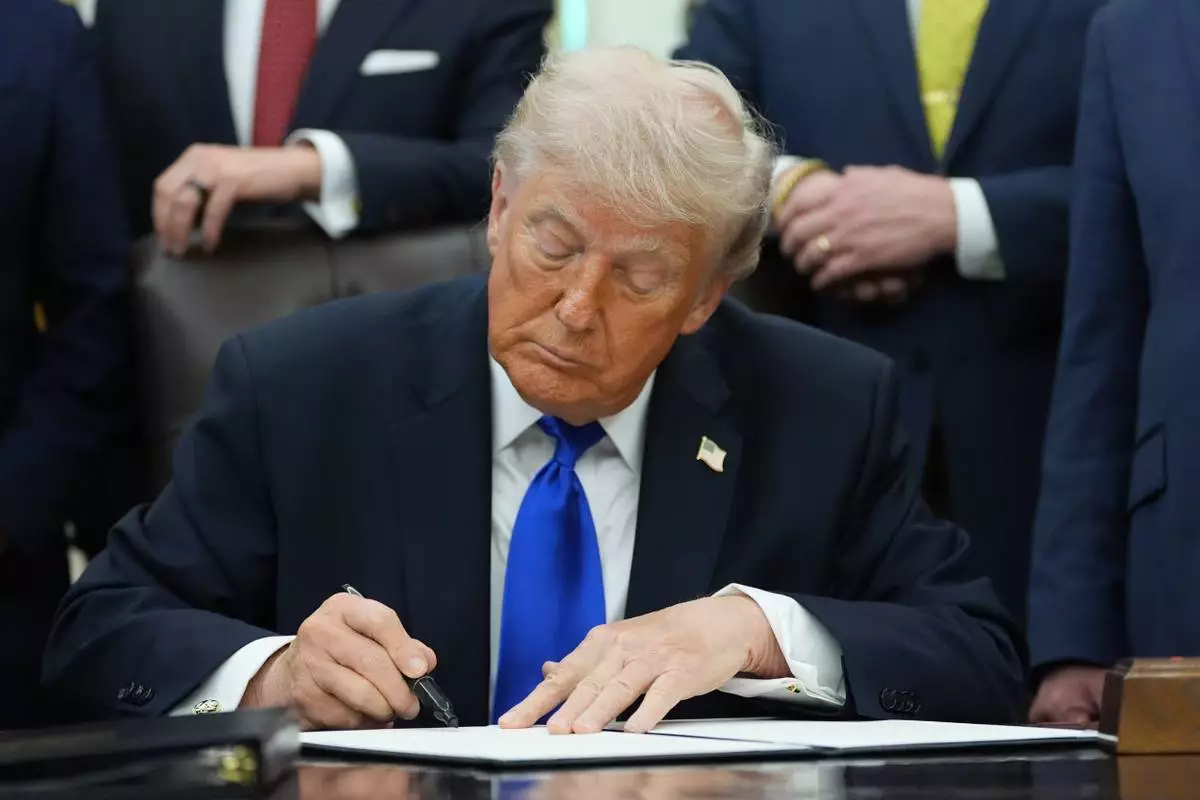
President Donald Trump signs a presidential permit regarding pipeline construction in the Oval Office of the White House, Thursday, April 30, 2026, in Washington. (AP Photo/Alex Brandon)