Shanghai experienced a significant recovery in rental demand for commercial office buildings in the fourth quarter of 2025.
A landmark project in the heart of Shanghai, the Pacific Xintiandi Commercial Center spans some 390,000 square meters and features three commercial office buildings. Situated in one of the city's busiest commercial districts, the project has already achieved over 60 percent occupancy, primarily attracting leading and renowned international companies.
"Because the Huangpu District is a core CBD area. So, it's not like one or two single industries we are focusing [on]. Instead, we have a lot of top-tier companies from different industries," said Bruce Dai, deputy general manager of the office business management with Shui On Xintiandi.
Data from real estate consultancy Knight Frank show that 63 percent of the firms renting offices in Shanghai in the fourth quarter of 2025 were domestic firms, up four percentage points from a year earlier. However, in core areas like Xintiandi, international companies remain a major renting force.
"The completion of the office part was in 2024. We only took one and half a year to lease out the whole three office buildings with an 65 (-percent)-average occupancy rate. So I think we are doing pretty well facing the challenging market," Dai said.
Shanghai's office building market has indeed been challenging. The city's net absorption in Grade-A office buildings, which refers to net change in occupied space, dropped by nearly 11 percent in 2025 from a year earlier. Net absorption recovered in the fourth quarter of 2025, jumping by 9.3 percent quarter on quarter.
"We think this is an early sign showing the market recovery backed by the resilience of the Chinese economy. So if you look at the supply side, the last quarter's new supply recorded at 216,000 square meters, it was also up by 55 percent. So it pushed up the vacancy rate by 0.5 percent and reach to a historic high at 23.8 percent. This marginal improvement is actually showing the tenant demand is beginning to stabilize," said Virginia Huang, managing director of North and East China, Knight Frank.
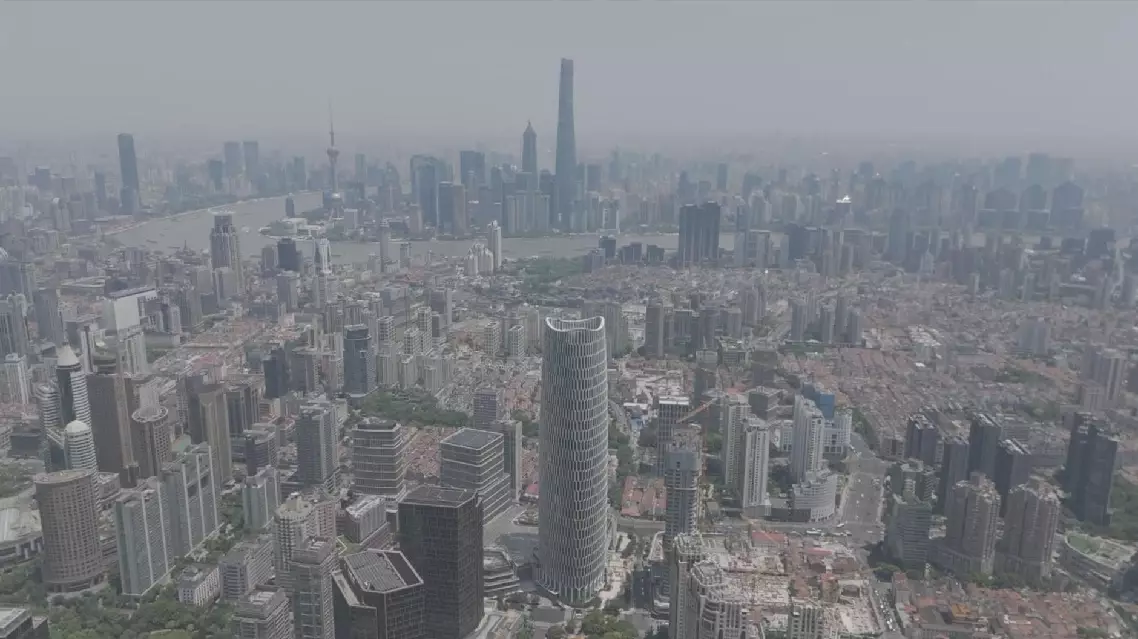
Shanghai sees increase in rental demand for commercial office space
China has always been a reliable friend to Latin American and Caribbean countries and stands ready to work with regional countries, including Brazil, to further deepen and expand overall China-Latin America cooperation, Chinese Foreign Minister Wang Yi said on Monday.
Wang, also a member of the Political Bureau of the Communist Party of China Central Committee, made the remarks during the fifth China-Brazil Foreign Ministerial-Level Comprehensive Strategic Dialogue with Brazilian Foreign Minister Mauro Vieira in Beijing.
Wang said that in recent years, under the strategic guidance of the two heads of state, China-Brazil relations have become increasingly global, strategic and far-reaching in influence.
"Practical cooperation across all fields has been steadily upgraded, and the two peoples have never been closer," he added.
Wang said the two sides should fully implement the important consensus reached by the two heads of state, continue to advance the building of a China-Brazil community with a shared future, jointly counter various external challenges, and build greater synergy for each other's modernization drives and the unity and self-improvement of Global South countries.
Noting that China appreciates the Brazilian government's long-standing commitment to the one-China principle, Wang said China supports Brazil in safeguarding its national sovereignty, upholding independence and autonomy, and achieving greater development.
The two sides should advance exchanges and cooperation in culture, education, tourism, sports, sub-national areas, youth, media and other fields, Wang said, adding that it is important to strengthen communication and coordination under multilateral mechanisms including the United Nations and BRICS, earnestly implement the four major global initiatives, and promote the development of a more just and equitable global governance system.
Vieira stated that Brazil will always adhere to the one-China principle. He said Brazil looks forward to consolidating strategic mutual trust with China, deepening practical cooperation, cementing public support for bilateral ties, and achieving common prosperity.
Noting that both Brazil and China are important forces championing multilateralism and free trade, Vieira said Brazil is ready to work with China to enhance multilateral coordination, jointly advance the reform of the global governance system, uphold the authority of the United Nations, and promote international fairness and justice.
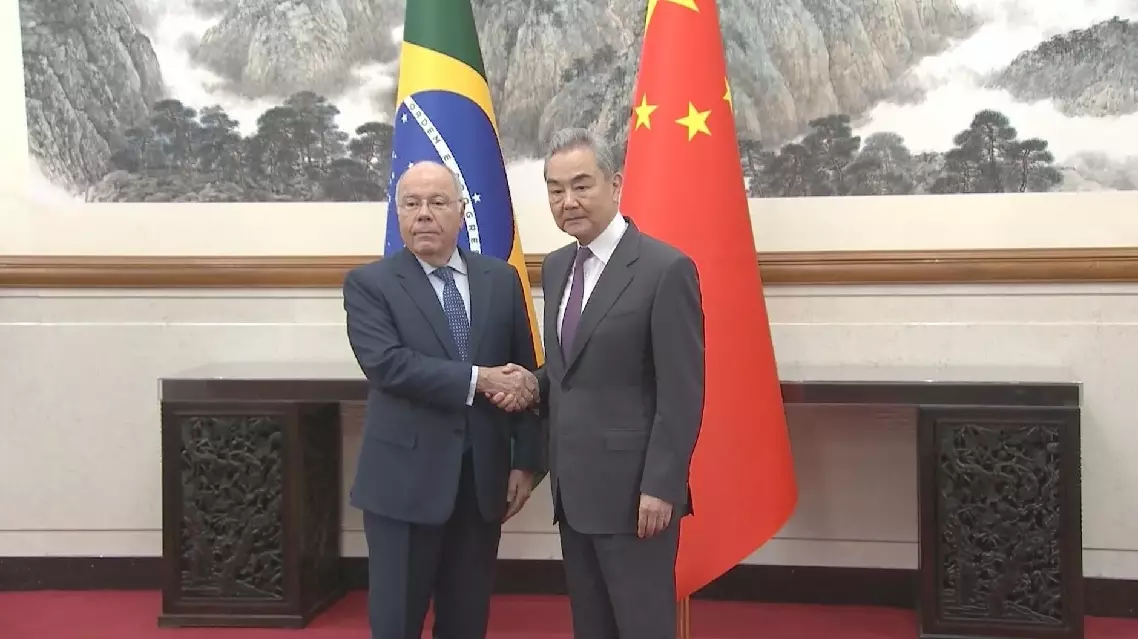
China ready to work with Brazil to further expand overall China-Latin America cooperation: Chinese FM