A senior United Nations trade official warned on Monday the greatest challenge facing the global economy this year is not a single policy shock but the escalating uncertainty that clouds the international landscape, but believes China can serve as an "important stabilizing force" amid these difficult times.
Rebeca Grynspan, Secretary-General of the UN Conference on Trade and Development (UNCTAD), gave her assessment of the current global economic prospects in an interview with China Central Television (CCTV) on the sidelines of the 2026 World Economic Forum(WEF) in Davos, Switzerland.
The five-day WEF opened in the Swiss Alpine town on Monday, gathering 3,000 leaders and experts worldwide to discuss pressing global challenges including enhancing cooperation, unlocking new sources of growth and deploying innovation at scale and responsibly.
While the global economy has faced a series of shocks over the last year, including tariffs imposed by the U.S. and a number of geopolitical flashpoints that have further strained global markets, Grynspan emphasized that trade and investment relies heavily on predictability.
"Extreme uncertainty doesn't allow for any predictability and I think that the highest tariff to trade and investment is uncertainty. And I think that that will continue in 2026," she said.
Despite this, Grynspan expressed cautious optimism, highlighting structural trends that could bolster economic resilience. She pointed to China's robust growth as a key driver of global trade vitality and stability.
"China will support developing countries in getting the capacities for them to be able to close the gaps. And I think that that is a very important stabilizing force because the least developed countries, the most vulnerable countries will be the most affected by the dynamic of the global economy because of tariffs, because of uncertainty, because of investment not coming to them," said Grynspan.
China announced in June 2024 that it would contribute 20 million U.S. dollars to UNCTAD to help implement the 2030 Agenda for Sustainable Development and ensure that no country will be left behind.
With this in mind, Grynspan highlighted China's steadfast commitment to multilateralism, noting its influential role within the UN, the World Trade Organization, and other international institutions.
She also noted that China's policies, including its zero-tariff policy for the least developed countries and its efforts to boost global cooperation, serve as powerful demonstrations of multilateral solidarity amid these challenging times.
"I see China as a very important component of multi-polarity with multilateralism of cooperation and solidarity between the countries. And China has several initiatives in this respect, where cooperation is a very important part or [where it is] opening trade to countries that are more vulnerable," said Grynspan.
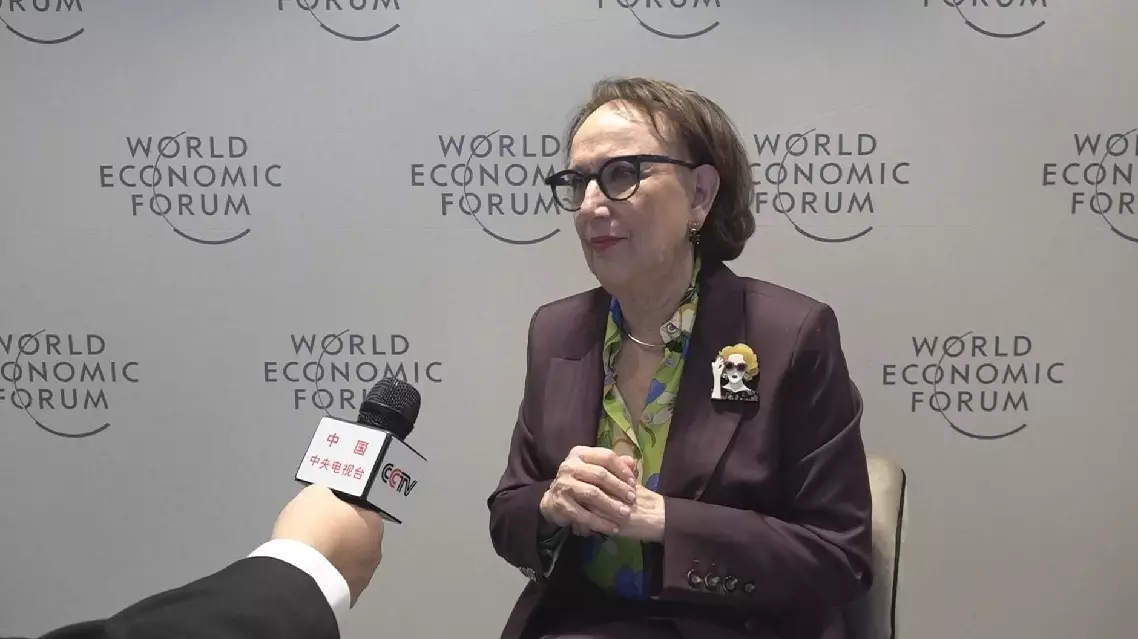
China can be 'stabilizing force' for global economy amid 'extreme uncertainty': UN trade official