From eye-catching performances at the 2025 Spring Festival Gala to competing alongside humans in sport games, China's AI-powered humanoid robots are developing rapidly and ready for more real-world application scenarios.
The year 2025 is widely regarded within the industry as the start of mass production of commercial humanoid robots. Data show China has been home to over 140 companies producing full humanoid robots, with over 330 humanoid robot models released last year.
"China's humanoid robots are now able to stand still, walk steadily and run fast. Efforts are made in expanding high-value application scenarios, including public services and industrial operations, to scale up new technologies and products. We will continue to adopt an open competition mechanism for selecting the best candidates and establish major national science and technology projects to improve capabilities in developing large AI models, integrated joint modules, and computing chips," said Zhang Yunming, Vice Minister of Industry and Information Technology (MIIT), at a press conference in Beijing on Wednesday.
Zhang said the MIIT will strengthen testing and certification related to humanoid robots' product quality, cyber security and data security, while promoting research and management on science and technology ethics to ensure high-quality development with strong safety safeguards.
He said the ministry will also enhance financial support for humanoid robots through the National AI Industry Investment Fund, build an open-source humanoid robot community, and release guidelines for building a comprehensive standard system covering humanoid robots and embodied AI, promoting the sharing of innovation results around the world.
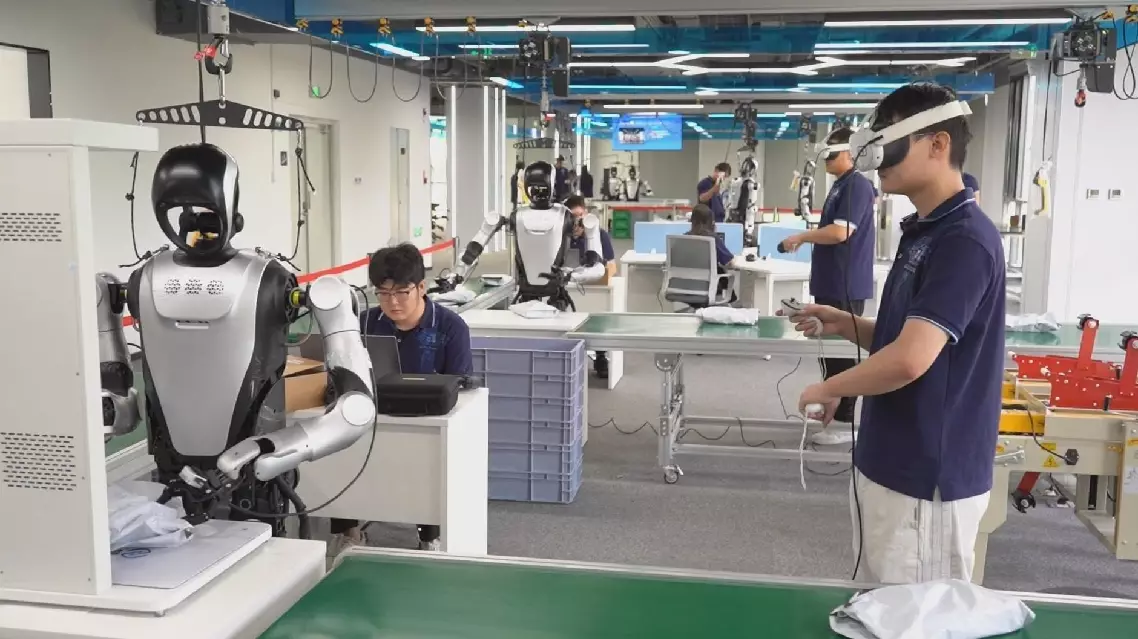
China’s humanoid robots ready for more real-world applications
The China-Laos Railway has become a major transport artery in Southeast Asia, cutting freight times, expanding passenger flows and linking regional economies.
The China-Laos Railway, a landmark project of high-quality Belt and Road cooperation, began operations in December 2021. The 1,035-kilometer railway connects Kunming, the capital of southwest China's Yunnan Province, with Vientiane, the capital of Laos.
It has significantly enhanced regional connectivity, boosted regional economic growth, and facilitated people-to-people and cultural exchanges.
Passengers can now travel by rail all the way from Thailand to China, a journey that would have been difficult to imagine just a few years ago.
"I traveled up from Bangkok last night on the overnight train, and now I'm traveling up to Luang Prabang and then on to Kunming to explore Yunnan province. It's really easy to use the app and to book the trains, so so far so good. Everything seems to be working out," said an Australian passenger.
Jie Sen, a passenger service staff at Vientiane Railway Station, said the railway has become an important channel for cross-border travel.
"Passengers from more than 120 countries and regions have traveled on the railway. International trains between China and Laos now run four times a day, with the fastest trip from Kunming South to Vientiane taking just 9 hours and 36 minutes," he said.
"In terms of freight transport, cross-border shipping time has been reduced from five to seven days by road to just one to two days by rail. More than 3,800 categories of goods are now transported via the railway. Its logistics network reaches 19 countries and regions, including Laos, Thailand, Vietnam and Singapore," said He Xuqiang, head of Vientiane Railway Station.
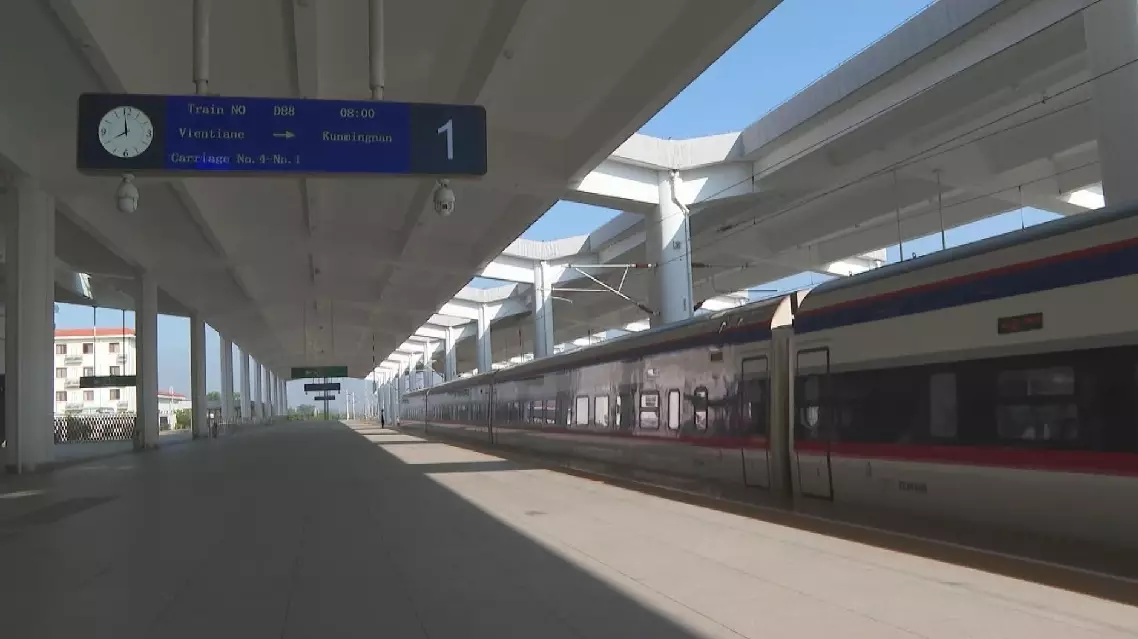
China-Laos Railway becomes key regional transportation corridor