Syngenta Group is deploying artificial intelligence (AI) and advanced agricultural technology to help farmers overcome volatility and bridge the digital divide, said the company's Chief Information and Digital Officer Feroz Sheikh.
Speaking to China Global Television Network (CGTN), Sheikh explained that volatility in farming stems from factors such as weather, geopolitical issues, and commodity prices, creating significant challenges for farmers. He said the company is addressing this by developing predictive algorithms to help farmers anticipate changes in prices and weather, enabling better decision-making.
"I would say, the other important factor is essentially access to the technology. And small farmers, but in particular in countries like China or other Asian countries, for them to be able to really get access to that technology. What you can describe it as a digital divide. And that's where we believe that data and AI can start to help bridge that divide," said Sheikh.
Sheikh likened agricultural advancement to a jigsaw puzzle, noting that while significant progress has been made in chemistry, genetics, and machinery, data and AI are the final crucial pieces that help farmers make precise decisions.
"In fact, if you think of it as a jigsaw puzzle, over the last few decades, we have seen major advancements in new chemistry, new genetics, and machinery on the farm. The final piece of that jigsaws puzzle is data and AI. With data, we can help farmers make better decisions. Those decisions could be related to applying the products and the machines that can spray it with precision. So that final piece of that jigsaw puzzle is really the key, in my opinion. So, when it comes to Agri-Tech, it's about putting the final piece of puzzle in it," he said.
As a wholly-owned subsidiary of ChemChina, the Switzerland-headquartered agricultural technology company's businesses span seeds, crop protection, plant nutrition and digital agriculture, focusing on improving farm productivity and advancing sustainable agricultural practices.
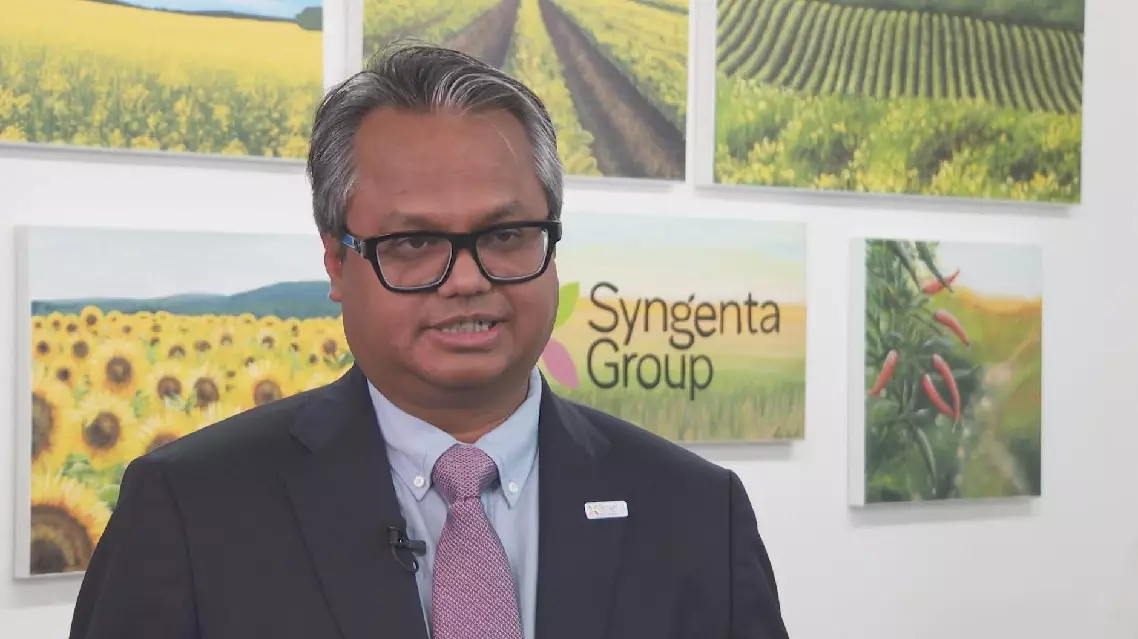
Global agri-tech giant Syngenta harnesses AI to narrow digital gap in farming
Highlighting the "Future Energy" as a key direction for China's strategic emerging industries, the country's nuclear energy development, guided by its three-step strategy, has seen major strides in the past year, said a member of the 14th National Committee of the Chinese People's Political Consultative Conference (CPPCC).
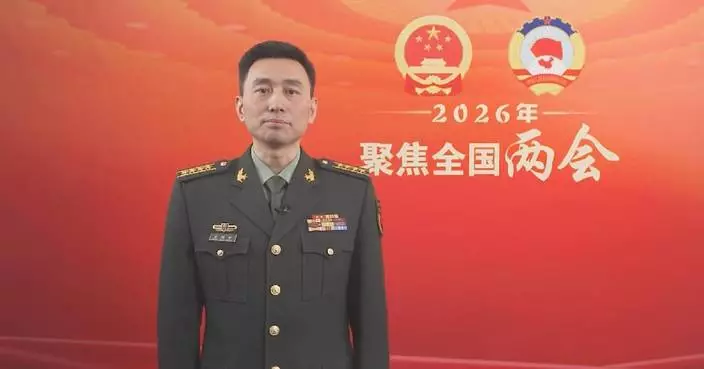
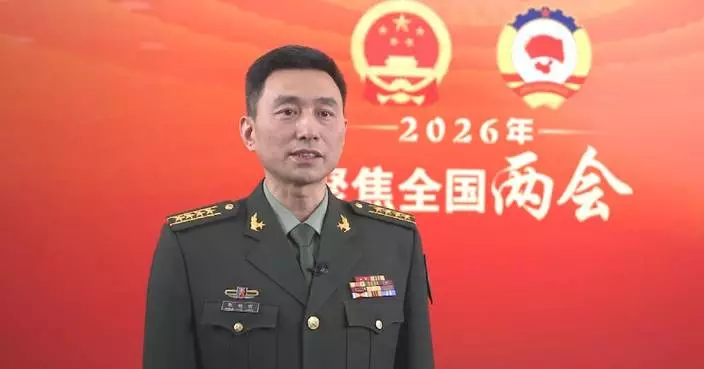
In a recent press briefing, Xin Feng, also deputy general manager of China National Nuclear Corporation (CNNC), updated the media on the progresses China has achieved under the strategy.
"China's three-step strategy for nuclear energy development -- from the thermal reactor to the fast reactor and the fusion reactor -- was formulated in 1983 as a medium- and long-term plan. For the thermal reactor, over the past year, our 2.0 version of the Hualong One technology has been approved. This is a unified and fully self-owned intellectual property based third-generation nuclear power technology solution. And the Linglong One small modular reactor also successfully completed its cold-state functional test last year and is expected to be put into commercial operation this year," he said.
For the second and third steps, Chinese researchers and engineers have achieved milestones in the past year with the government support, Xin noted.
"Then for the fast reactor, last year, a closed-cycle system for an integral fast reactor successfully achieved preliminary standard design. We will continue to solve its engineering technology challenges. As for the fusion reactor, in 2025, with national support, we established the China Fusion Energy Company in Shanghai. And our Huanliu-3, a platform for conducting research and development of fusion technology, made a big stride, with an iron temperature in it achieving 117 million Celsius and an electron temperature reaching 160 million Celsius. We will continue to adhere to the development strategy and focus on technological research and engineering technology development," Xin said.
The fourth session of the 14th NPC and the fourth session of the 14th National Committee of the CPPCC kicked off in Beijing on March 5 and March 4, respectively.
The "two sessions" -- which refer to the annual meetings of China's supreme organ of state power, the National People's Congress (NPC), and its top political advisory body, the National Committee of the CPPCC -- are a key event on the country's political calendar and offer a window into the country's development direction.
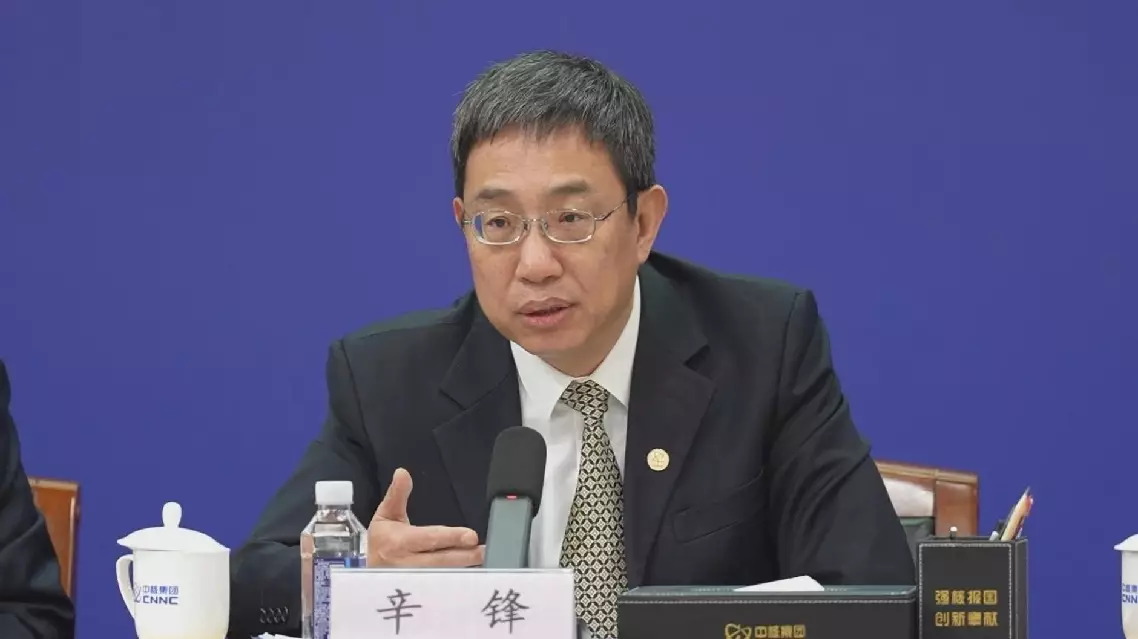
China's nuclear energy development makes great strides with three-step strategy: CPPCC member