RALEIGH, N.C. (AP) — An 18-year-old pleaded guilty Wednesday to murder and other charges for a mass shooting in North Carolina, acknowledging that he carried out a 2022 killing rampage that left five people dead, including his older brother and a police officer.
Austin David Thompson, who was 15 at the time of the attack that authorities say began in his Raleigh neighborhood, had been poised to go on trial in state court in less than two weeks.
Click to Gallery
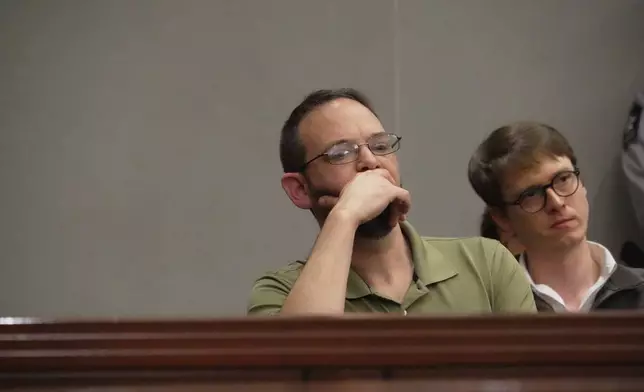
Rob Steele listens a prosecutor describes his fiancee Mary Marshalls' murder during a hearing in Wake County Superior Court on Wednesday, Jan. 21, 2026, in Raleigh, N.C. (AP Photo/Allen G. Breed)
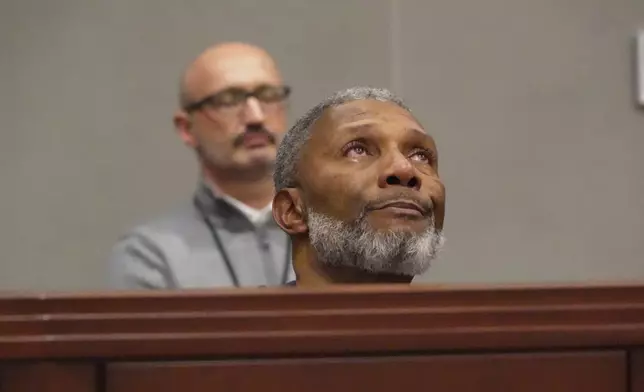
Tears well in Tracey Howard's eyes as he hears a prosecutor describe his wife Nicole Connors' murder during a hearing in Wake County Superior Court on Wednesday, Jan. 21, 2026, in Raleigh, N.C. (AP Photo/Allen G. Breed)
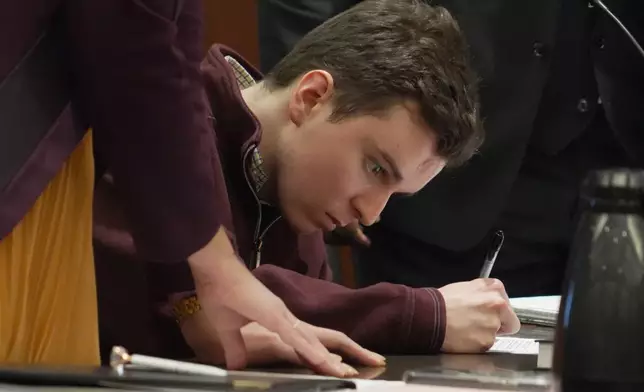
Austin Thompson signs documents pleading guilty to five counts of murder in Wake County Superior Court on Wednesday, Jan. 21, 2026, in Raleigh, N.C. (AP Photo/Allen G. Breed)
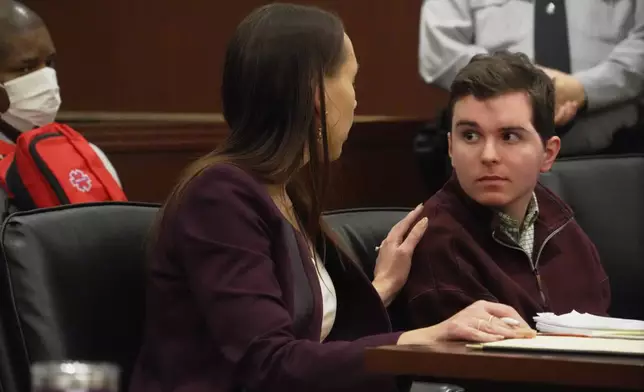
Defense attorney Kellie Mannette touches Austin Thompson's shoulder during a hearing in Wake County Superior Court on Wednesday, Jan. 21, 2026, in Raleigh, N.C. (AP Photo/Allen G. Breed)
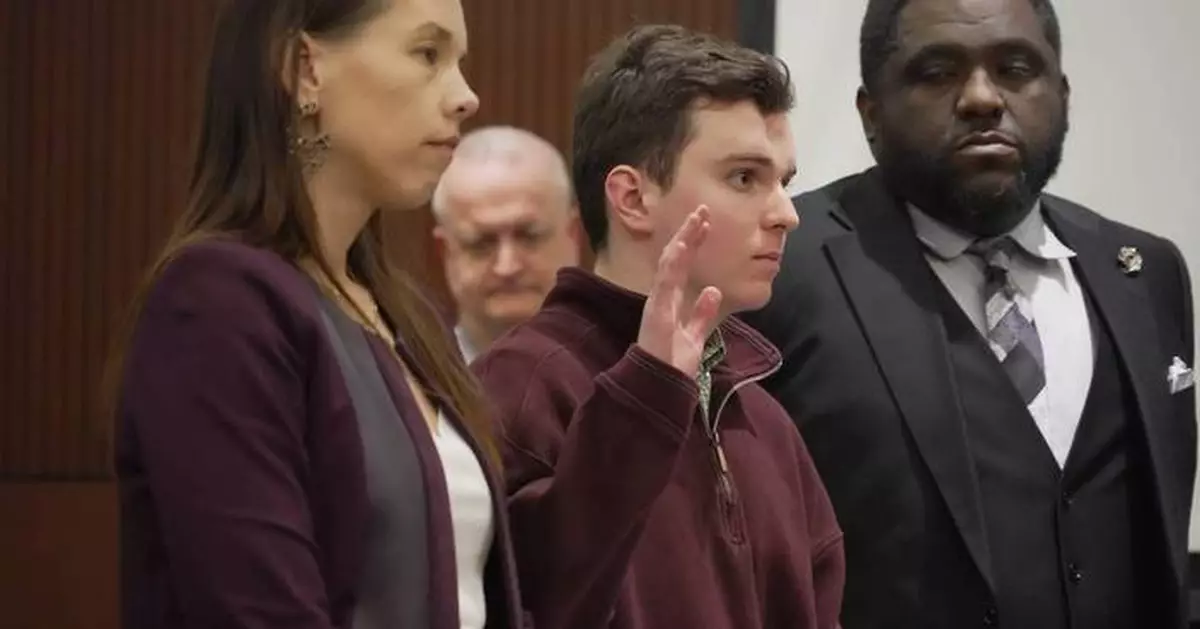
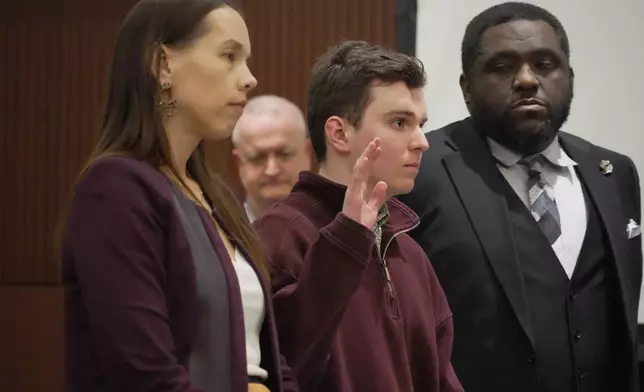
Austin Thompson is sworn in during a hearing in Wake County Superior Court on Wednesday, Jan. 21, 2026, in Raleigh, N.C. (AP Photo/Allen G. Breed)
Instead, Thompson's attorneys, who for months had filed pretrial motions designed to limit certain testimony and evidence, announced Tuesday that he planned to plead guilty to all charges against him. His attorneys wrote that avoiding a trial would “save the community and the victims from as much additional infliction of trauma as possible."
Thompson, wearing a quarter-zip sweater and slacks, offered few words while Wake County Superior Court Judge Paul Ridgeway questioned him and accepted his pleas. He pleaded guilty to five counts of first-degree murder, two counts of attempted first-degree murder, two counts of assault with a deadly weapon and one count of assault of an officer with a gun.
Ridgeway set a sentencing hearing for Feb. 2, which could last several days as testimony and evidence are reviewed. Thompson and his attorney acknowledged in court that no plea agreement had been reached with local prosecutors.
Because of his age at the time of the attack, Thompson can't receive the death penalty. A judge can issue sentences of life in prison without parole on such murder counts. Ridgeway instead could sentence him in the case so he could be eligible for parole after at least 25 years. State appeals judges recently placed a 40-year limit on how long such young offenders must serve before becoming eligible for parole.
Resolution in the case was delayed in part while Thompson recovered from a gunshot wound that Wake County District Attorney Lorrin Freeman concluded earlier was self-inflicted before his arrest. His attorneys say it resulted in a serious brain injury.
Providing the court a summary of evidence that would have been used at trial, Assistant District Attorney Patrick Latour described the sequence of events during the Oct. 13, 2022, shootings. He said Thompson first shot then repeatedly stabbed his brother James, whose body was found in the family's home in the Hedingham community.
Latour said Thompson, armed with a shotgun and handgun, next shot multiple neighbors on the community’s streets, killing Nicole Connors, 52, and then off-duty Raleigh police Officer Gabriel Torres, 29. Another neighbor who was wounded survived. Later, Thompson fatally shot two others on a nearby greenway trail: Mary Marshall, 34, and Susan Karnatz, 49.
Dressed in camouflage and carrying a backpack, Thompson was located by law enforcement in a shed nearby and arrested after an hourslong standoff during which he wounded another police officer, Latour said.
Wednesday’s hearing provided little additional explanation about Austin's motive. His attorneys wrote this week that the brain injury “has made it such that Austin cannot explain why he committed this shooting.”
Latour said a note written by Thompson acknowledged why he killed his brother but that information wasn't provided Wednesday. The note was ordered to remain confidential for now. Latour also said records showing Thompson's online search history revealed that he had sought information on mass shootings and related items. A Thompson attorney said the report with those records may be challenged at sentencing.
Robert Steele, Marshall's fiance at the time of her death, told reporters after the hearing that sentencing Thompson to life in prison without parole is the right thing to do.
“That's justice,” Steele said. "He took five people's lives, he tried to take two others."
In 2024, Thompson’s father pleaded guilty to improperly storing his handgun that authorities said was found when his son was arrested. He received a suspended sentence and probation.
Investigators seized 11 firearms and 160 boxes of ammunition — some of them empty — from the Thompson home, according to search warrants. Austin Thompson and his family were avid hunters, Latour said.
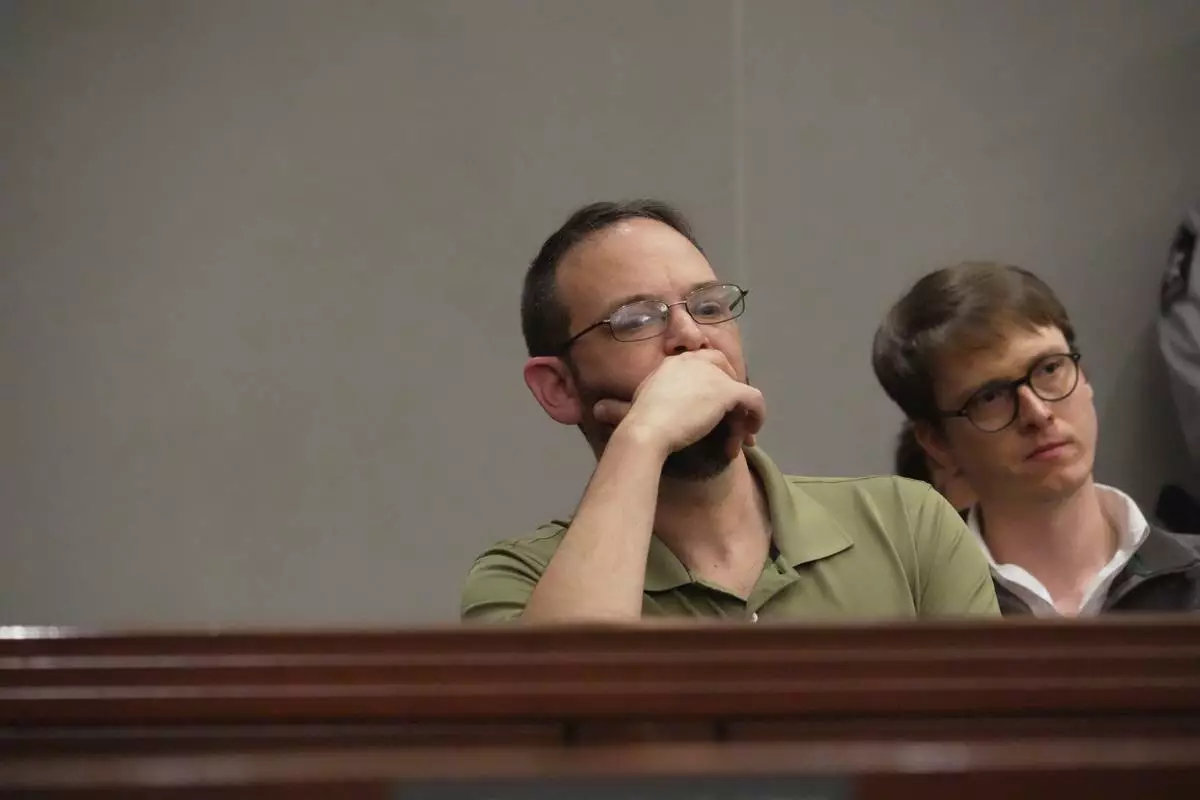
Rob Steele listens a prosecutor describes his fiancee Mary Marshalls' murder during a hearing in Wake County Superior Court on Wednesday, Jan. 21, 2026, in Raleigh, N.C. (AP Photo/Allen G. Breed)
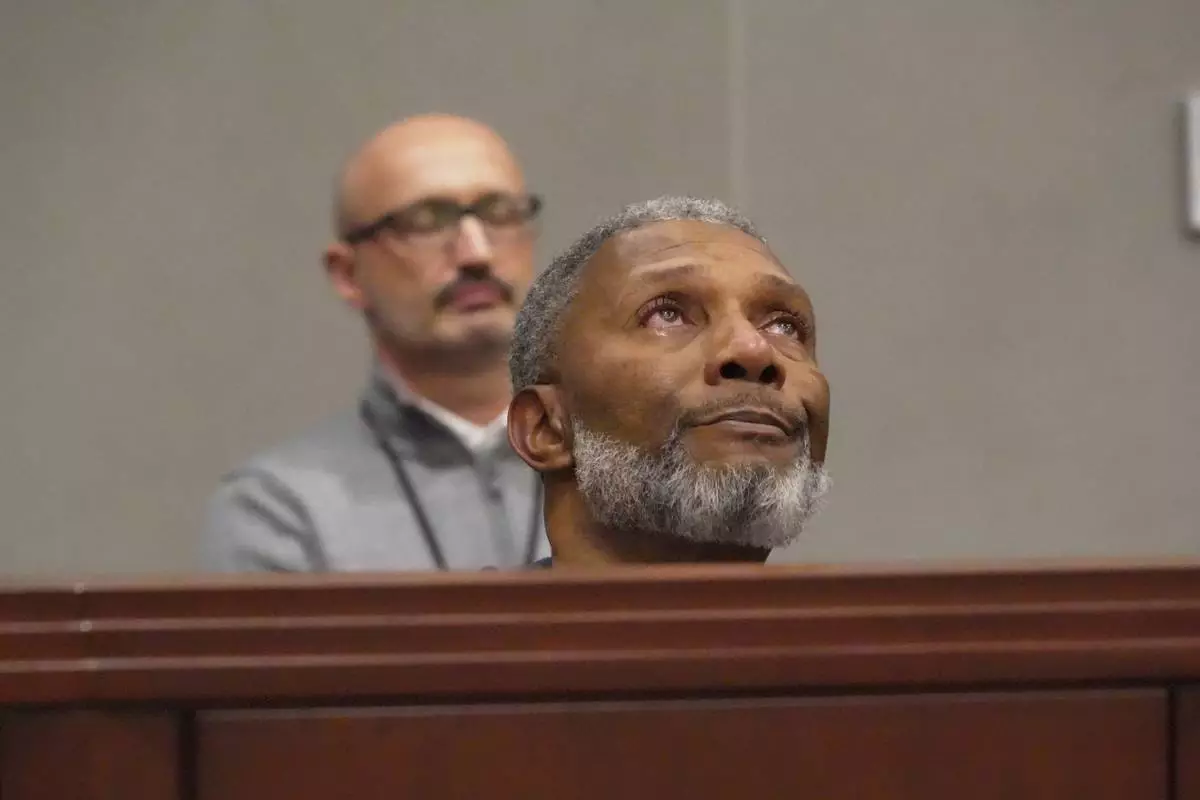
Tears well in Tracey Howard's eyes as he hears a prosecutor describe his wife Nicole Connors' murder during a hearing in Wake County Superior Court on Wednesday, Jan. 21, 2026, in Raleigh, N.C. (AP Photo/Allen G. Breed)
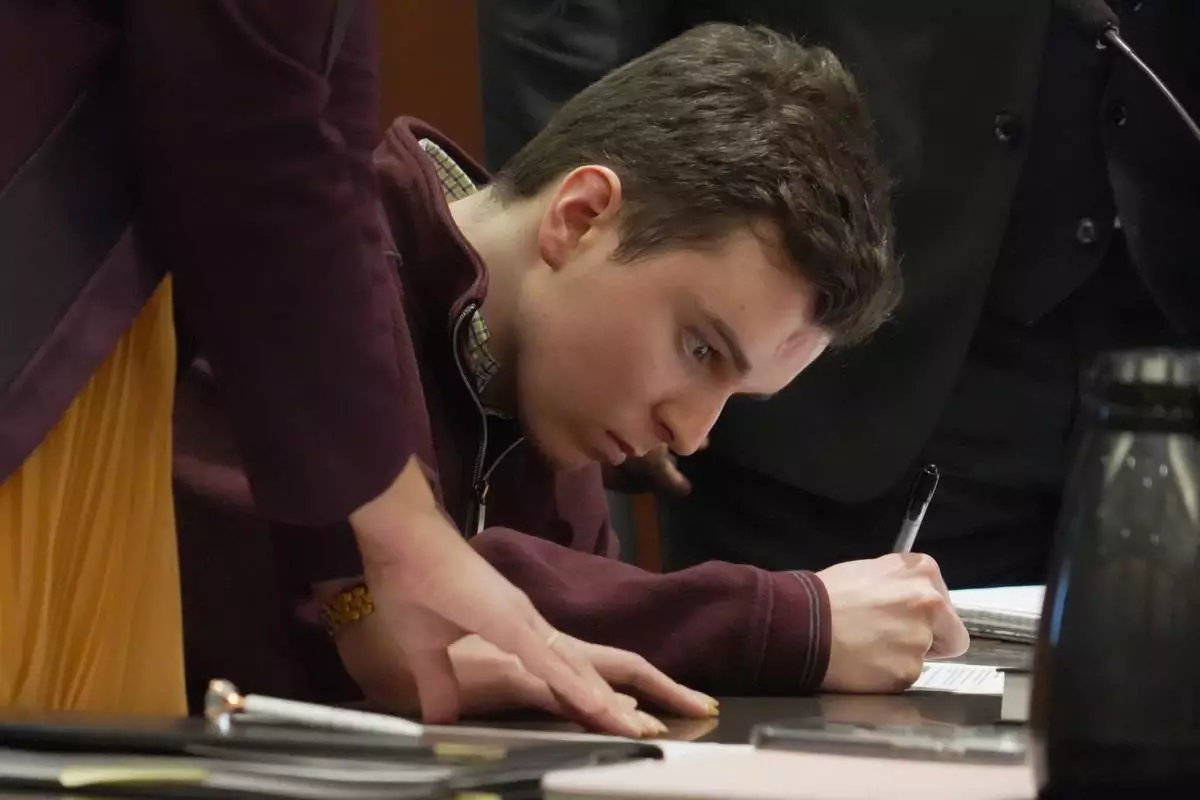
Austin Thompson signs documents pleading guilty to five counts of murder in Wake County Superior Court on Wednesday, Jan. 21, 2026, in Raleigh, N.C. (AP Photo/Allen G. Breed)
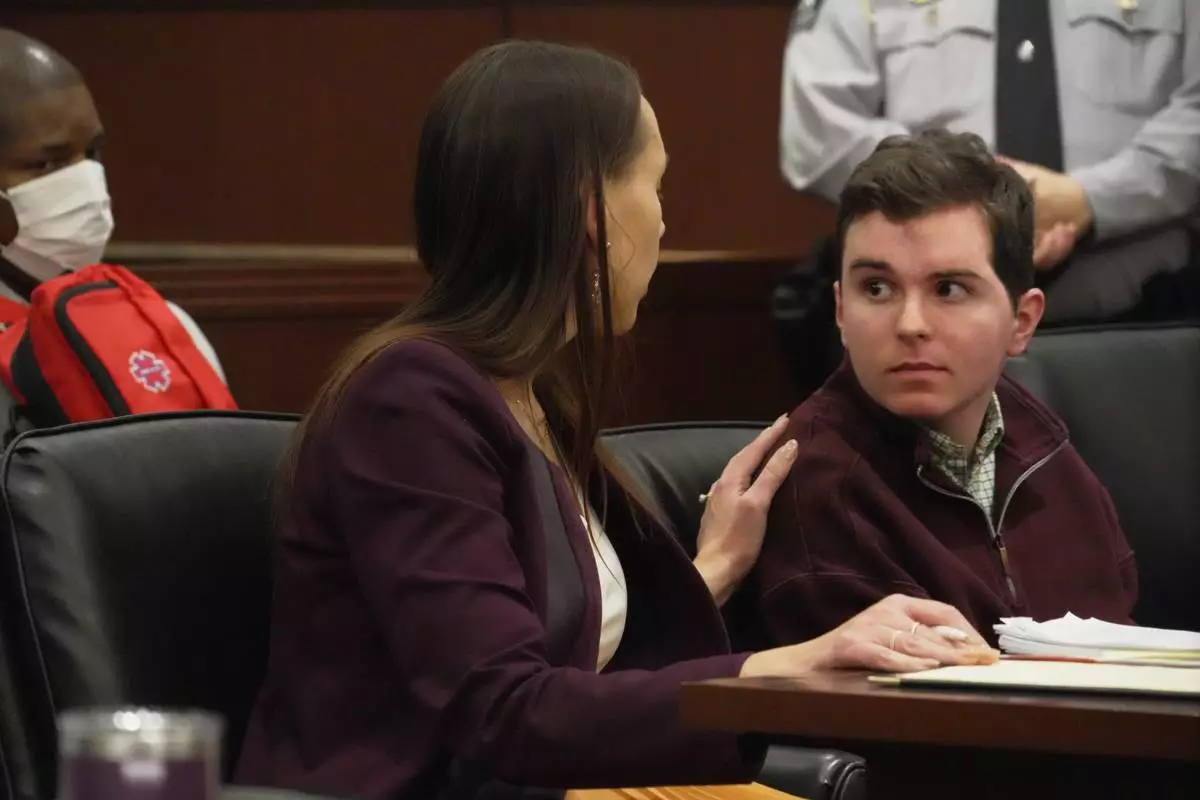
Defense attorney Kellie Mannette touches Austin Thompson's shoulder during a hearing in Wake County Superior Court on Wednesday, Jan. 21, 2026, in Raleigh, N.C. (AP Photo/Allen G. Breed)
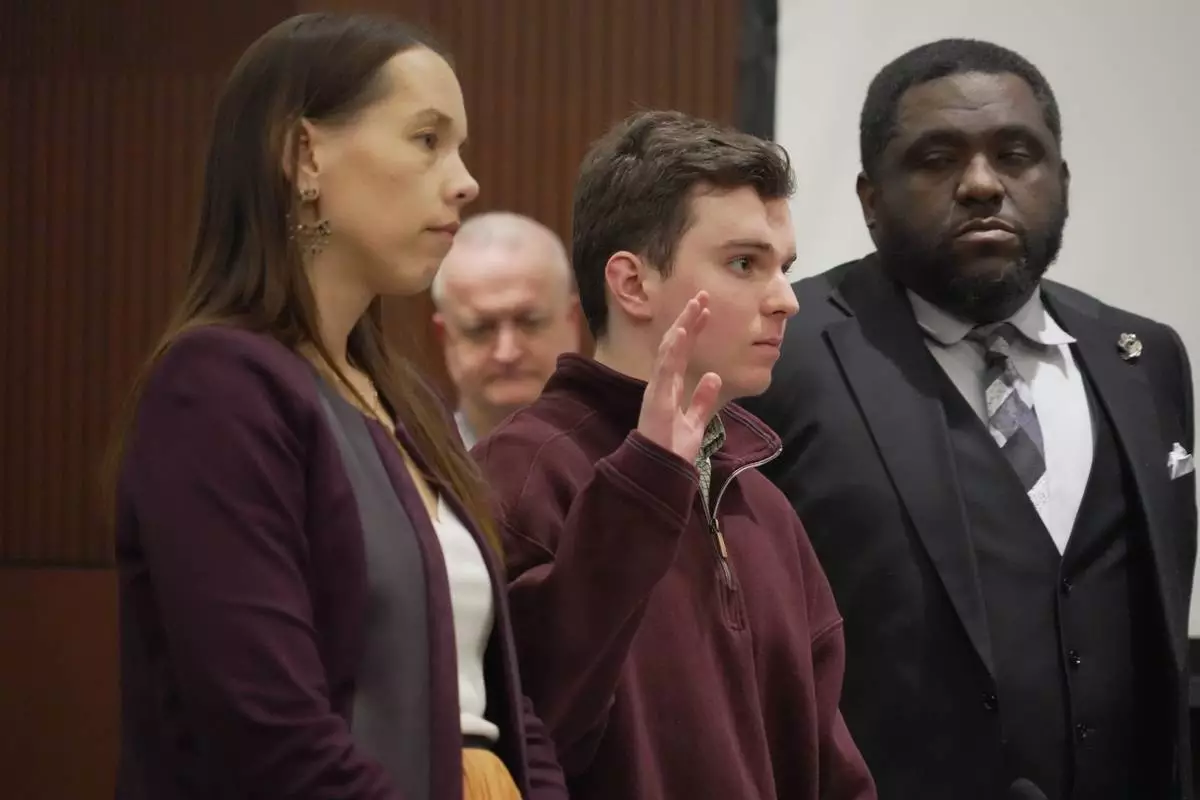
Austin Thompson is sworn in during a hearing in Wake County Superior Court on Wednesday, Jan. 21, 2026, in Raleigh, N.C. (AP Photo/Allen G. Breed)
CORPUS CHRISTI, Texas (AP) — A former Uvalde police officer was acquitted Wednesday of charges that he failed in his duties to confront the gunman at Robb Elementary during the critical first minutes of one of the deadliest school shootings in U.S. history.
Jurors deliberated for more than seven hours before finding Adrian Gonzalez, 52, not guilty in the first trial over the hesitant law enforcement response to the 2022 attack, which killed 19 children and two teachers.
Gonzales appeared to close his eyes and take a deep breath as he stood to hear the verdict in a Corpus Christi courtroom hundreds of miles from Uvalde, where Gonzales' attorneys argued that he could not receive a fair trial. After the verdict was read, he hugged one of his lawyers and appeared to be fighting back tears.
“Thank you for the jury for considering all the evidence,” Gonzales told reporters. Asked if he wanted to say anything to the families, he declined.
Moments after the verdict was read, several members of families of the victims sat in silence, some crying or wiping away tears.
“Faith is fractured, but you never lose faith," said Jesse Rizo, whose 9-year-old niece Jackie Cazares was killed. He said he was frustrated by the verdict and hopes the state will press ahead with the trial of former Uvalde schools Police Chief Pete Arredondo, the only other officer who has been charged over the police response.
“Those children in the cemetery can’t speak for themselves,” Rizo said.
Arredondo’s trial has not yet been set.
Jurors declined to speak to reporters while leaving the courthouse.
The nearly three-week trial was a rare case in the U.S. of an officer facing criminal charges on accusations of failing to stop a crime and protect lives. Gonzales had faced the possibility of up to two years in prison if convicted.
The proceedings included emotional testimony from teachers who were shot and survived. Prosecutors argued that Gonzales abandoned his training and did nothing to stop or interrupt the teenage gunman before he entered the school.
“We’re expected to act differently when talking about a child that can’t defend themselves,” special prosecutor Bill Turner said during closing arguments Wednesday. “If you have a duty to act, you can’t stand by while a child is in imminent danger.”
At least 370 law enforcement officers rushed to the school, where 77 minutes passed before a tactical team finally entered the classroom to confront and kill the gunman. Gonzales was one of just two officers indicted, angering some victim’s relatives who said they wanted more to be held accountable.
Gonzales was charged with 29 counts of child abandonment and endangerment — each count representing the 19 students who were killed and 10 others who were injured.
During the trial jurors heard a medical examiner describe the fatal wounds to the children, some of whom were shot more than a dozen times. Several parents told of sending their children to school for an awards ceremony and the panic that ensued as the attack unfolded.
Gonzales’ lawyers said he arrived upon a chaotic scene of rifle shots echoing on school grounds and never saw the gunman before the attacker went inside the school. They also insisted that three other officers who arrived seconds later had a better chance to stop the gunman.
Gonzales’ attorney, Jason Goss, told jurors before they began deliberating that his client was not responsible for the attack.
“The monster that hurt those kids is dead,” Goss said. “It is one of the worst things that ever happened.”
A conviction would tell police they have to be “perfect” when responding to a crisis and could make them even more hesitant in the future, Goss said.
Some victims’ families made the long drive to watch Gonzales' trial. Early on the sister of one of the teachers killed was removed from the courtroom after an angry outburst following one officer’s testimony.
Gonzales’ trial was tightly focused on his actions in the early moments of the attack, but prosecutors also presented the graphic and emotional testimony as the result of police failures.
State and federal reviews of the shooting cited cascading problems in law enforcement training, communication, leadership and technology, and questioned why officers waited so long.
Prosecutors faced a high bar to win a conviction. Juries are often reluctant to convict law enforcement officers for inaction, as seen after the 2018 school massacre in Parkland, Florida. A sheriff’s deputy was acquitted after being charged with failing to confront the shooter in that attack — the first such prosecution in the U.S. for an on-campus shooting.
Vertuno reported from Austin, Texas.
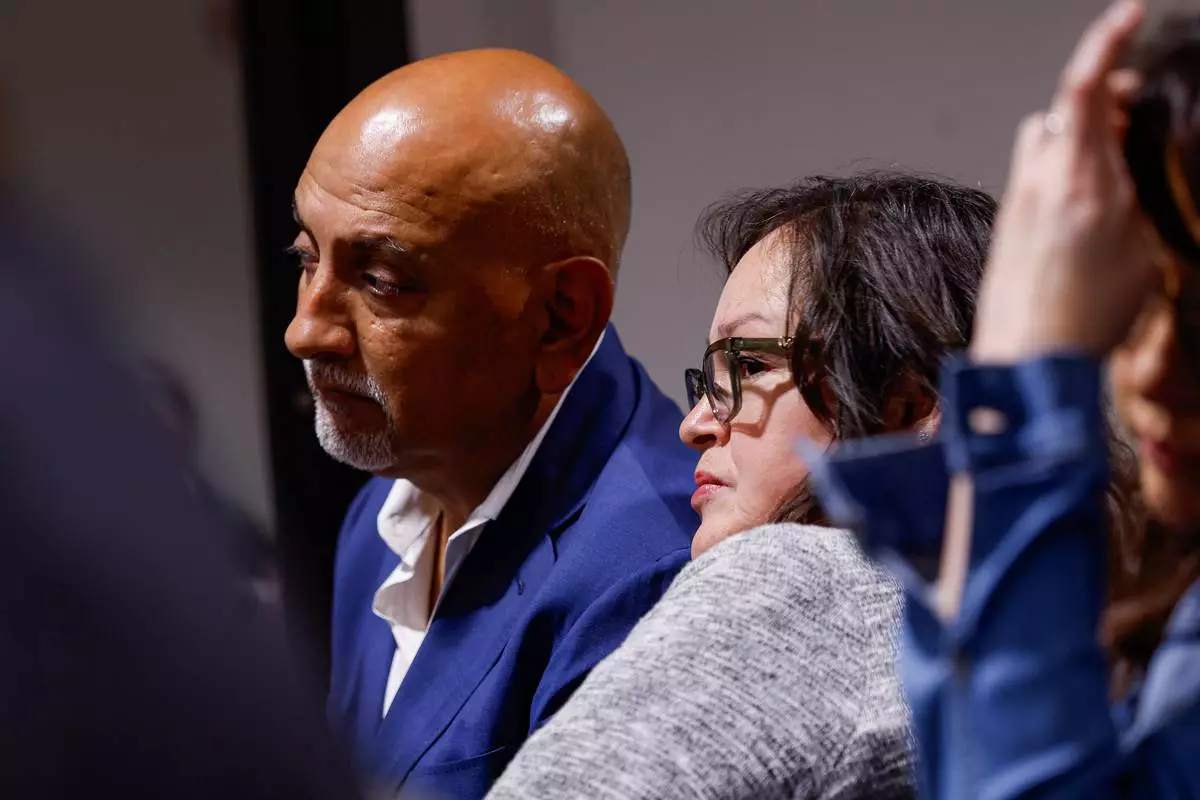
Jesse Rizo and his wife Juanita Cazares-Rizo listen to the prosecution and defense deliver their closing statements to the jury on the 11th day of the trial for former Uvalde school district police officer Adrian Gonzales at the Nueces County Courthouse on Wednesday, Jan. 21, 2026, in Corpus Christi, Texas. T (Sam Owens /The San Antonio Express-News via AP, Pool)
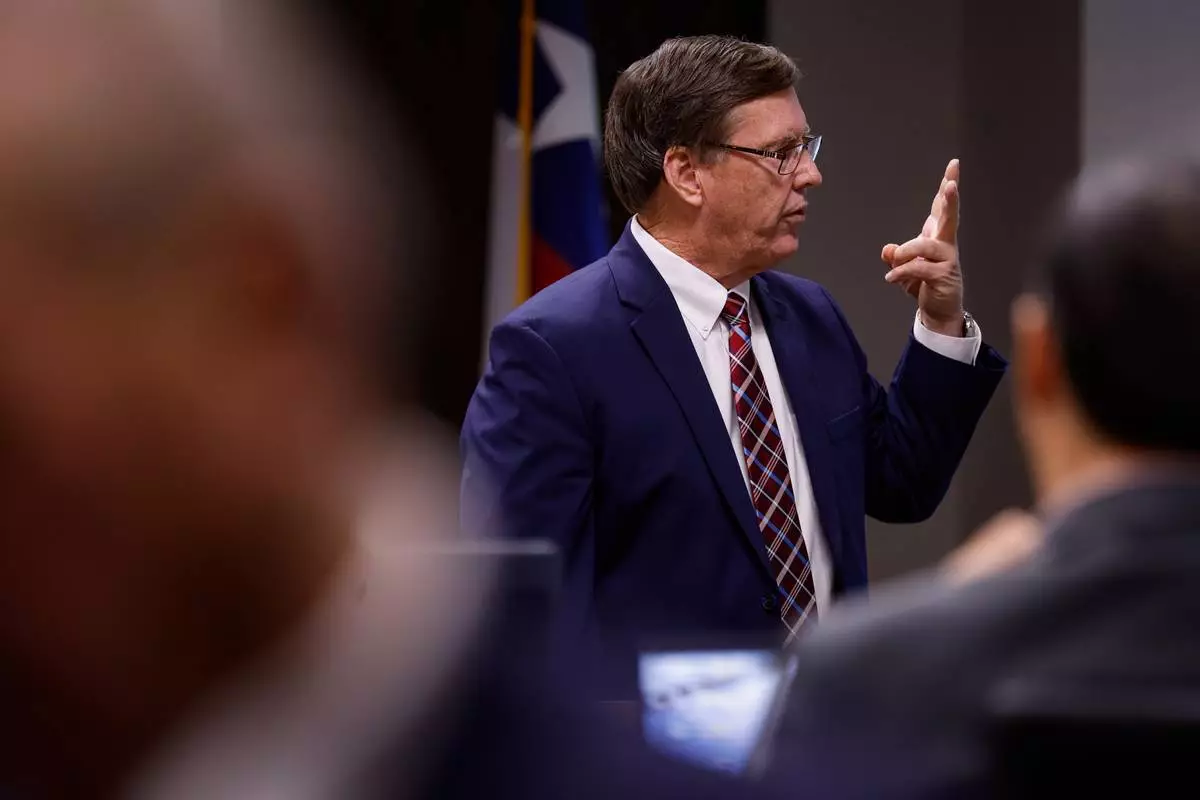
Special prosecutor Bill Turner delivers a closing statement to the jury on the 11th day of the trial for former Uvalde school district police officer Adrian Gonzales at the Nueces County Courthouse on Wednesday, Jan. 21, 2026, in Corpus Christi, Texas. (Sam Owens /The San Antonio Express-News via AP, Pool)
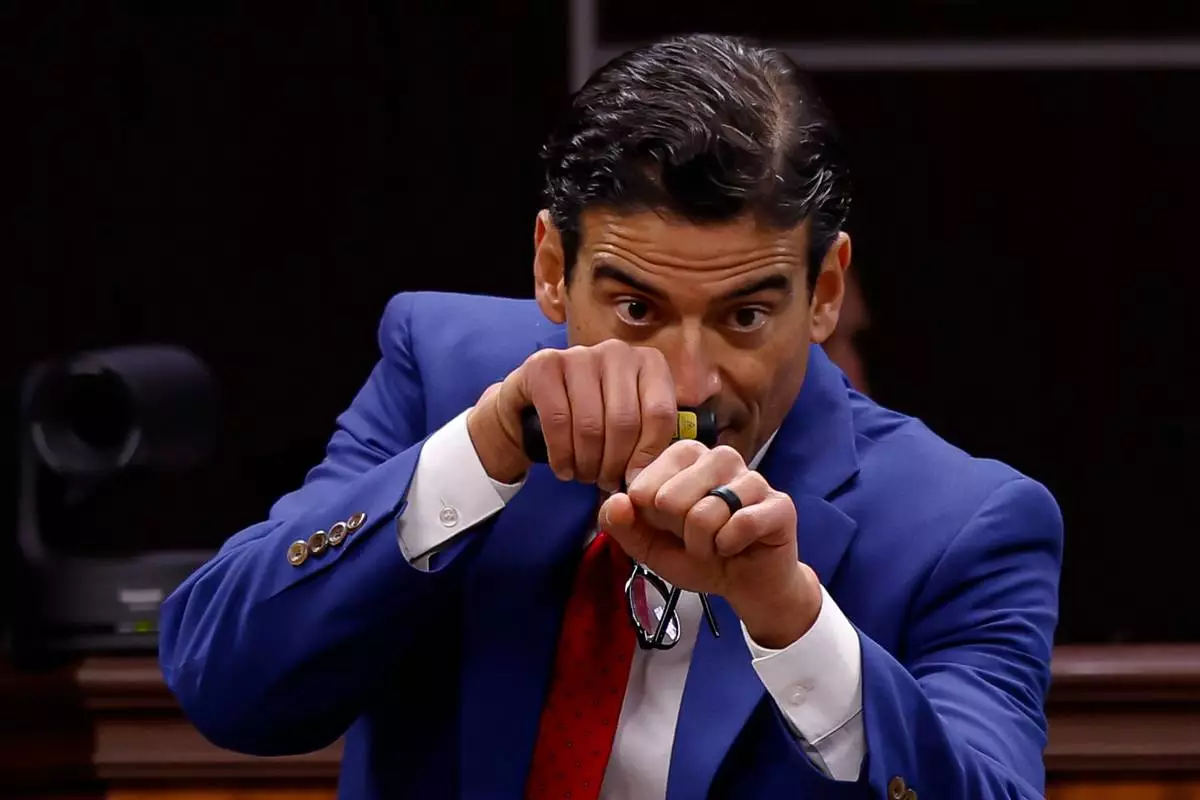
Defense attorney Nico LaHood mimics a police officer responding to a threat inside a classroom while delivering a closing statement to the jury on the 11th day of the trial for former Uvalde school district police officer Adrian Gonzales at the Nueces County Courthouse on Wednesday, Jan. 21, 2026, in Corpus Christi, Texas. (Sam Owens /The San Antonio Express-News via AP, Pool)
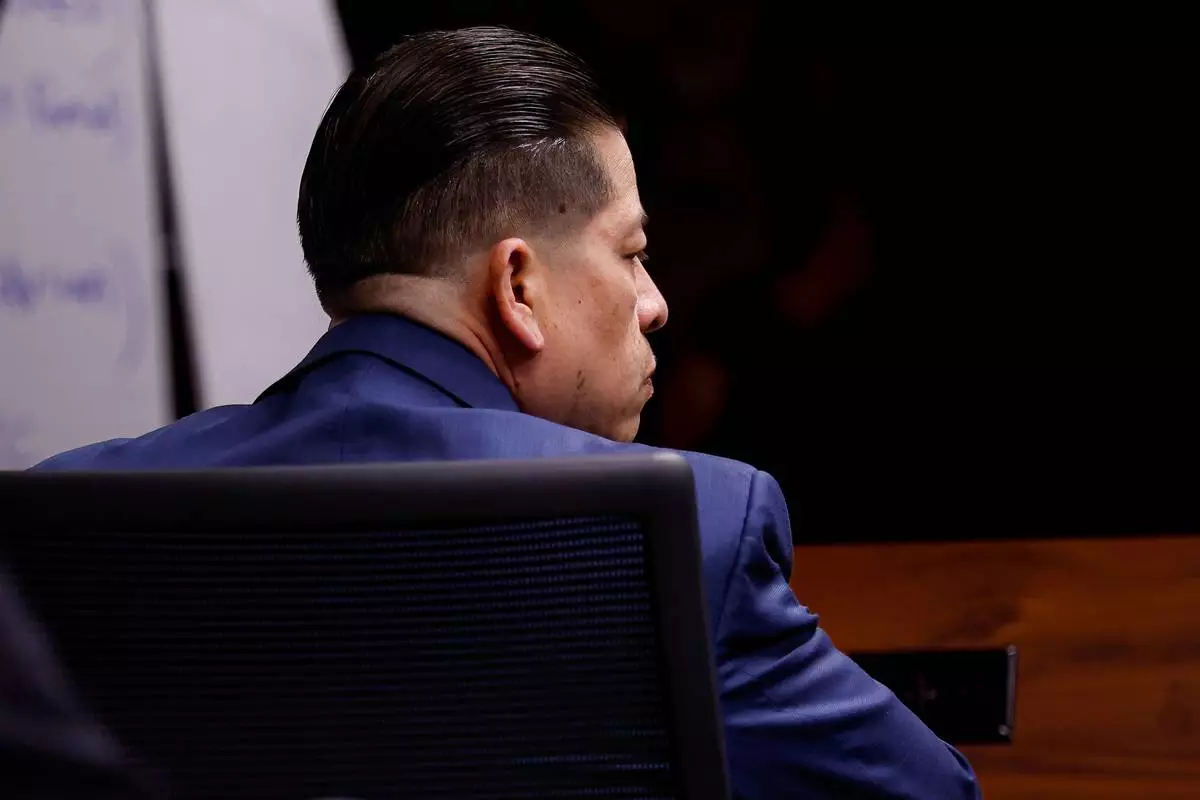
Former Uvalde school district police officer Adrian Gonzales listens to closing statements on the 11th day of his trial at the Nueces County Courthouse on Wednesday, Jan. 21, 2026, in Corpus Christi, Texas. (Sam Owens /The San Antonio Express-News via AP, Pool)
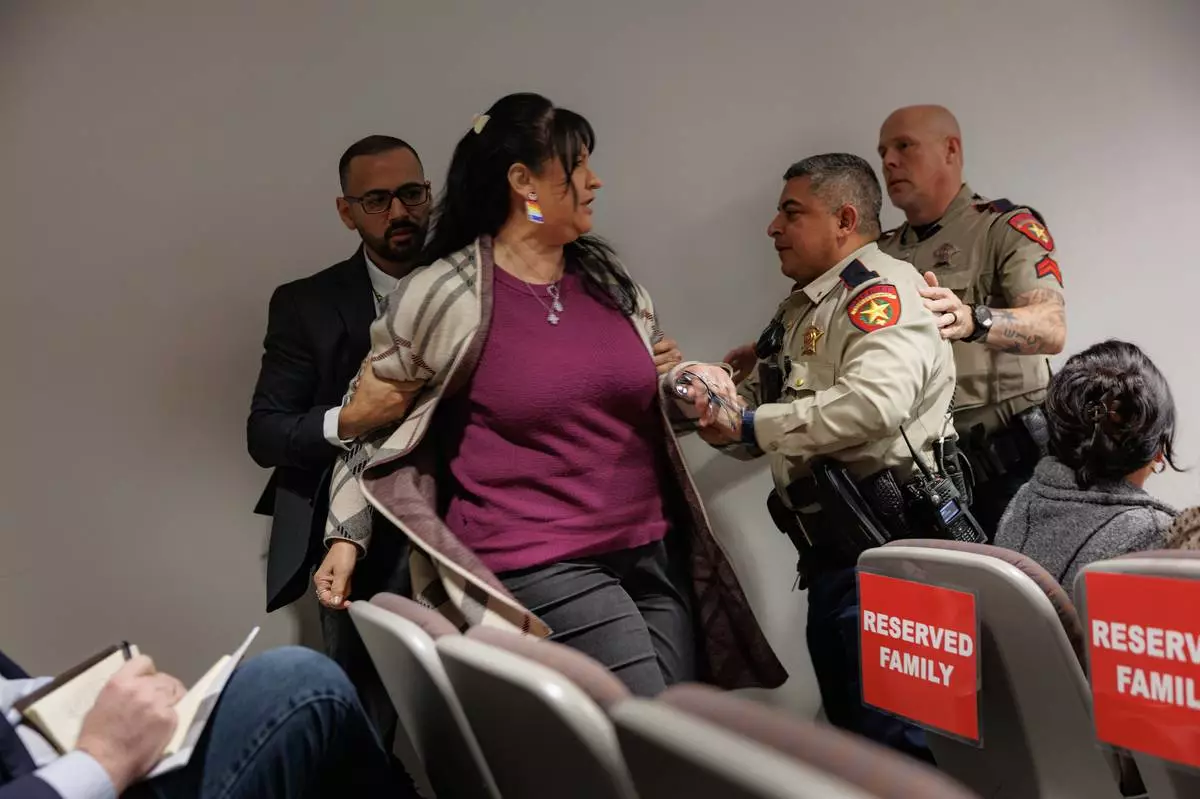
Police officers escort Velma Lisa Duran of the courtroom as she yells at witness Joe Vasquez, a Zavala County Sheriff's Office deputy, during a trial for former Uvalde school district police officer Adrian Gonzales at the Nueces County Courthouse in Corpus Christi, Texas, on Tuesday, Jan. 13, 2026. Duran's sister Irma Garcia was one of two teachers who were killed in the Robb Elementary mass shooting. (Sam Owens/The San Antonio Express-News via AP, Pool)
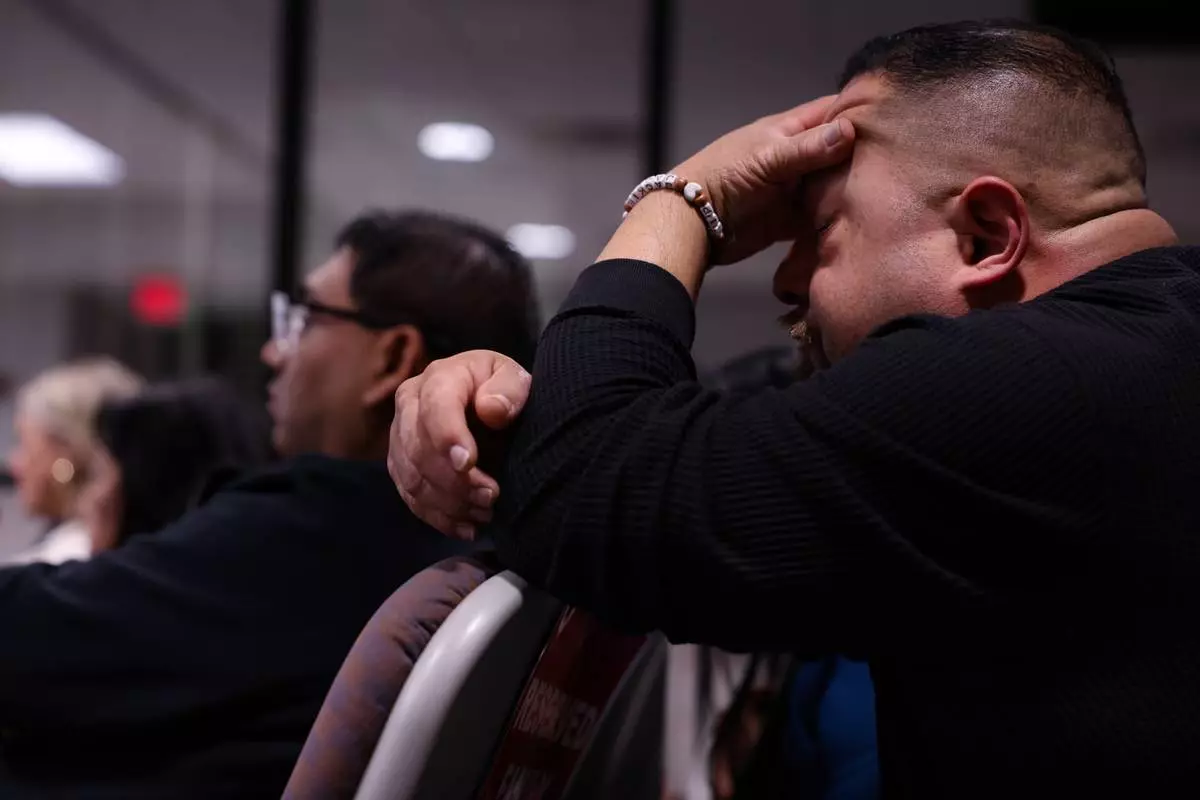
Javier Cazares listens to testimony during the 10th day of the trial of former Uvalde school district police officer Adrian Gonzales at the Nueces County Courthouse in Corpus Christi, Texas, Tuesday, Jan. 20, 2026. Cazares is the father of Robb Elementary shooting victim Jackie Cazares, one of the 19 children killed by an 18-year-old gunman. (Sam Owens/The San Antonio Express-News via AP, Pool)
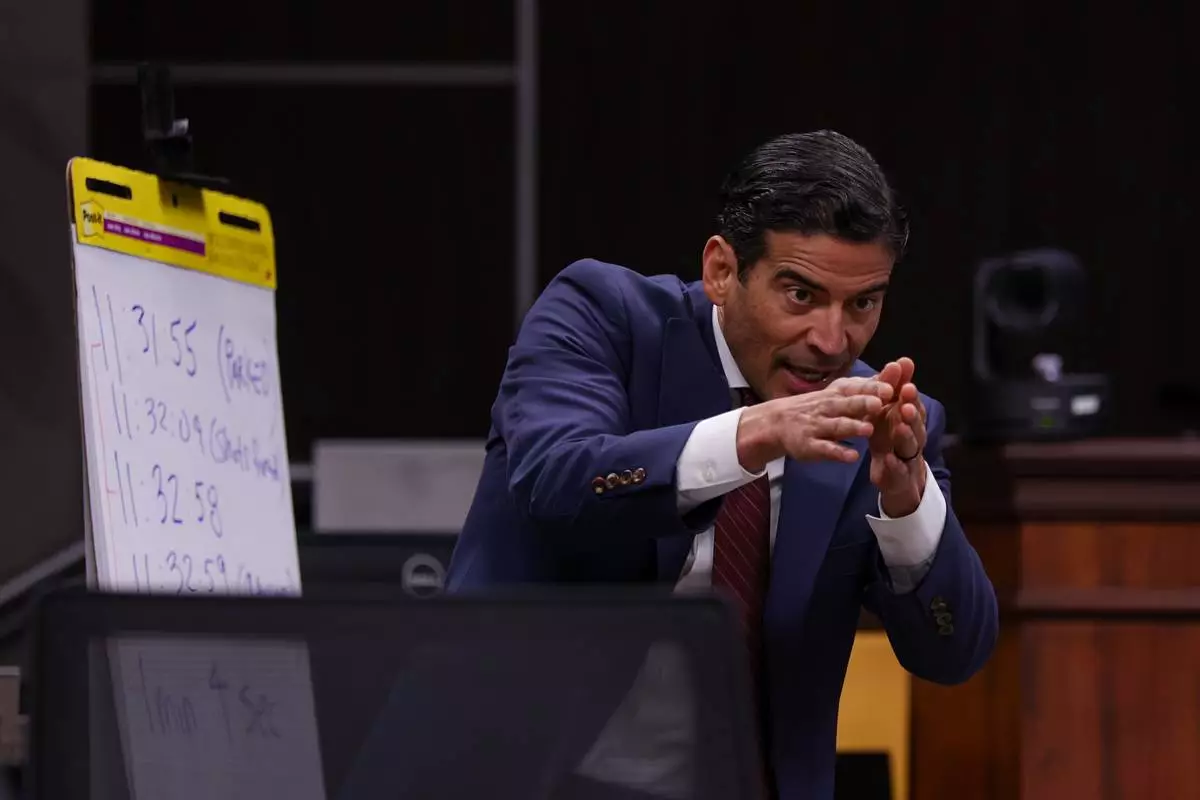
Defense attorney Nico LaHood cross-examines the prosecution's witness Nick Hill, a Texas Ranger lieutenant with the Texas Department of Public Safety, during the 10th day of the trial for former Uvalde school district police officer Adrian Gonzales at Nueces County Courthouse in Corpus Christi, Texas, Tuesday, Jan. 20, 2026. (Sam Owens/The San Antonio Express-News via AP, Pool)
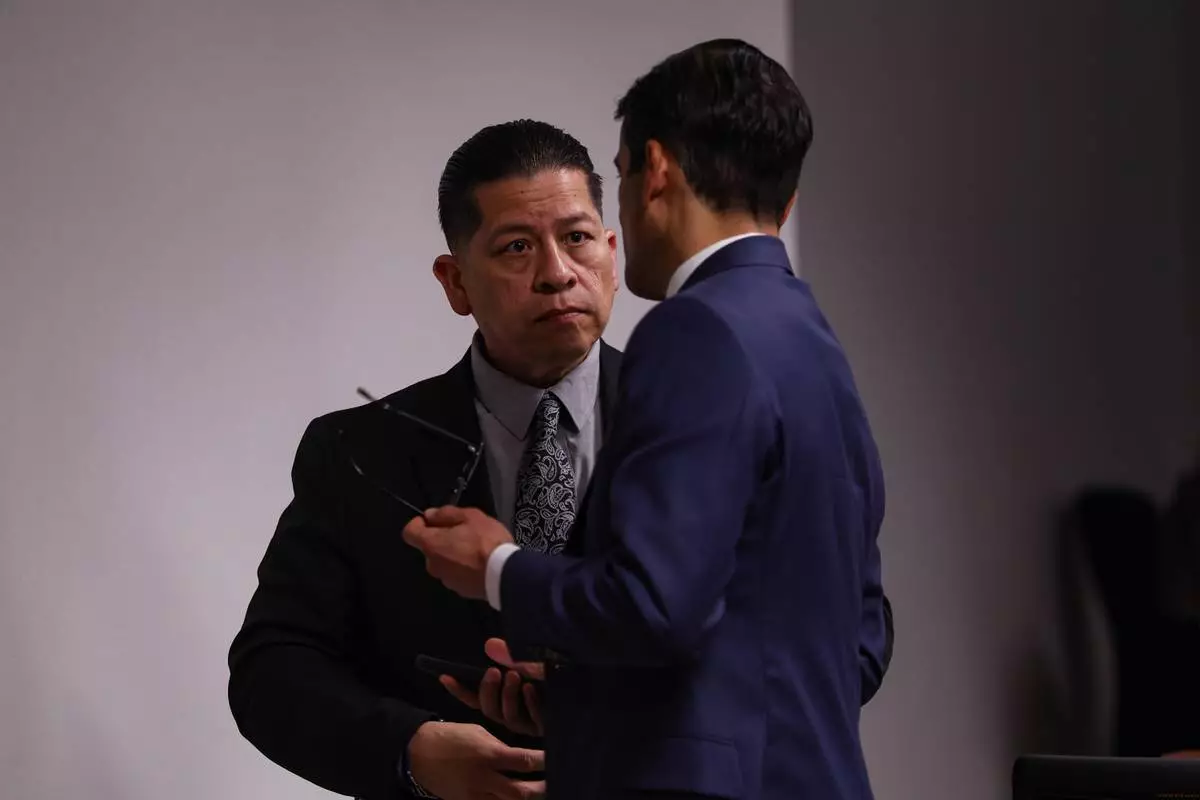
Former Uvalde school district police officer Adrian Gonzales, left, talks to his defense attorney Nico LaHood during a break on the 10th day of his trial at Nueces County Courthouse in Corpus Christi, Texas, Tuesday, Jan. 20, 2026. (Sam Owens/The San Antonio Express-News via AP, Pool)