People in Bulgaria have voiced strong opposition to the U.S. overt interest in acquiring Greenland, with some describing the American stance as "terrorism" while others saying that the island must remain part of Denmark.
The public outcry follows a series of remarks from the United States, which included statements that it "must have" the island and earlier threats to impose tariffs on eight European nations opposing the potential acquisition by Washington.
Local residents in Bulgaria have reacted with disbelief to this rhetoric. One described the American threat as an attack on a fellow NATO member.
"The U.S. policy exemplifies terrorism. As a NATO member, the United States attacks other alliance members, an action that is profoundly infuriating," said the Sofia resident.
Another resident emphasized the legal and sovereign principles at stake, calling for a firm European response.
"In my opinion, the United States should not take Greenland because it violates all kinds of laws. European countries must firmly defend their positions, which means that Greenland must remain under Danish sovereignty," he said.
The recent U.S. rhetoric concerning Greenland has caused a significant diplomatic rift between the United States and Europe. Lyubomir Kyuchukov, former deputy minister of foreign affairs of Bulgaria, said that the divide between the two sides is growing deeper.
"In fact, what we're witnessing right now is that the [rift in] Atlantic [relationship] is becoming deeper and larger by every day, and the two sides are moving apart from each other. And that applies not just to NATO, that applies to geopolitics in more general terms," he said.
U.S. President Donald Trump on Wednesday announced he would not proceed with tariffs on eight European countries that were scheduled to take effect on Feb. 1. But he renewed his push for U.S. acquisition of Greenland and sharpened criticism of Europe and NATO in a special address at an annual meeting of the World Economic Forum in Switzerland.
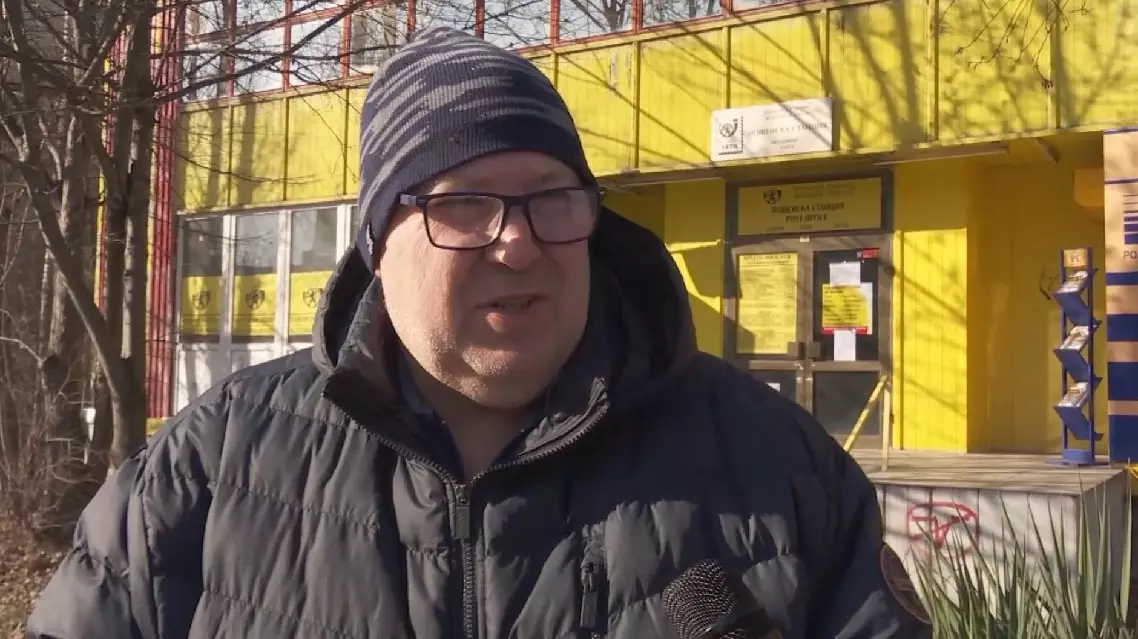
Bulgarians say Greenland must remain as part of Denmark despite U.S. pressure