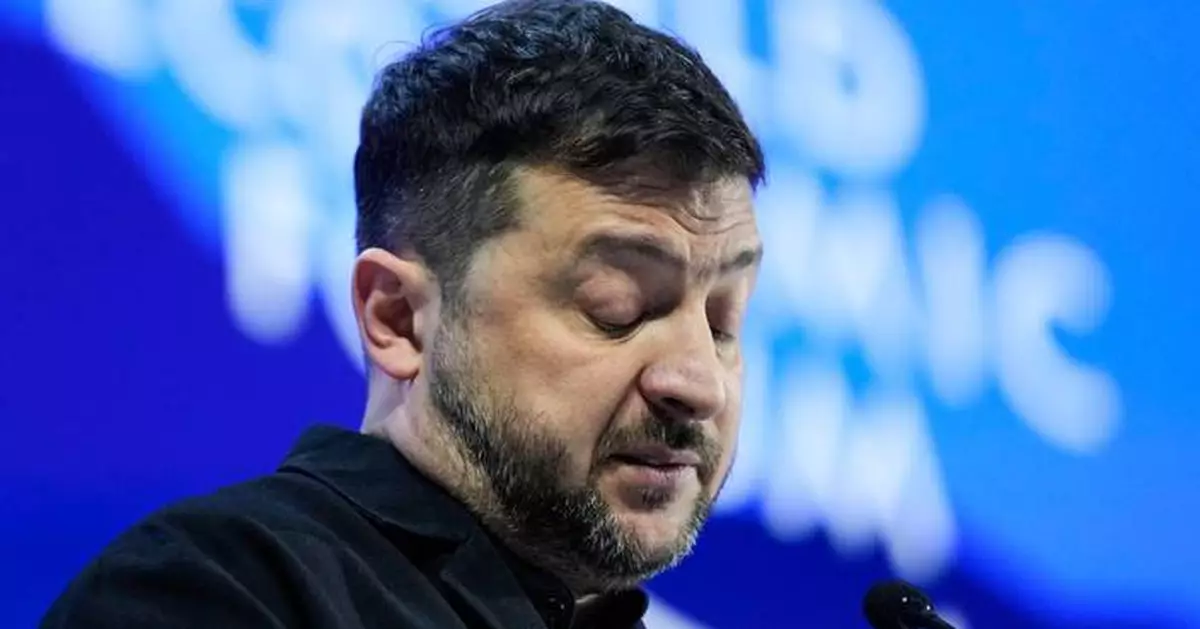
DAVOS, Switzerland (AP) — Ukrainian President Volodymyr Zelenskyy blasted his European allies Thursday for what he portrayed as the continent’s slow, fragmented and inadequate response to Russia’s invasion nearly four years ago and its continued international aggression.
Addressing the World Economic Forum in Davos, Switzerland, Zelenskyy listed a litany of grievances and criticisms of Europe that he said have left Ukraine at the mercy of Russian President Vladimir Putin amid an ongoing U.S. push for a peace settlement.
Click to Gallery
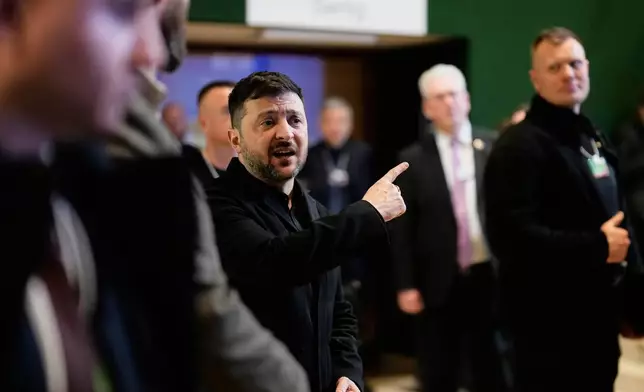
Ukraine's President Volodymyr Zelenskyy, centre, talks to the media at the Annual Meeting of the World Economic Forum in Davos, Switzerland, Thursday, Jan. 22, 2026. (AP Photo/Markus Schreiber)
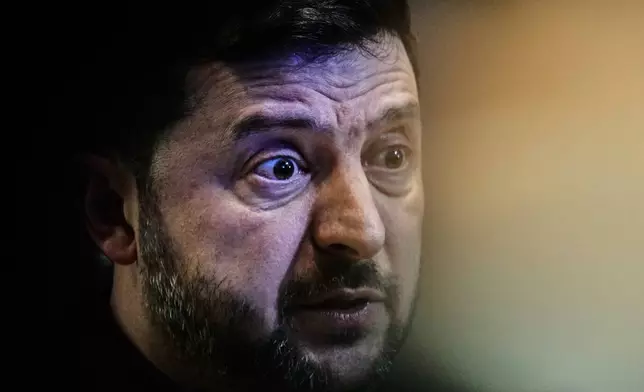
Ukraine's President Volodymyr Zelenskyy talks to the media at the Annual Meeting of the World Economic Forum in Davos, Switzerland, Thursday, Jan. 22, 2026. (AP Photo/Markus Schreiber)
Ukraine's President Volodymyr Zelenskyy talks to the media at the Annual Meeting of the World Economic Forum in Davos, Switzerland, Thursday, Jan. 22, 2026. (AP Photo/Markus Schreiber)
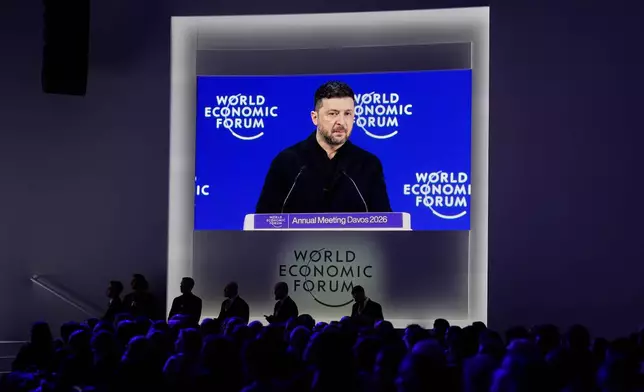
Ukraine's President Volodymyr Zelenskyy appears on a screen as he delivers a speech at the Annual Meeting of the World Economic Forum in Davos, Switzerland, Thursday, Jan. 22, 2026. (AP Photo/Markus Schreiber)
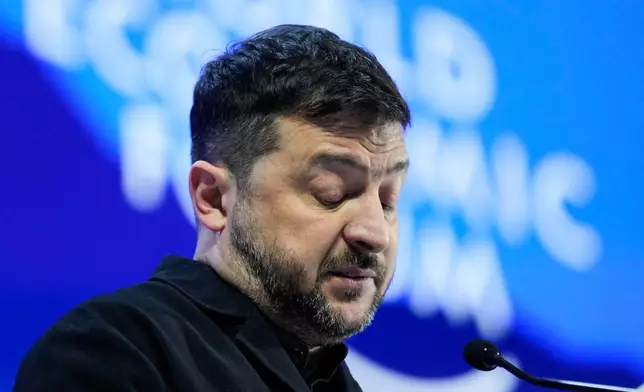
Ukraine's President Volodymyr Zelenskyy delivers a speech at the Annual Meeting of the World Economic Forum in Davos, Switzerland, Thursday, Jan. 22, 2026. (AP Photo/Markus Schreiber)
“Europe looks lost,” Zelenskyy said in his speech, urging the continent to become a global force. He contrasted Europe’s response with Washington’s bold steps in Venezuela and Iran.
The former comic actor referred to the movie “Groundhog Day,” in which the main character must relive the same day over and over again.
“Just last year, here in Davos, I ended my speech with the words: Europe needs to know how to defend itself. A year has passed. And nothing has changed. We are still in a situation where I must say the same words again,” Zelenskyy said.
He said that Ukrainians, too, seem caught in that reality in the war, "repeating the same thing for weeks, months and, of course, for years. And yet that is exactly how we live now. It’s our life.”
European countries, which see their own future defense at stake in the war on its eastern flank, have provided financial, military and humanitarian support for Kyiv, but not all members of the 27-nation European Union are helping. Ukraine also has been frustrated by political disagreements within Europe over how to deal with Russia, as well as the bloc’s at times slow-moving responses.
His speech came after he met behind closed doors for about an hour in Davos with U.S. President Donald Trump, who described the talks as “very good.” Zelenskyy called them “productive and meaningful.”
Speaking to reporters aboard Air Force One as he flew back to Washington from Davos, Trump said his meeting with Zelenskyy went well, adding that the Ukrainian president told him he wants to make a deal to end the war.
“I had a good meeting, but I’ve had numerous good meetings with President Zelenskyy and it doesn’t seem to happen,” he said.
Trump noted that both Putin and Zelenskyy want to reach a deal and that “everyone’s making concessions” to try to end the war.
He said the sticking points in talks remain the same as they’ve been during talks held during the past six or seven months, noting “boundaries” was a key issue. “The main hold-up is the same things that’s been holding it up for the last year,” he said.
Trump said he and Zelenskyy talked about how Ukrainians were surviving the cold winter without heat.
“It’s really tough for the people of Ukraine,” Trump said, noting that it was “amazing” how residents have been able to persevere through the winter facing relentless Russian strikes. “It’s no way to live,” he said.
Russia’s bigger army has managed to capture about 20% of Ukraine since hostilities began in 2014 and its full-scale invasion of 2022. But the battlefield gains along the roughly 1,000-kilometer (600-mile) front line have been costly for Moscow, and the Russian economy is feeling the consequences of the war and international sanctions.
Ukraine is short of money and, despite significantly boosting its own arms manufacturing, still needs Western weaponry. It is also short-handed on the front line. Its defense minister last week reported some 200,000 troop desertions and draft-dodging by about 2 million Ukrainians.
Zelenskyy is also striving to keep the world's attention focused on Ukraine despite other conflicts.
He chided Europe for being slow to act on key decisions, spending too little on defense, failing to stop Russia’s ”shadow fleet" of oil tankers that are breaking international sanctions, and balking at using its frozen assets in Europe to finance Ukraine, among other things.
Europe, he said, “still feels more like a geography, history, a tradition, not a real political force, not a great power.”
“Some Europeans are really strong, it’s true, but many say we must stand strong, and they always want someone else to tell them how long they need to stand strong, preferably until the next election,” he said.
The Trump administration is pushing for a peace settlement, with its envoys shuttling between Kyiv and Moscow in a flurry of negotiations that some worry could force Ukraine into an unfavorable deal.
Trump’s special envoy Steve Witkoff and his son-in-law Jared Kushner arrived in Moscow late Thursday and sat for talks with Putin for more than 3 hours, according to the Kremlin.
One major issue remains to be resolved in negotiations, Witkoff said at Davos, without saying what it was. Zelenskyy said the future status of land in eastern Ukraine currently occupied by Russia is unresolved but that peace proposals are “nearly ready.”
Postwar security guarantees, should a deal be reached, are agreed between the U.S. and Ukraine, although they would require each country's ratification, he said.
Zelenskyy said two days of trilateral meetings involving the U.S., Ukraine and Russia are due to begin Friday in the United Arab Emirates.
“Russians have to be ready for compromises because, you know, everybody has to be ready, not only Ukraine, and this is important for us,” he said.
Trump and Zelenskyy have had a fraught relationship, and the American president has at times also rebuked Putin.
Zelenskyy said he thanked Trump for providing U.S.-made Patriot air defense systems that can help stop Russian missiles that are repeatedly hitting Ukraine’s power grid, causing hardship for civilians denied light, heating and running water. He said he asked Trump for more of them.
After Trump cut support for Ukraine, other NATO countries began buying weapons from the U.S. to donate to Kyiv under a special financial arrangement.
Hrabchuk reported from Kyiv, Ukraine. Josh Boak on Air Force One, Meg Kinnard in Houston and Ali Swenson from Washington contributed to this report.
Follow AP’s coverage of the war in Ukraine at https://apnews.com/hub/russia-ukraine

Ukraine's President Volodymyr Zelenskyy, centre, talks to the media at the Annual Meeting of the World Economic Forum in Davos, Switzerland, Thursday, Jan. 22, 2026. (AP Photo/Markus Schreiber)
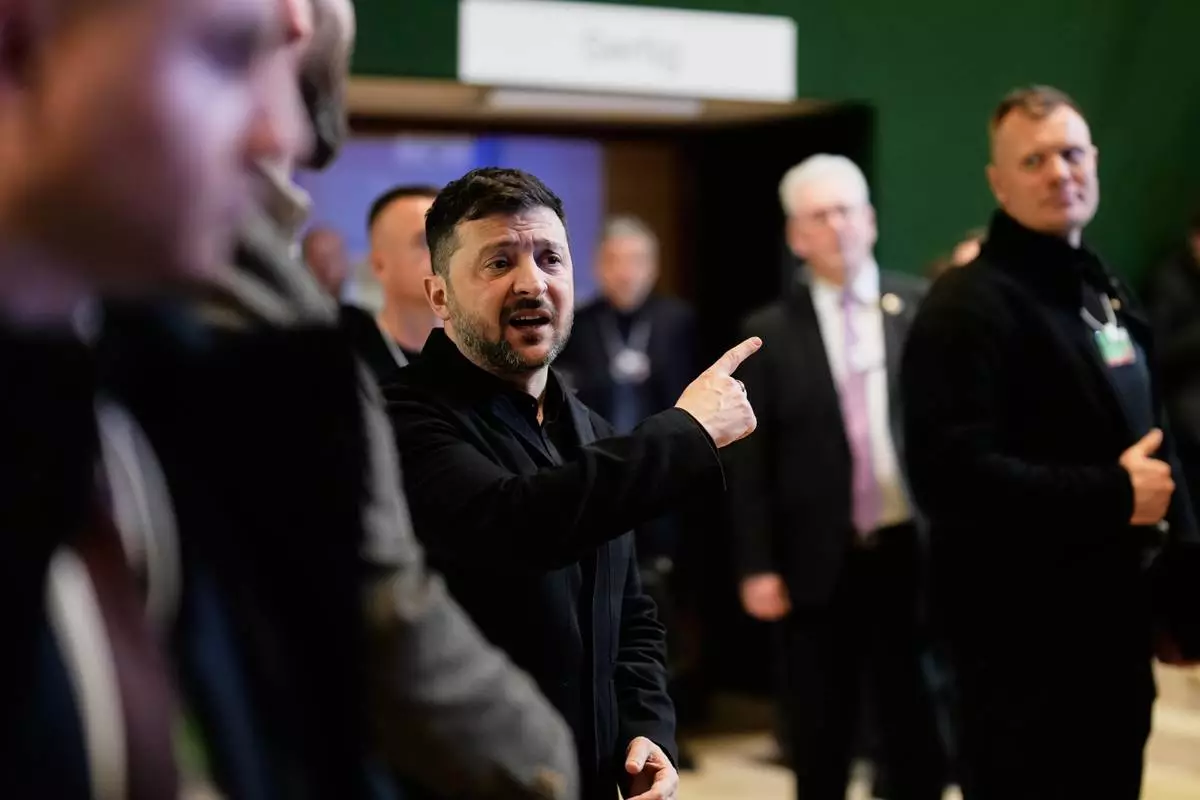
Ukraine's President Volodymyr Zelenskyy talks to the media at the Annual Meeting of the World Economic Forum in Davos, Switzerland, Thursday, Jan. 22, 2026. (AP Photo/Markus Schreiber)

Ukraine's President Volodymyr Zelenskyy talks to the media at the Annual Meeting of the World Economic Forum in Davos, Switzerland, Thursday, Jan. 22, 2026. (AP Photo/Markus Schreiber)

Ukraine's President Volodymyr Zelenskyy appears on a screen as he delivers a speech at the Annual Meeting of the World Economic Forum in Davos, Switzerland, Thursday, Jan. 22, 2026. (AP Photo/Markus Schreiber)

Ukraine's President Volodymyr Zelenskyy delivers a speech at the Annual Meeting of the World Economic Forum in Davos, Switzerland, Thursday, Jan. 22, 2026. (AP Photo/Markus Schreiber)
The ongoing American-Israeli war on Iran, for all its complexity and global effects, boils down to a single question: Who can take the pain the longest? A surge in oil prices points to what may be Iran’s most effective weapon and the United States’ biggest vulnerability in continuing the campaign: Damaging the world economy.
Wednesday’s major developments include Iranian attacks against commercial ships — setting a Thai cargo ship ablaze in the Strait of Hormuz — and drones targeting Dubai International Airport, escalating a campaign of squeezing the oil-rich region as global energy concerns mount.
The U.S. campaign of airstrikes on Iran is now in its 12th day with no end in sight after hitting more than 5,500 targets. The Israeli military is striking across Iran as well as in Lebanon, where Israel says it's targeting the Iran-backed militant group Hezbollah. An Israeli intelligence assessment also indicates that Iran’s new supreme leader, Ayatollah Mojtaba Khamenei, was wounded at the start of the war.
The war has killed at least 1,230 people in Iran, at least 570 in Lebanon and 12 in Israel, according to officials in those countries. The Pentagon said Tuesday that about 140 U.S. service members have been wounded, eight of them severely, and seven killed.
Here is the latest:
The International Energy Agency agreed Wednesday to release the largest volume of emergency oil reserves in its history.
The Paris-based organization said it will make 400 million barrels of oil available from its members’ emergency reserves. That’s more than twice the 182.7 million barrels released in 2022 by the IEA’s 32 member countries in response to Russia’s full-scale invasion of Ukraine.
These countries currently hold over 1.2 billion barrels of public emergency oil stocks, and 600 million barrels of industry stocks under government obligation.
Germany, Austria and Japan said earlier Wednesday that they would release parts of their oil reserves following the IEA’s request to mitigate energy price spikes due to the Iran war.
Adm. Brad Cooper, commander of U.S. Central Command, said that as a result of the U.S. strikes, including one on a “large ballistic missile manufacturing facility,” Iran’s ballistic missile and drone attacks have “dropped drastically.” The targets have included more than 60 ships, he said in a video posted to social media Wednesday.
Cooper also confirmed that the military was using “advanced AI tools” to “sift through vast amounts of data in seconds.” He said these tools are enabling leaders to make smarter decisions faster but stressed that “humans will always make final decisions on what to shoot and what not to shoot and when to shoot.”
Ambassador Danny Danon said Israel always prefers diplomacy and talks with the Lebanese government will continue, “but now they have to choose to actually confront Hezbollah — they have to stop Hezbollah.”
“They have to choose — either they confront Hezbollah or they let us do it,” he said. “There is no other option.”
Danon was asked by U.N. reporters ahead of an emergency meeting of the U.N. Security Council meeting on Lebanon how long its military operation would last.
“As long as there will be a threat against us, we will operate,” he replied.
Lebanon’s cash-strapped military, backed by the U.S. and other governments, has been deploying in recent months across southern Lebanon where Hezbollah has a strong military presence, but it’s unclear if they are able or willing to disarm the Iran-backed militant group.
11 sec ago
The Strait of Hormuz, a narrow waterway off Iran’s coast now effectively closed by the war, is so vital for the global economy that governments are working on blueprints to speedily reopen it to oil tankers and other shipping when the shooting stops.
Former naval officers who are intimately familiar with the narrow Hormuz passage say vessels would be sitting ducks if military forces tried to reopen the waterway before hostilities cease.
“In today’s context, sending warships or civilian vessels into the Strait of Hormuz would be suicidal,” French navy retired Vice Adm. Pascal Ausseur said in an interview with The Associated Press.
A ceasefire agreement with Iran “would make the situation shift from suicidal to dangerous. At that point, military ships could be deployed. And then escort operations could begin,” he said.
Imad Darwish of Biddya — a northern West Bank town of more than 10,000 people — told The Associated Press that his two nieces panicked as the debris tore through concrete, sparking a small fire fueled by rocket propellant.
“Thankfully there were no injuries, only minor panic,” Darwish said. He had been at nightly Ramadan prayers at the time.
The Israeli-occupied West Bank does not have the same siren and shelter system Israelis rely on, although warning sirens from nearby Israeli settlements can often be heard. No Palestinians have been killed by Iranian missiles or falling debris from Israeli interceptions, but large fragments have hit multiple homes.
Palestinian Civil Defense crews arrived to remove the debris from the Darwish’s ceiling and extinguish the fire.
Facing jittery global markets and drooping poll numbers since launching a war on Iran, President Donald Trump has cycled from calls for “unconditional surrender” to sounding amenable to an end state in which Iran trades one hard-line ayatollah for another.
Shifting comments from the Republican president and his top aides are adding to the precariousness of the 12-day-old conflict, which is impacting nearly every corner of the Middle East and causing economic tremors around the globe. With neither side budging, the war is now on an unpredictable path — one in which a credible endgame is still unclear.
▶ Read more
Michael Eisenberg, general manager of the Aleph venture capital fund, told The Associated Press Wednesday that he hopes Iranians will seize this opportunity to claim their freedom, as it’s currently the only option on the table. He said the war’s goals include enabling the Iranian people to take hold of their future in what he called a once-in-a-generation opportunity.
He acknowledged that people could risk death if they rise up, but said “freedom has a price. People pay. Sometimes with their life.”
“What Israel and the United States have done together is reduce the cost of freedom for the Iranian people,” he said. “It’s time to leave this evil death cult regime behind.”
When asked in the interview if there’s a plan B if that doesn’t transpire, Eisenberg said: “Plan B is not on the table right now.”
Russia’s President Vladimir Putin spoke about the war Wednesday with the United Arab Emirates president, Sheikh Mohamed bin Zayed Al Nahyan.
The Kremlin said in a readout that the leaders “continued their exchange of views on the dangerously deteriorating situation in the Middle East, which has grave consequences for Iran and the Arab countries.”
In his second call with Al Nahyan since the start of the Iran war, Putin emphasized “the need to stop the further escalation of the conflict and settle it through talks.” He also thanked Al Nahyan for offering assistance and support to Russian citizens in the UAE.
At least 12 incidents have been confirmed involving vessels in and around the Strait of Hormuz since the war began, according to two global trackers.
The International Maritime Organization reports 12 involving merchant vessels as of Wednesday. IMO secretary-general Arsenio Dominguez earlier said at least seven mariners had been killed.
And the United Kingdom Maritime Trade Operations center, run by the British military, says it has received 17 reports of incidents affecting vessels in and around the Arabian Gulf, Strait of Hormuz and Gulf of Oman as of Wednesday. It lists 13 attacks and four others as “suspicious activity,” involving tankers, tugs, cargo and other vessels.
The team members who didn't request asylum in Australia may remain in Malaysia longer as Asian football authorities explore options for their onward travel.
“There is a possibility that they may remain in Malaysia longer if necessary,” Asian Football Confederation secretary-general Windsor John told the Scoop online news portal. He was quoted as saying that the AFC was also discussing with several countries in Asia about temporarily hosting the team.
He said the AFC had arranged for the team to travel from Sydney to Kuala Lumpur at short notice after it became clear the squad could not immediately return to Iran. They arrived in Malaysia early Wednesday, and their accomodation and related costs will be covered by the AFC, he said.
Windsor separately was quoted by the New Straits Times as saying the players were in “good condition and spirits” and looking forward to return to Iran. Windsor couldn’t be immediately reached for comments.
▶ Read more
The head of Iran’s Football Federation raised doubts about whether Iran will take part in the World Cup that will be held across North America in June, after several members of the Iranian women’s soccer team sought asylum in Australia. Mehdi Taj told Iranian state media in an interview broadcast on Tuesday that members of the women’s soccer were coerced into staying in Australia, and accused Trump of interfering, referring to the soccer players as “hostages.”
Iran is scheduled to play its first match against New Zealand on June 16 in Los Angeles.
“If the outlook for the World Cup is like this, no reasonable person would accept to send their national team to such a place,” he said.
That’s according to an Israeli intelligence official and a reservist with knowledge of the situation. They spoke on condition of anonymity because they were not authorized to discuss the matter with the media.
They gave no details on the nature of Ayatollah Motjaba Khamenei’s injuries.
The 56-year-old son of the late Supreme Leader Ayatollah Ali Khamenei has not been seen since succeeding his father on Monday. His father and wife both were killed in an Israeli airstrike on the first day of the conflict.
EU foreign policy chief Kaja Kallas said Wednesday that the 27-nation bloc is issuing new sanctions on 19 Iranian officials and entities.
“As the Iran war continues, the EU will protect its interests and pursue those responsible for domestic repression,” the EU’s top diplomat said in a social media post. “It also sends a message to Tehran that Iran’s future cannot be built on repression.”
A spokesperson for the European Commission did not immediately provide additional details.
Iran threatened to not allow “even a single liter of oil” to pass through the Strait of Hormuz for the U.S., Israel, or their allies.
A spokesperson for Khatam Al-Anbia, which operates the Revolutionary Guard-owned companies, said any ship or oil cargo that belongs to the U.S., Israel, or its allies will be a legitimate target.
Under normal circumstances, around 20% of the world’s oil and natural gas is shipped through the narrow channel that leads to the Persian Gulf. Fears about the geopolitical situation have caused the price of oil to swing wildly.
Consumer prices were up 2.4% in February compared with a year earlier, the Labor Department said Wednesday. Excluding volatile food and energy categories, core prices climbed 2.5%. And since this data was collected, the U.S. and Israeli attacks on Iran have caused wild gyrations in oil prices. Gas prices already jumped and are expected to push inflation much higher when March data is released in early April.
The price spike will challenge officials at the Federal Reserve and could slow consumer spending, which drives two thirds of the nation’s economic growth each year. This could reverse if the war ends soon, but gas prices threaten to worsen inflation for at least a few months. That could keep “affordability” as a thorny political issue for Republicans facing voters in this year’s elections.
▶ Read more
Romania’s top defense body on Wednesday approved a request from the United States to increase its troop presence and use of the NATO country’s air bases to facilitate its military operations in Iran and the Middle East.
President Nicusor Dan said the agreement would allow for the temporary deployment of more U.S. troops, and military equipment for refueling planes and defensive equipment such as satellite communication and monitoring equipment.
Iran has arrested 81 people who have posted information on social media the authorities deem unacceptable during wartime, Iran’s state TV reported.
“Since we are at war, we will act like it, those in social media who cause tension for the public mind will be considered the enemy and will be treated as such,” Ahmad Reza Radan, the commander-in-chief of the Islamic Republic’s security forces, said on state TV late Tuesday.
He said the people who post critical things or repost things connected to Iran’s enemies will face lengthy prison sentences and possibly executions.
Several other countries in the Middle East have also instituted similar bans.
Israel has restrictions on sharing photos and videos that show specific locations of strikes. Several dozen have been arrested in Bahrain and Qatar for sharing “misleading” opinions and information online, according to DAWN, a Washington-based rights organization.
The Israeli military sounded alarms across Israel after detecting missiles launched from Iran.
“There have been attacks against U.S. citizens and U.S. interests in Iraq, and Americans face risk of kidnapping,” the statement said. “American businesses, hotels frequented by foreigners, and other facilities in Iraq, including those with U.S. ties, have been attacked.”
Since the U.S. and Israel attacked Iran, triggering the ongoing war in the Middle East, Iran and Iran-backed Iraqi militias have launched dozens of missile and drone attacks on U.S. bases and diplomatic facilities, energy and communications sites in Iraq, particularly in the semiautonomous northern Kurdish region.
Iraq’s airspace is closed, with land borders open to cross into Jordan, Kuwait, Saudi Arabia and Turkey.
“Americans should strongly consider departing via one of these overland routes if they believe it is safe to do so,” the statement said.
Egypt’s Foreign Minister has called for Iran to stop its attacks in Arab countries and warned that it should avoid “comprehensive chaos” in the Middle East.
Badr Abdelatty’s comments Wednesday came in a phone call with Iranian Foreign Minister Abbas Araghchi, according to the Egyptian foreign ministry.
Lebanon’s Health Ministry says that the death toll since the latest round of Israel-Hezbollah fighting began on March 2, has risen to 570.
The ministry added that 1,444 people have been wounded since then.
The ministry said the dead included 86 children and 45 women.
Hong Kong’s Cathay Pacific Airways will soon raise its fuel surcharges after experiencing a jump in jet fuel prices during the Iran war, its leaders said Wednesday.
The company’s CEO, Ronald Lam, said an announcement on surcharge adjustment will be made soon. The airline saw jet fuel prices roughly double in March from the average prices recorded in January and February.
Lavinia Lau, the firm’s chief customer and commercial officer, reported a surge in demand for routes, including those flying between Hong Kong and Europe, as passengers sought alternatives.
The airline has already halted flight services to Dubai and Riyadh for this month.
Thai officials say a search is underway for three missing crew members after a Thai cargo ship was struck and set ablaze in the Strait of Hormuz on Wednesday.
Thailand’s Marine Department said 20 crew members from the ship Mayuree Naree have already been rescued by the Omani navy and brought ashore in Khasab. The department said the three missing crew members were reportedly in the engine room when the explosion occurred.
The United Kingdom Maritime Trade Operations center, run by the British military, said earlier that the vessel had been hit just north of Oman in the strait.
The Marine Department said it is coordinating with relevant domestic and international agencies for the search and rescue operation and to provide assistance to the affected crew members.
Israel’s military said Wednesday it was repositioning troops from the south to provide reinforcements along the northern border.
Hezbollah last week resumed its drone and rocket attacks against Israel in support of Iran, and Israel responded with an intense, ongoing offensive.
For the residents of northern Israel, this has meant a return of the familiar sounds of explosions, interceptions, artillery fire and overhead jets. Sirens go off multiple times a day warning of incoming fire, typically providing a warning of just seconds to take cover and forcing residents to stay near shelters at all times.
Israel evacuated more than 60,000 people from northern Israel during the previous war with Hezbollah. There are currently no plans to evacuate northern communities.
Turkish President Recep Tayyip Erdogan said the war must be stopped before it “sets the entire region on fire.”
“If diplomacy is given a chance, it is indeed possible to achieve (peace),” Erdogan said in a speech to his ruling party’s legislators.
He said Turkey was pressing ahead with efforts to bring the parties back to the negotiating table.
Iranian state television aired footage of people gathered Wednesday at Enqelab Square in Tehran even as Israeli airstrikes targeted the capital.
Among those being honored were Lt. Gen. Abdolrahim Mousavi, the chief of staff of Iran’s armed forces, and Lt. Gen. Mohammad Pakpour, who led the country’s paramilitary Revolutionary Guard.
The Israeli military said it is simultaneously carrying out strikes across Iran as well as Hezbollah infrastructure in Beirut.
Pope Leo XIV is praying for peace in Iran, Lebanon and the Middle East at large, saying he hopes prayers may “be a comfort to those who suffer and a seed of hope for the future.”
Speaking at the end of his weekly general audience, Leo recalled that the funeral of a Maronite priest killed in southern Lebanon was being celebrated Wednesday. He said the Rev. Pierre El Raii, who was killed Monday as he tried to rescue a wounded parishioner, was a true pastor.
“May the Lord grant that his shed blood be a seed of peace for beloved Lebanon,” he said.
The Vatican is particularly concerned about how the war is affecting Lebanon, a Muslim-majority country where about a third of the population is Christian.
Lebanon, where Leo visited late last year, has always been a priority for the Holy See since it stands as a bulwark for Christians in the region at a time when protracted conflicts have decimated Christian communities that date from the time of the Apostles.
Oman said Wednesday that it shot down an Iranian drone and another crashed into the sea near its port at Duqm.
The state-run Oman News Agency, quoting an anonymous security official, made the announcement. It said there were no human or material losses in Wednesday’s drone attack.
Duqm has been a key resupply point for the aircraft carrier USS Abraham Lincoln and its strike group amid the war.

Flames rise from an Israeli airstrike in Dahiyeh, Beirut's southern suburbs, Wednesday, March 11, 2026. (AP Photo/Hassan Ammar)

People take cover in an underground bomb shelter as air raid sirens warn of incoming Iranian missile strike, in Ramat Gan, Israel, Wednesday, March 11, 2026. (AP Photo/Oded Balilty)
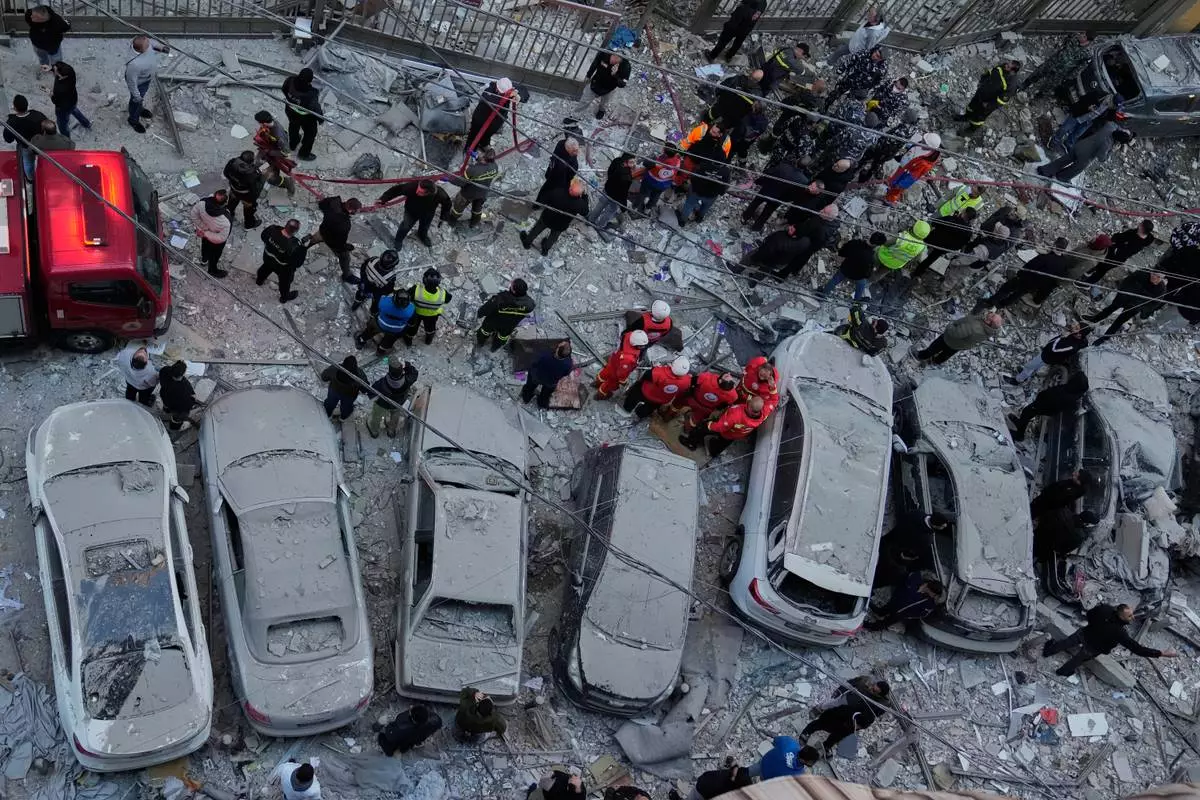
Rescue workers gather at the site where Israeli airstrikes hit apartments in Beirut, Lebanon, Wednesday, March 11, 2026. (AP Photo/Hussein Malla)

A man waves an Iranian flag as a crowd attends the funeral procession for senior Iranian military officials and civilians killed during the U.S.-Israel campaign in Tehran, Iran, Wednesday, March 11, 2026. (AP Photo/Vahid Salemi)
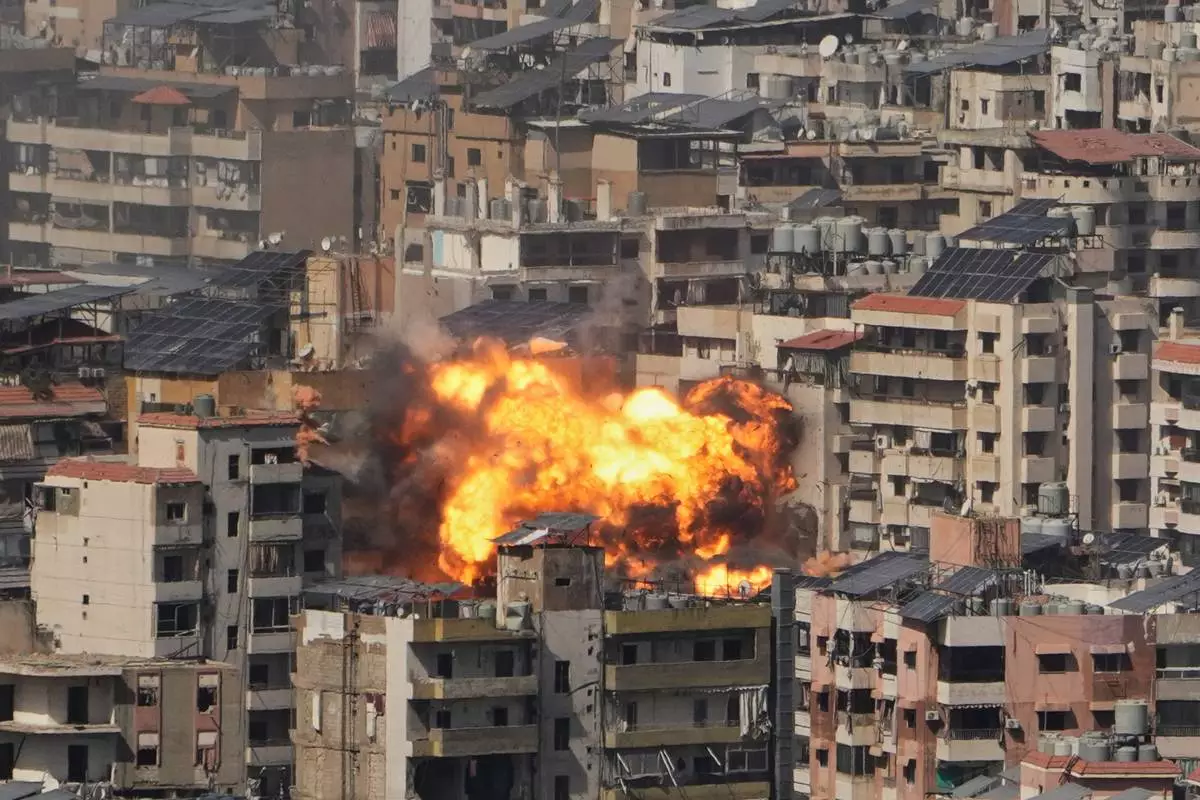
Flames rise from an Israeli airstrike in Dahiyeh, Beirut's southern suburbs, Wednesday, March 11, 2026. (AP Photo/Hassan Ammar)
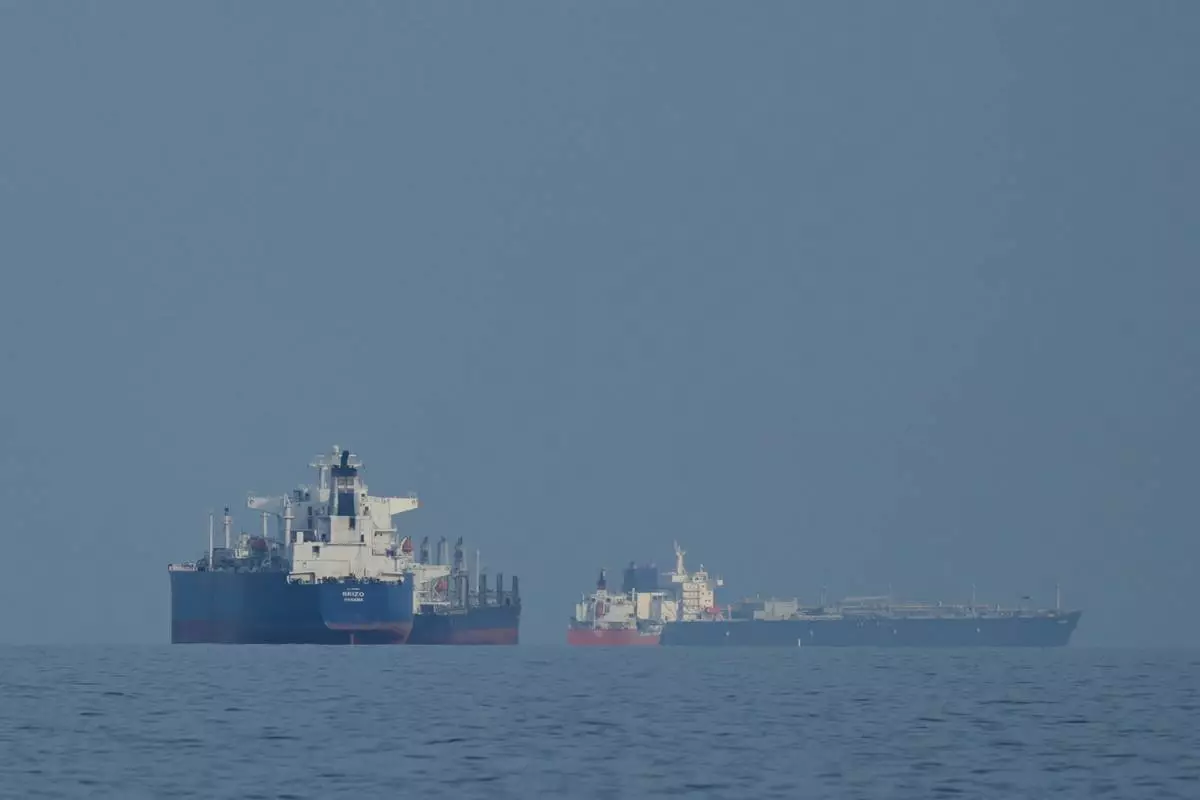
Oil tankers and cargo ships line up in the Strait of Hormuz as seen from Khor Fakkan, United Arab Emirates, Wednesday, March 11, 2026. (AP Photo/Altaf Qadri)
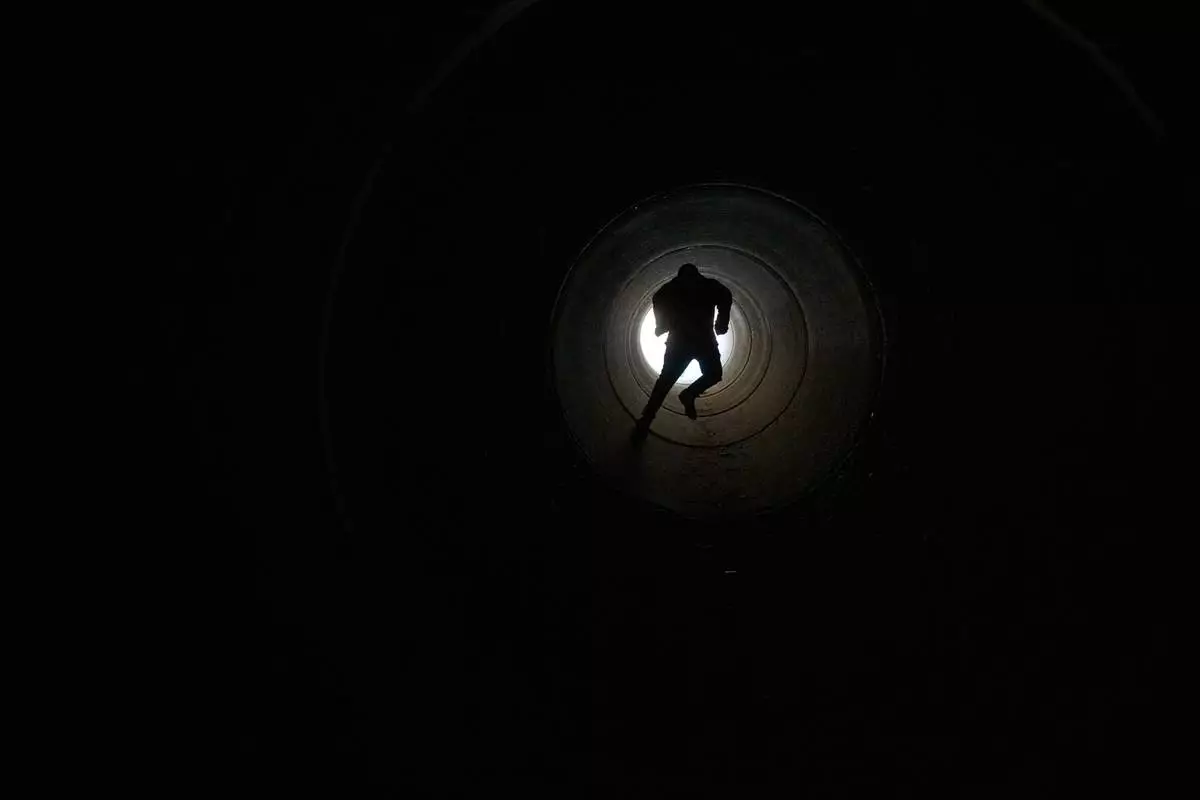
A boy runs inside cement pipe turned into a bomb shelter as air raid sirens warn of incoming Iranian missile strike in Michmoret, Israel, Tuesday, March 10, 2026. (AP Photo/Ariel Schalit)
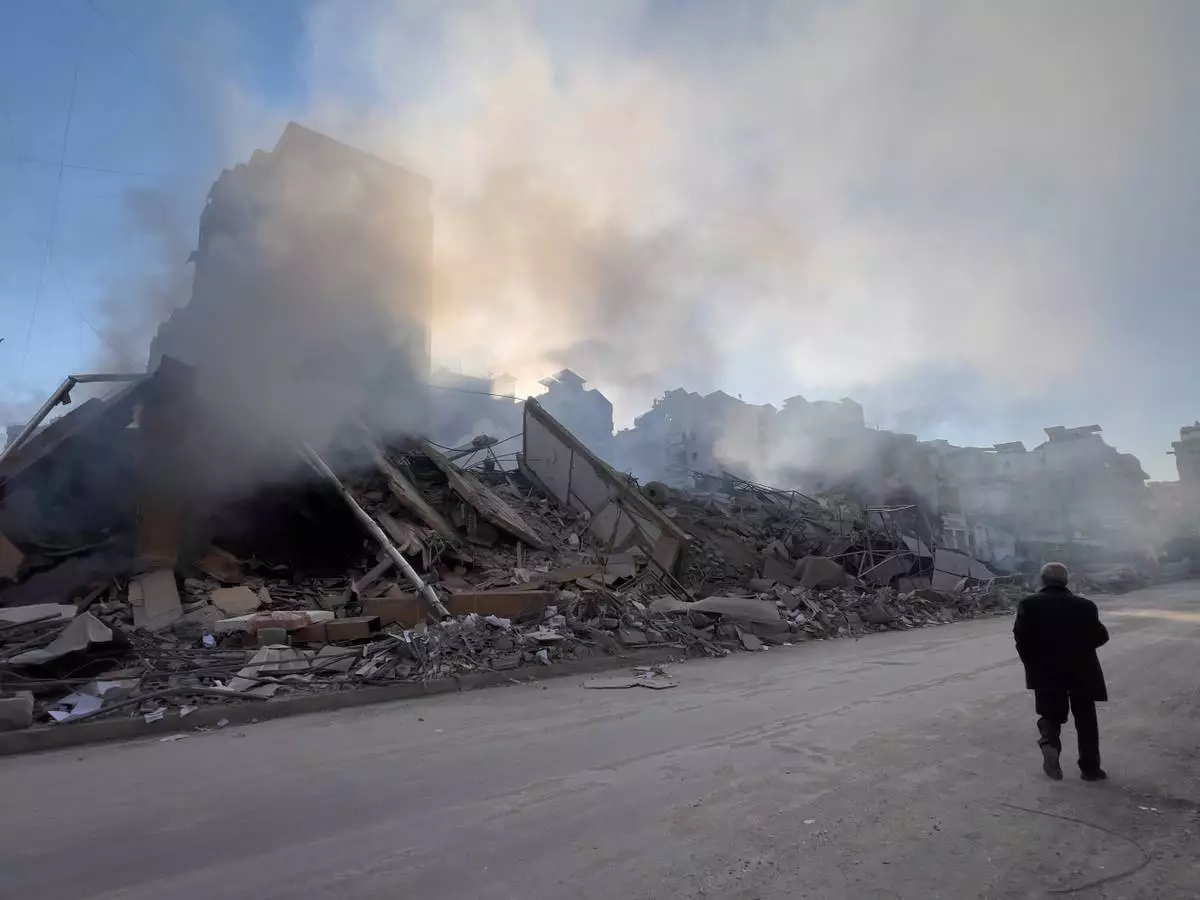
A man passes in front of a destroyed building that housed a branch of Al-Qard Al-Hassan, a non-bank financial institution run by Hezbollah, which was hit by an Israeli airstrike in Dahiyeh, Beirut's southern suburbs, Lebanon, Tuesday, March 10, 2026. (AP Photo/Hussein Malla)
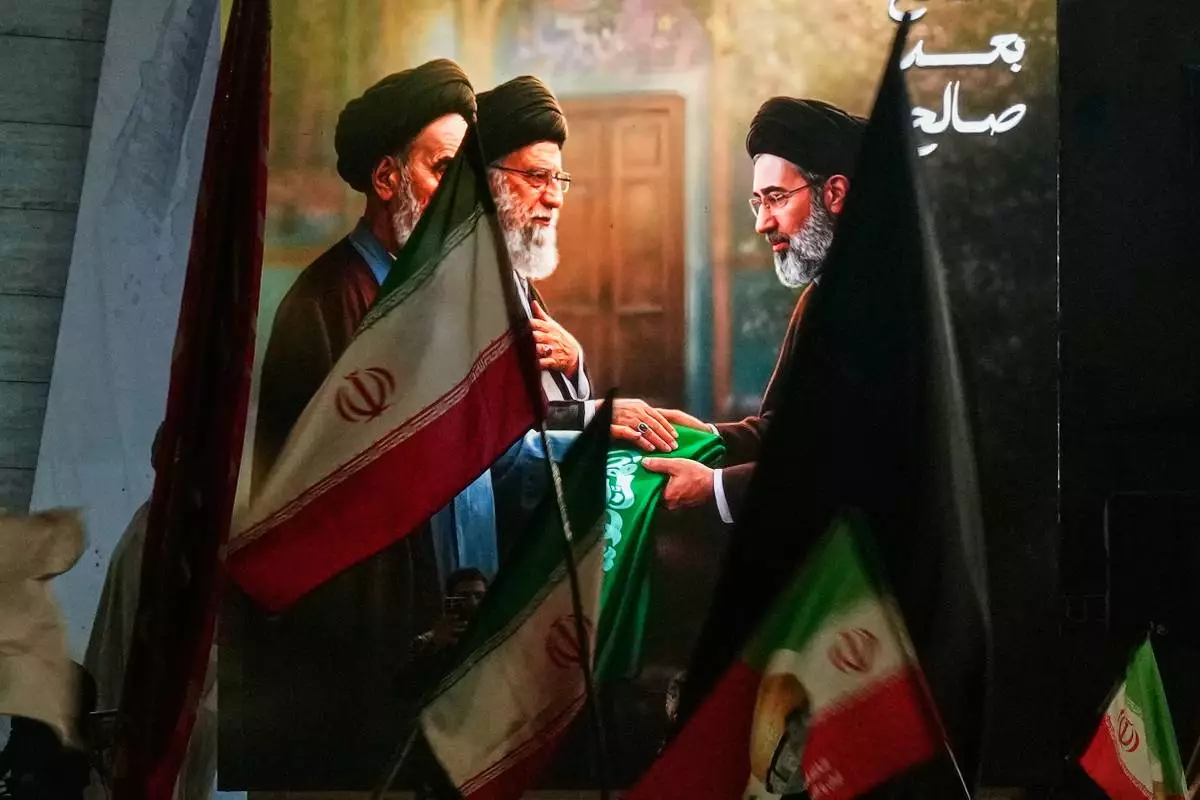
Protesters wave Iranian flags and hold a portrait of the late Iran's Supreme Leader Ayatollah Ali Khamenei and his son Ayatollah Mojtaba Khamenei to support his selection as the new Iran's Supreme Leader in Baghdad, Monday, March 9, 2026. (AP Photo/Hadi Mizban)
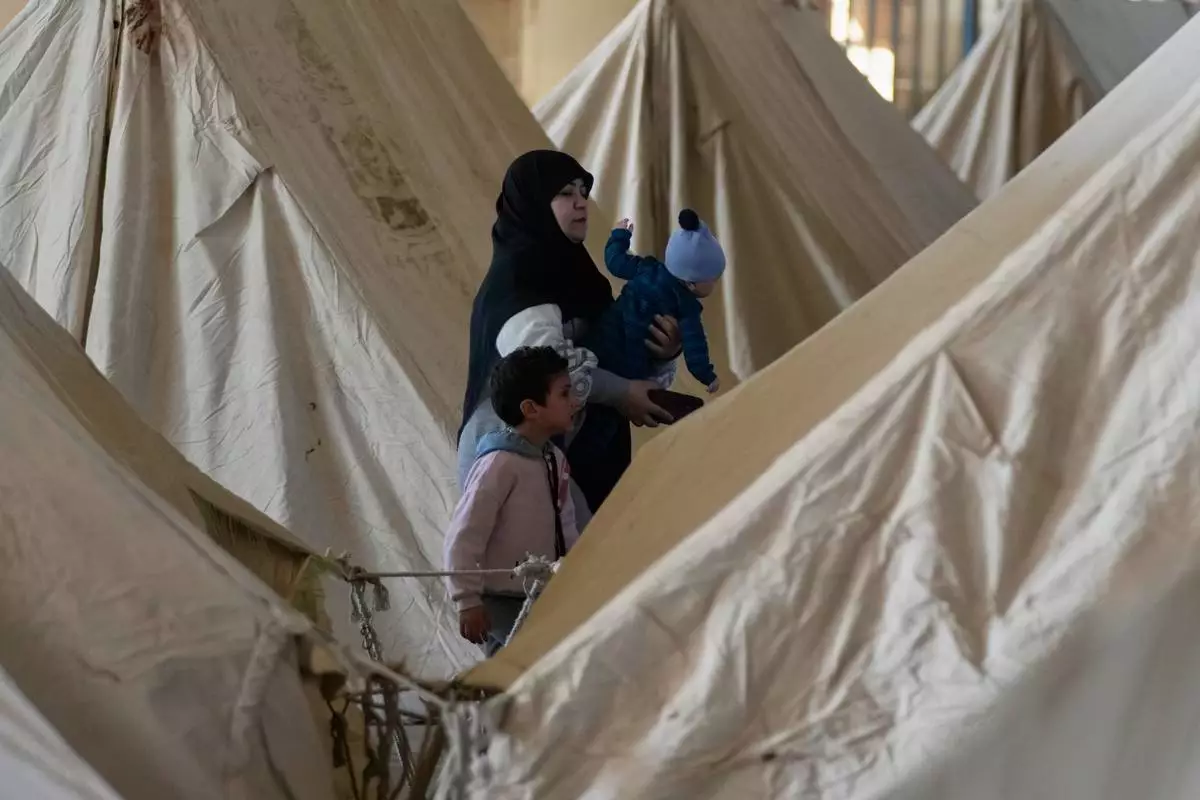
A displaced woman holds a child as another stands beside her between rows of tents at the Camille Chamoun Sports City Stadium, which has been turned into a shelter for people displaced by Israeli airstrikes in southern Lebanon and Dahiyeh, Beirut's southern suburbs, in Beirut, Lebanon, Tuesday, March 10, 2026. (AP Photo/Hassan Ammar)
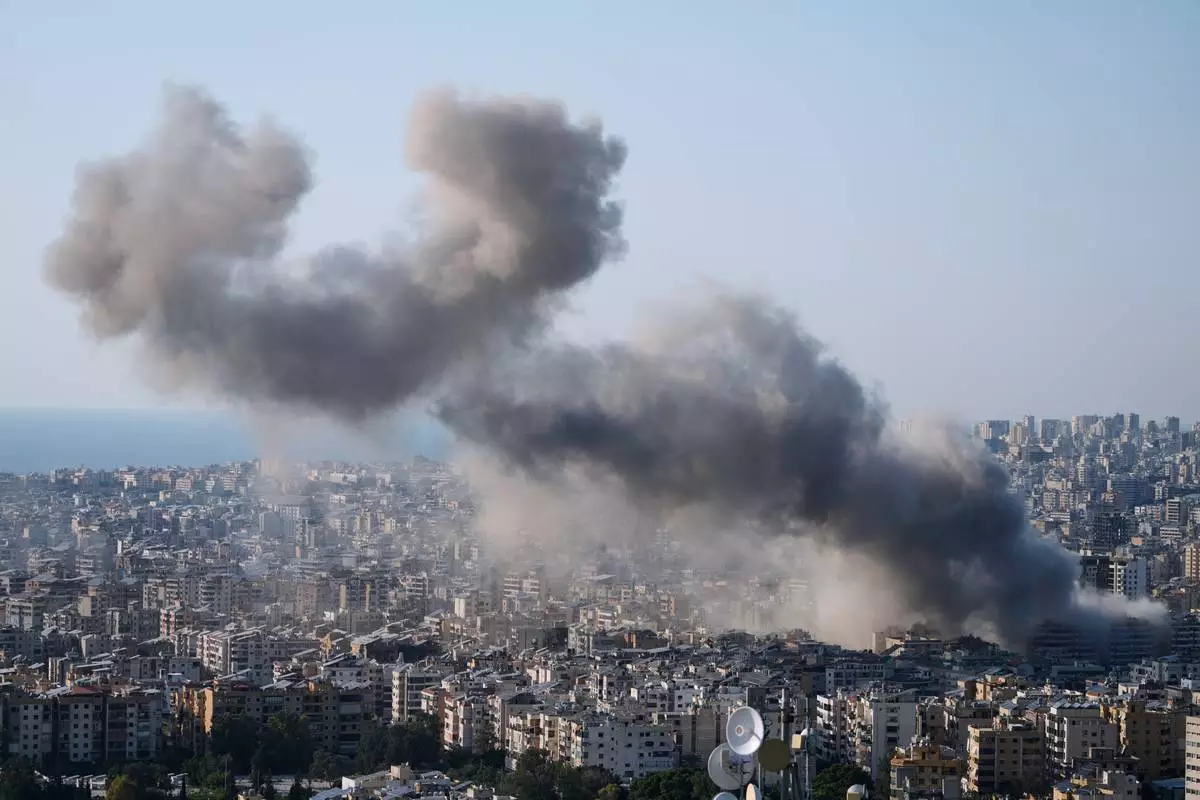
Smoke rise from an Israeli airstrike in Dahiyeh, Beirut's southern suburbs, Lebanon, Tuesday, March 10, 2026. (AP Photo/Bilal Hussein)