WASHINGTON (AP) — The Trump administration is expanding its ban on U.S. foreign aid for groups supporting abortion services to include assistance going to international and domestic organizations and agencies that promote gender identity as well as diversity, equity and inclusion programs.
An administration official said Thursday that the State Department would release final rules that expand the scope of the “Mexico City” policy that has already severely reduced assistance to international organizations that provide abortion-related care. The policy was first established under President Ronald Reagan, rescinded by subsequent Democratic administrations and reinstated in Trump's first term.
The new rules, first reported by Fox News, would halt foreign assistance from going toward not only groups that provide abortion as a method of family planning but also those that advocate “gender ideology” and DEI, according to the official, who spoke on condition of anonymity ahead of the rules’ publication in the Federal Register on Friday.
The change, which threatens billions in funding for groups around the world, was part of a series of actions that the Trump administration timed to this week's anniversary of the now-overturned Roe v. Wade ruling and anti-abortion activists’ annual March for Life demonstration in Washington.
The official said the expanded policy would apply to more than $30 billion in foreign aid that the U.S. provides and would cover not only foreign and U.S.-based aid agencies but international organizations.
LGBTQ+ and abortion rights advocates said the changes would force humanitarian aid groups and others to choose between U.S. funding and the sometimes entirely unrelated lifesaving services they provide around the world.
“The Trump administration’s expanded global gag rule puts politics between people and their care,” Human Rights Campaign President Kelley Robinson said in a statement. “Simply put, the White House is putting medically necessary health care at risk for people around the world in service to a political agenda.”
Beirne Roose-Snyder, senior policy fellow at the Council for Global Equality, said, “It's hard for me to even begin to anticipate how destructive this will be.”
Anti-abortion advocates welcomed the expansion. SBA Pro-Life America President Marjorie Dannenfelser said on a call with reporters that the Trump administration presented it to them alongside other new actions. Among them were the National Institutes of Health halting funding for research that uses human fetal tissue and the Small Business Administration launching a review into Planned Parenthood's use of COVID-era loans.
“All of these things are fantastic news,” Dannenfelser said.
It was not immediately clear how significant the impact of the foreign aid ban's expansion would be. The Trump administration has already slashed hundreds of millions of dollars in foreign aid and dismantled the U.S. Agency for International Development, which had been the main provider of U.S. assistance.
But if the new rules are written as expected, “many more billions” of dollars will be affected than in any prior period, said Jen Kates, senior vice president and director of the Global and Public Health Policy Program at the health care research nonprofit KFF.
It is also the latest effort by the Trump administration to take aim at DEI programs in the federal government. The White House reposted a Fox News article on X seemingly confirming the plans, but did not immediately respond to an emailed request for comment.
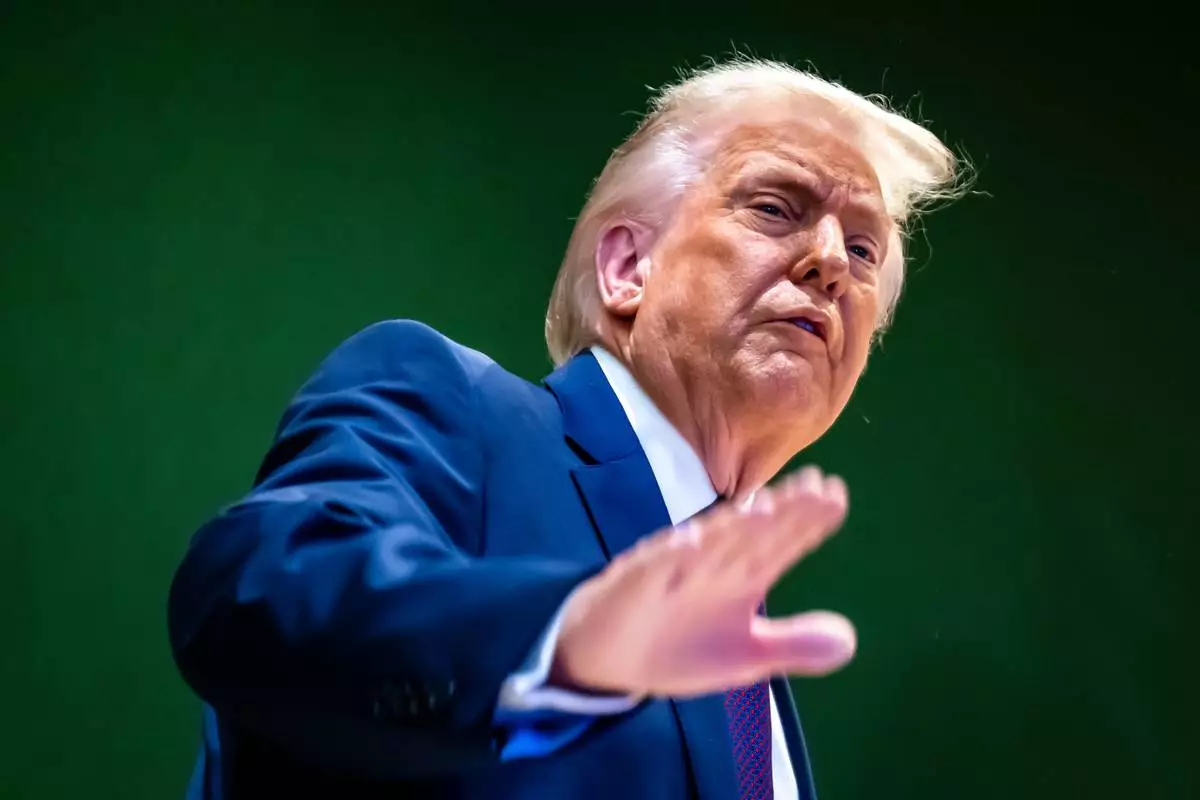
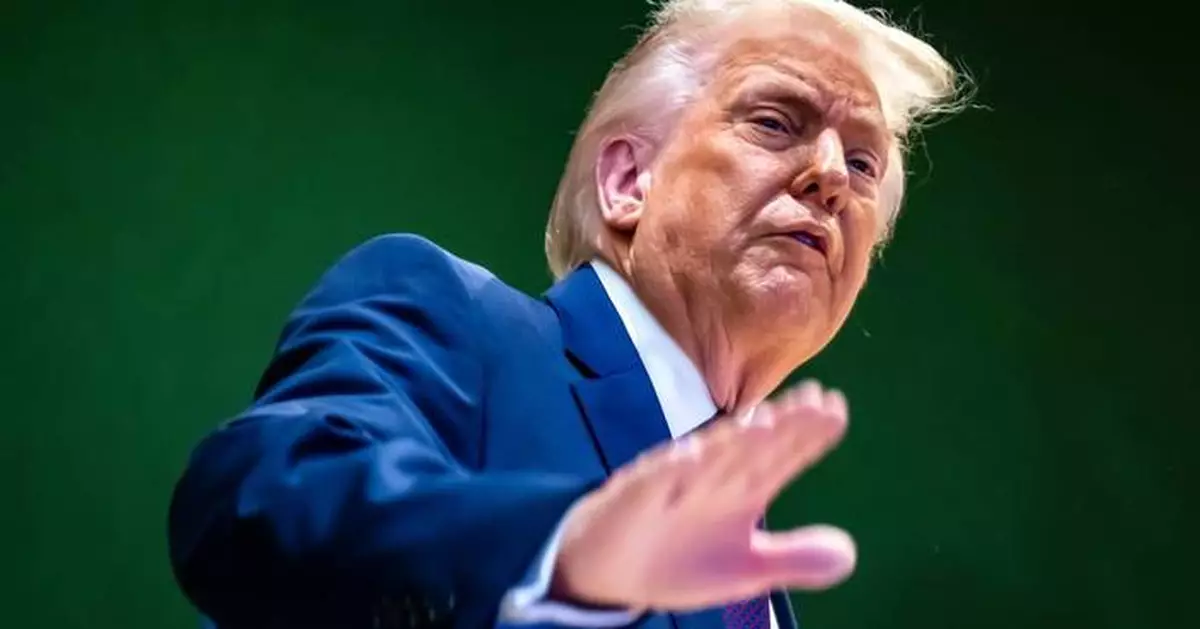
U.S. President Donald Trump gestures as he climbs a staircase after a signing ceremony of his Board of Peace initiative at the Annual Meeting of the World Economic Forum in Davos, Switzerland, Thursday, Jan. 22, 2026. (Laurent Gillieron/Keystone via AP)
NEW YORK (AP) — The U.S. stock market is rising again Thursday and regaining more of its losses for the week following the latest walkback by President Donald Trump from tariffs he had earlier threatened.
The S&P 500 climbed 0.8% and added to its big gain from Wednesday, when Trump said he had reached “the framework of a future deal with respect to Greenland” and called off 10% tariffs on European countries that he said opposed his having the Arctic island. The index has recovered most of the losses it took after Trump shook financial markets with his initial tariff threat.
The Dow Jones Industrial Average was up 473 points, or 1%, as of 2:03 p.m. Eastern time, and the Nasdaq composite was 1.1% higher.
It’s the latest example of Trump making a big, initial threat, only to pull back after seeing how much pain it created in financial markets. The pattern has led to the “TACO” acronym, suggesting that “Trump Always Chickens Out” if markets react strongly enough. Tuesday’s drop for the U.S. stock market was the worst since October and large enough that Trump, who often takes credit when Wall Street is doing well, acknowledged “the dip.”
But the pattern has also led to deals for Trump that outsiders may have initially considered unlikely if not for his extreme initial threat.
Details are still sparse about the framework of a deal on Greenland that Trump said he reached with the head of NATO. And it is not a signed deal yet.
Financial markets were still showing some signals of nervousness on Thursday. Gold’s price swiveled between small losses and gains before turning 1.7% higher. Its price often rises when investors are looking for something safer to own. The value of the U.S. dollar also slipped against the euro and several other foreign currencies, though the slide wasn't as sharp as earlier in the week when global investors bailed out of several U.S. markets.
Treasury yields held relatively steady in the bond market following encouraging reports on the U.S. economy’s strength. One said that fewer U.S. workers applied for unemployment benefits last week than economists expected in a potential signal that the pace of layoffs remains low. A second suggested the U.S. economy grew at a faster rate during the summer than the government initially estimated.
A third said that inflation in November was close to economists' expectations, while spending by U.S. consumers was a touch better than expected.
The yield on the 10-year Treasury fell to 4.25% from 4.26% late Wednesday.
On Wall Street, Northern Trust climbed 5.9% after reporting a stronger profit for the end of 2025 than analysts expected. CEO Michael O’Grady also said that the financial services company is entering 2026 with “strong momentum across all our businesses.”
Procter & Gamble added 3.1% after likewise delivering a better profit than analysts expected. Revenue for the company behind the Downy, Pantene and Tide brands, though, fell just shy of expectations amid what CEO Shailesh Jejurikar called a “challenging consumer and geopolitical environment.”
Another winner was Generac, which sells power generators. It rose 0.8% as forecasters warned a potentially catastrophic ice storm may hit a large swath of the United States.
They helped offset a 8.4% drop for spice seller McCormick & Co., whose profit fell short of expectations. CEO Brendan Foley said it continues to face rising costs because of “a shifting global trade environment.”
Shares of BitGo, a company that helps crypto businesses and traditional financial firms hold and manage digital assets, jumped 17.2% in its debut on the New York Stock Exchange. The company priced its stock at $18 per share in its initial public offering, above its earlier estimated range of $15 to $17.
In stock markets abroad, indexes climbed across Europe and Asia amid relief on Trump’s walkback of tariffs.
Japan’s Nikkei 225 jumped 1.7%, and France’s CAC 40 climbed 1%.
Global markets also got support from a continuing easing of long-term yields in Japan’s bond market. They had spiked early in the week on worries that Japan’s popular prime minister could make moves that would add heavily to the government’s already big debt.
But the 40-year Japanese government bond yield has eased since hitting a record and dropped back below 4% on Thursday after hitting 4.22% on Tuesday.
AP Business Writers Chan Ho-him and Matt Ott contributed.
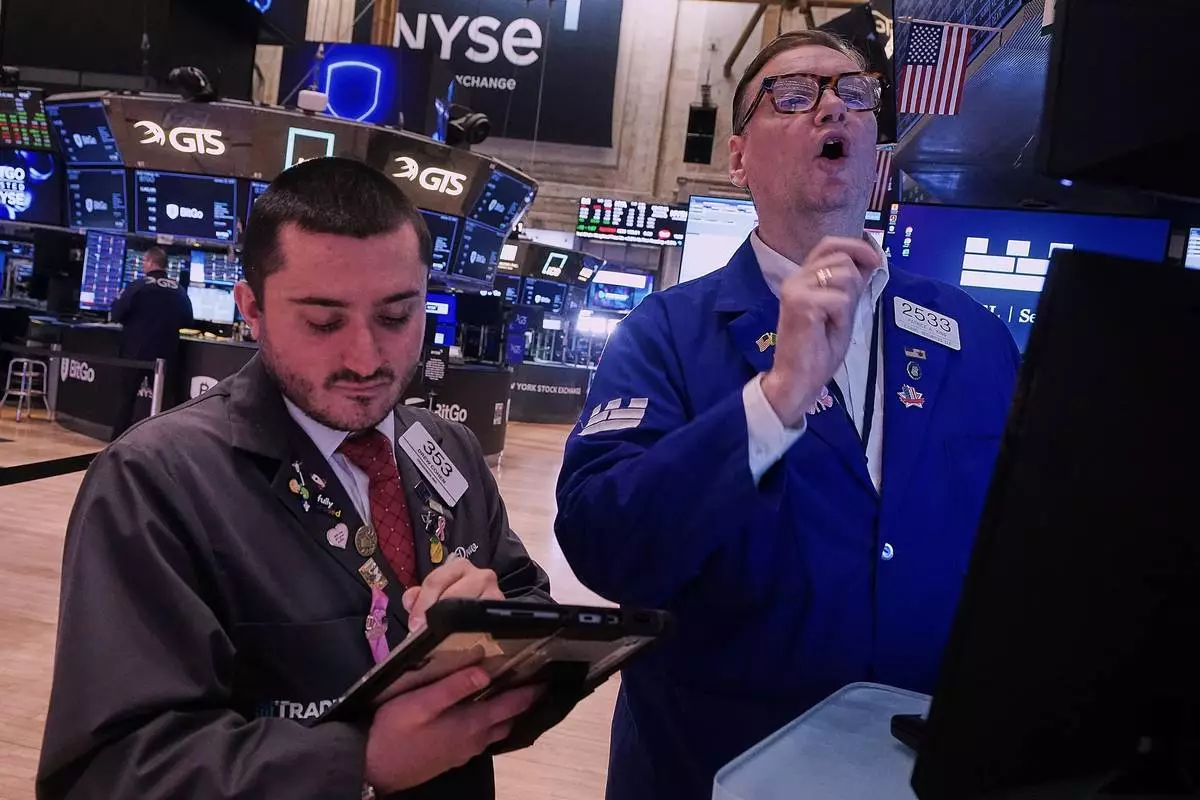
Trader Drew Cohen,; left, and Specialist Patrick King work on the floor of the New York Stock Exchange, Thursday, Jan. 22, 2026. (AP Photo/Richard Drew)
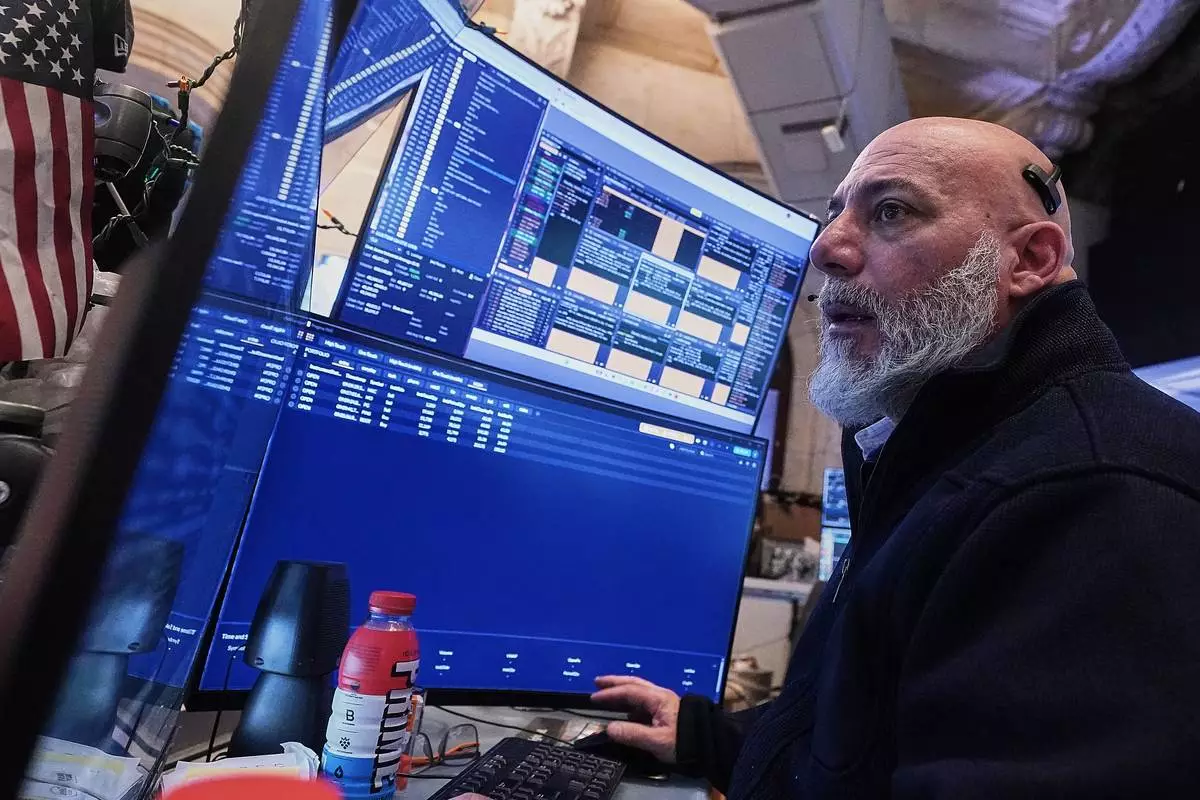
Trader Vincent Napolitano works on the floor of the New York Stock Exchange, Thursday, Jan. 22, 2026. (AP Photo/Richard Drew)
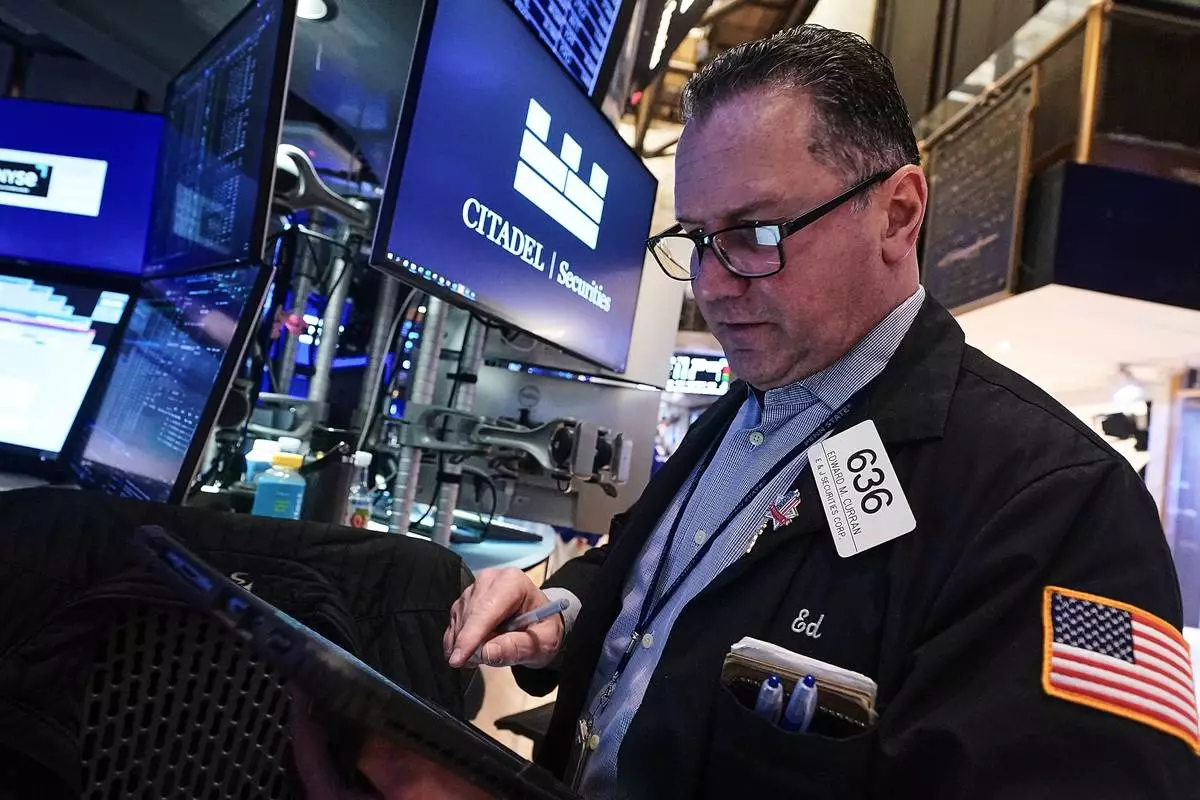
Trader Edward Curran works on the floor of the New York Stock Exchange, Thursday, Jan. 22, 2026. (AP Photo/Richard Drew)
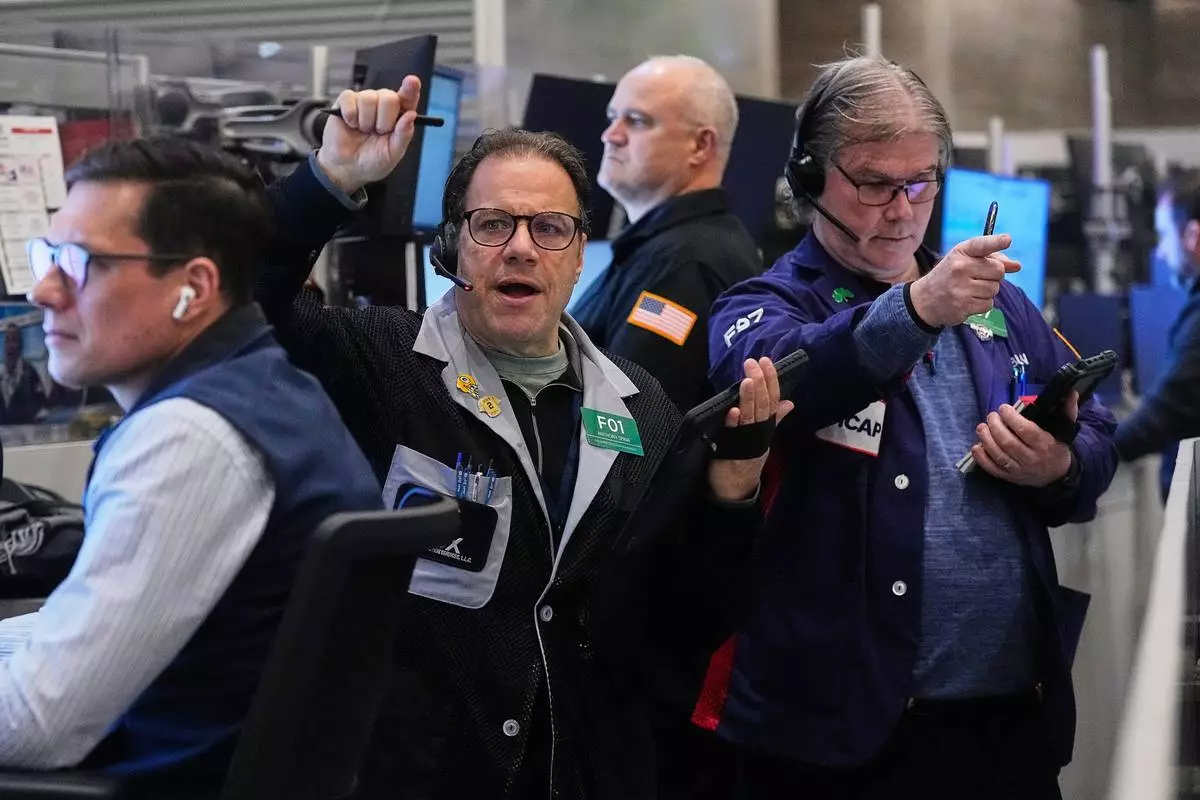
Options traders Anthony Spina, second left, and Brian Garvey, right, work on the floor of the New York Stock Exchange, Wednesday, Jan. 21, 2026. (AP Photo/Richard Drew)
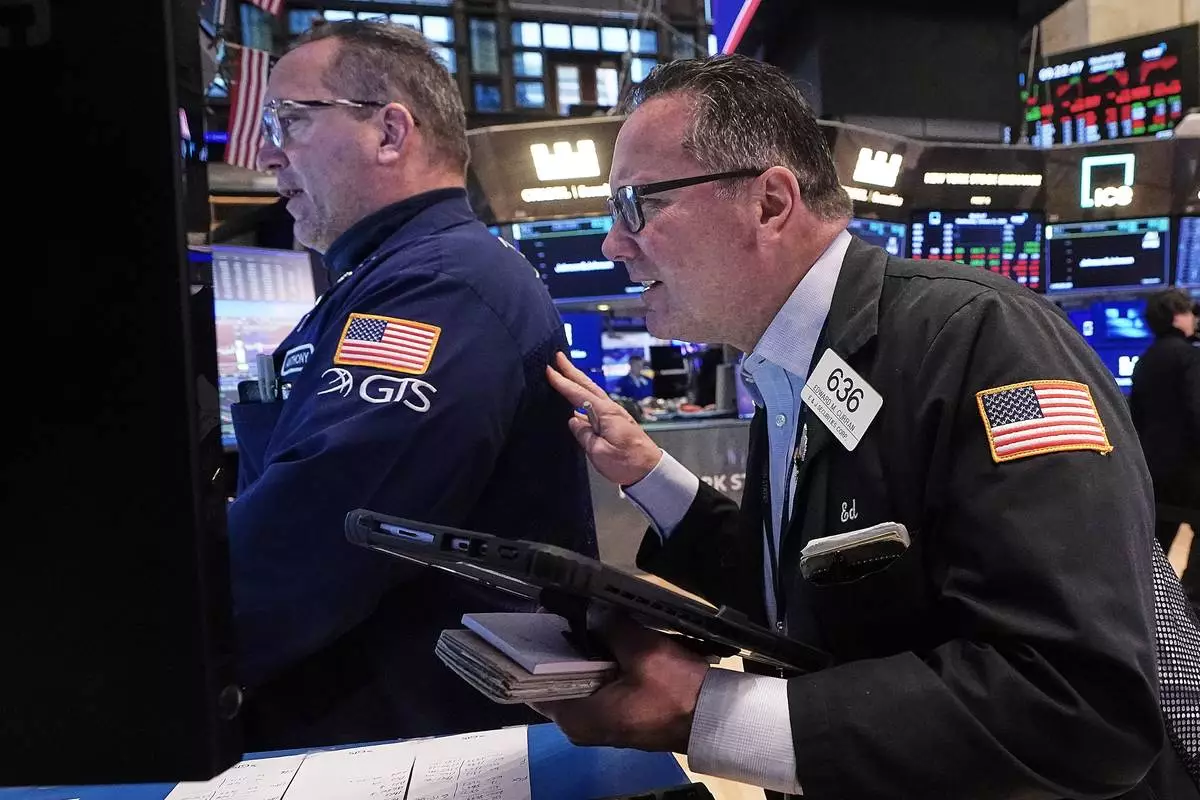
Specialist Anthony Matesic, left, and trader Edward Curran work on the floor of the New York Stock Exchange, Wednesday, Jan. 21, 2026. (AP Photo/Richard Drew)

Trader Daniel Krieger is framed by his computer monitors as he works on the floor of the New York Stock Exchange, Wednesday, Jan. 21, 2026. (AP Photo/Richard Drew)

Specialist Meric Greenbaum works at his post on the floor of the New York Stock Exchange, as a television shows President Donald Trump speaking at the World Economic Forum, Wednesday, Jan. 21, 2026. (AP Photo/Richard Drew)
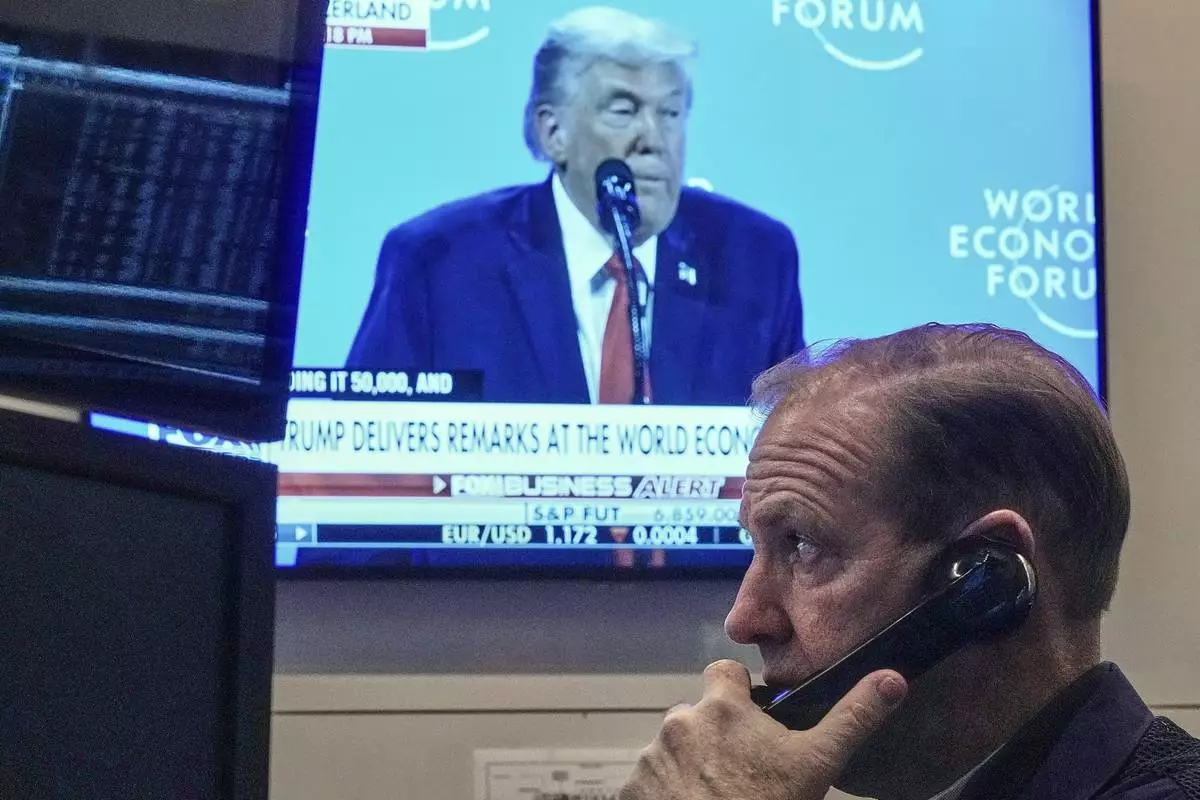
Trader Michale Smyth works on the floor of the New York Stock Exchange as President Donald Trump speaks at the World Economic Forum, Wednesday, Jan. 21, 2026. (AP Photo/Richard Drew)

Currency traders celebrate as they work in the office with a screen showing the Korea Composite Stock Price Index (KOSPI), center, of over 5,000 points at the foreign exchange dealing room of the Hana Bank headquarters in Seoul, South Korea, Thursday, Jan. 22, 2026. (AP Photo/Ahn Young-joon)

A currency trader passes by a screen showing the Korea Composite Stock Price Index (KOSPI) and the foreign exchange rate between U.S. dollar and South Korean won, left, at the foreign exchange dealing room of the Hana Bank headquarters in Seoul, South Korea, Thursday, Jan. 22, 2026. (AP Photo/Ahn Young-joon)

Currency traders celebrate as they work in the office with a screen showing the Korea Composite Stock Price Index (KOSPI), center, of over 5,000 points at the foreign exchange dealing room of the Hana Bank headquarters in Seoul, South Korea, Thursday, Jan. 22, 2026. (AP Photo/Ahn Young-joon)

Currency traders celebrate as they work in the office with a screen showing the Korea Composite Stock Price Index (KOSPI), center top, of over 5,000 points at the foreign exchange dealing room of the Hana Bank headquarters in Seoul, South Korea, Thursday, Jan. 22, 2026. (AP Photo/Ahn Young-joon)