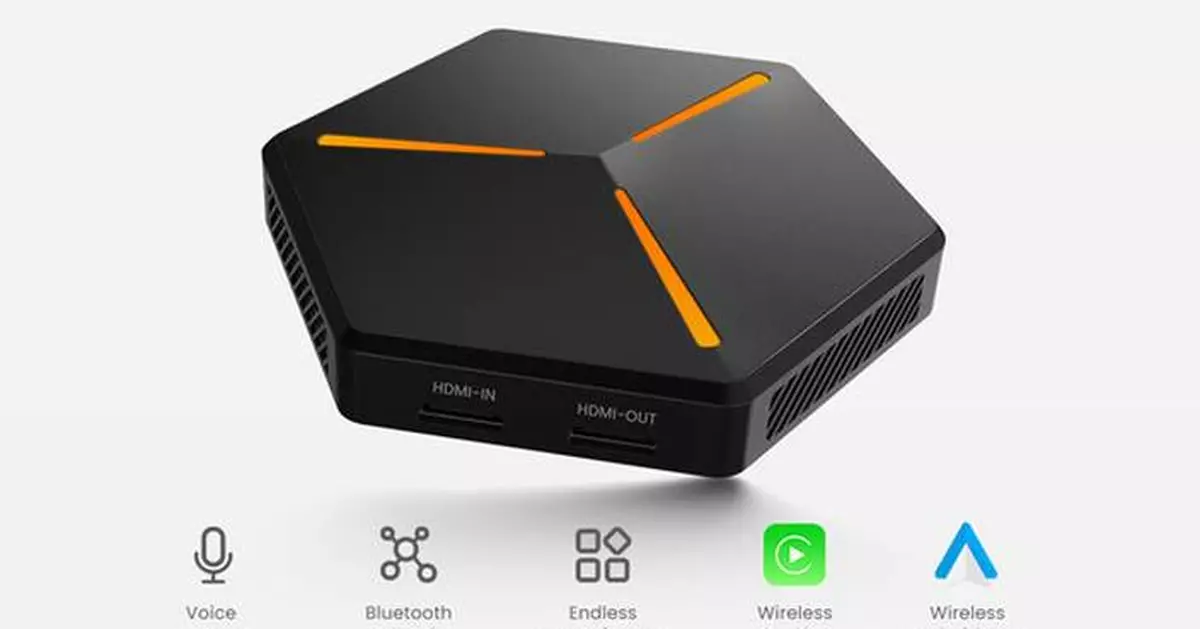
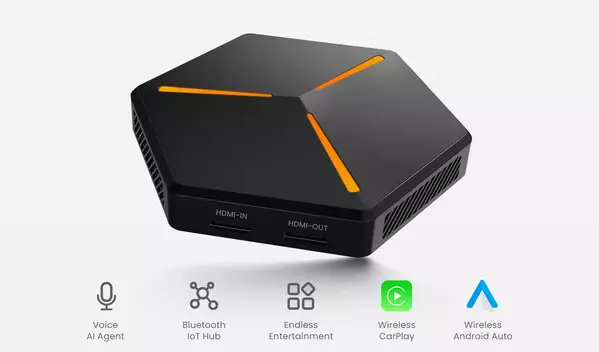
SHENZHEN, China, Jan. 23, 2026 /PRNewswire/ -- ATOTO shared an update on CB7 Pro, its Head-Unit AI Console. It's built on a simple philosophy: don't replace the factory screen—give it new capabilities. CB7 Pro plugs into the USB port used for wired CarPlay or wired Android Auto, upgrades the head unit to wireless CarPlay and wireless Android Auto, adds a switchable Android 13 system, and expands the factory display into a more capable in‑car console with video, AI assistance, vehicle data integration, and entertainment options.
To put that idea in real drivers' hands faster, ATOTO launched CB7 Pro with an Indiegogo‑first release, making early allocations available to customers who want to experience CB7 Pro sooner than broad retail rollout. ATOTO reports the campaign reached its funding goal within 46 hours, and as of January 21 has reached 301% of its funding goal.
So what makes CB7 Pro stand out—and why did it resonate so quickly with drivers?
Visit the campaign page here for more details:
https://atotodirect.net/CB7Pro
Most vehicles don't need a bigger screen. They need the screen they already have to feel modern again—without losing what OEM systems do well: clean integration, familiar controls, and audio behavior that "just works." CB7 Pro is designed around that reality. It adds a richer environment when drivers want more flexibility than phone projection typically allows.
CB7 Pro's most distinctive leap, however, is video—not as a single "camera feature," but as a deliberate choice based on how people actually drive. CB7 Pro introduces a dual‑mode video architecture. A shared interface can be configured for one of two outcomes (mutually exclusive), so customers choose the mode they will rely on most.
In Wireless Video Input mode, pairing CB7 Pro with ATOTO's WR2A wireless video system enables practical viewpoints on the factory screen without running video cables through the car—such as a wireless reverse view for everyday parking, a wireless front view (front plate camera) for curbs and close maneuvers, and a wireless rear‑hatch/cabin view depending on camera placement for quick situational checks.
In AHD DVR mode, CB7 Pro connects to a specified 1080p WDR camera for recording—and turns that DVR camera into something more than a dash cam. In this configuration, CB7 Pro is designed to support remote video calling and two‑way talk/intercom experiences using the DVR camera view (feature availability depends on configuration and software version). The difference versus a typical phone video call isn't "another way to talk"—it's the viewpoint: a mounted, stable, wide‑angle lens that can share what the camera sees. A family member can call in and, when it's safe to answer (or when a passenger handles the screen), the in‑car user can share the road ahead—the scenery on a trip, weather on the route, or a moment worth showing—without fumbling with a handheld phone camera. when someone borrows the vehicle, where sharing a clear road/cabin view can communicate conditions faster than a shaky handheld call.
CB7 Pro also introduces an AI Vision roadmap built on cloud‑assisted photo analysis from the DVR camera feed. Example scenarios include recognizing road types such as mud, snow, or sand to surface context‑aware driving suggestions when relevant, and cabin‑view awareness designed for family comfort—such as checking on a rear‑seat baby or pet and offering gentle prompts in specific situations (one example: if rear passengers appear to be asleep, the system may suggest lowering audio volume). Additional AI Vision agents are planned for future software updates.
Beyond video, CB7 Pro is designed to feel like an "upgrade of the whole experience," not just one feature. It includes AI assistance and car‑IoT functions intended to be useful day after day:
- DriveChat (powered by ChatGPT) brings voice interaction to the in‑car Android system—helping drivers launch apps, ask questions, and get online answers by voice (DriveChat controls CB7 Pro's software environment, not the vehicle's factory functions).
- CIoTHub + a compatible Bluetooth OBD‑II adapter enables vehicle data integration such as diagnostics and real‑time driving/vehicle data on the factory screen, turning the head unit into a more informative driving companion.
- TrackHU GPS Tracking adds practical security and family‑use tools such as real‑time location, trip/route history, and geofence alerts.
- AI ParkFinder is built for one of the most common "small stresses" in modern driving: forgetting exactly where you parked. It uses footage captured by the DVR camera during parking to record both the visual context and the location, making it easier to find the vehicle later via the SSHub app.
CB7 Pro also expands what the factory screen can do for passengers and parked moments, with entertainment and extension features designed around flexibility:
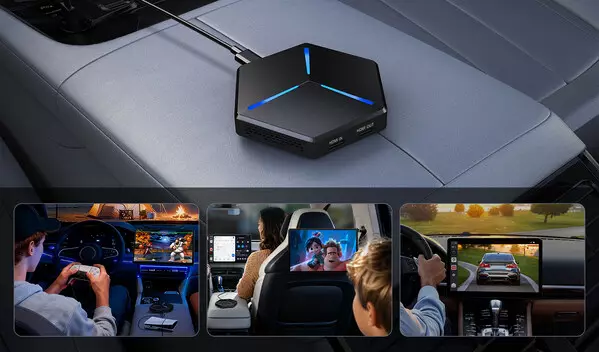
- HDMI Input/Output supports connecting external sources such as game consoles or media players, and projecting to a rear/headrest display for passengers.
- A stand‑alone Android system enables split‑screen multitasking and direct use of Google Play apps—helping users go beyond the limits of CarPlay/Android Auto when appropriate (for example, richer tools and passenger/parked entertainment).
- SSRadio is designed to keep listening effortless, with a wide selection of preloaded internet radio stations available out of the box, and cloud syncing that lets users discover and add favorite stations from around the world.
- SSFrame brings a more human, calm cockpit feel when the system is idle by syncing photos from the cloud and displaying them as a screensaver—ideal for family moments and travel memories while parked.
ATOTO emphasizes responsible use: camera views and video features are intended for passengers or when parked where legal. Drivers should remain focused on the road and comply with local regulations. Remote calling and AI Vision depend on the AHD DVR camera configuration, connectivity, and software version. Wireless Video Input mode and AHD DVR mode are mutually exclusive, as they share the same interface; customers choose the mode that best fits their priorities.
Availability
ATOTO CB7 Pro is available now on Indiegogo. Visit the campaign page here for more details:
https://atotodirect.net/CB7Pro
Following the crowdfunding campaign, CB7 Pro is planned to be offered through additional sales channels, including ATOTO's official website and major e-commerce platforms such as Amazon.
For future availability updates and official announcements, please visit:
https://www.atotodirect.com/
About ATOTO
ATOTO designs and builds smart in-car electronics—Android head units, portable screens, AI boxes, cameras, and accessories—focused on driver-first UX, solid audio, and helpful AI. Continuous software updates and a self-service Eproductcare portal aim to deliver long-term value well beyond checkout.
Customer Support: support@atotoglobal.com
PR Inquiries: pr@atotoglobal.com
Footnotes & Disclaimers
| [1] Driving safety: Video playback and interactive entertainment features are intended for parked use or passengers only, where permitted by local laws. Always prioritize safe driving. |
| [2] Projection compatibility: Wireless CarPlay® and Android Auto™ require compatible smartphones and supported software versions. Availability and functionality may vary by region, device, and app implementation. |
| [3] Camera & DVR specifications: DVR recording supports up to 1080p at 25 fps with compatible cameras. Camera-based AI Vision features are delivered via software and become available through OTA updates after launch. |
| [4] Apps & services: App availability may vary by region and platform. Certain apps and services may require separate subscriptions or third-party accounts. |
| [5] Connectivity: Built-in LTE functionality requires a compatible physical SIM or cloud-based virtual SIM with an active data plan. Network performance and band support depend on local carriers and regional regulations. |
| [6] Power & stability: For stable operation under high load or when multiple accessories are connected, use the included Y-cable to provide additional power alongside the head unit's USB data connection. |
| [7] Design & specifications: Product design, features, and specifications are subject to change without notice. Images shown are for illustrative purposes only. |
| [8] Compatibility exclusions: BMW models, most Subaru vehicles, and head units that support only wireless CarPlay or only wireless Android Auto are not compatible, as noted in the campaign details. |
[1] Driving safety: Video playback and interactive entertainment features are intended for parked use or passengers only, where permitted by local laws. Always prioritize safe driving.
[2] Projection compatibility: Wireless CarPlay® and Android Auto™ require compatible smartphones and supported software versions. Availability and functionality may vary by region, device, and app implementation.
[3] Camera & DVR specifications: DVR recording supports up to 1080p at 25 fps with compatible cameras. Camera-based AI Vision features are delivered via software and become available through OTA updates after launch.
[4] Apps & services: App availability may vary by region and platform. Certain apps and services may require separate subscriptions or third-party accounts.
[5] Connectivity: Built-in LTE functionality requires a compatible physical SIM or cloud-based virtual SIM with an active data plan. Network performance and band support depend on local carriers and regional regulations.
[6] Power & stability: For stable operation under high load or when multiple accessories are connected, use the included Y-cable to provide additional power alongside the head unit's USB data connection.
[7] Design & specifications: Product design, features, and specifications are subject to change without notice. Images shown are for illustrative purposes only.
[8] Compatibility exclusions: BMW models, most Subaru vehicles, and head units that support only wireless CarPlay or only wireless Android Auto are not compatible, as noted in the campaign details.
** The press release content is from PR Newswire. Bastille Post is not involved in its creation. **
ATOTO CB7 Pro 301% Funded--Head‑Unit AI Console for Wireless CarPlay/Android Auto and Camera‑Smart Driving
ATOTO CB7 Pro 301% Funded--Head‑Unit AI Console for Wireless CarPlay/Android Auto and Camera‑Smart Driving