Skip to Content Facebook Feature Image

China's central bank signals further RRR, interest rate cuts to bolster growth

China

China

China

China's central bank signals further RRR, interest rate cuts to bolster growth

2026-01-24 16:57 Last Updated At:17:37

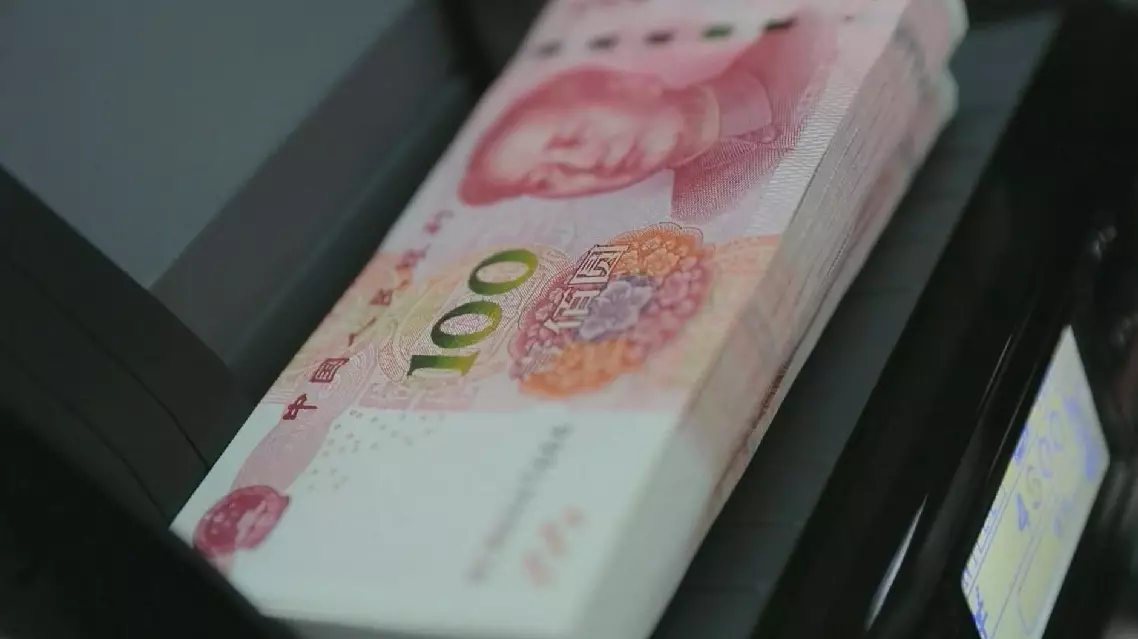
The People's Bank of China (PBOC), the country's central bank, will continue to implement a moderately loose monetary policy in 2026, and utilize tools such as reserve requirement ratio (RRR) cuts and interest rate reductions to ensure liquidity remains sufficient, according to its governor Pan Gongsheng.

Monetary policy will focus on promoting stable economic growth and reasonable price recovery, with the use of both incremental and existing policies to create a favorable monetary and financial environment for the high-quality development and stable operations of financial markets, said Pan.

"We will carefully calibrate the intensity, pace, and timing of policy implementation, and make flexible and efficient use of monetary policy instruments such as RRR cuts and interest rate reductions to maintain adequate liquidity. This will ensure that increases in aggregate financing and money supply are in step with projected economic growth and Consumer Price Index levels. There remains room for RRR and interest rate cuts this year. The PBOC will also strengthen the implementation and supervision of interest rate policies to keep overall financing costs low," said Pan.

For 2026, financial institutions will be guided to enhance support for key areas, including expanding domestic demand, advancing technological innovation, and assisting micro, small, and medium-sized enterprises, he said.

"Efforts will be made to improve consumer finance services, further facilitate payment service, and effectively implement the one-off credit repair policy to improve the consumer finance environment. We will also support eligible financial institutions in issuing financial bonds to boost funding supply in the consumption sector," said Pan.

In addition, policy backing will be further strengthened for technological innovation, said Pan.

The relending quota for sci-tech innovation and technological upgrades will be raised from 800 billion yuan (about 114.81 billion U.S. dollars) to 1.2 trillion yuan, with the scope extended to include small and medium-sized private enterprises (SMEs) with higher levels of research and development investment.

"The relending and rediscounting quota targeting agriculture and small businesses will be increased by 500 billion yuan, bringing the total to 4.35 trillion yuan. Meanwhile, a dedicated relending facility of 1 trillion yuan will be established specifically for private enterprises, prioritizing support for private SMEs. Financial institutions will also be supported in issuing financial bonds for micro and small enterprises, and the credit enhancement system for private SMEs will be improved," he said.
China's central bank signals further RRR, interest rate cuts to bolster growth
China's central bank signals further RRR, interest rate cuts to bolster growth

China's central bank signals further RRR, interest rate cuts to bolster growth
China's central bank signals further RRR, interest rate cuts to bolster growth

Hong Kong's Hang Seng Index ended slightly higher on Monday while Japan's Nikkei 225 saw a decline, according to Timothy Pope, a market analyst for China Global Television Network (CGTN).

The Hang Seng Index went up 0.06 percent to close at 26,765.52 points on Monday and the benchmark Nikkei stock index, the 225-issue Nikkei Stock Average, dropped by 1.79 percent to end at 52,885.25 points.

"The Hang Seng managed to claw back some earlier losses and end the session flat. The big supporting factor in Hong Kong was also Chinese energy and metals stocks. I said miners were going gangbusters, well, Zijin Mining surged to a record high at one point today, adding 7.8 percent, but closed 4.4 percent higher, paring those gains a little bit. Zijin mines copper as well as gold and announced today that an expansion of a Chinese copper mine project was now up and running. Its Hong Kong shares have risen almost 18 percent since the start of this year, and its Shanghai stock has also made some pretty comfortable double digit gains. The downside in Hong Kong today was also the same story as the Chinese mainland - it was tech. The Hang Seng Tech Index shed 1.2 percent by the end of the session," he said.

Popo said the decline in the Tokyo market was caused by fears of a joint Japanese-US currency intervention.

"Over in Tokyo the Nikkei 225 was down 1.8 percent as investors were on guard for a potential joint Japanese-US currency intervention. The Japanese Prime Minister said all necessary steps would be taken to act against abnormal market moves, but she was fairly non-specific. The yen surged on Friday after the New York Fed reportedly conducted a rate check, and it was up again today to a more than three-month high. The intervention would be to stem yen declines, but it's not clear if that threat has been averted as yet. But Japan's exporter heavy markets were down on the currency gains today, automaker stocks like Nissan and Honda traded significantly lower, as did the tech investor Softbank, it was one of the Nikkei's heaviest decliners. Conversely, of course, it was good for importer stocks, but those gains didn't do nearly enough to outweigh the very broad-based losses that we saw in Monday's session in Tokyo," he said.

Hong Kong stock markets edge higher, Tokyo stocks decline amid currency fluctuations: analyst

Hong Kong stock markets edge higher, Tokyo stocks decline amid currency fluctuations: analyst

Recommended Articles