MINNEAPOLIS (AP) — Saturday morning started frigid and quiet on Minneapolis' "Eat Street," a stretch of road south of downtown famous for its small coffee shops and restaurants ranging from New American to Vietnamese.
Within five hours, seemingly everything had changed. A protester was dead. Videos were circulating showing multiple federal agents on top of the man and gunshots being fired. Federal and local officials again were angrily divided over who was to blame.
Click to Gallery
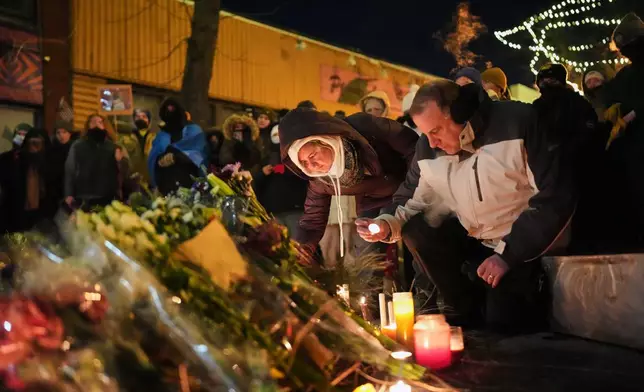
People gather during a vigil for 37-year-old Alex Pretti, who was fatally shot by a U.S. Border Patrol officer earlier in the day, Saturday, Jan. 24, 2026, in Minneapolis. (AP Photo/Adam Gray)
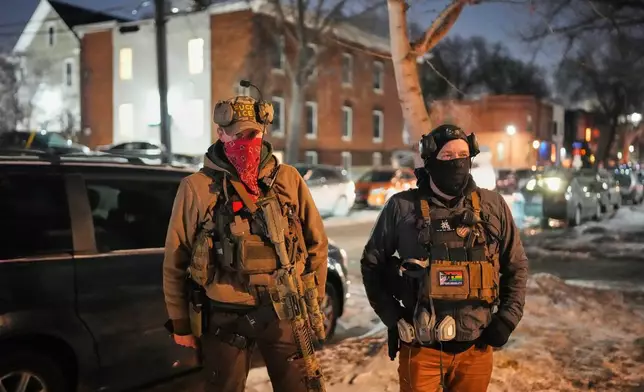
EDS NOTE: OBSCENITY - Armed community response members patrol near the scene where 37-year-old Alex Pretti was fatally shot by a U.S. Border Patrol officer earlier in the day, Saturday, Jan. 24, 2026, in Minneapolis. (AP Photo/Adam Gray)
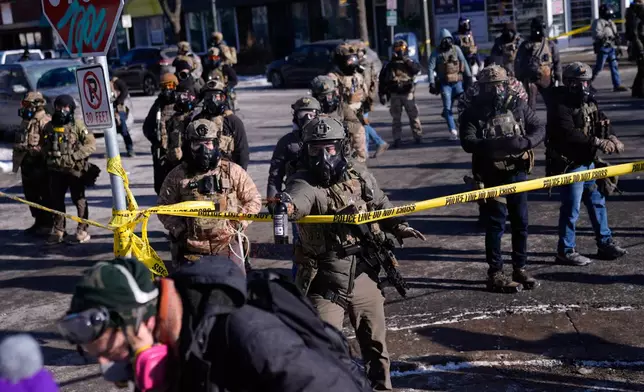
Federal immigration officers deploy pepper spray at protesters after a shooting Saturday, Jan. 24, 2026, in Minneapolis. (AP Photo/Abbie Parr)
Federal immigration officers deploy tear gas after a shooting Saturday, Jan. 24, 2026, in Minneapolis. (AP Photo/Abbie Parr)
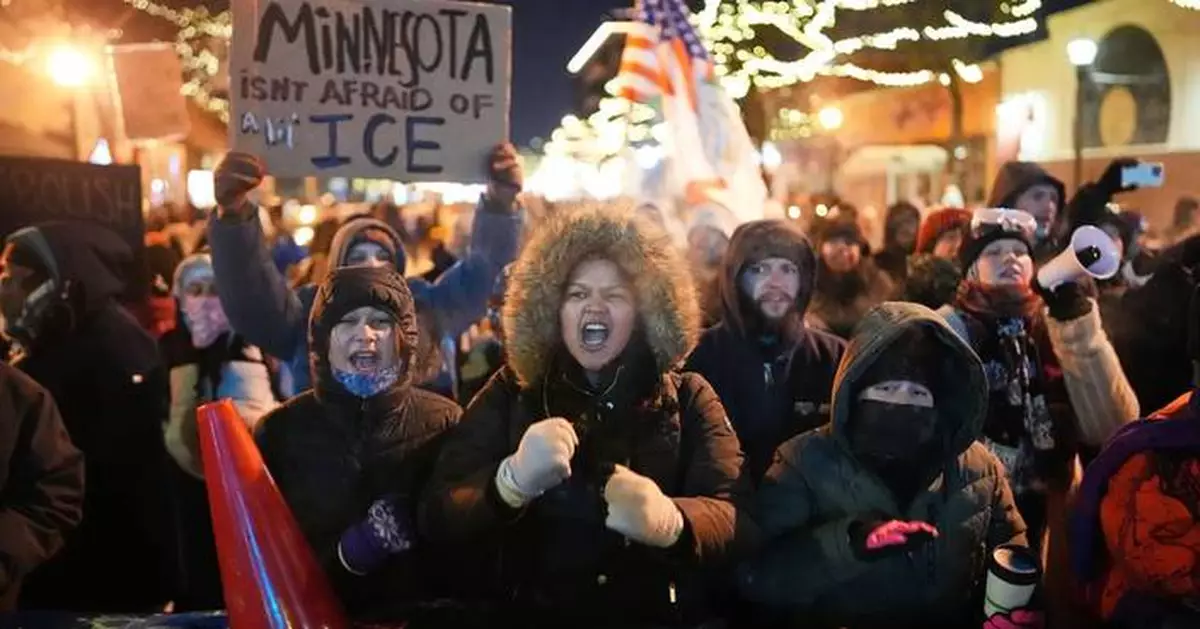
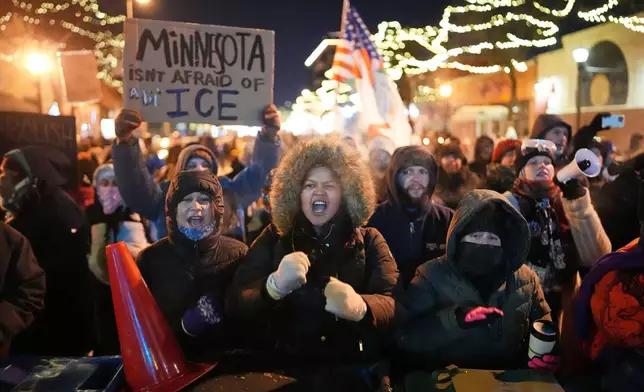
Protesters chant and bang on trash cans as they stand behind a makeshift barricade during a protest in response to the death of 37-year-old Alex Pretti, who was fatally shot by a U.S. Border Patrol officer earlier in the day, Saturday, Jan. 24, 2026, in Minneapolis. (AP Photo/Adam Gray)
And Eat Street was the scene of a series of clashes, federal officers and local and state police pulled back and protesters took over the area.
It all started around 9 a.m. when a federal immigration officer shot and killed a man there, about 1.5 mile (2.4 kilometers) from the scene of a Jan. 7 fatal shooting of a local woman by an Immigration and Customs Enforcement officer that sparked outrage and daily protests.
And in just over an hour, anger exploded again in the city already on edge. Even before the current immigration enforcement surge, networks of thousands of residents had organized to monitor and denounce it while national, state and local leaders traded blame over the rising tensions.
Two Associated Press journalists reached the scene minutes after Saturday's shooting. They saw dozens of protesters quickly converging and confronting the federal agents, many blowing the whistles activists use to alert to the presence of federal officers.
They had been covering protests for days, including a massive one Friday afternoon in downtown Minneapolis, but the anger and sorrow among Saturday's crowd felt more urgent and intense.
The crowd, rapidly swelling into the hundreds, screamed insults and obscenities at the agents, some of whom shouted back mockingly. Then for several hours, the two groups clashed as tear gas billowed in the subzero air.
Over and over, officers pushed back the protesters from improvised barricades with the aid of flash bang grenades and pepper balls, only for the protesters to regroup and regain their ground. Some five hours after the shooting, after one more big push down the street, enforcement officers left in a convoy.
By mid-afternoon, protesters had taken over the intersection next to the shooting scene and cordoned it off with discarded yellow tape from the police. Some stood on large metal dumpsters that blocked all traffic, banging on them, while others gave speeches at the impromptu and growing memorial for 37-year-old Alex Pretti, the man killed Saturday morning.
People brought tree branches in a circle to cordon off the area while others put flowers and candles at the memorial by a snow bank.
Many carried handwritten signs demanding that Immigration and Customs Enforcement leave Minnesota immediately, using the expletives against ICE that have been plastered all over the Twin Cities for more than weeks.
The mood in the crowd was widespread anger and sadness — recalling the same outpour of wrath that shook the city for weeks after the killing of George Floyd in 2020, although without the widespread rioting that had occurred then.
Law enforcement was not visibly present in the blocks immediately around the shooting scene, although multiple agencies had mobilized and the National Guard announced it would also help provide security there.
At an afternoon news conference Minneapolis police Chief Brian O’Hara said his officers as well as members of the Minnesota National Guard in yellow safety traffic vests were working to keep the area around the shooting safe and avoid traffic interfering with “lawful, peaceful demonstrations.” No traffic except for residents was allowed in a 6-by-7 block area around the scene.
Stores, sports and cultural institutions shuttered Saturday afternoon citing safety. Some stayed open to give a break to the protesters from the dangerous cold, providing water, coffee, snacks and hand warmer packets.
After evening fell, a somber, sorrowful crowd in the hundreds kept a vigil by the memorial.
“It feels like every day something crazier happens,” said Caleb Spike. “What comes next? I don't know what the solution is.”
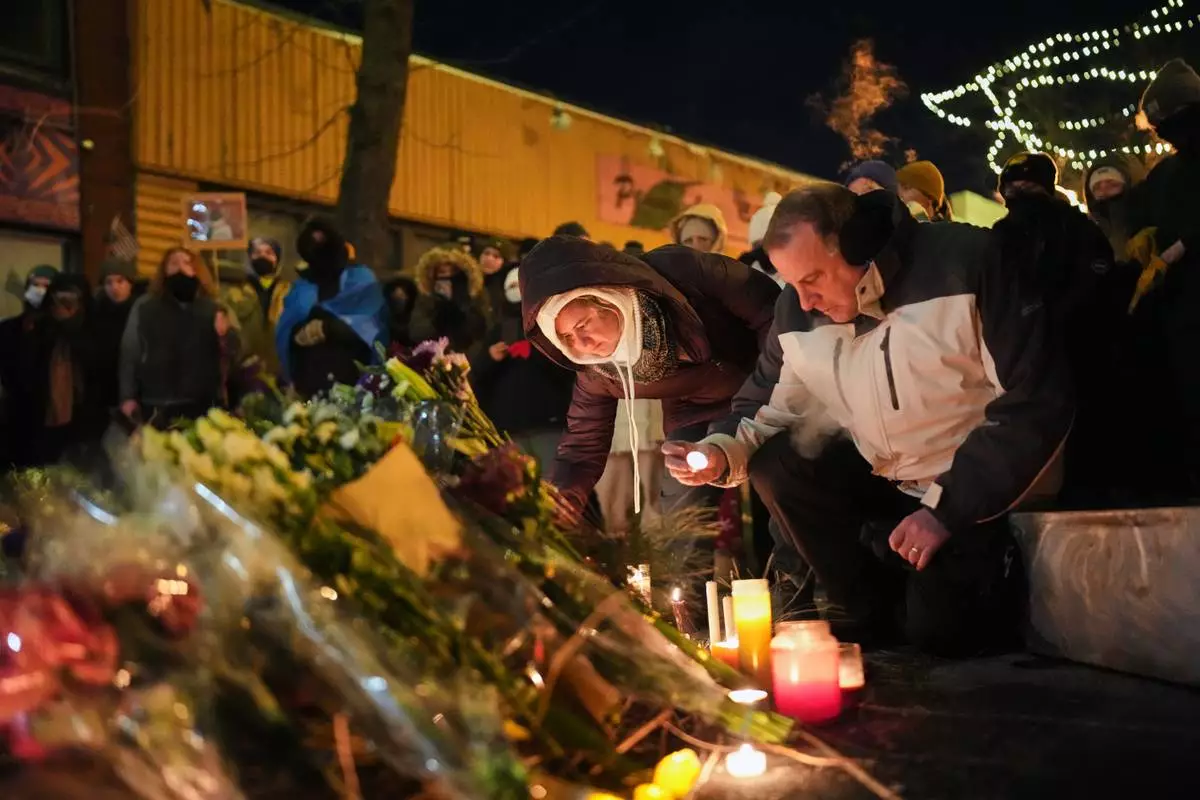
People gather during a vigil for 37-year-old Alex Pretti, who was fatally shot by a U.S. Border Patrol officer earlier in the day, Saturday, Jan. 24, 2026, in Minneapolis. (AP Photo/Adam Gray)
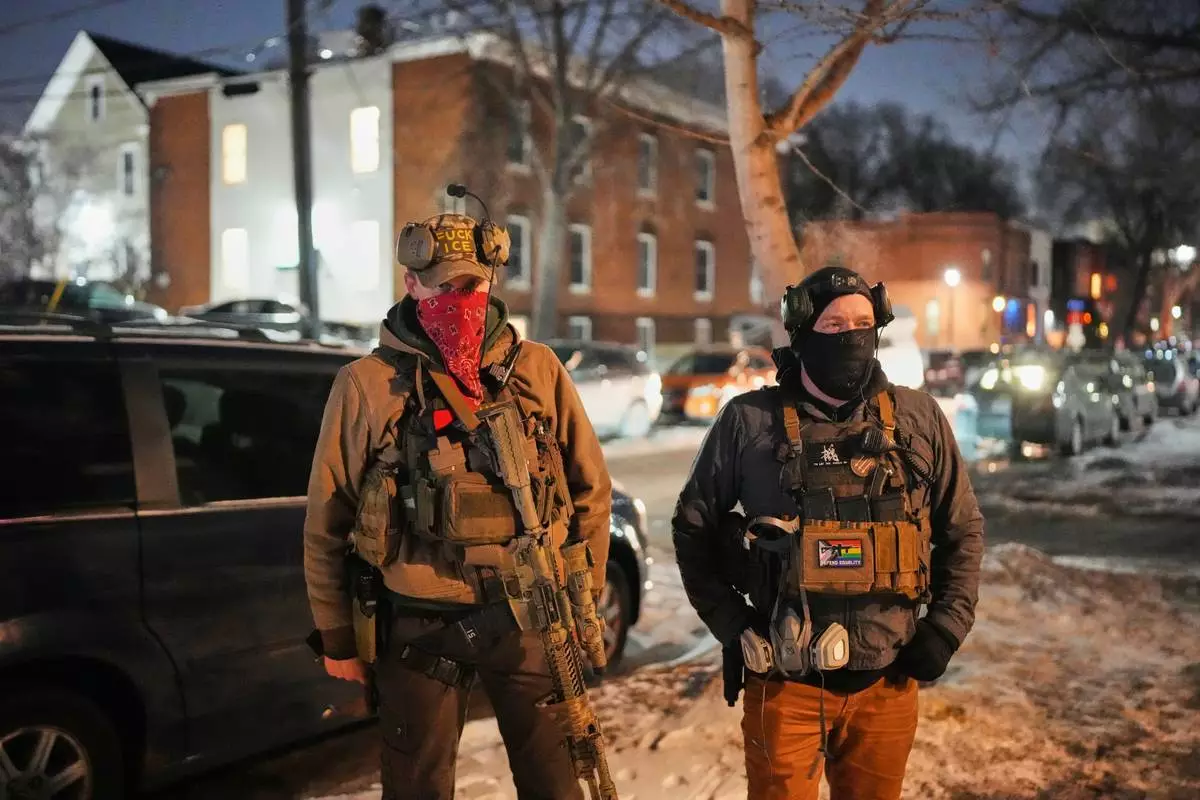
EDS NOTE: OBSCENITY - Armed community response members patrol near the scene where 37-year-old Alex Pretti was fatally shot by a U.S. Border Patrol officer earlier in the day, Saturday, Jan. 24, 2026, in Minneapolis. (AP Photo/Adam Gray)
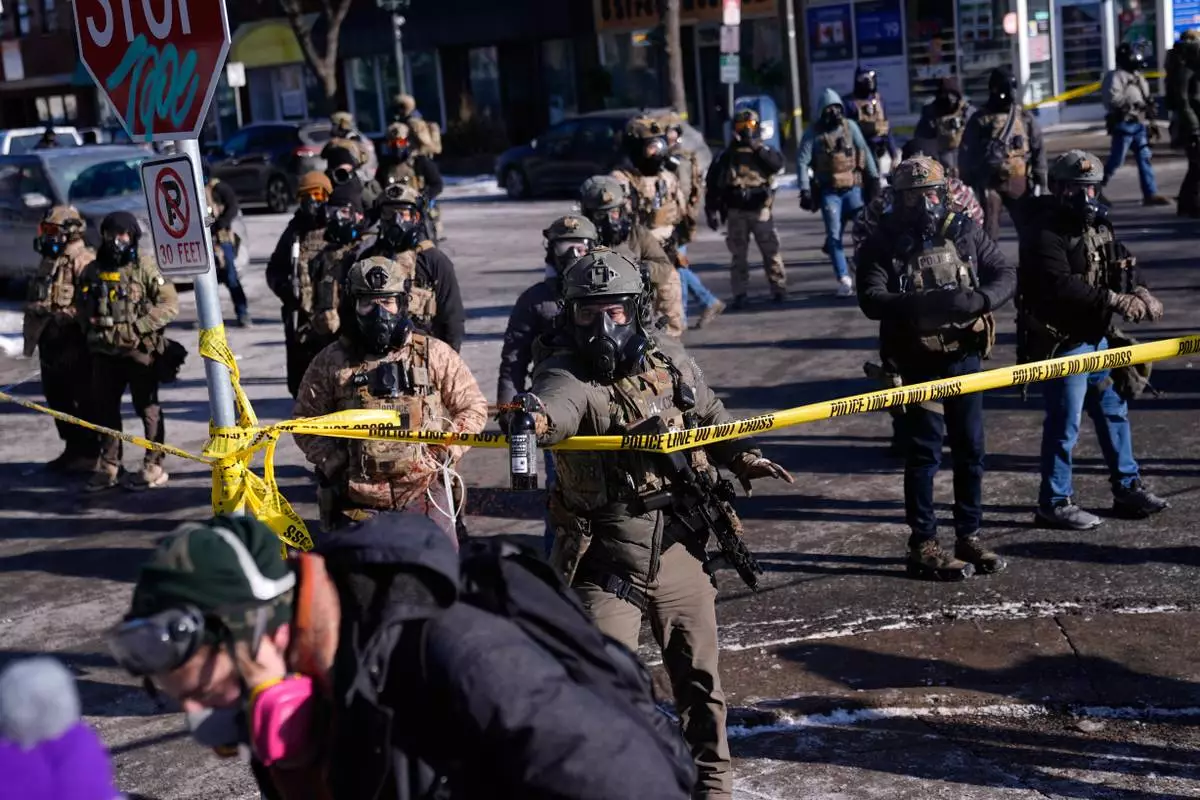
Federal immigration officers deploy pepper spray at protesters after a shooting Saturday, Jan. 24, 2026, in Minneapolis. (AP Photo/Abbie Parr)

Federal immigration officers deploy tear gas after a shooting Saturday, Jan. 24, 2026, in Minneapolis. (AP Photo/Abbie Parr)
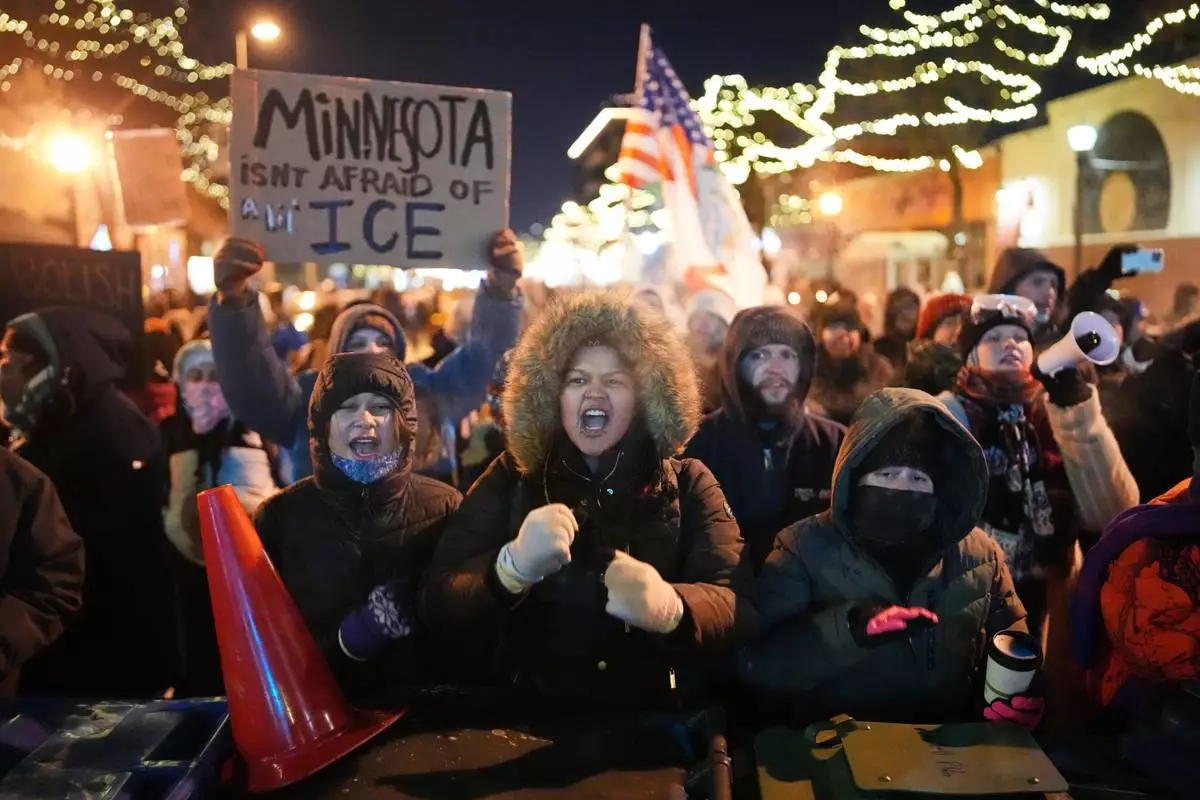
Protesters chant and bang on trash cans as they stand behind a makeshift barricade during a protest in response to the death of 37-year-old Alex Pretti, who was fatally shot by a U.S. Border Patrol officer earlier in the day, Saturday, Jan. 24, 2026, in Minneapolis. (AP Photo/Adam Gray)
PROVIDENCE, R.I. (AP) — Chuck Collins figures he won life’s lottery by inheriting vast sums of money through his great-grandfather Oscar Mayer’s processed meat company, but rather than fight to protect every dime Collins has helped push to hike taxes on the ultrarich like himself.
He was successful in helping implement a higher tax in Massachusetts on income over $1 million, and the idea has already taken hold in a handful of other blue states, including California, Maryland, Minnesota and New Jersey. Lawmakers in the state of Washington, which doesn't have an income tax, could send the governor this week a measure that would impose one on million-dollar earners.
“I think people are waking up to the harms of these inequalities,” said Collins, a founding member of the group Patriotic Millionaires, which calls for higher taxes on the country’s super affluent. “Including people who have wealth, who say, if we keep going down this road, it ain’t going to end well for anybody.”
Since a state Supreme Court decision nearly a century ago shot down an income tax, Washington has stood out as being one of few states controlled by Democrats without a tax on wages or salaries — though it does tax certain investment proceeds.
Facing a budget shortage, lawmakers are debating a proposal that would create a nearly 10% annual tax on personal earnings over $1 million. If adopted, the tax would collect billions of dollars of new revenue that would be designed to pay for free K-12 school meals, childcare services, a family tax credit and eliminate sales taxes on personal care items such as shampoo.
The state House adopted it this week after an all-night session deliberating amendments to the proposal. Now, it goes back to the Senate, which passed a version previously. Democratic Gov. Bob Ferguson has indicated support if the Legislature, which is controlled by his party, can send it to him before it adjourns Thursday.
“Washington is a state that has had an extremely regressive tax structure for 93 years,” House Majority Leader Joe Fitzgibbon, a Democrat, said in an interview. “It falls very heavily on working and middle class people in our state.” He said that if the change is adopted, it will help. “We don’t need to be a tax haven,” he said.
Others, including GOP lawmakers, caution that taxes on the wealthy are not a comprehensive solution to addressing worrisome state revenues and can drive away businesses.
Colin Hathaway, a millionaire businessman in Washington, said he's concerned the proposed tax would treat the money earned by his roofing company as income, even though he's putting most of it back into the business. He was already hit by the state's previous move to hike capital gains taxes, and said an additional tax could force him to move way from the state where his high school-aged children grew up.
“There’s a strong incentive to not be doing business here,” he said.
If the measure is adopted, it's likely to be challenged in court and with a ballot measure.
With affordability a hot topic in statehouses this session, a handful of progressive states are at least considering some kind of wealth tax.
Perhaps the most ambitious tax-the-rich effort is taking place in California – a state that already taxes its millionaire class. Advocates are working on a ballot measure that would place a one-time 5% tax on the assets of those with a $1 billion net worth. The proposal, backed by a large health care union, would use the extra revenue to backfill federal funding cuts to health services for lower-income people that were signed by President Donald Trump last year.
For critics, the wealth tax effort in California is the latest example of how the push to tax the rich in the U.S. is no longer about finding solutions to raise revenue but instead now backed by those who believe excessive wealth should be reduced or even erased, said Jared Walczak, a senior fellow at the Tax Foundation.
“You see that in the language around something like the California wealth tax, where the ballot language itself talks about it being a tax on sustaining excessive accumulations of wealth,” Walczak said.
Elsewhere, Rhode Island legislators are debating a budget proposal – backed by Democratic Gov. Dan McKee – that would enact higher taxes on residents earning $1 million or more.
In Michigan, organizers are working to collect enough signatures to get a ballot initiative in front of voters in November asking them to approve replacing the state’s current flat tax. Under the proposal, Michigan would place an additional 5% tax on those who make over $500,000 individually or $1 million for joint filers. The initiative, which is backed by the state’s board of education, would direct the new revenue to help fund K-12 schools.
And New York City Mayor Zohran Mamdani has reupped his push for New York state to raise taxes on the rich — though he faces opposition from Democratic Gov. Kathy Hochul. A similar call has been made by Chicago Mayor Brandon Johnson, but the Illinois Statehouse so far has not moved on imposing a millionaire tax.
The recent push by left-leaning leaders in blue states contrasts with what's being done in many Republican-led states, which have been more critical of passing higher taxes on their richest residents and have moved to abolish or significantly reduce personal income taxes.
Eight states have no income tax at all, and Walczak said the gap between states seeking tax relief and those seeking higher taxes on the wealthy “is larger than it has been for decades.”
Still, questions remain about whether such cuts result in spiking other taxes or eliminating funding for services.
“I think most Americans are pretty fed up because I think they understand that there’s really two tax systems. There’s one for your average person. You’re a nurse? You’re firefighter? Every two weeks you pay taxes. And then for the super wealthy, there’s all these tax breaks and all these special loopholes,” said David Kass, executive director of the left-leaning advocacy group Americans for Tax Fairness.
Massachusetts is often brought up in the debate over the effectiveness of millionaire taxes. Voters passed the Fair Share Amendment in 2022, which added a 4% surtax on income over $1 million; the threshold has risen annually for inflation. To date, the amendment has collected $6 billion for education and transportation, according to the state’s Executive Office for Administration and Finance.
“It’s good for everybody, in a time of grotesque inequality, for wealthy people to chip in a little bit more,” said Collins, Oscar Mayer's great-grandson. “Especially at a time when others are just struggling to keep up.”
Attanasio reported from Seattle and Mulvihill from Haddonfield, New Jersey.
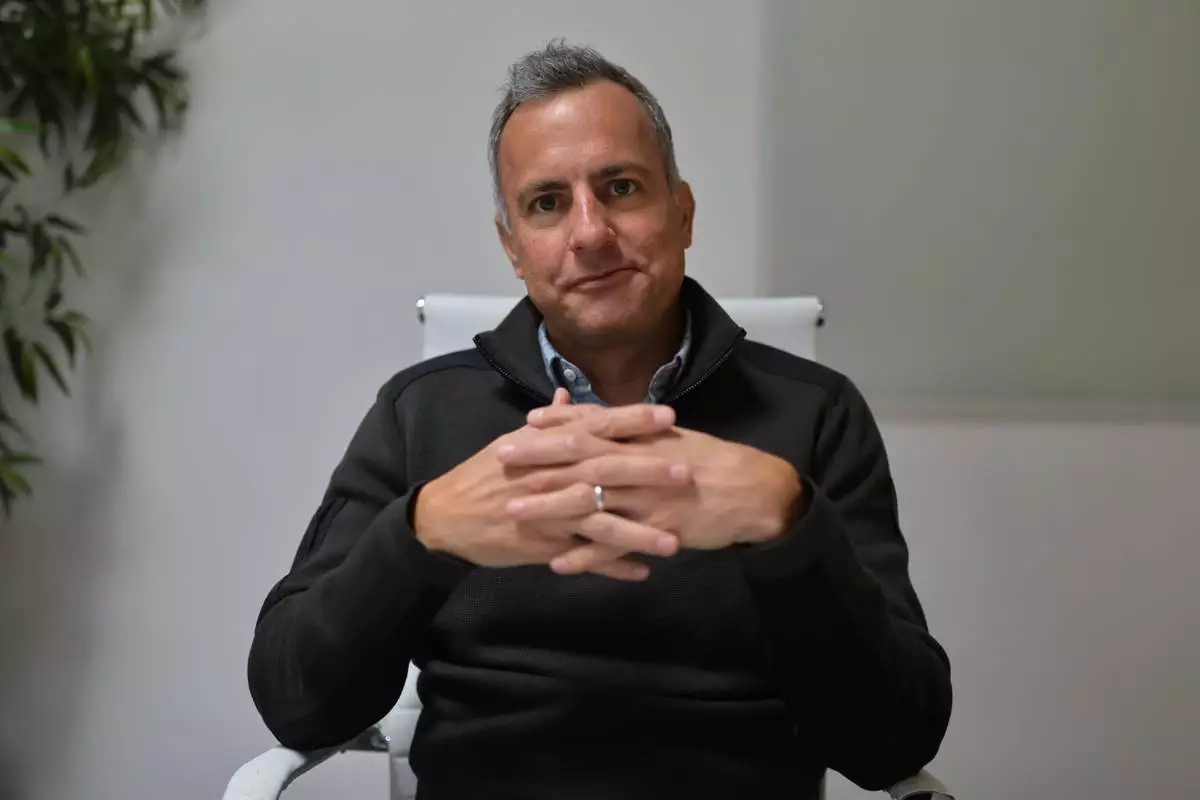
Colin Hathaway poses for a portrait in his office, Friday, Feb. 20, 2026, in Seattle. (AP Photo/Cedar Attanasio)

Chuck Collins tends to his chickens, Tuesday, Feb. 10, 2026, in Guilford, Vt. (AP Photo/Amanda Swinhart)
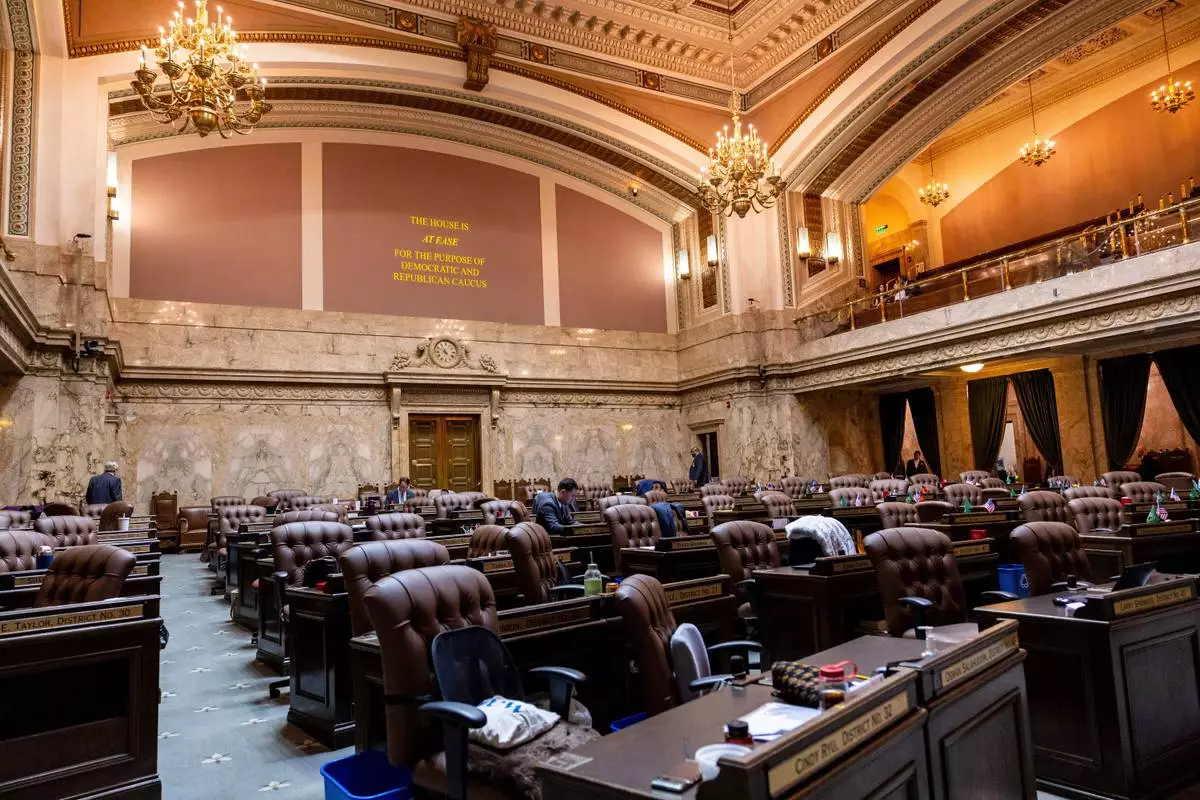
FILE - The interior of the House chamber at the Washington state Capitol is seen April 25, 2025, in Olympia, Wash. (AP Photo/Maddy Grassy, File)