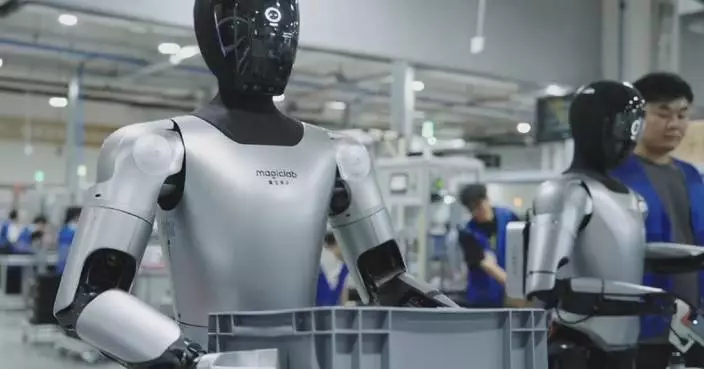
A wide range of AI-related innovations were presented at the finals of the third China's innovation challenge on Artificial Intelligence Application Scene (CICAS) from Friday to Sunday in Suzhou, east China's Jiangsu Province.
The competition, jointly sponsored by the Chinese Association for Artificial Intelligence and other institutions, focused on key areas including large AI models, generative AI and embodied intelligence. It attracted more than 3,250 teams from China and abroad, with 113 advancing to the finals.
The event comprehensively tested the real-world applicability of core technologies and their industrial implementation. Through on-site dataset evaluations, functional testing and algorithmic assessments, a total of 12 teams were awarded the top prize.
He Yiming, a Ph.D candidate at the School of Mechanical Science and Engineering (MSE), Huazhong University of Science and Technology (HUST), introduced his team's project, a human-machine collaborative intelligent operation and maintenance system based on edge AI.
"Our project presented today is essentially an edge AI-based human-machine collaborative intelligent operation and maintenance system. In short, it is a health check system for industrial equipment, which can be understood as a 'robot doctor.' Traditionally, the diagnosis is performed by regular manual inspections, relying much on expert knowledge and experience. We now achieve overtaking by changing lanes with AI technology," he said.
Edge AI refers to the deployment of AI algorithms and AI models directly on local edge devices such as sensors or Internet of Things (IoT) devices, enabling real-time data processing and analysis without constant reliance on cloud infrastructure.
In addition, a catalog focusing on nationwide AI application scenario innovations was also released at a concurrent event.
The catalog systematically outlines 100 high-value application scenarios across five major areas, including intelligent manufacturing, smart healthcare and transportation, providing key support for the exploration of scenario-driven AI application.

National contest on AI application scenarios enters finals
High in the Himalayas, Lhasa, the capital of southwest China's Xizang Autonomous Region, has quietly become one of the country's most caffeinated cities, signaling a fresh business wave in this ancient cultural hub.
With more than 800 coffee shops now serving a population of under one million, the city hosts roughly one cafe for every 1,200 residents, giving it one of the highest cafe densities in the country.
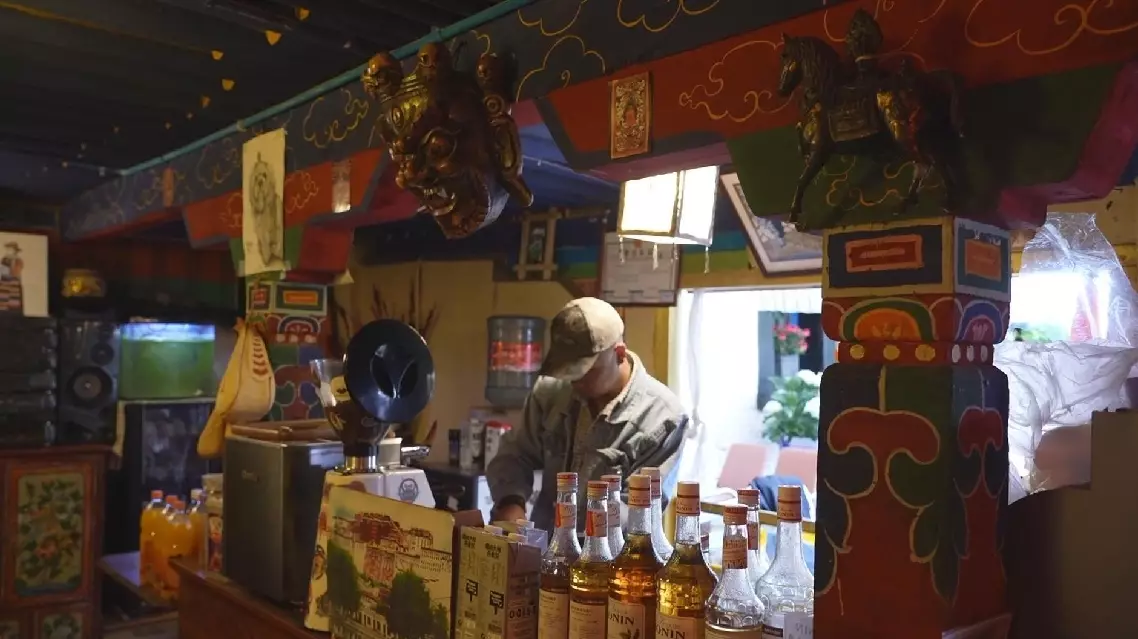
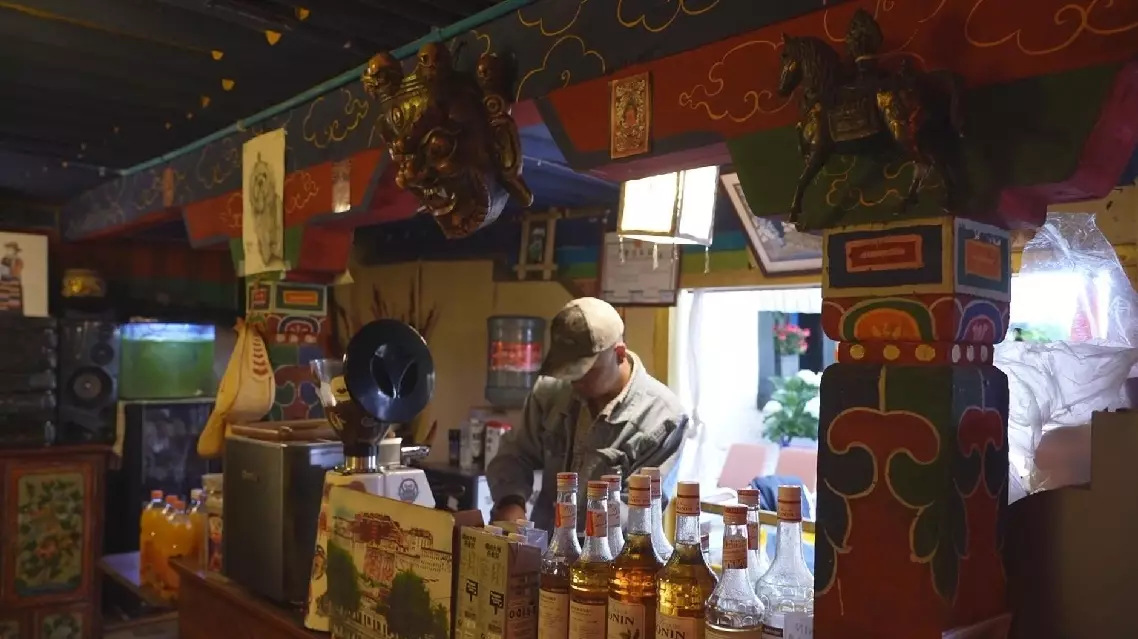
But this is not simply a transplant of Western coffee culture. On Barkhor Street in Lhasa's old town, a historic Buddhist pilgrimage circuit, baristas are stirring centuries-old yak cheese into espresso -- a blend that mirrors the city's transformation from a spiritual center into a modern regional hub.
"We have got this great Xizang-style vibe. There are plenty of cafes in Lhasa, but we are special. Locals -- even 80-year-olds -- come here for Americanos. Plus, lots of tourists, including foreigners, come just to check us out," the owner of Senxia Coffee, a local hotspot, said, revealing the secret behind his cafe's pull.
That dedication to innovation and presenting Xizang's culture through every cup have earned the shop a loyal following.
"I make a trip here once a year. It is my fourth year coming. The taste never changes, but they always have a new special to try -- and it is always great!" said a tourist from the eastern municipality Tianjin.
"It's very unique, I like it a lot. It's good coffee and it's a very nice place. The courtyard here is different than a courtyard in Germany would be," a German tourist offered similar praise.
In 2025, Lhasa's GDP crossed the 100-billion-yuan (about 14.7 billion US dollars) mark creating fertile ground for entrepreneurs, who found coffee as a light-asset business easy to start with -- small footprint, fast setup, easy to brand.
Amid intense competitions, businesses loyal to their hometown and home culture wins, Senxia's owner said.
"There are tons of entrepreneurs here. Local college grads are coming back to start businesses, and friends from inland are moving here to do the same. So the competition is actually fierce. With so many cafes around, we feel pretty lucky to have made it, and we have definitely got our own unique vibe," he said.
Lahsa sees booming coffee scene infused with local culture
Lahsa sees booming coffee scene infused with local culture