Northeast China's Jilin Province, which boasts abundant snow and ice resources for winter sports, has intensified efforts to upgrade its infrastructure with a reinforced transportation network making winter travel faster and more convenient for the growing numbers of visitors flocking to the province for ice and snow sports. For Jilin's Changbai Mountain scenic area, a three-dimensional transport network with enhanced shuttle service, new high-speed railway lines and denser air routes, has helped facilitate visitors' travel. To ensure smooth traffic during this year's ice-and-snow season, the scenic area has purchased new equipment and realized all-time snow removal operations. Except for periods of extreme weather, other attractions in addition to the main peak in the scenic area have largely remained open.
"Our equipment starts operation as early as 3 to 4 o'clock in the morning. We are using mechanized snow sweeping equipment, with the snow-removing coverage rate reaching 100 percent. We can't allow problems brought by road conditions to affect visitors' sightseeing," said Gong Xiaolei, deputy manager of operations of the Northern Changbai Mountain Scenic Area. The current snow season also marks the first time the Shenyang-Baihe High-Speed Railway has been fully put into operation for winter travel services. Previously, a journey from Beijing to the Changbai Mountain could take most of a day. Now, high-speed trains can complete the trip in just over four hours, while the travel time between Shenyang, provincial capital of the neighboring Liaoning Province, and the Changbai Mountain has been cut to a little more than one hour. Starting on January 26, the Shenyang-Baihe High-Speed Railway Line will begin operating its first-quarter train schedule. According to railway authorities, services will be increased by two and a half pairs of regular high-speed train trips and four pairs of peak-period train trips linking the Changbai Mountain with Beijing and Shenyang. As one of Jilin's key railway hubs, the Changchun Railway Station is seeing strong transfer demand during the ice-and-snow season, with nearly 90,000 passenger trips made through the station on an average day. To better serve winter tourists, the station has introduced services tailored to snow and ski travelers and implemented a service connecting 18 stations along the Shenyang-Baihe High-Speed Railway.
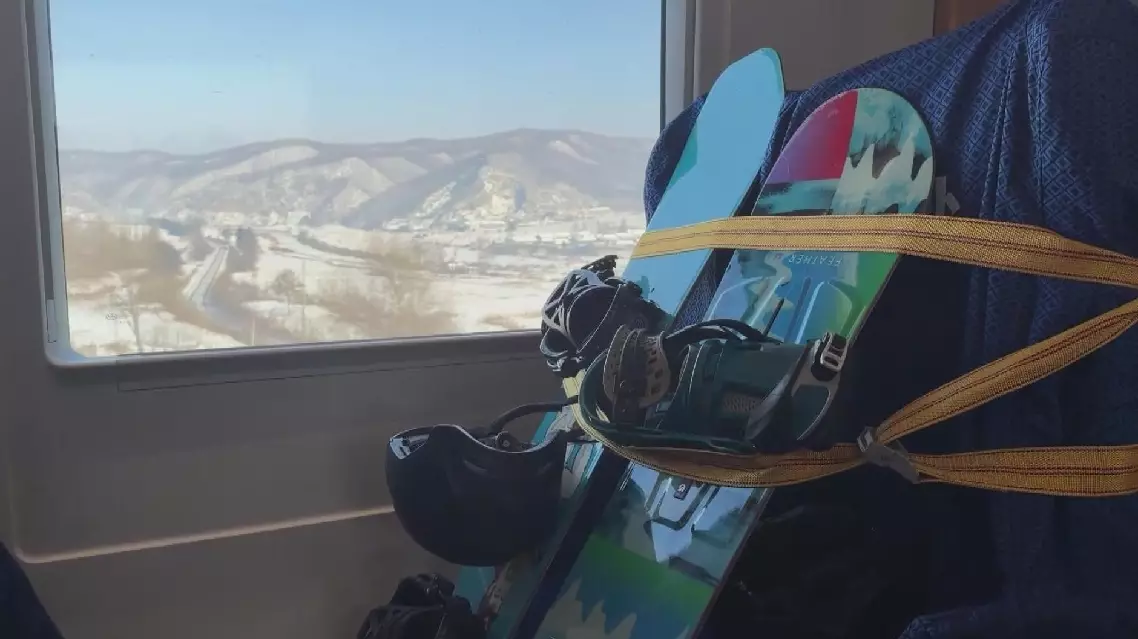
"Right now, loop trains running between the Changchun West Railway Station and the Changchun Railway Station and between the Shenyang North Railway Station and the Shenyang Railway Station offer a convenient service for passengers traveling with skiing and snowboarding equipment. Major stations along the Shenyang-Baihe High-Speed Railway, including the Shenyang North, Tonghua and Changbai Mountain Stations, also provide such service," said Ma Yingyun, deputy head of passenger transportation at the Changchun Railway Station.
As far as the air passenger transport service is concerned, Jilin's civil aviation network has also been upgraded to cater to the growing numbers of tourists. The Jilin Civil Aviation Airport Group, which manages five airports across the province, plans to operate 193 air routes in the current winter season, reaching 93 destinations. The density of direct flights to southern cities such as Xiamen, Fuzhou, Guangzhou, Haikou and Sanya, has been increased, and higher flight frequencies have been boosted on routes linking Jilin to nine other major airports, including Guangzhou in south China and Qingdao in east China, each handling over 10 million passenger trips annually. These efforts have made it easier for tourists from across the country to visit the colder northeastern province for winter sports and sightseeing.
Northeast China's Jilin upgrades transport network to power winter sports boom