The first time Patrick Thaw saw his University of Michigan friends together since sophomore year ended was bittersweet. They were starting a new semester in Ann Arbor, while he was FaceTiming in from Singapore, stranded half a world away.
One day last June he was interviewing to renew his U.S. student visa, and the next his world was turned upside down by President Donald Trump's travel ban on people from 12 countries, including Thaw's native Myanmar.
Click to Gallery
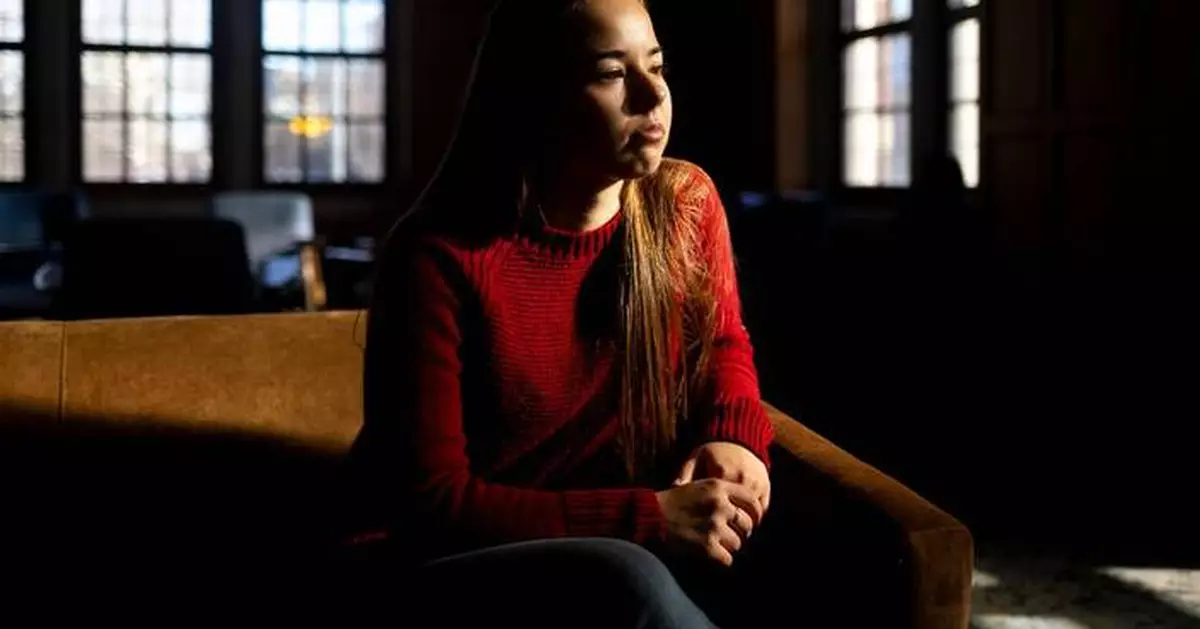
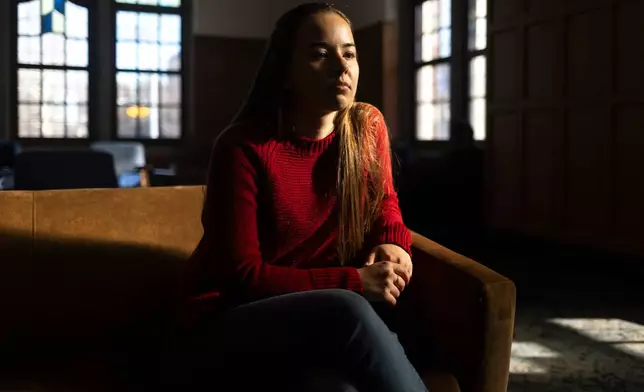
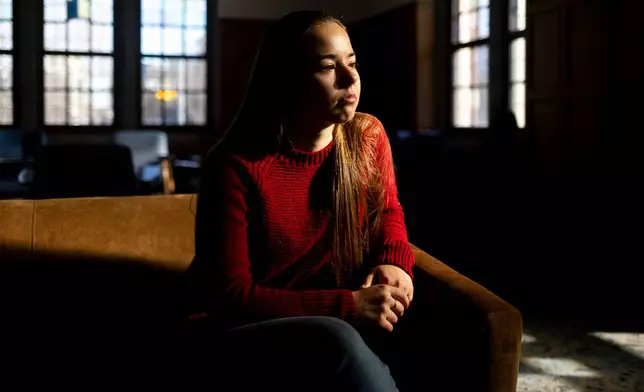
University of Michigan junior Allison Voto poses of a photo inside the Michigan Union on the University of Michigan campus in Ann Arbor, Mich., Jan. 17, 2026. (AP Photo/Emily Elconin)
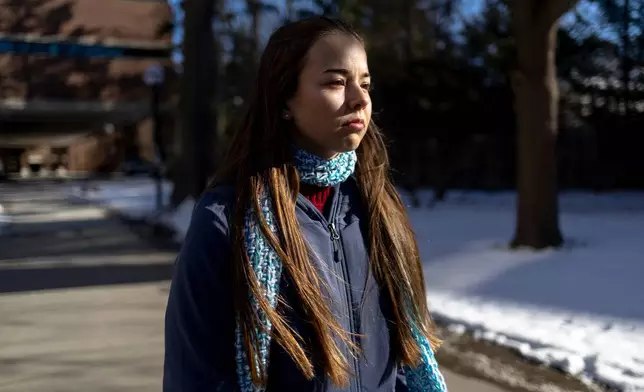
University of Michigan junior Allison Voto poses of a photo on the University of Michigan campus in Ann Arbor, Mich., Jan. 17, 2026. (AP Photo/Emily Elconin)
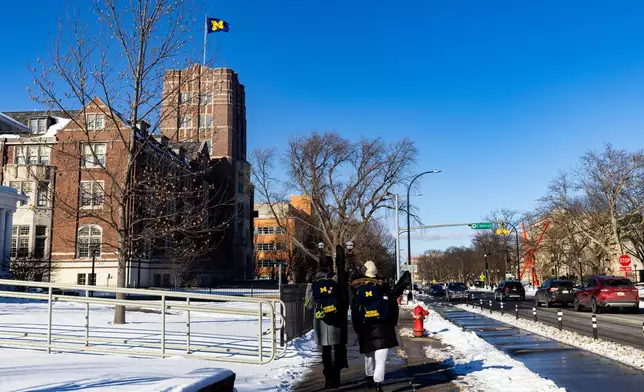
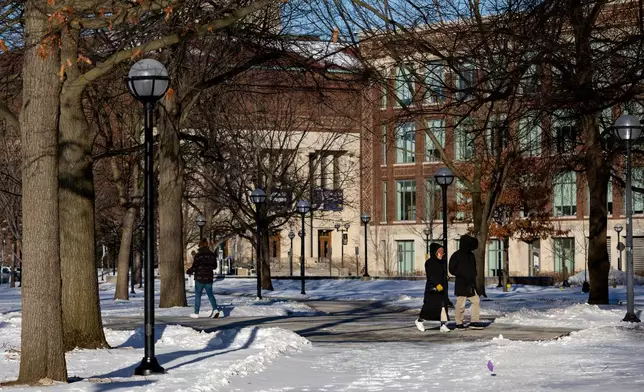
Students walk around the University of Michigan campus in Ann Arbor, Mich., Jan. 17, 2026. (AP Photo/Emily Elconin)
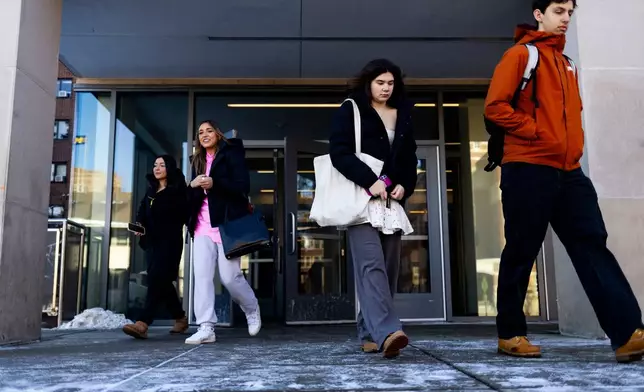
Students walk out of South Quad on the University of Michigan campus in Ann Arbor, Mich., Jan. 17, 2026. (AP Photo/Emily Elconin)
People walk around the University of Michigan campus in Ann Arbor, Mich., Jan. 17, 2026. (AP Photo/Emily Elconin)
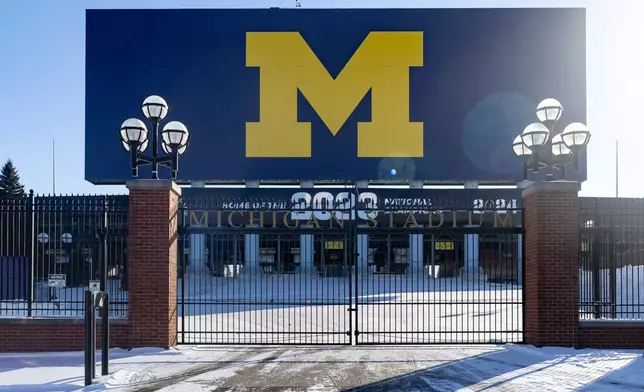
Michigan Stadium at the University of Michigan campus in Ann Arbor, Mich., Jan. 17, 2026. (AP Photo/Emily Elconin)
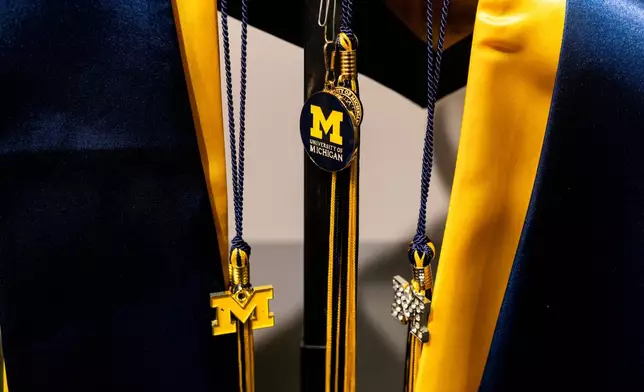
Graduation apparel is seen on display at a store at the Michigan Union on the University of Michigan campus in Ann Arbor, Mich., Jan. 17, 2026. (AP Photo/Emily Elconin)
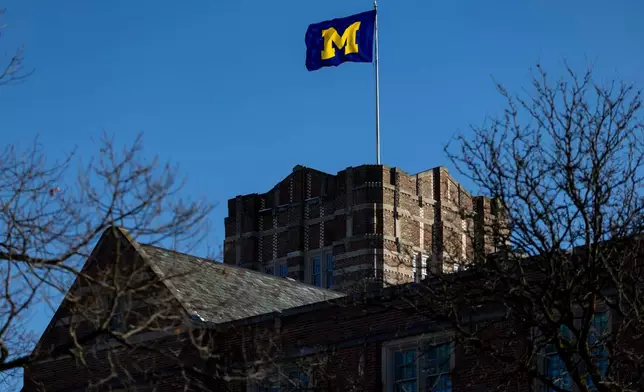
A flag blows in the wind atop the Michigan Union on the University of Michigan campus in Ann Arbor, Mich., Jan. 17, 2026. (AP Photo/Emily Elconin)
University of Michigan junior Allison Voto poses of a photo inside the Michigan Union on the University of Michigan campus in Ann Arbor, Mich., Jan. 17, 2026. (AP Photo/Emily Elconin)
“If I knew it was going to go down this badly, I wouldn’t have left the United States,” he said of his decision to leave Michigan for a summer internship in Singapore.
The ban was one of several ways the Trump administration made life harder for international students during his first year back in the White House, including a pause in visa appointments and additional layers of vetting that contributed to a dip in foreign enrollment for first-time students. New students had to look elsewhere, but the hurdles made life particularly complicated for those like Thaw who were well into their U.S. college careers.
Universities have had to come up with increasingly flexible solutions, such as bringing back pandemic-era remote learning arrangements or offering admission to international campuses they partner with, said Sarah Spreitzer, assistant vice president of government relations at the American Council on Education.
In Thaw's case, a Michigan administrator highlighted studying abroad as an option. As long as the travel ban was in place, a program in Australia seemed viable — at least initially.
In the meantime, Thaw didn’t have much to do in Singapore but wait. He made friends, but they were busy with school or jobs. After his internship ended, he killed time by checking email, talking walks and eating out.
“Mentally, I’m back in Ann Arbor,” the 21-year-old said. “But physically, I’m trapped in Singapore.”
When Thaw arrived in Ann Arbor in 2023, he threw himself into campus life. He immediately meshed with his dorm roommate’s group of friends, who had gone to high school together about an hour away. A neuroscience major, he also joined a biology fraternity and an Alzheimer's research lab.
His curiosity pushed him to explore a wide range of courses, including a Jewish studies class. The professor, Cara Rock-Singer, said Thaw told her his interest stemmed from reading the works of Philip Roth.
“I really work to make it a place where everyone feels not only comfortable, but invested in contributing,” Rock-Singer said. “But Patrick did not need nudging. He was always there to think and take risks.”
When Thaw landed his clinical research internship at a Singapore medical school, it felt like just another step toward success.
He heard speculation that the Trump administration might impose travel restrictions, but it was barely an afterthought — something he said he even joked about with friends before departing.
Then the travel ban was announced.
Thaw's U.S. college dream had been a lifetime in the making but was undone — at least for now — by one trip abroad. Stuck in Singapore, he couldn’t sleep and his mind fixated on one question: “Why did you even come here?”
As a child, Thaw set his sights on attending an American university. That desire became more urgent as higher education opportunities dwindled after a civil war broke out in Myanmar.
For a time, tensions were so high that Thaw and his mother took shifts watching to make sure the bamboo in their front yard didn’t erupt in flames from Molotov cocktails. Once, he was late for an algebra exam because a bomb exploded in front of his house, he said.
So when he was accepted to the University of Michigan after applying to colleges “around the clock," Thaw was elated.
“The moment I landed in the United States, like, set foot, I was like, this is it,” Thaw said. “This is where I begin my new life.”
When Thaw talked about life in Myanmar, it often led to deep conversations, said Allison Voto, one of his friends. He was one of the first people she met whose background was very different from hers, which made her “more understanding of the world,” she said.
During the 2024-25 school year, the U.S. hosted nearly 1.2 million international students. As of summer 2024, more than 1,400 people from Myanmar had American student visas, making it one of the top-represented countries among those hit by the travel ban.
A Michigan official said the school recognizes the challenges facing some international students and is committed to ensuring they have all the support and options it can provide. The university declined to comment specifically on Thaw's situation.
While the study abroad program in Australia sparked some hope that Thaw could stay enrolled at Michigan, uncertainty around the travel ban and visa obstacles ultimately led him to decide against it.
He had left Myanmar to get an education and it was time to finish what he started, which meant moving on.
“I cannot just wait for the travel ban to just end and get lifted and go back, because that’s going to be an indefinite amount of time,” he said.
He started applying to colleges outside the U.S., getting back acceptance letters from schools in Australia and Canada. He is holding out hope of attending the University of Toronto, which would put his friends in Ann Arbor just a four-hour drive from visiting him.
“If he comes anywhere near me, basically on the continent of North America, I’m going to go see him,” said Voto, whose friendship with Thaw lately is defined by daylong gaps in their text conversations. “I mean, he’s Patrick, you know? That’s absolutely worth it.”
The Associated Press’ education coverage receives financial support from multiple private foundations. AP is solely responsible for all content. Find AP’s standards for working with philanthropies, a list of supporters and funded coverage areas at AP.org.
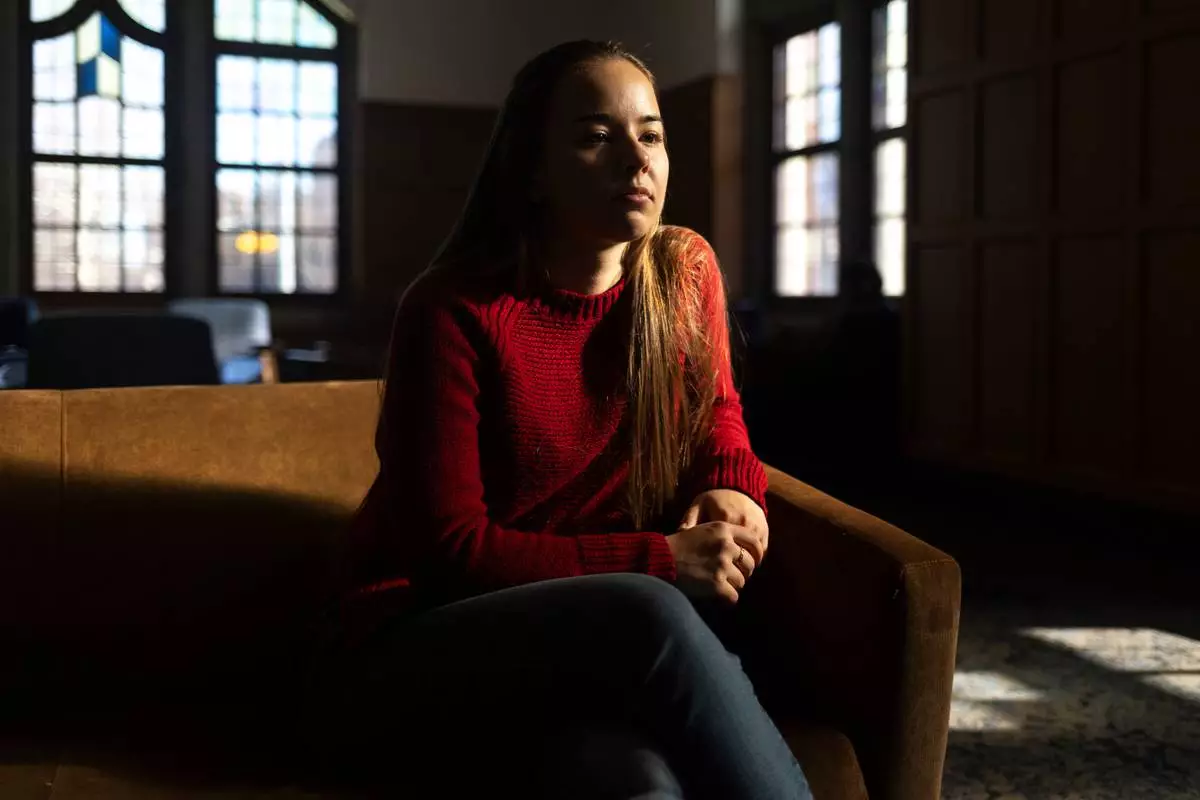
University of Michigan junior Allison Voto poses of a photo inside the Michigan Union on the University of Michigan campus in Ann Arbor, Mich., Jan. 17, 2026. (AP Photo/Emily Elconin)
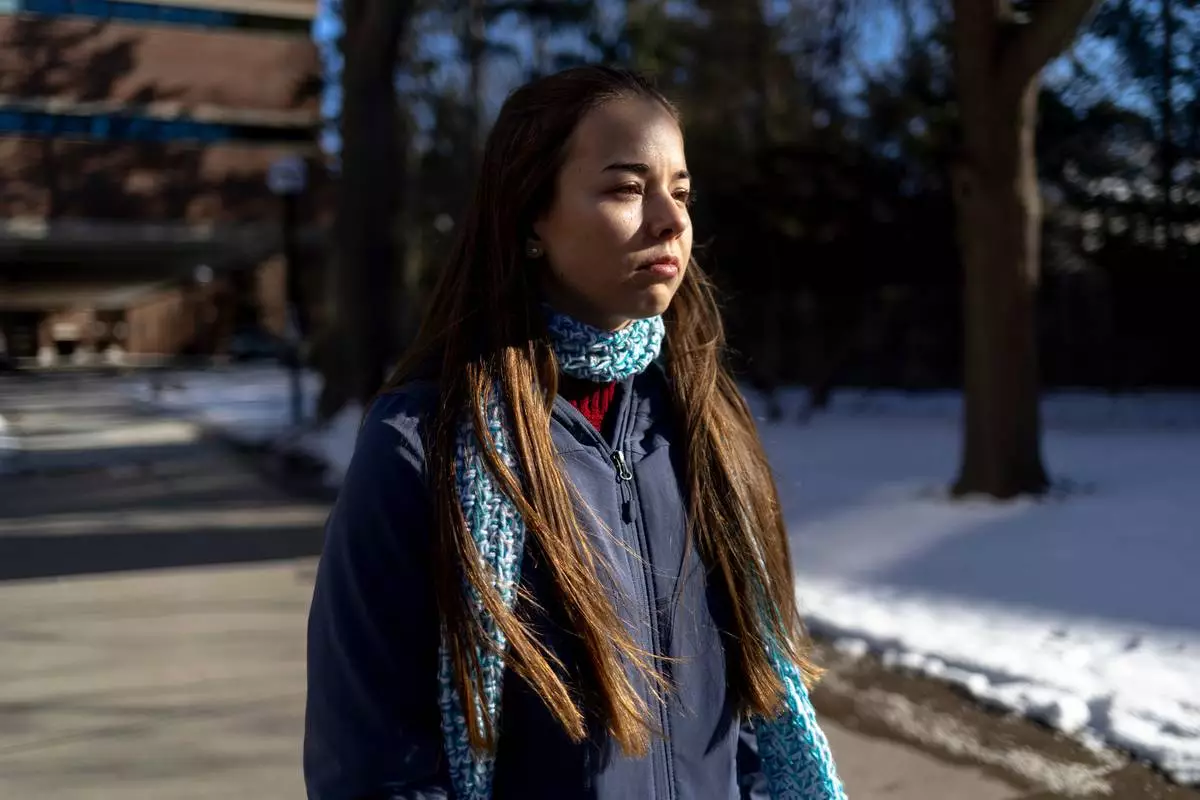
University of Michigan junior Allison Voto poses of a photo on the University of Michigan campus in Ann Arbor, Mich., Jan. 17, 2026. (AP Photo/Emily Elconin)
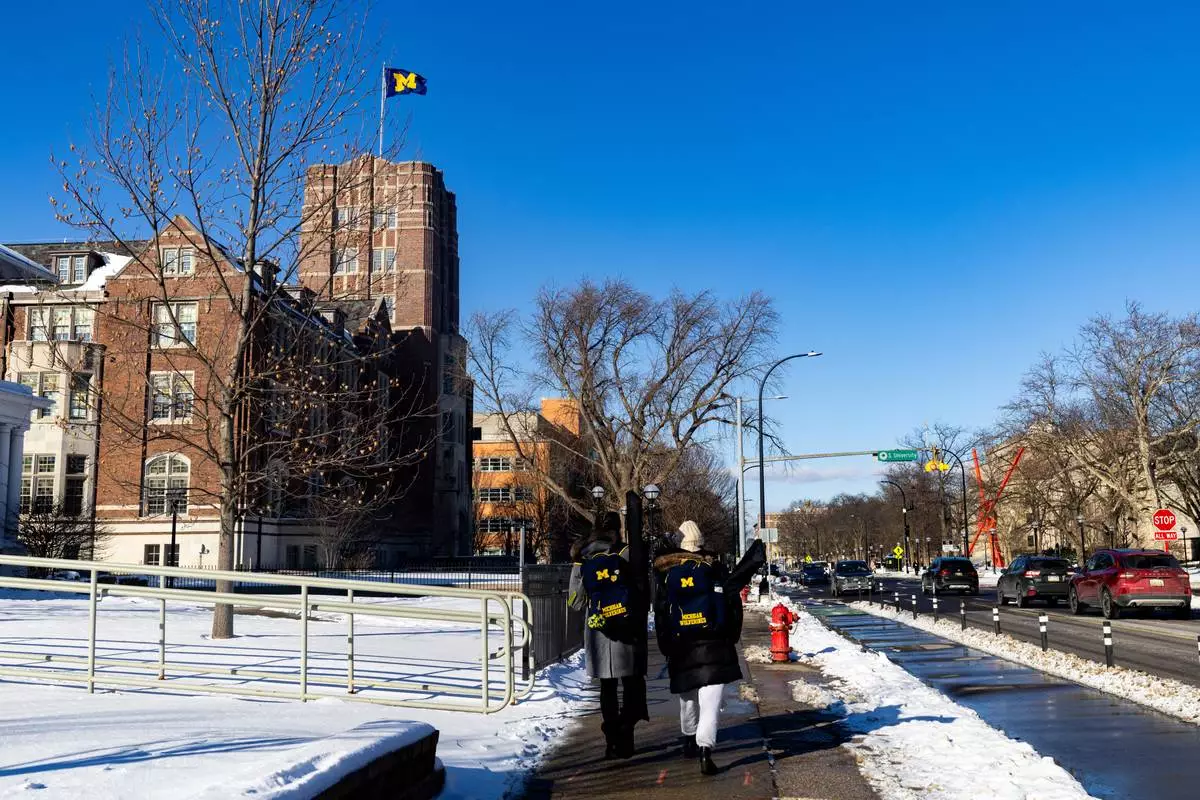
Students walk around the University of Michigan campus in Ann Arbor, Mich., Jan. 17, 2026. (AP Photo/Emily Elconin)
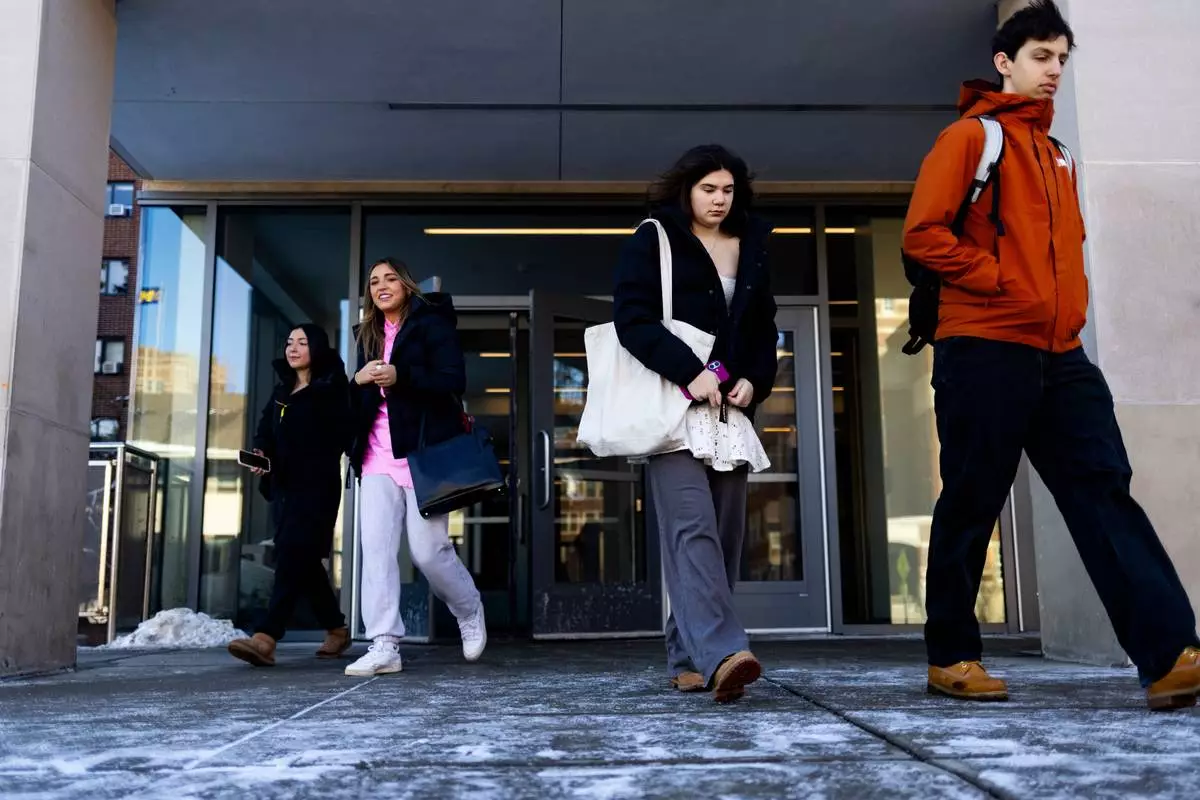
Students walk out of South Quad on the University of Michigan campus in Ann Arbor, Mich., Jan. 17, 2026. (AP Photo/Emily Elconin)
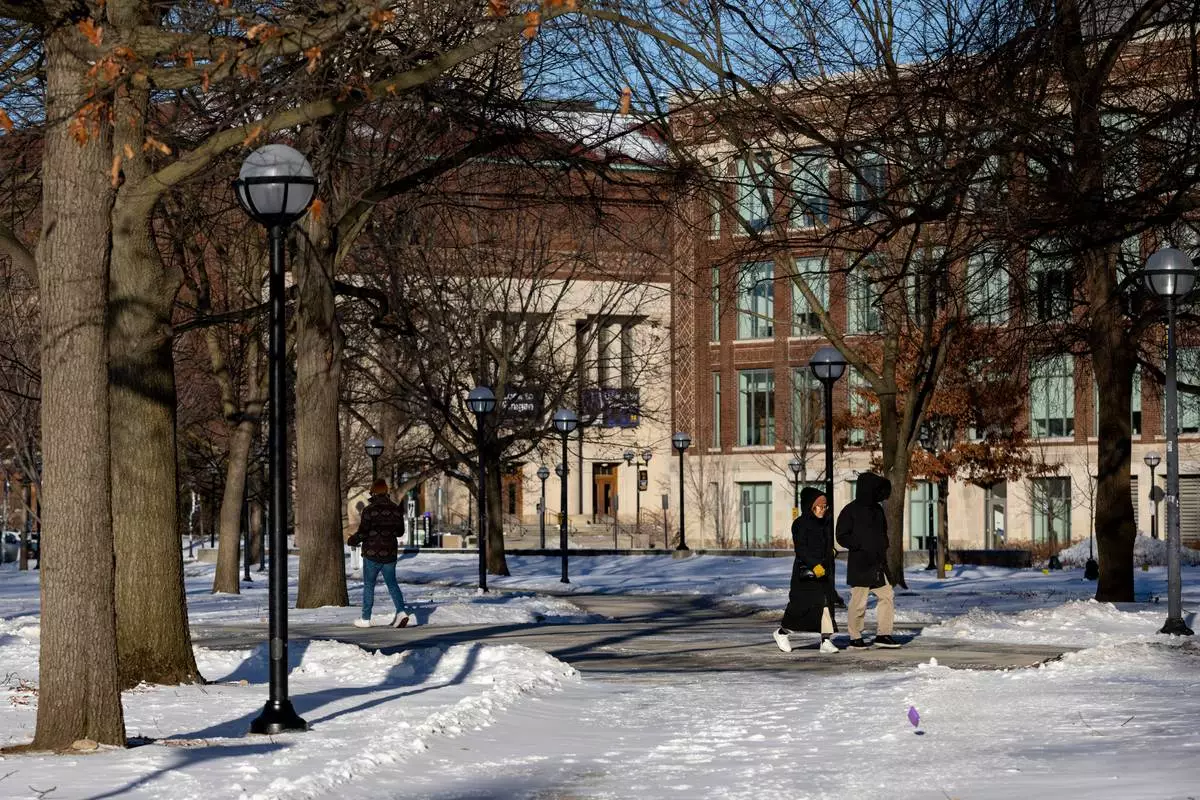
People walk around the University of Michigan campus in Ann Arbor, Mich., Jan. 17, 2026. (AP Photo/Emily Elconin)
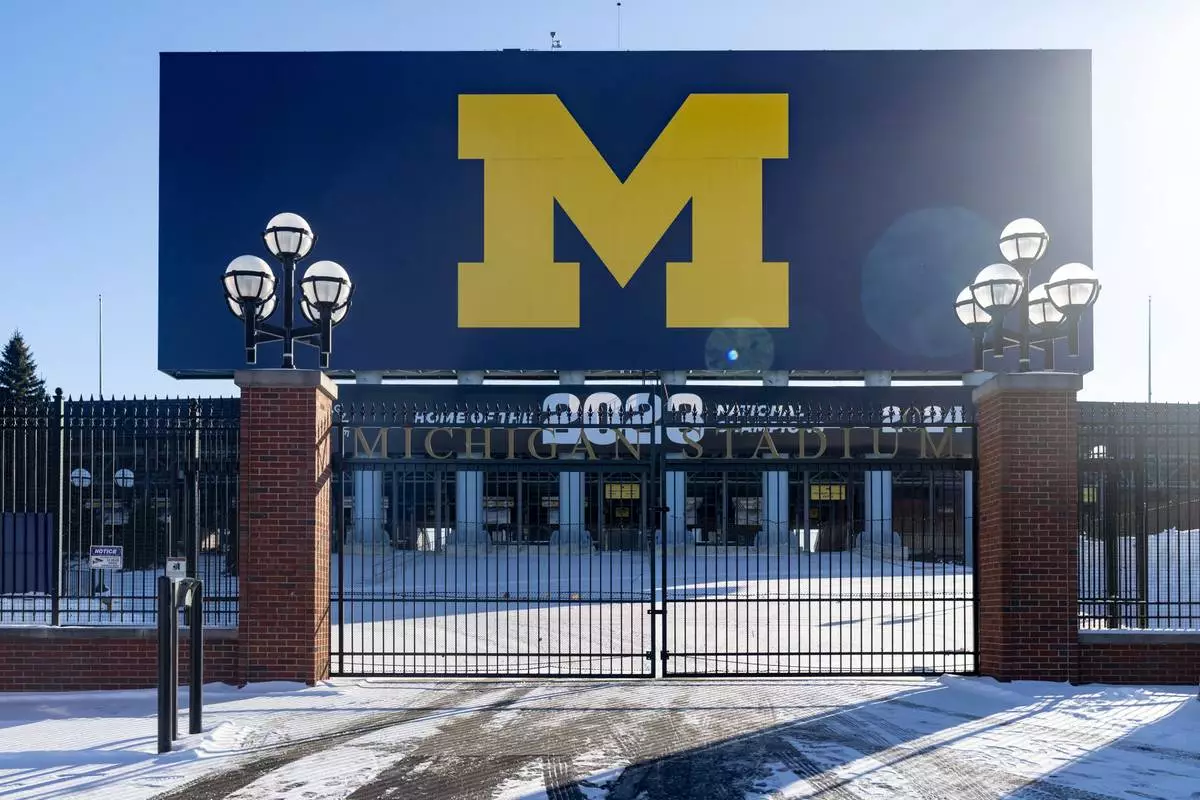
Michigan Stadium at the University of Michigan campus in Ann Arbor, Mich., Jan. 17, 2026. (AP Photo/Emily Elconin)
Graduation apparel is seen on display at a store at the Michigan Union on the University of Michigan campus in Ann Arbor, Mich., Jan. 17, 2026. (AP Photo/Emily Elconin)
A flag blows in the wind atop the Michigan Union on the University of Michigan campus in Ann Arbor, Mich., Jan. 17, 2026. (AP Photo/Emily Elconin)
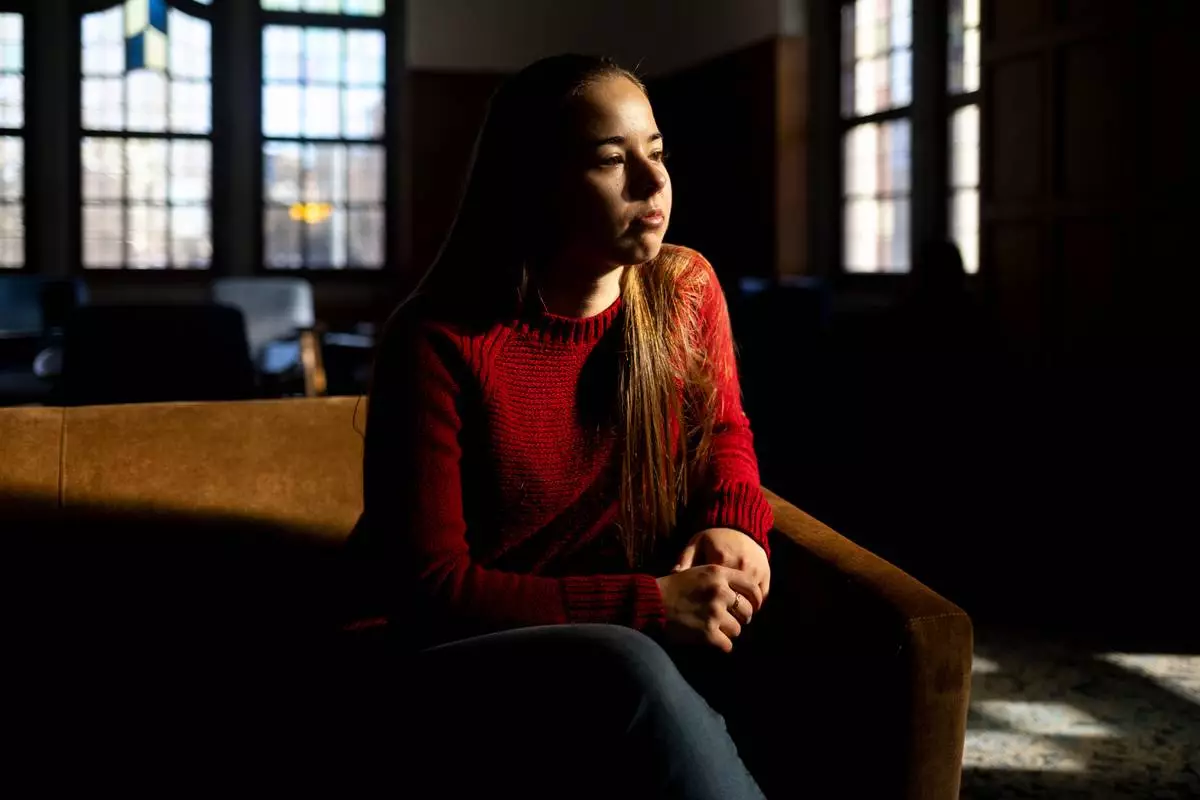
University of Michigan junior Allison Voto poses of a photo inside the Michigan Union on the University of Michigan campus in Ann Arbor, Mich., Jan. 17, 2026. (AP Photo/Emily Elconin)
The White House on Monday made an effort to distance President Donald Trump from comments made by several members of his administration that criminalized Minneapolis protester Alex Pretti, who was shot and killed Saturday by a Border Patrol officer.
In the immediate aftermath of Pretti’s killing, Deputy White House chief of staff Stephen Miller labeled the protester “an assassin” who “tried to murder federal agents.” When asked about the comment during a briefing, press secretary Karoline Leavitt stressed that Trump hadn’t used such words.
Leavitt also said she “not heard the president characterize” Pretti as a domestic terrorist, a label Homeland Security Secretary Kristi Noem used a day earlier.
The White House’s seeming retreat comes as a growing number of Republicans call for a deeper investigation into Pretti’s killing, a sign that the Trump administration’s accounting of events may face bipartisan scrutiny.
Hours before the briefing, a federal judge began hearing arguments on whether she should at least temporarily halt the immigration crackdown in Minnesota.
Here's the latest:
The chairman of the Senate Homeland Security and Governmental Affairs Committee is inviting three top Homeland Security Department officials to testify before Congress after a fatal shooting of a protester in Minneapolis over the weekend.
Sen. Rand Paul, R-Ky., sent letters Tuesday to the heads of Immigration and Customs Enforcement (ICE), Customs and Border Patrol (CBP) and Citizenship and Immigration Services (USCIS) inviting them to a hearing on Feb. 12. His letters come after the GOP chairman of the House Homeland Security Committee, New York Rep. Andrew Garbarino, requested a similar hearing over the weekend.
In the letters, Paul wrote that Congress has a duty to oversee taxpayer dollars and “ensure the funding is used to accomplish the mission, provide proper support for our law enforcement and, most importantly, protect the American people.”
Republican U.S. Rep. Tom Tiffany, also a candidate for Wisconsin governor, said Monday he has not seen any of the videos of Alex Pretti being shot and killed by a federal Border Patrol officer in Minneapolis.
“I have not seen the video,” Tiffany told reporters at a news conference called to release his property tax plan.
Tiffany said he was also not aware of comments from Trump administration officials alleging that Pretti was a “would-be assassin” who intended to “massacre” federal agents.
“I didn’t see those comments, but I’d have to see the context of them,” Tiffany said.
Tiffany said he supports a “full investigation” into what happened that includes Minnesota officials working with those from the federal government. He called the loss of life in Minnesota “tragic.”
“Let’s get all the facts on the table and be sure to make a reasoned decision in what has been a chaotic time,” Tiffany said.
Tiffany is a strong supporter of President Donald Trump and said if elected governor of Wisconsin he would work closely with federal immigration officers.
White House press secretary Karoline Leavitt said that Trump wants to see the bipartisan spending package passed this week to avoid the possibility of a government shutdown.
Leavitt said that “policy discussions on immigration in Minnesota are happening” and that Trump as president “is leading those discussions.” But she said those conversations “should not be at the expense of government funding for the American people.”
“We absolutely do not want to see that funding lapse,” Leavitt said. “And we want the Senate to move forward with passing the bipartisan appropriations package that was negotiated on a bipartisan basis.
Minnesota Attorney General Keith Ellison says a federal judge’s decision on whether to halt an immigration crackdown in the state will have major ramifications for the rest of the nation.
“This decision is extremely important to the sovereignty of every single state,” Ellison said shortly after the hearing before U.S. District Judge Katherine Menendez came to a close on Monday. State and Twin Cities officials have asked Menendez to order a halt to the crackdown.
“We’re asking for preliminary relief,” he later continued. “The case will go on. But what is decided in Minnesota, overall, this case, and everything that we’re doing to try to protect our state, has great ramifications for the rest of the country.”
Menendez’ ruling will not weigh in on the merits of the case, but instead determine if the crackdown needs to stop temporarily while the lawsuit moves forward in court.
“We’re never going to stop defending Minnesota, If things go our way, great. If they don’t, we’re right back to the drawing board,” Ellison said. “The moment will never arrive when we stop fighting for this state. Full stop.”
White House press secretary Karoline Leavitt said that Tom Homan, the administration’s border czar, would be “the main point of contact on the ground in Minneapolis” during continued operations by federal immigration officers.
That marks something of a change as Border Patrol Commander Gregory Bovino had been the public face of operations in the city.
Leavitt said that Bovino would “very much continue to lead Customs and Border Patrol, throughout and across the country.”
“While Americans have a constitutional right to bear arms, Americans do not have a constitutional right to impede lawful immigration enforcement operations,” Leavitt said, adding that, when an armed person is confronted by law enforcement, “you are raising the assumption of risk, and the risk of a force being used against you.”
Leavitt was asked about FBI Director Kash Patel’s remarks that someone could not bring a loaded firearm to a protest.
Family members said Pretti owned a handgun and had a permit to carry a concealed handgun in Minnesota, but that they had never known him to carry it.
The Department of Homeland Security has said Pretti was shot after he “approached” Border Patrol officers with a 9 mm semiautomatic handgun but did not specify if he brandished it.
White House press secretary Karoline Leavitt said at the news briefing that she has not heard Trump commit to release body camera footage from federal immigration officers involved in the shooting and killing of Alex Pretti, who was protesting the administration’s actions.
Leavitt later said that the administration is talking with members of Congress about requirements to have federal immigration officers wear body cameras.
Asked if Noem had made a mistake that led Trump to send border czar Tom Homan to Minnesota, Leavitt said no.
Noting that Noem oversees “the entire Department of Homeland Security,” Leavitt stressed that that includes the Federal Emergency Management Agency, which is managing response to “a brutal winter storm, where hundreds of thousands of Americans have been impacted by that.”
Leavitt said that Homan “is in a unique position to drop everything and go to Minnesota to continue having these productive conversations with state and local officials,” adding that he would be “catching a plane in just a few hours to do just that, at the at the request of the president.”
White House press secretary says that she has “not heard the president characterize” as a domestic terrorist Alex Pretti, the Minneapolis protester shot and killed on Saturday by a federal immigration officer.
That marks something of a difference with the message of other administration officials. Homeland Security Secretary Kristi Noem has labeled Pretti as committing an act of domestic terrorism.
Leavitt said she has “heard the president say he wants to get the facts on the investigation” of the shooting
Asked about deputy White House chief of staff Stephen Miller’s social media characterization of Pretti, without offering any evidence, as “an assassin” who “tried to murder federal agents,” Leavitt stressed that Trump hadn’t used such words.
“This has obviously been a very fluid and fast moving situation throughout the weekend,” Leavitt said, adding that Trump “has said that he wants to let the investigation continue and let the facts lead.”
Asked if Miller would apologize to Pretti’s family, Leavitt again turned to Trump’s position.
“Nobody here at the White House, including the president of the United States, wants to see Americans hurt and losing their lives,” she said.
White House press secretary Karoline Leavitt said the shooting and killing by a federal immigration officer of Minneapolis protester Alex Pretti “occurred as a result of a deliberate and hostile resistance by Democrat leaders in Minnesota.”
Her remarks showed the administration still seeks to blame the violence on political rivals, despite Trump seeking to ease tensions by saying Monday that he had a productive phone conversation with Minnesota Gov. Tim Walz.
The White House continues to say that resistance to Trump’s agenda is what led to the shootings and killings of Pretti and Renee Good after ICE agents have engaged in aggressive operations in Minnesota.
Walz, Minneapolis Mayor Jacob Frey and other elected Democrats “were spreading lies about federal law enforcement officers,” Leavitt said at the White House briefing.
“They have also used their platforms to encourage Left-Wing agitators to stalk, record, confront, and obstruct federal officers who were just trying to lawfully perform their duties, which has created dangerous situations threatening both these officers and the general public and Minnesotans alike,” Leavitt said.
During a briefing on Monday, White House press secretary Karoline Leavitt said that a trio of “active investigations” and internal probes of the shooting were underway by federal agencies.
Leavitt said that the Department of Homeland Security and FBI were investigating the shooting and that U.S. Customs and Border Protection was “conducting their own internal review.”
“As President Trump said yesterday, the administration is reviewing everything with respect to the shooting, and we will let that investigation play out,” Leavitt added.
Texas Republican Gov. Greg Abbott, who has been a strong supporter of Trump’s crackdown on immigration, said Monday the White House needs to “recalibrate” what it is doing in Minnesota.
Abbott spoke with conservative radio host Mark Davis and said immigration agents deserve respect as law enforcement.
Abbott said he believes the White House is working on a “game plan” for immigration agents to “go about their job in a more structured way to make sure that they are going to be able to remove these people, but without causing all the kinds of problems and fighting in communities that they are experiencing right now.”
Abbott also blamed Minnesota Gov. Tim Walz and Minneapolis Mayor for not doing enough to calm the situation on the ground.
Massachusetts Gov. Maura Healey renewed her calls for Homeland Security Secretary Kristi Noem to resign when asked by reporters on Monday.
In a lengthy response, Healey accused the head of the FBI of not understanding the Second Amendment and Attorney General Pam Bondi of extorting Minnesota for its voter rolls.
Healey added that Trump’s administration was “doing a huge disservice” to the American public.
Monday’s hearing in federal court on Minnesota and the Twin Cities’ suit aiming to halt the Trump administration’s surge of immigration law enforcement has ended without the judge ruling from the bench.
U.S. District Court Judge Katherine Menendez emphasized the urgency of the case, saying she plans to issue a written opinion, though didn’t specify when.
A Monday morning call between President Donald Trump and Minnesota Gov. Tim Walz about fatal shootings by immigration officers appears to have been well-received by both sides.
Walz’ office said the call was “productive.”
“The Governor made the case that we need impartial investigations of the Minneapolis shootings involving federal agents, and that we need to reduce the number of federal agents in Minnesota,” his office wrote in a release.
Renee Good and Alex Pretti, both Minnesota residents and U.S. citizens, were fatally shot and killed by federal immigration officers in separate incidents in Minneapolis.
Trump agreed to talk to the Department of Homeland Security about ensuring the Minnesota Bureau of Criminal Apprehension is able to conduct an independent investigation, Walz’ office said, and also agreed to look into either reducing the number of federal agents in Minnesota or working with the state “in a more coordinated fashion on immigration enforcement regarding violent criminals.”
Trump wrote in a social media post earlier Monday that the two “actually” seem to be on the same page in wanting to work together on immigration issues in Minnesota. He said the people the administration is seeking “are any and all Criminals that they have in their possession” and Walz “very respectfully, understood that.”
More than 3,000 federal immigration officers are part of the immigration enforcement surge in Minnesota, a Department of Justice attorney told a federal judge on Monday.
Brantley Mayers, counsel to the DOJ’s assistant attorney general, told U.S. District Judge Katherine Menendez that at least 2,000 Immigration and Customs Enforcement officers and at least 1,000 Customs and Border Patrol officers were part of the operation, and that he would provide her with an exact number later.
Minnesota state and Twin Cities officials have asked Menendez to halt the immigration crackdown, which has led to widespread unrest. Two Minnesota residents have been shot and killed by immigration officials since the crackdown began.
Menendez asked Mayers why so many officers were needed. Mayers said it had to do with complications surrounding how immigration officers typically stage for enforcement operations, gathering in parking lots.
Twin Cities officials have taken steps to prohibit city-owned parking lots and garages from being used in immigration enforcement operations. Chicago officials took similar steps after immigration crackdowns in that city last year.
“I failed to view the DHS funding vote as a referendum on the illegal and immoral conduct of ICE in Minneapolis,” Rep. Tom Suozzi, D-N.Y., posted on social media. “I hear the anger from many of my constituents, and I take responsibility for that. I have long been critical of ICE’s unlawful behavior and I must do a better job demonstrating that.”
Suozzi was one of the seven moderate Democrats who voted with Republicans last week to pass a tranche of funding for the Department of Homeland Security.
The congressman added that the “senseless and tragic murder of Alex Pretti underscores what happens when untrained federal agents operate without accountability” and called on President Donald Trump to end ICE’s enhanced enforcement operation in Minnesota.
A federal judge asked a Justice Department attorney about the federal government’s motivation behind the immigration crackdown in Minnesota during a hearing on the state’s request for an emergency halt to the immigration enforcement.
“So the goal of the surge is not to get the state and cities to change sanctuary policies?” Menendez asked Brantley Mayers, counsel to the DOJ’s assistant attorney general.
No, Mayers said — the goal is to enforce federal law.
The judge also expressed skepticism about a letter recently sent by Attorney General Pam Bondi to Minnesota Gov. Tim Walz asking the state to allow the federal government to access state voter roles, turn over state Medicaid and food assistance records, and repeal sanctuary policies. All three requests are the subject of litigation, she noted.
“Would 10,000 ICE agents on the ground in the Twin Cities cross the line?” Menendez asked Mayers. “I mean, is there no limit to what the executive can do under the guise of enforcing immigration law?”
Mayers said one lawful action shouldn’t be used to discredit another lawful action.
“I don’t see how the fact that we’re also doing additional things that we are allowed to do, that the Constitution has vested us with doing, would in any way negate another piece of the same operation, the same surge.”
And the president said the two “actually” seem to be on the same page in wanting to work together as it relates to immigration issues in Minnesota.
Trump said the people the administration is seeking “are any and all Criminals that they have in their possession” and Walz “very respectfully, understood that.”
“He was happy that Tom Homan was going to Minnesota, and so am I!” Trump wrote in a social media post which was notable for its warm and collaborative tone toward Minnesota’s governor, whom Trump frequently derides.
At issue is whether the federal court should at least temporarily halt the immigration crackdown in Minnesota that’s led to the fatal shootings of two people by government officers.
In arguments before U.S. District Judge Katherine Menendez, lawyers for the state and Twin Cities argued the situation is so dire on the street as to require the court to halt the federal government’s immigration enforcement actions.
“If this is not stopped right here, right now, I don’t think anybody who is seriously looking at this problem can have much faith in how our republic is going to go in the future,” Minnesota Assistant Attorney General Brian Carter said.
The Justice Department’s attorneys were set to speak later Monday.
Judge Menendez asked attorneys for the state and cities where she should draw the line between legitimate law enforcement response and one that violates the Constitution.
“The images of this incident are deeply troubling and a full and transparent investigation of this officer involved shooting must take place immediately,” the Republican who served during President Trump’s first term wrote on X. He also said he was praying for Alex Pretti’s family as well as Minnesota citizens and state and federal law enforcement officers.
“The American people deserve to have safe streets, our laws enforced and our constitutional rights of Freedom of Speech, peaceable assembly and the right to keep and bear Arms respected and preserved all at the same time,” Pence wrote. “That’s how Law and Order and Freedom work together in America.”
Pence is one of a growing number of Republicans to press for a deeper investigation into federal immigration tactics in Minnesota.
The attorney representing the family of Renee Good, who was fatally shot by a federal immigration officer earlier this month in Minneapolis, said in a statement that it was “terrifying, deeply disturbing, and heartbreaking” that another person had died.
“It is time for a hard reset,” attorney Antonio Romanucci said in the statement released Sunday. “ICE agents can leave Minneapolis. The residents of Minnesota cannot. We call for a complete and immediate end to the ICE invasion of this beautiful American city.”
Minnesota gubernatorial candidate Chris Madel, a Minneapolis attorney who provided legal support to the ICE agent who shot and killed Renee Good, ended his GOP campaign in a surprise video announcement Monday.
Madel called the recent immigration enforcement operation in the Twin Cities an “unmitigated disaster.”
“I cannot support the national Republican’s stated retribution on the citizens of our state,” Madel said. “Nor can I count myself a member of a party that would do so.”
He was among a large group of candidates seeking to replace Democratic Gov. Tim Walz, who dropped his reelection bid earlier this month. Madel described himself as a “pragmatist,” and said national Republicans “have made it nearly impossible for a Republican to win a statewide election in Minnesota.”
“I have read about and I have spoken to help countless United States citizens who have been detained in Minnesota due to the color of their skin,” Madel said.
That support from the Republican governor for the Department of Homeland Security’s immigration enforcement efforts came Monday as tensions in Minnesota ratcheted up over the weekend following the fatal shooting of a Minneapolis protester by a federal agent.
DeSantis pointed to his administration’s signing of cooperative agreements with Homeland Security agencies when it comes to detaining people in the U.S. illegally as a model for other states. As he has before, DeSantis noted that state and local law enforcement agencies had detained nearly 20,000 people in the U.S. illegally in the past year.
DeSantis made no mention of the fatal shooting of 37-year-old Alex Pretti by a federal officer Saturday. Following the shooting, several Republican elected officials have questioned President Trump’s hard-line immigration crackdown in Minnesota, but DeSantis was not among them.
Homan will report directly to Trump, the president said in a social media post, adding that Homan is “tough but fair.”
“He has not been involved in that area, but knows and likes many of the people there,” Trump said Monday morning.
A growing number of Republicans are pressing for a deeper investigation into federal immigration tactics in Minnesota after a U.S. Border Patrol agent fatally shot a man in Minneapolis, a sign the Trump administration’s accounting of events may face bipartisan scrutiny.
House Homeland Security Committee Chairman Andrew Garbarino sought testimony from leaders at Immigration and Customs Enforcement, Customs and Border Protection and U.S. Citizenship and Immigration Services, saying “my top priority remains keeping Americans safe.”
A host of other congressional Republicans, including Rep. Michael McCaul of Texas and Sens. Thom Tillis of North Carolina, Bill Cassidy of Louisiana, Susan Collins of Maine and Lisa Murkowski of Alaska, pressed for more information. Their statements, in addition to concern expressed from several Republican governors, reflected a party struggling with how to respond to Saturday’s fatal shooting.
▶ Read more about Republicans’ response to the shooting
The shooting of Pretti prompted some fellow Republicans to question Trump’s hard-line immigration crackdown, but the president on Sunday night continued to blame Democratic officials.
After remaining relatively quiet on Sunday, the Republican president in two lengthy social media posts said that Democrats had encouraged people to obstruct law enforcement operations. He also called on officials in Minnesota to work with immigration officers and “turn over” people who were in the U.S. illegally.
“Tragically, two American Citizens have lost their lives as a result of this Democrat ensued chaos,” Trump wrote on his Truth Social media network.
Trump’s refusal to back away from his pledge to carry out the largest deportation program in history and the surge of immigration officers to heavily Democratic cities came as more Republicans began calling for a deeper investigation and expressing unease with some of the administration’s tactics.
▶ Read more about Trump’s comments
Leaders of law enforcement organizations expressed alarm Sunday over the latest deadly shooting by federal officers in Minneapolis while use-of-force experts criticized the Trump administration’s justification of the killing, saying bystander footage contradicted its narrative of what prompted it.
The federal government also faced criticism over the lack of a civil rights inquiry by the U.S. Justice Department and its efforts to block Minnesota authorities from conducting their own review of the killing of Pretti.
In a bid to ease tensions, the International Association of Chiefs of Police called on the White House to convene discussions “as soon as practicable” among federal, state and local law enforcement.
While questions remained about the latest confrontation, use-of-force experts told The Associated Press that bystander video undermined federal authorities’ claim that Pretti “approached” a group of lawmen with a firearm and that a Border Patrol officer opened fire “defensively.” There has been no evidence made public, they said, that supports a claim by Border Patrol senior official Greg Bovino that Pretti, who had a permit to carry a concealed handgun, intended to “massacre law enforcement.”
▶ Read more about the videos
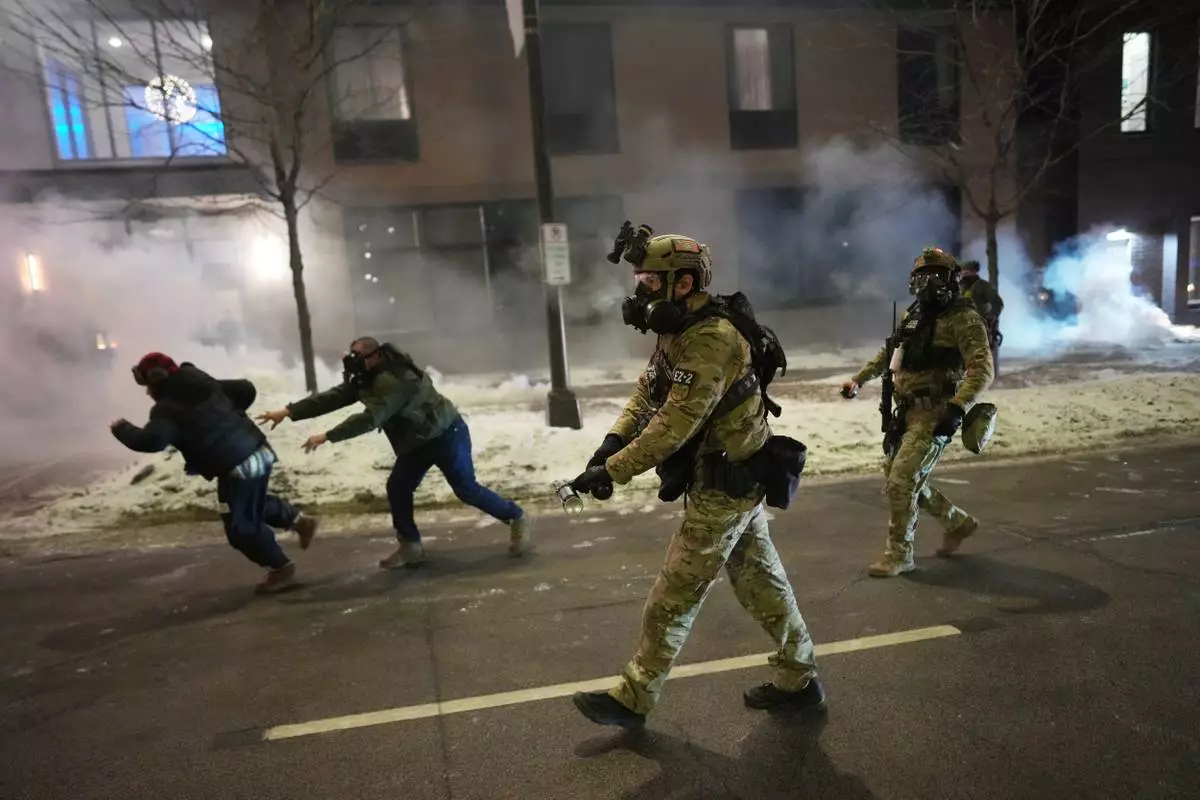
Federal agents try to clear demonstrators near a hotel, using tear gas during a noise demonstration protest in response to federal immigration enforcement operations in the city Sunday, Jan. 25, 2026, in Minneapolis. (AP Photo/Adam Gray)
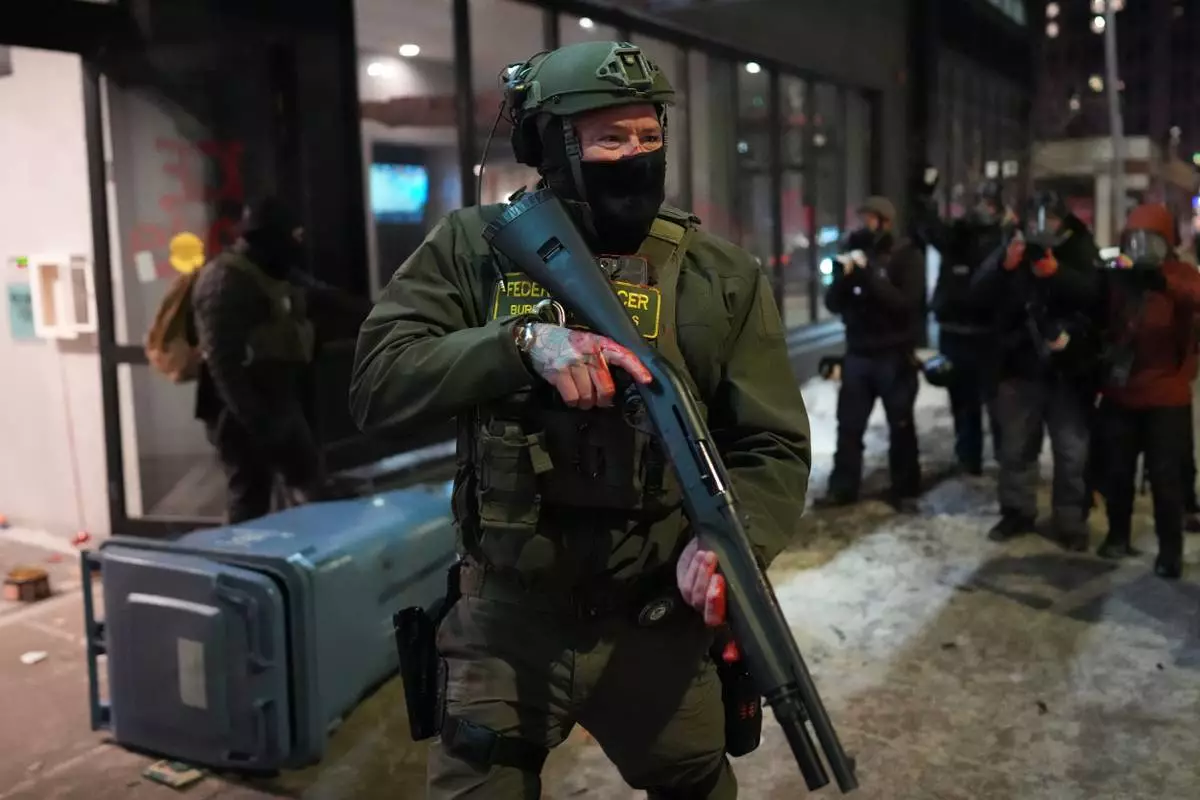
A federal agent stands guard near a hotel during a noise demonstration protest in response to federal immigration enforcement operations in the city Sunday, Jan. 25, 2026, in Minneapolis. (AP Photo/Adam Gray)
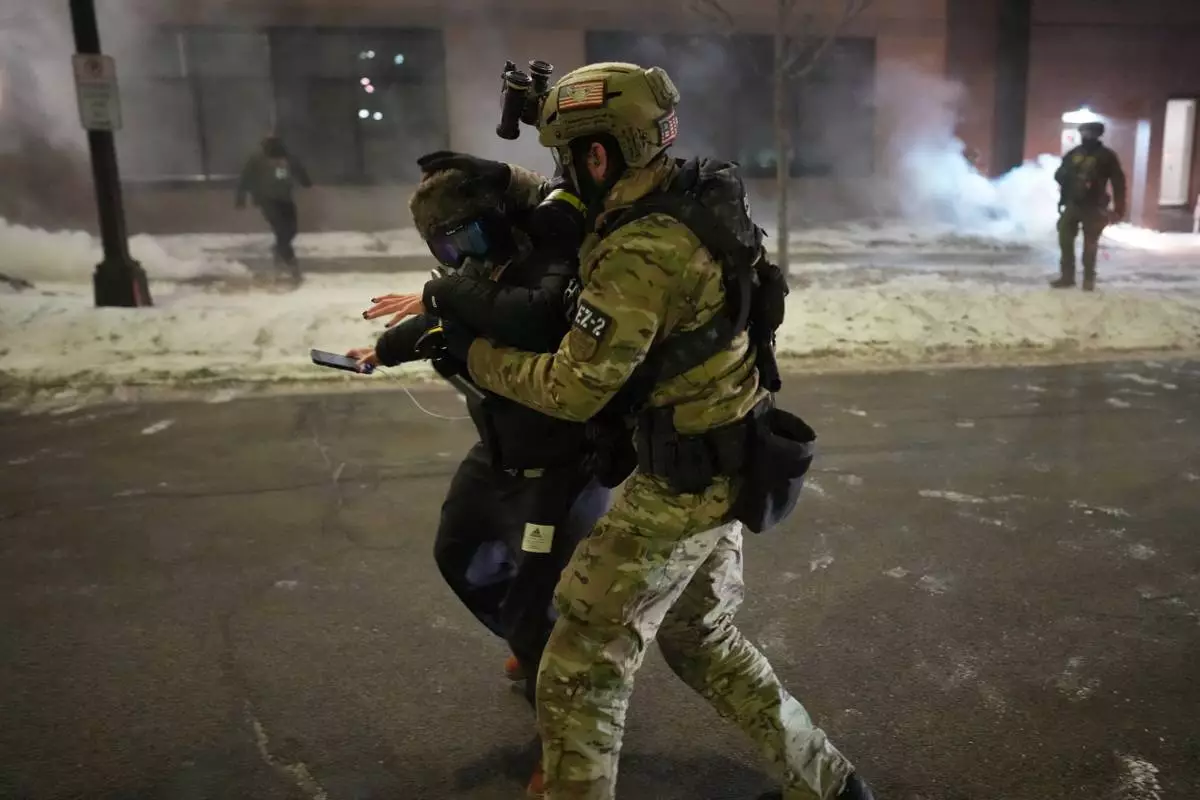
A federal agent holds a person as the agents try to clear the demonstrators near a hotel, using tear gas during a noise demonstration protest in response to federal immigration enforcement operations in the city Sunday, Jan. 25, 2026, in Minneapolis. (AP Photo/Adam Gray)
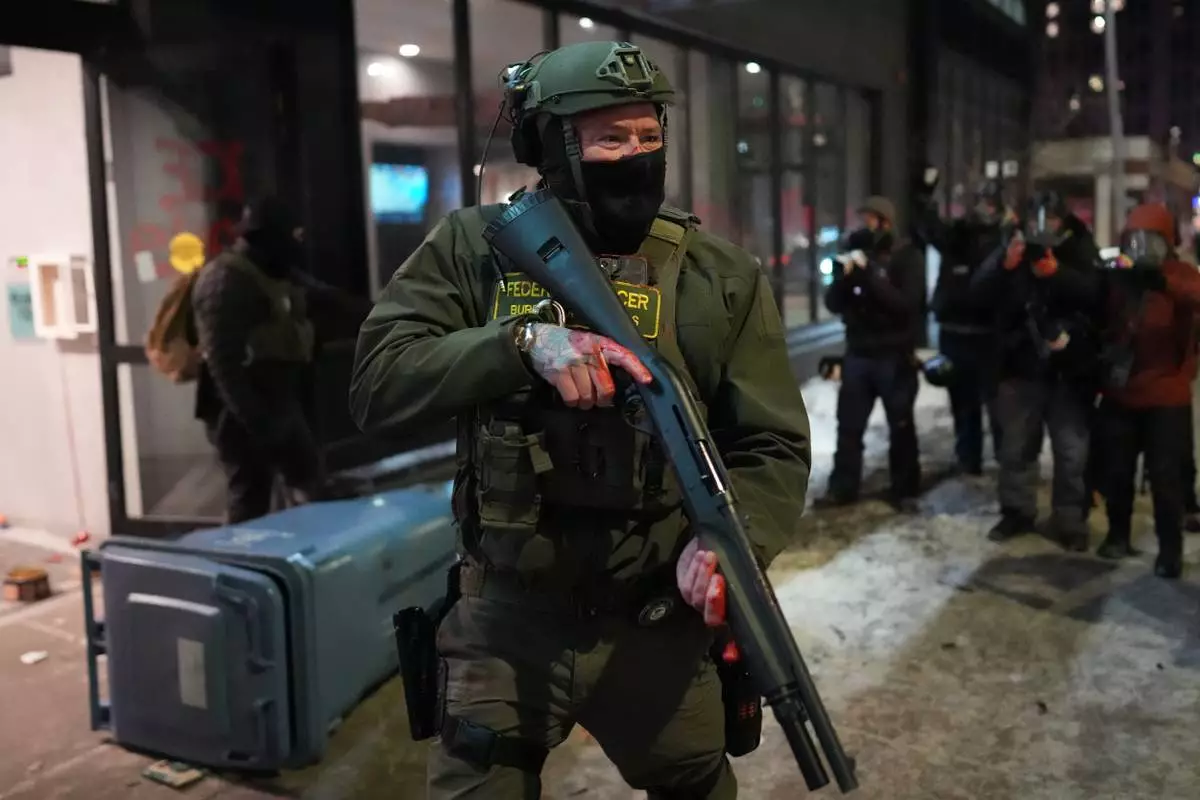
A federal agent stands guard near a hotel during a noise demonstration protest in response to federal immigration enforcement operations in the city Sunday, Jan. 25, 2026, in Minneapolis. (AP Photo/Adam Gray)