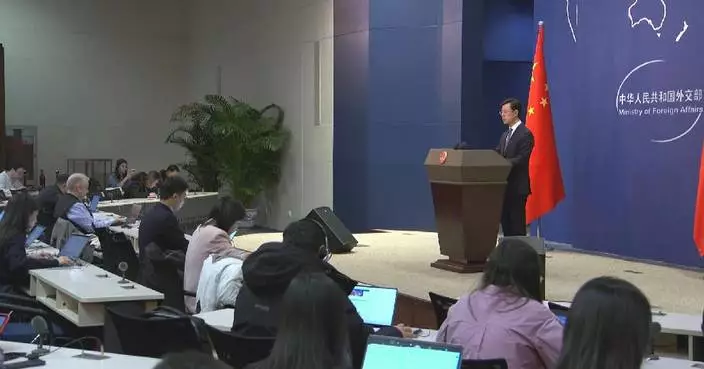
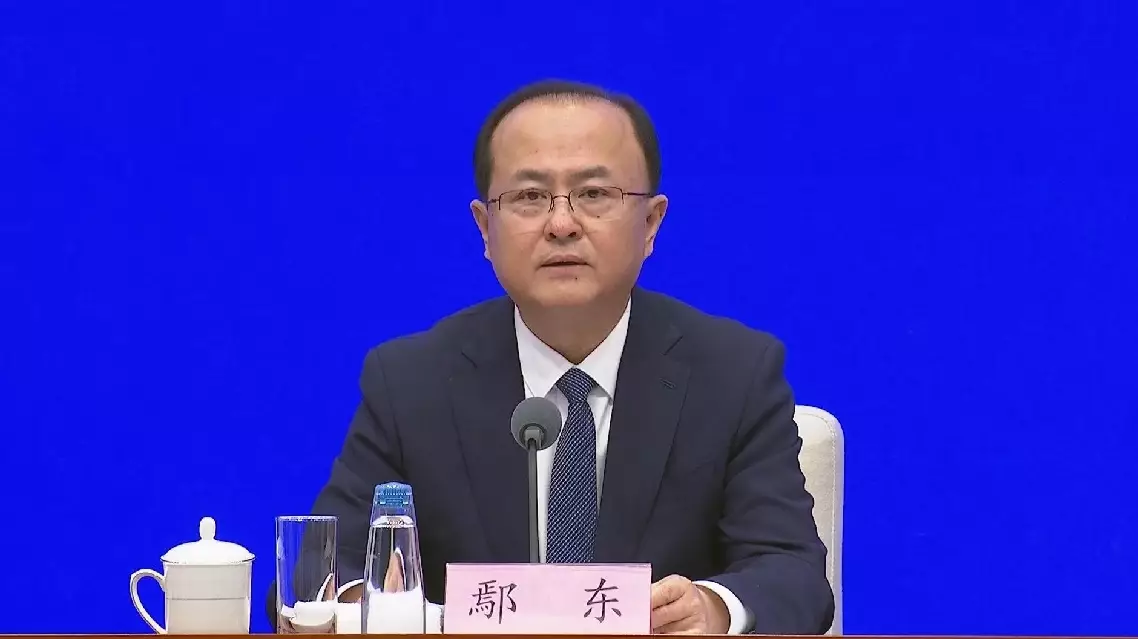
Efforts to boost China's consumption was effective in 2025, with total retail sales of consumer goods reaching 50.1 trillion yuan (about 7.18 trillion U.S. dollars) for the first time, said Yan Dong, vice minister of commerce, at a press conference on China's commerce work and performance in 2025 in Beijing on Tuesday.
"We adhered to closely combining the benefiting of people's livelihood with promoting consumption, and used both policy and campaigns as two main engines to build the 'Shopping in China' brand, and to continuously unleash the consumption potentials. The total retail sales of consumer goods exceeded 50 trillion yuan for the first time, reaching 50.1 trillion yuan, a growth of 3.7 percent compared to the previous year. Consumption contributed 52 percent to the economic growth, up five percentage points," Yan said. "In goods consumption, we expanded the scope and improved quality of the trade-in program for consumer goods, driving sales of related products like automobiles, home appliances, and mobile phones to 2.61 trillion yuan (about 374.27 billion U.S. dollars), benefiting 366 million purchases. In service consumption, we launched initiatives to upgrade services to benefit consumers, with service retail sales throughout the year increasing by 5.5 percent, and retail sales in services areas of culture and sports, leisure, tourism, consultation, leasing, and transportation maintaining double-digit growth. In innovative consumption scenarios, we conducted pilot projects for building an internationalized consumption environment and optimized the departure tax refund policy, with sales of tax-refunded goods nearly doubling," Yan said.
Efforts to boost consumption effective in 2025: official
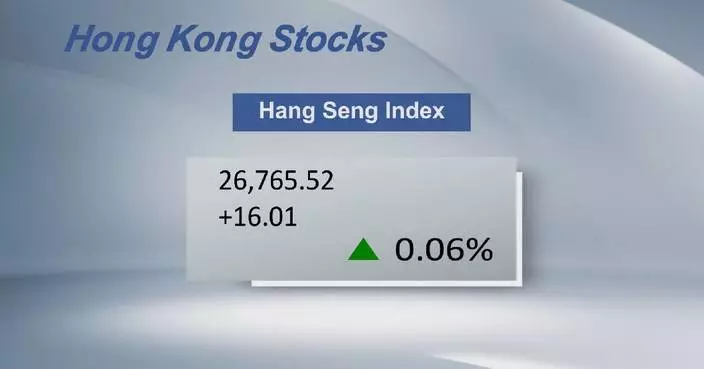
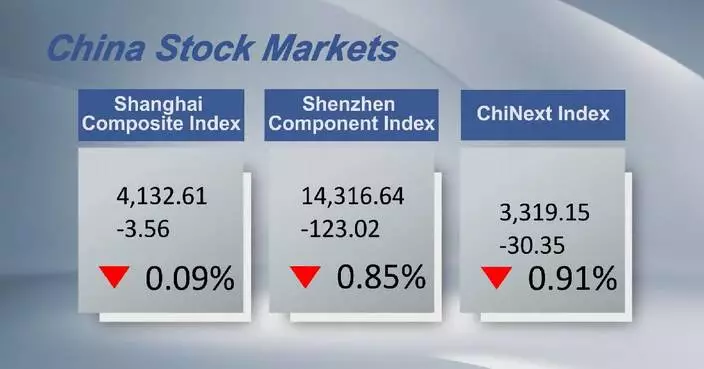
As China's stock market continues to rebound, international investors are increasingly recognizing the country's high-quality development prospects, announcing plans to maintain an overweight allocation to Chinese assets in 2026 and step up long-term investment, citing confidence in their innovation and sustained growth.
Global investors are shifting their focus from short-term valuation gains to the long-term growth potential of Chinese assets, as corporate transformation and industrial upgrading accelerate. The steady improvement in corporate fundamentals has become the core driver underpinning foreign investors' bullish outlook.
"In the past, markets mainly focused on relative valuation attractiveness. Now, more and more companies are proving themselves through earnings performance and cash flow. We see continuous improvements in Chinese firms' capabilities in research and development investment, product iteration, and global expansion. Innovation is no longer just about scaling up, but increasingly about efficiency and quality," said Wen Tianna, President of Hong Kong Boda Capital International.
The sustained innovation capacity of Chinese enterprises, coupled with targeted governmental policies, is further amplifying the global appeal of Chinese assets.
"For global investors, Chinese assets offer both high-quality earnings growth and strong macro policy support, making them a core component of global asset allocation," said Wang Xinjie, Chief Investment Strategist of Standard Chartered China Wealth Solutions Department.
Looking ahead to 2026, investment in the AI industrial chain has emerged as a broad consensus. Meanwhile, sectors such as new consumption are also becoming focal points, drawing increasing global attention to opportunities in China.
"Recently, our UBS Greater China Conference in Shanghai attracted more than 3,600 participants. Notably, the number of investors from the United States, Europe, the Middle East, and Africa rose by 32 percent year on year. The surge in Chinese innovation is creating valuable opportunities for global investors to position for high-quality growth," said Xu Bin, Head of Research from UBS Securities.

Foreign investors bullish on long-term growth potential of Chinese assets in 2026