NEW YORK (AP) — One man was discovered under a layer of snow on a park bench in Queens. Another was found just steps from a Manhattan hospital. Yet another was pronounced dead on the ground beneath an elevated train line in the Bronx.
Each is among a growing number of people — at least 10, as of Tuesday — who died after being exposed to the bitter cold that has persisted in New York City since late last Friday.
Their causes of death are still under investigation, but some showed signs of having succumbed to hypothermia. Officials said several victims were believed to have been living on the streets. At least six of the fatalities came early Saturday, as the temperature in the city fell to 9 degrees (minus 13 degrees Celsius).
With the frigid weather expected to continue, Mayor Zohran Mamdani said the city was adding additional homeless outreach workers, opening new warming centers and instructing hospitals to limit discharges “to ensure that people who have nowhere to go are kept indoors.”
But the rising death toll has also prompted questions about whether Mamdani’s nascent administration could have done more to protect the city’s most vulnerable residents ahead of the Arctic blast and the snowstorm that hit early Sunday.
One of the victims, a 52-year-old man living in Queens, was found Sunday morning with discharge papers in his pocket showing he had been released from Elmhurst Hospital, a city-run facility, on Friday, according to State Senator Jessica Ramos.
By the time of his release, the city had already activated its Code Blue protocols, a set of extreme weather policies that include precautions meant to ensure homeless patients are not released back onto the street.
It was not immediately clear if the man, who is originally from Ecuador, had been living outside at the time of his death. Inquiries to City Hall, the Department of Homeless Services and the city’s public hospital system were not returned.
The city has yet to release the names of any of those who died during the storm.
Studies have shown that around 15 people suffer from cold-related deaths in New York City each year. But homeless advocates said they could not remember another storm in recent memory that resulted in so many deaths outside in such a brief period.
“The fact that this many people have passed away shows the city needs to do a much better job of making people feel safe when they come inside,” said David Giffen, the executive director of the Coalition for the Homeless. “It’s not that most of the people on the streets are unaware of the shelter system, but that they’ve had experiences there that make them not want to return."
In the lead-up to the storm, city-contracted outreach teams fanned out across the five boroughs, attempting to coax residents to accept placements in shelters, transitional housing or even heated buses. Mamdani and his deputies have repeatedly urged New Yorkers to look out for those in need of help.
“Extreme weather is not a personal failure, but it is a public responsibility,” Mamdani said on Tuesday. “We are mobilizing every resource at our disposal to ensure that New Yorkers are brought indoors during this potentially lethal weather event.”
The city’s social services commissioner, Molly Wasow Park, said at least 200 people have voluntarily accepted shelter since the storm began. She said the city has also moved to involuntarily hospitalize a handful of people, including those who were wet, inappropriately dressed or “unable to acknowledge that there are real dangers.”
Ramos said the man discovered on the park bench was wearing only a thin jacket. His body appeared to be frozen when it was found by police under a layer of snow on Sunday morning.
“It’s devastating to know the government could have done more and didn’t,” she said. “There are real questions here that demand answers.”
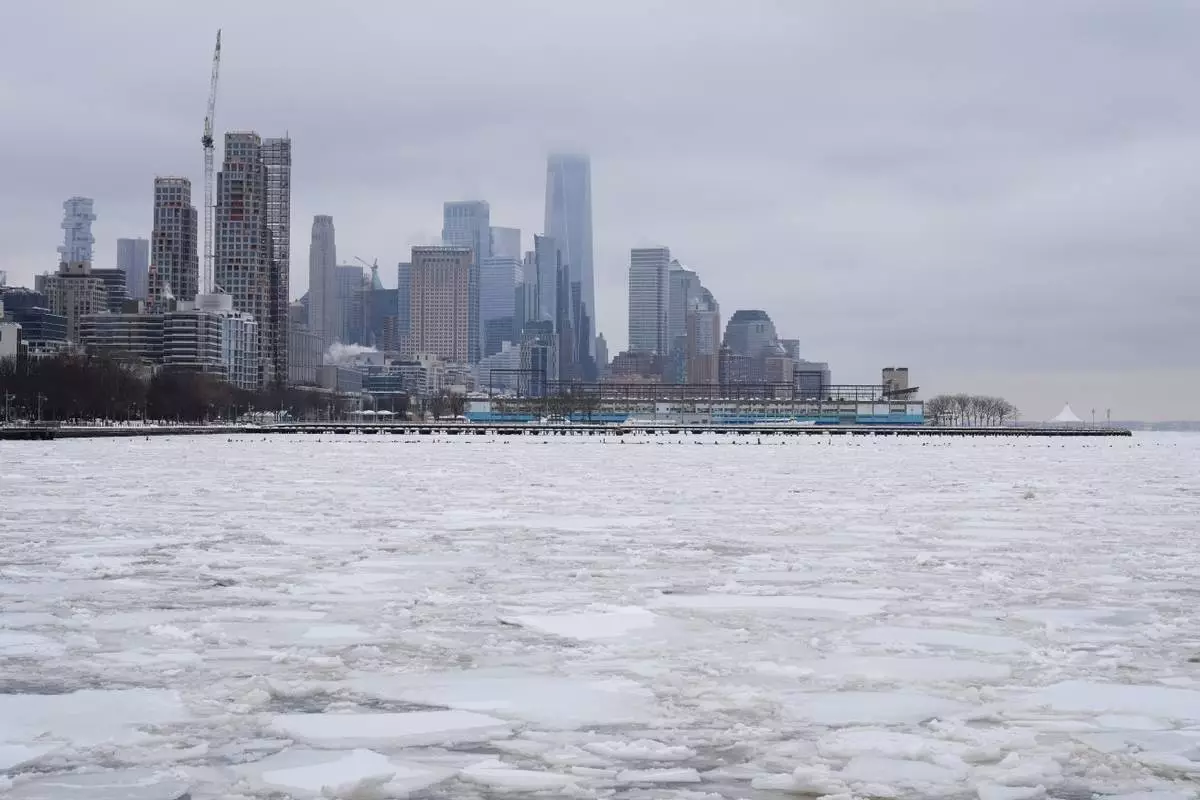
Clouds cover the top of One World Trade, top center, as ice crowds the Hudson River in New York, Monday, Jan. 26, 2026. (AP Photo/Seth Wenig)
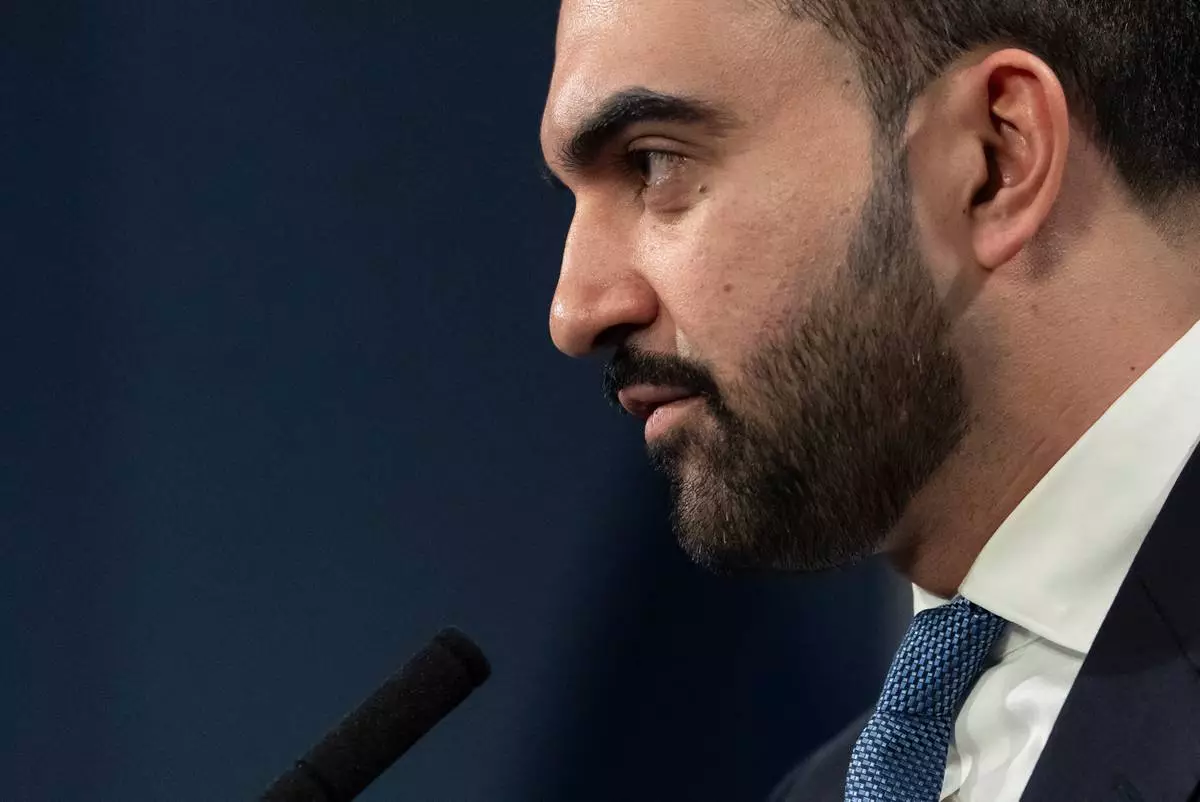
New York Mayor Zohran Mamdani speaks during a press conference, Tuesday, Jan. 27, 2026, in New York. (AP Photo/Yuki Iwamura)
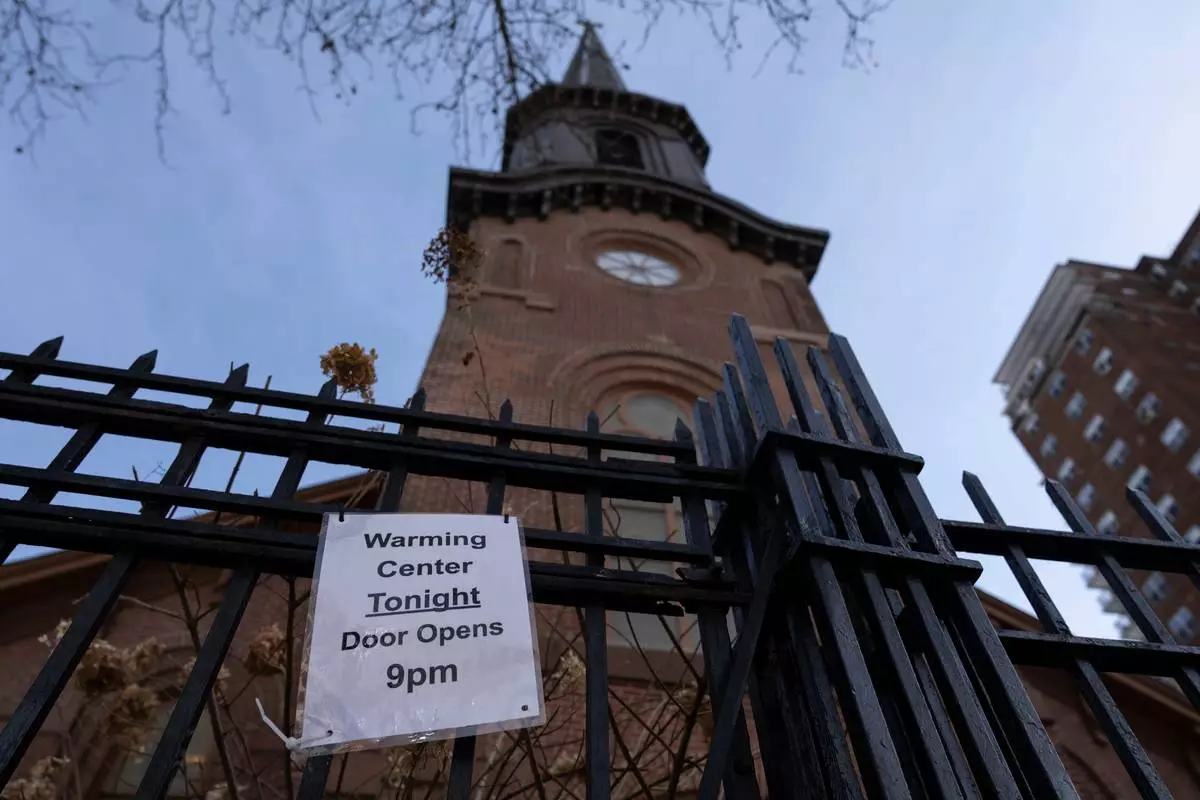
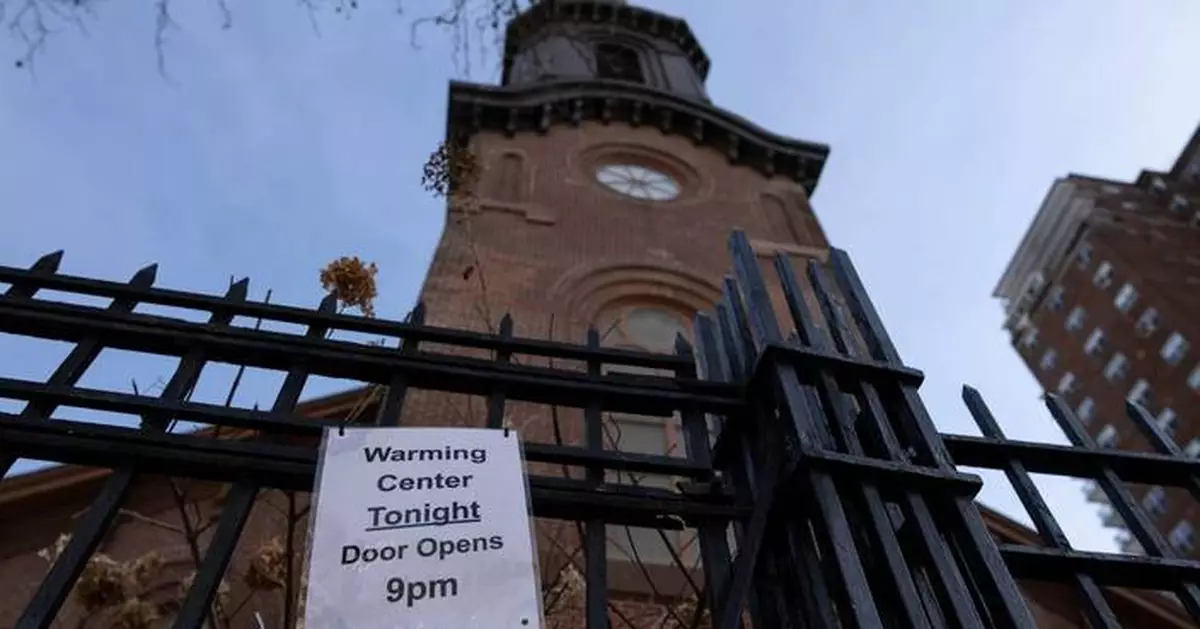
A sign showing the opening hour for warming center is displayed outside Holy Apostle Soup Kitchen, Tuesday, Jan. 27, 2026, in New York. (AP Photo/Yuki Iwamura)
WASHINGTON (AP) — Secretary of State Marco Rubio plans on Wednesday to warn that the Trump administration is ready to take new military action against Venezuela if the country’s interim leadership strays from U.S. expectations.
In prepared testimony for a hearing before the Senate Foreign Relations Committee, Rubio says the U.S. is not at war with Venezuela and that its interim leaders are cooperating, but he notes that the Trump administration would not rule out using additional force if needed following a raid to capture then-President Nicolás Maduro early this month.
“We are prepared to use force to ensure maximum cooperation if other methods fail," Rubio will say, according to his prepared opening statement released Tuesday by the State Department. "It is our hope that this will not prove necessary, but we will never shy away from our duty to the American people and our mission in this hemisphere.”
As he often is called to do, Rubio, a former Florida senator, will aim to sell one of President Donald Trump’s more contentious priorities to former colleagues in Congress. With the Republican administration’s foreign policy gyrating among the Western Hemisphere, Europe and the Middle East, Rubio also may be called to smooth alarm that has emerged in his own party lately about efforts like Trump’s demand to annex Greenland.
In the hearing focused on Venezuela, Rubio will defend Trump’s decisions to remove Maduro to face drug trafficking charges in the U.S., continue deadly military strikes on boats suspected of smuggling drugs and seize sanctioned tankers carrying Venezuelan oil, according to the prepared remarks. He will again reject allegations that Trump is violating the Constitution by taking such actions.
“There is no war against Venezuela, and we did not occupy a country,” he will say, according to the prepared remarks. “There are no U.S. troops on the ground. This was an operation to aid law enforcement.”
Maduro, who has pleaded not guilty to federal drug trafficking charges in a U.S. court, has defiantly declared himself “the president of my country” and protested his capture.
Congressional Democrats have condemned Trump's moves as exceeding the authority of the executive branch, while most Republicans have supported them as a legitimate exercise of presidential power.
Idaho Republican Sen. Jim Risch, the chairman of the committee, planned to open the hearing by lauding Trump and Rubio for making Americans safer with the military actions in and around Venezuela and saying they were legal.
“These actions were limited in scope, short in duration, and done to protect U.S. interests and citizens,” Risch will say, according to his prepared remarks released by the committee. “What President Trump has done in Venezuela is the definition of the president’s Article II constitutional authorities as commander-in-chief.”
New Hampshire Sen. Jeanne Shaheen, the top Democrat on the committee, was taking the opposite tack, questioning whether the operation to remove Maduro was worth it considering most of his former top aides and lieutenants are still running the country.
“The U.S. naval blockade around Venezuela and the raid have already cost American taxpayers hundreds of millions of dollars … and yet the Maduro regime is still in power,” she plans to say, according to her prepared opening statement.
The House narrowly defeated a war powers act resolution that would have directed Trump to remove U.S. troops from Venezuela. As Rubio will argue, the administration says there are no U.S. troops on the ground in the South American nation despite a large military buildup in the region.
Democrats had argued that the resolution was necessary after the U.S. raid to capture Maduro and because Trump has stated plans to control the country’s oil industry for years to come.
The pushback has begun in the courts, too, as the families of two Trinidadian nationals killed in a Trump administration boat strike filed what is thought to be the first wrongful-death case arising from the campaign. Three dozen strikes on boats in the Caribbean Sea and the eastern Pacific Ocean have killed at least 126 people since September.
While keeping pressure on those the Trump administration dubs “narcotraffickers” without providing evidence, U.S. officials also are working to normalize ties with Venezuelan acting President Delcy Rodríguez. Nonetheless, Rubio will make clear in his testimony that she has little choice but to comply with Trump's demands.
"Rodríguez is well aware of the fate of Maduro; it is our belief that her own self-interest aligns with advancing our key objectives,” Rubio will say, noting that they include opening Venezuela’s energy sector to U.S. companies, providing preferential access to production, using oil revenue to purchase American goods, and ending subsidized oil exports to Cuba.
Rodríguez, who previously served as Maduro's vice president, on Tuesday said her government and the Trump administration “have established respectful and courteous channels of communication.” During televised remarks, Rodríguez said she is working with Trump and Rubio to set “a working agenda.”
So far, she has appeared to acquiesce to Trump’s demands and to release prisoners jailed by the government under Maduro and his predecessor, Hugo Chávez. On Monday, the head of a Venezuelan human rights group said 266 political prisoners had been freed since Jan. 8.
Trump had praised the releases, saying on social media that he would “like to thank the leadership of Venezuela for agreeing to this powerful humanitarian gesture!”
In a key step to the restoration of diplomatic relations between the two countries, the State Department notified Congress just this week that it intends to begin sending additional diplomatic and support personnel to Caracas to prepare for the possible reopening of the U.S. Embassy there.
It was the first formal notice of the administration’s intent to reopen the embassy, which shuttered in 2019. Fully normalizing ties, however, would require the U.S. to revoke its decision recognizing the Venezuelan parliament elected in 2015 as the country’s legitimate government.
Rubio also planned to meet Venezuelan opposition leader María Corina Machado later Wednesday at the State Department.
Machado went into hiding after Maduro was declared the winner of the 2024 presidential election despite ample credible evidence to the contrary. She reemerged in December to pick up her Nobel Peace Prize in Norway. After Maduro was ousted, she traveled to Washington. In a meeting with Trump, she presented him with her Peace Prize medal, an extraordinary gesture given that Trump has effectively sidelined her.
Associated Press writer Regina Garcia Cano in Caracas, Venezuela, contributed to this report.
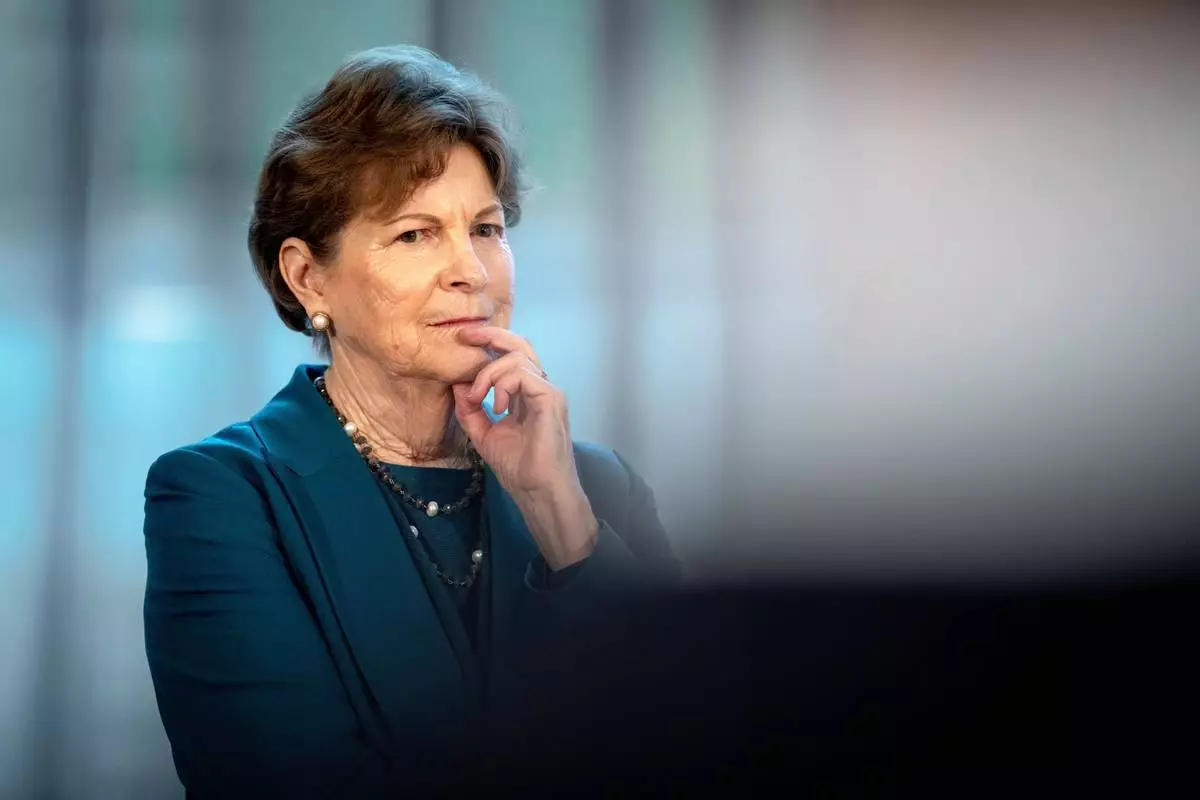
Sen. Jeanne Shaheen, D-N.H., looks on during a press conference with the American delegation, consisting of senators and members of the House of Representatives, in Copenhagen, Denmark, Saturday, Jan. 17, 2026. (Ida Marie Odgaard/Ritzau Scanpix via AP)
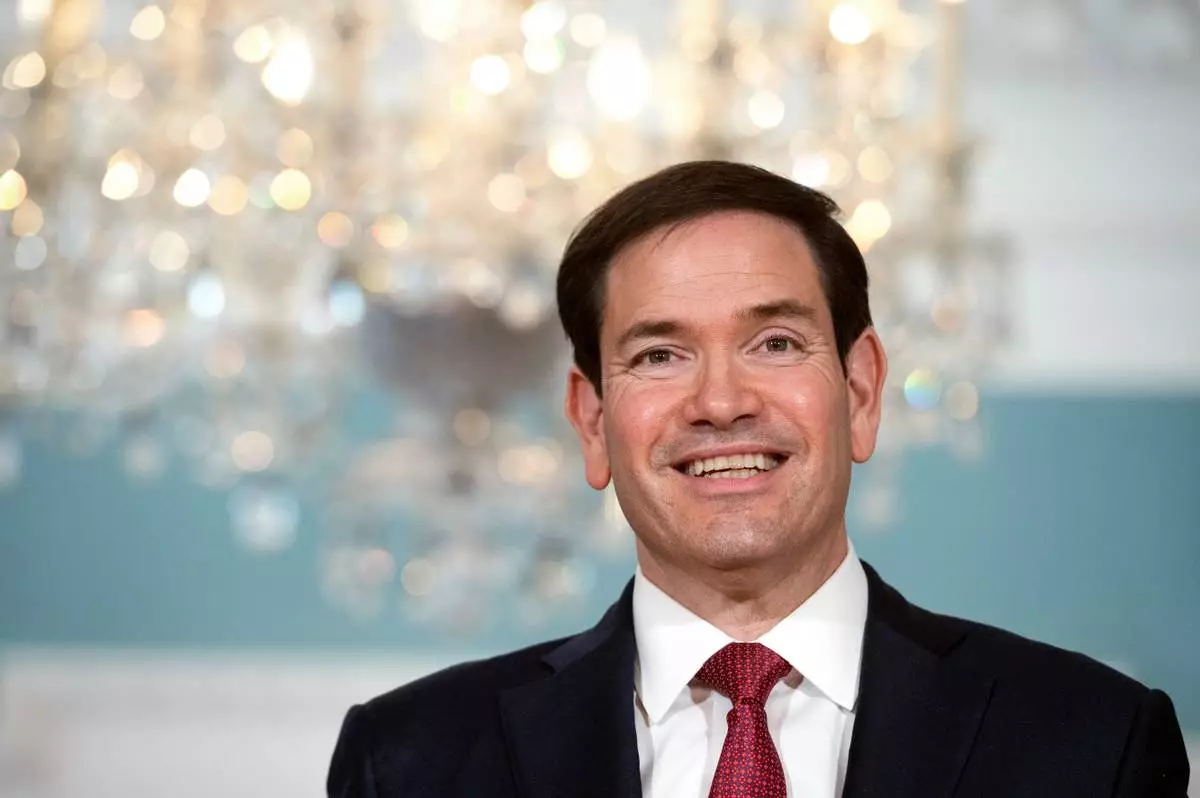
FILE - Secretary of State Marco Rubio speaks to reporters while meeting with Armenian Foreign Minister Ararat Mirzoyan at the State Department in Washington, Jan. 13, 2026. (AP Photo/Cliff Owen, File)