VALLETTA, Malta--(BUSINESS WIRE)--Jan 28, 2026--
OKX, a leading global cryptocurrency platform and onchain technology company, today announced the European launch of the OKX Card, designed to knock down barriers to everyday crypto use.
This press release features multimedia. View the full release here: https://www.businesswire.com/news/home/20260128534008/en/
While most crypto cards require users to manually convert assets, preload balances, or absorb hidden fees before paying, the OKX Card enables direct stablecoin payments anywhere in the world Mastercard is accepted - with zero fees and instant crypto rewards of up to 20% on eligible purchases.
Built for modern Europeans who want to use crypto as everyday money without giving up control, OKX Card removes the friction traditionally associated with crypto payments. Users can tap to pay directly while earning instant crypto rewards.
OKX Card is designed around onchain self-custody and instant execution. Stablecoins remain in the user’s wallet until the exact moment of purchase, converting seamlessly at checkout to connect crypto with real world purchases at any retailer that accepts Mastercard worldwide.
Key benefits of OKX Card include:
"With OKX Card, we’re making it simple for anyone in Europe to use crypto for real-world purchases - instantly, securely, and transparently," said Erald Ghoos, CEO of OKX Europe. "Crypto was originally conceived as a means of payment and with OKX Card our users can turn this vision into reality. We are making stablecoins practical and accessible for everyday finance for everyone, powered by one of the world’s most trusted digital asset platforms."
"Stablecoins bring more choice to users, and by partnering with OKX, Mastercard is helping bring them into the financial mainstream with trust, scale, and utility,” said Christian Rau, Senior Vice President, Global Digital Commercialization. “Expanding the OKX card to Europeans is a natural next step."
OKX Card is issued through a licensed European payments partner and operates within the European Economic Area under strict AML and KYC standards. OKX continues to advance its own payments licensing as part of its long-term commitment to compliant, regulated crypto services across Europe.
The launch of OKX Card marks a major step in OKX’s broader strategy to bring crypto into everyday finance — setting the stage for premium card tiers, expanded rewards, merchant partnerships, and Web3 commerce integrations across the region.
About OKX
Trusted by more than 100 million customers around the globe, OKX is a technology company building a decentralized future that makes the world more tradable, transparent and connected. We're known for being one of the fastest and most reliable crypto apps in the world, and have processed trillions of dollars in transactions.
We have key regional offices, including headquarters in San José, California, for the Americas and in Dubai for the Middle East. We also have offices in São Paulo, New York, Hong Kong, Singapore, the Republic of Türkiye, Australia and Europe. Over the past several years, we've built one of the world's most comprehensive regulatory compliant, licensed crypto companies. We hold licenses in the United States, the UAE, EEA, Singapore and Australia, as well as in other markets.
We're steadfastly committed to transparency and security and publish Proof of Reserves reports on a monthly basis. To learn more about OKX, download our app or visit: okx.com.

Leading global cryptocurrency exchange OKX launches OKX Card in Europe, enabling stablecoin payments anywhere Mastercard is accepted.
The Trump administration's indictment of former Cuban President Raúl Castro in the 1996 downing of civilian planes flown by Miami-based exiles is escalating pressure on the island’s socialist government.
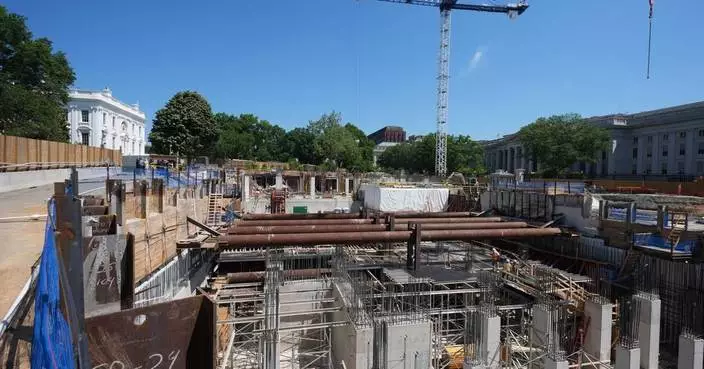
Meanwhile, Senate Republicans are expected to abandon a proposal for $1 billion in security money for the White House complex and Trump’s ballroom on Thursday. And Trump's plan to build a triumphal arch in Washington is getting a second look from the U.S. Commission of Fine Arts, a federal agency that suggested changes before it approved the concept last month.
The Latest:
House and Senate Democrats gathered on the Capitol steps in opposition to Republicans’ funding bill for immigration enforcement.
Democrats are trying to draw a sharp contrast with the upcoming votes by highlighting how the White House has proposed including $1 billion for security for the White House complex and President Donald Trump’s ballroom. Republicans are abandoning that proposal, but Democrats said Congress should be focused instead on making life affordable for everyday Americans.
“Ballroom Republicans are not working for you, they are busy fighting for Trump,” said Senate Democratic leader Chuck Schumer. “The American people are watching and in November, they will be watching.”
House Democratic leader Hakeem Jeffries, for his part, said “immigration enforcement in this country should be fair. It should be just, and it should be humane.”
▶ Read more
Cuba is accusing the Trump administration of hypocrisy for indicting former President Raul Castro in the downing of civilian planes near its coast 30 years ago, noting that the U.S. president is responsible for many more killings of civilians in international waters this year.
“It is highly cynical that this accusation is made by the same government that has murdered nearly 200 people and destroyed 57 vessels in international waters of the Caribbean and the Pacific, far from the territory of the United States,” the Cuban government response said, adding that the killings “qualify as extrajudicial executions, in accordance with International Law, and murders, according to US laws.”
Trump has justified the attacks as necessary to stem the flow of drugs, while offering little evidence that “narcoterrorists” are in the boats.
The Pentagon inspector general announced a review of whether the attacks on alleged drug-smuggling boats followed an established targeting framework, but said it would not probe the legality of the strikes, which have drawn intense scrutiny.
▶ Read more:
The Trump administration is set to loosen a federal rule that requires grocery stores and air-conditioning companies to reduce greenhouse gases used in cooling equipment. The head of the Environmental Protection Agency, Lee Zeldin, said American families will see lower grocery prices as a result. Trump is scheduled to be joined by executives from Kroger, Piggly Wiggly and other grocery chains for Thursday’s announcement.
Just how much or how quickly loosening the refrigerant rule might ease grocery prices is unclear. The 2020 law reflected a broad bipartisan consensus on the need to quickly phase out domestic use of hydrofluorocarbons, or HFCs, that are thousands of times more potent than carbon dioxide and are considered a major driver of global warming.
▶ Read more:
Trump has been escalating talk about regime change in Cuba ever since he sent the U.S. military to capture Venezuelan President Nicolás Maduro in January. Now a federal indictment of former Cuban leader Raúl Castro is raising questions about whether Trump might try something similar in Havana.
Here’s a timeline of U.S. relations with the communist-run island, including repeated meetings with Raúl Guillermo Rodríguez Castro, the grandson of Castro known as “Raúlito.”
“China always firmly opposes illegal unilateral sanctions that lack a basis in international law and have no authorization from the United Nations Security Council and the abuse of judicial measures, and we also oppose external forces exerting pressure on Cuba under any pretext,” Foreign Ministry spokesperson Guo Jiankun said Thursday.
The U.S. should “stop wielding the stick of sanctions and judicial measures” against the country, Guo added. “China firmly supports Cuba in safeguarding its national sovereignty and national dignity and opposes external interference.”
Trump’s plan to build a triumphal arch in Washington is getting a second look from a federal agency that suggested changes before it approved the concept last month.
The proposed 250-foot (76 meter) arch is one of several projects the Republican president is pursuing alongside a White House ballroom to leave his imprint on Washington. Critics of the project, including an overwhelming number of people who submitted public comment in April, said the arch would be taller than any other monument in the capital city and dominate the skyline.
He has said some of his other projects, such as adding a blue coating to the interior of the Lincoln Memorial Reflecting Pool, will beautify the city in time for July 4 celebrations of America’s 250th birthday.
The U.S. Commission of Fine Arts, whose members were appointed by Trump, approved the concept for the arch at its monthly meeting in April. Commissioners are set to consider and possibly vote on updated plans when they meet again on Thursday.
▶ Read more
The more than a dozen young Republicans who gathered with beers and brightly colored cocktails at a bar called dEcORa in Kentucky this week were picking apart the presidential administration they welcomed with high hopes last year.
By now, their enthusiasm for Trump had curdled into frustration. What poured out at the bar was a sense that the Republican establishment — which they initially applauded Trump for disrupting, but which some now see him sustaining — had forsaken them.
That festering feeling has widened a generational gap between younger and older conservatives as the party slowly begins to consider a future without Trump in charge.
The Republican primary defeat of Rep. Thomas Massie — who had earned a younger and anti-establishment following while feuding with Trump — cost them one of their strongest allies in Congress.
▶ Read more
Senate Republican leaders are expected to abandon a proposal for $1 billion in security money for the White House complex and Trump’s ballroom on Thursday after members of their own party questioned the timing and the lack of detail in the Secret Service request.
Pressured by the White House, Republicans have tried to add the money to a roughly $70 billion bill to restore funding to U.S. Immigration and Customs Enforcement and the Border Patrol. But the security proposal met with backlash from some GOP lawmakers who are questioning the cost and how the taxpayer dollars would be used.
The bill’s text has not yet been released, but the Senate hopes to pass it this week and send it to the House before leaving for a weeklong Memorial Day recess.
Sen. Thom Tillis, R-N.C., said the effort to add the security package to the bill was a “bad idea” and he does not think there is enough backing to pass it, even if the cost were reduced.
▶ Read more
Federal prosecutors on Wednesday announced criminal charges against former Cuban President Raúl Castro in the 1996 downing of civilian planes flown by Miami-based exiles as the Trump administration escalated pressure on the island’s socialist government.
The indictment accuses Castro of ordering the shootdown of two small planes operated by the exile group Brothers to the Rescue. Castro, who turns 95 next month, was Cuba’s defense minister at the time. The charges, which were secretly filed by a grand jury in April, included murder and destruction of an airplane. Five Cuban military pilots were also charged.
Asked to what lengths American authorities would go to bring Castro to face charges in the U.S., acting Attorney General Todd Blanche said: “There was a warrant issued for his arrest. So we expect that he will show up here, by his own will or by another way.”
The charges pose a real threat, observers said, following the capture by U.S. forces in January of former Venezuelan President Nicolás Maduro to face drug charges in New York.
▶ Read more
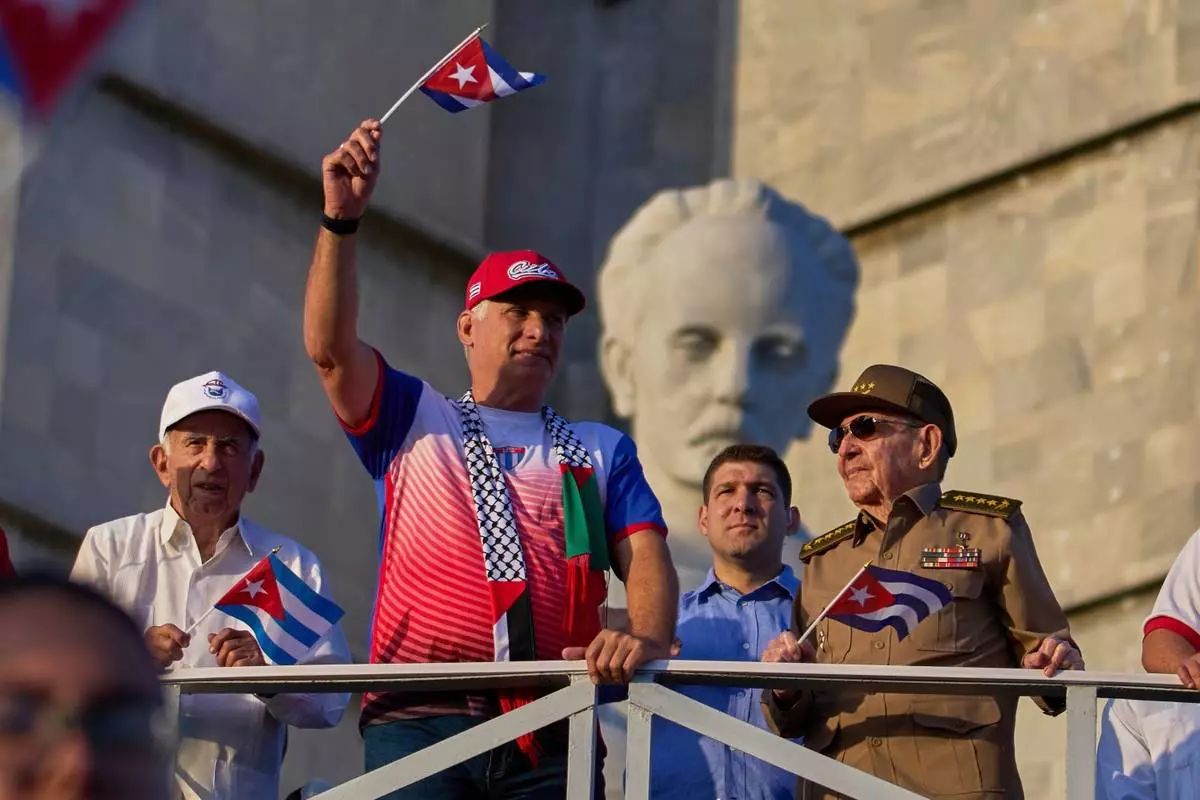
FILE - Raul Castro, right, watches the May Day parade accompanied by Cuba's President Miguel Diaz-Canel, second left, and Castro's grandson, Raul Guillermo Rodriguez Castro, center, at Revolution Square in Havana, May 1, 2025. (AP Photo/Ramon Espinosa, File)
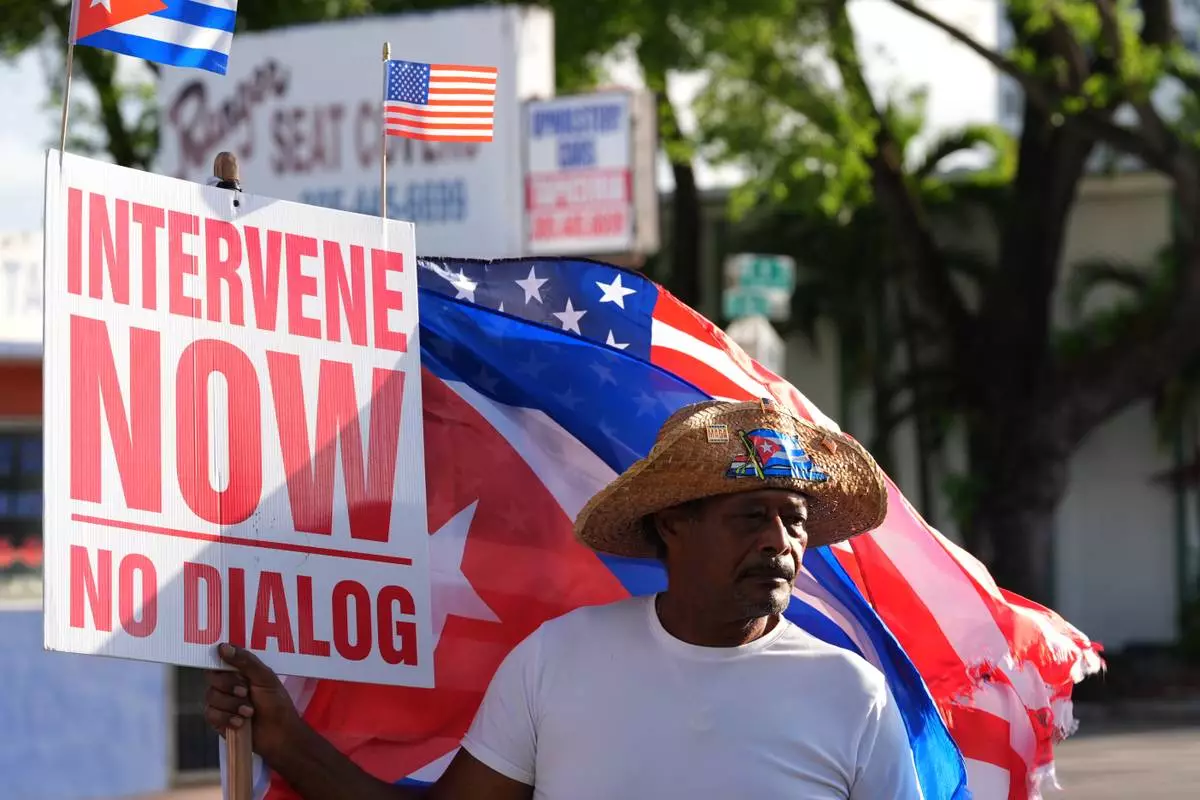
Santiago Ferran holds a sign calling for American intervention in Cuba, as a small group of Cubans turned out to wave flags and hold signs hours after federal prosecutors announced charges against Castro in the 1996 downing of civilian planes operated by Miami-based exiles, Wednesday, May 20, 2026, in Miami. (AP Photo/Rebecca Blackwell)

FILE - A marcher holds a framed composite image of Fidel Castro, Raul Castro and Cuba's President Miguel Diaz-Canel, during the May Day parade at Revolution Square in Havana, May 1, 2025. (AP Photo/Ramon Espinosa, File)