As Washington pursues an increasingly confrontational foreign policy, partners from Europe and beyond are seen to be diversifying their economic ties and hedging against geopolitical uncertainty, with China emerging as a key focal point for engagement, according a U.S.-based scholar.
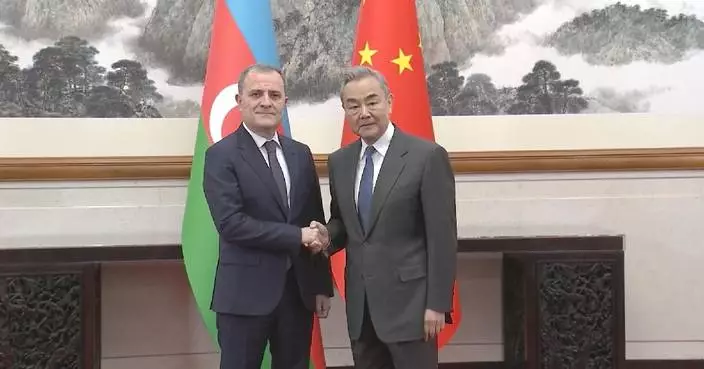
A wave of high-level visits to Beijing by leaders from traditional U.S. allies highlights growing transatlantic rifts.
This trend is driven by a pragmatic need to explore new opportunities, and China, with its stable foreign and trade policies, is an ideal destination, Klaus Larres, a distinguished professor of history and international affairs at the University of North Carolina at Chapel Hill, told China Global Television Network (CGTN) in an interview on Tuesday.
"Here, they are indeed looking around. They are diversifying their economic and trade relations. And you rightly said a number of European heads of state and heads of government are coming to China," said Larres.
He pointed to Germany's economic situation as a compelling example.
"The Germans, for example, at the moment have a very weak economy. They are losing 10,000 manufacturing jobs per month. And their exports of luxury limousines to China have dropped by over 40 percent. And for the first time in years, the Germans are running actually a trade deficit with China. So when Chancellor [Friedrich] Merz coming to China later in February, he will talk about these problems and he will hope that he and China can actually agree on some sort of compromise," he said.
The scholar also discussed recent U.S. rhetoric concerning Greenland, which has caused a significant diplomatic rift between the United States and Europe. He believes a potential path forward for Europe lies in greater unity.
"In the Greenland case, we noticed that Europeans got to act together. So that really shows that if the transatlantic alliance, if the Europeans get to act together and a little stronger and stand up to [Donald] Trump, they can actually succeed. And I think that probably is a recipe for the future," said Larres.

U.S. allies deepen ties with China amid transatlantic strains: scholar