HAVANA (AP) — Caribbean correspondent Dánica Coto returned to Cuba in late January, more than three years after her last visit to the island.
The landscape and lives in Cuba are now very different, and more changes are anticipated since the fallout of the U.S. attack on Venezuela, Cuba’s strongest ally, has yet to be fully felt.
This is an interview of Coto with Associated Press editor Laura Martínez.
I’m struck by the amount of garbage piling up in corners at popular tourist spots, and by the occasional Cuban wearing neatly pressed clothes rummaging through it. I observed one clean-cut man step into a pile of soggy rubbish, grab a small plastic container, fish for its lid and walk away with his find.
Fuel is hard to come by, and equipment including tractors and garbage trucks are breaking down, with crews unable to find the necessary spare parts.
I’ve also noticed that Havana’s beautiful architecture is crumbling more than ever. Once bright facades ranging from baroque to art nouveau are slowly being reduced to rubble in some areas.
At nighttime, the skyline is now largely black, with chronic outages, programmed and non-programmed, sinking the capital and beyond into darkness.
Alternatively, I was pleasantly surprised to see a handful of dog owners in Havana. I saw Cubans waking up early to walk well-cared for dogs, with the smaller ones sporting T-shirts to protect them from a cold snap in late January.
It’s the smallest things that reveal the most. The upgraded hotel where I’m staying cuts flimsy napkins in half to save resources and occasionally offers very small dabs of butter when it’s available.
Meanwhile, it’s not uncommon for office buildings in Havana to lack toilet paper and for water to be cut by mid-afternoon.
A growing number of Cubans are turning to firewood and charcoal so they can cook, because not only are power outages common, but natural gas is not always available, and many cannot afford solar panels.
Fuel and natural gas are so scarce sometimes that a group of people living in the city have set up a makeshift fireplace outside their building to cook food.
I’ve also seen people scramble to rearrange schedules so they can spend several hours in line to buy gasoline. I’ve also observed people crowded outside banks, with Cubans telling me that there’s a cash deficit.
Cubans also have told me that they’ve seen an increase in disruption in communications, making it harder to call people or browse online.
They’re very much in self-sufficient mode. Cubans have a strong spirit, and many lived through the so-called Special Period, an economic depression that struck in the 1990s after the collapse of the Soviet Union. That period eased when Venezuela, under former President Hugo Chávez, became an ally.
Even before the U.S. attacked Venezuela, Cuba was struggling with severe blackouts, soaring prices and scarcity of basic goods. Experts say that a disruption in oil shipments from Venezuela and now Mexico could unleash a potentially catastrophic crisis, especially since U.S. President Donald Trump signed an executive order Thursday that would impose a tariff on any goods from countries that sell or provide oil to Cuba.
Overall, many Cubans I’ve interviewed have shrugged off what could be impending doom, with experts saying that the Trump administration aims to spark a popular uprising in hopes that a new government will be established. But Cubans have said they will not be manipulated by outside forces. Meanwhile, some are preparing even though they doubt an invasion is looming. Those who can afford it are installing solar panels, while others are growing their own produce.
It’s hard to say. The U.S. government is stepping up its rhetoric, with Trump asserting that Cuba is failing while U.S. Deputy Secretary of State Christopher Landau recently claimed that the “Castro regime is tottering…after 67 years of a failed revolution.”
U.S. Secretary of State Marco Rubio, the son of Cuban immigrants, has said that the U.S. government seeks “the opportunity for a change in dynamic. That’s a country that’s been backward. It has no functional economy.”
Under Trump, the government once again designated Cuba as a state sponsor of terrorism.
Meanwhile, the Cuban government has not budged or changed its defiant speech. Cubans are going about their business as they decry the U.S. embargo and try to find ways to subsist.
The slogan “Patria o muerte, venceremos!” (Homeland or death, we will overcome!) still rings clear in Cuba.
Follow AP’s coverage of Latin America and the Caribbean at https://apnews.com/hub/latin-america
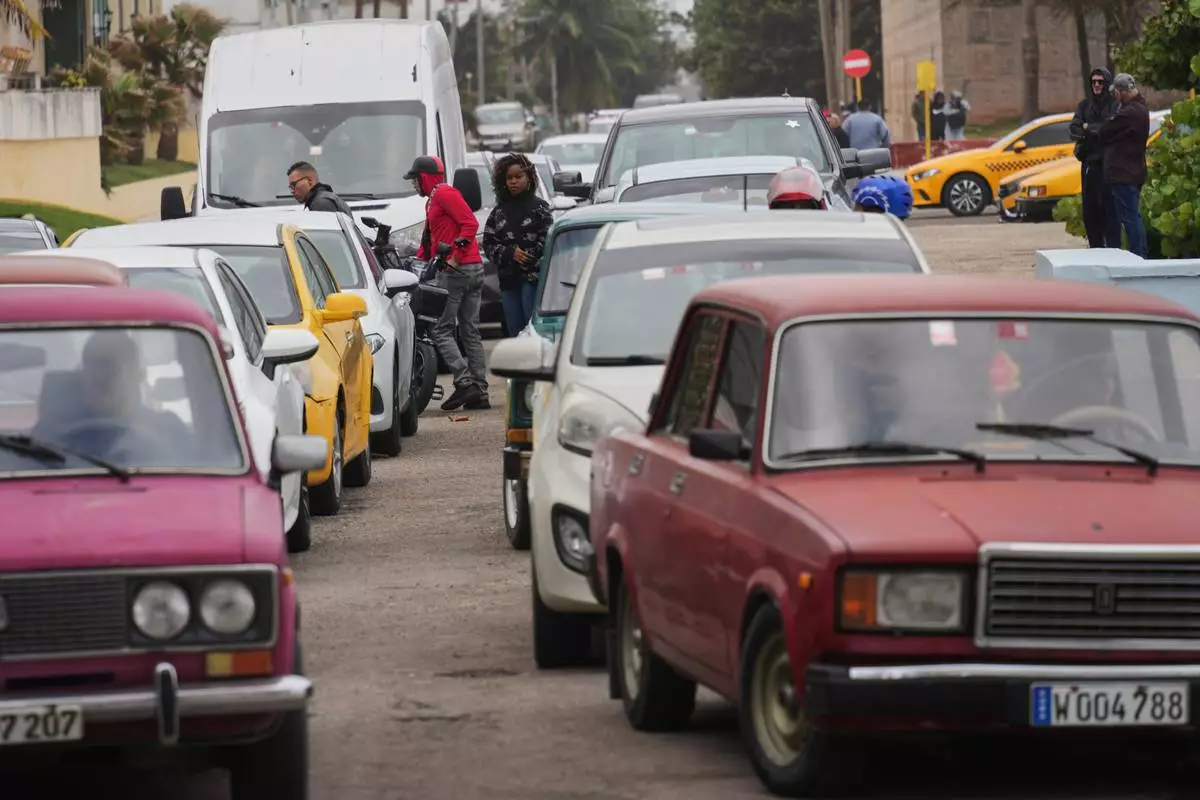
Drivers wait in line to fill up at a gas station in Havana, Cuba, Tuesday, Jan. 27, 2026. (AP Photo/Ramon Espinosa)
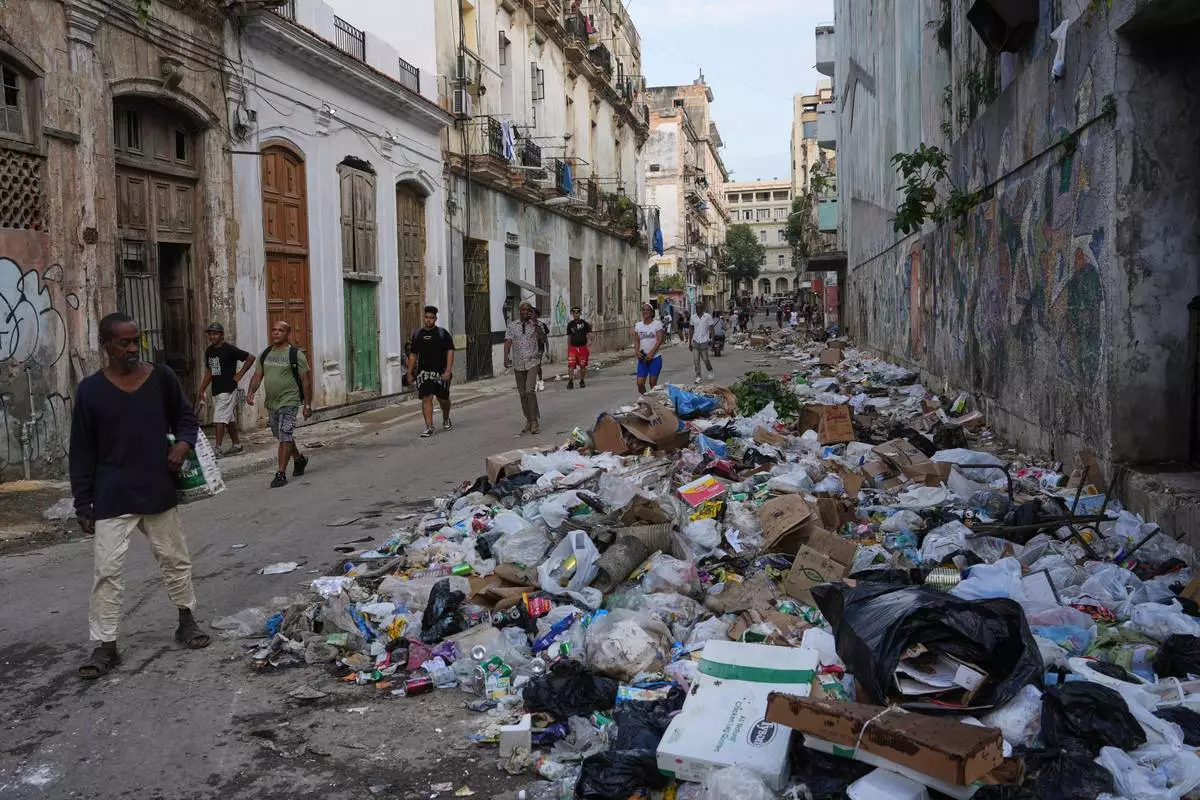
People walk next to trash on a street in Havana, Monday, Jan. 26, 2026. (AP Photo/Ramon Espinosa)
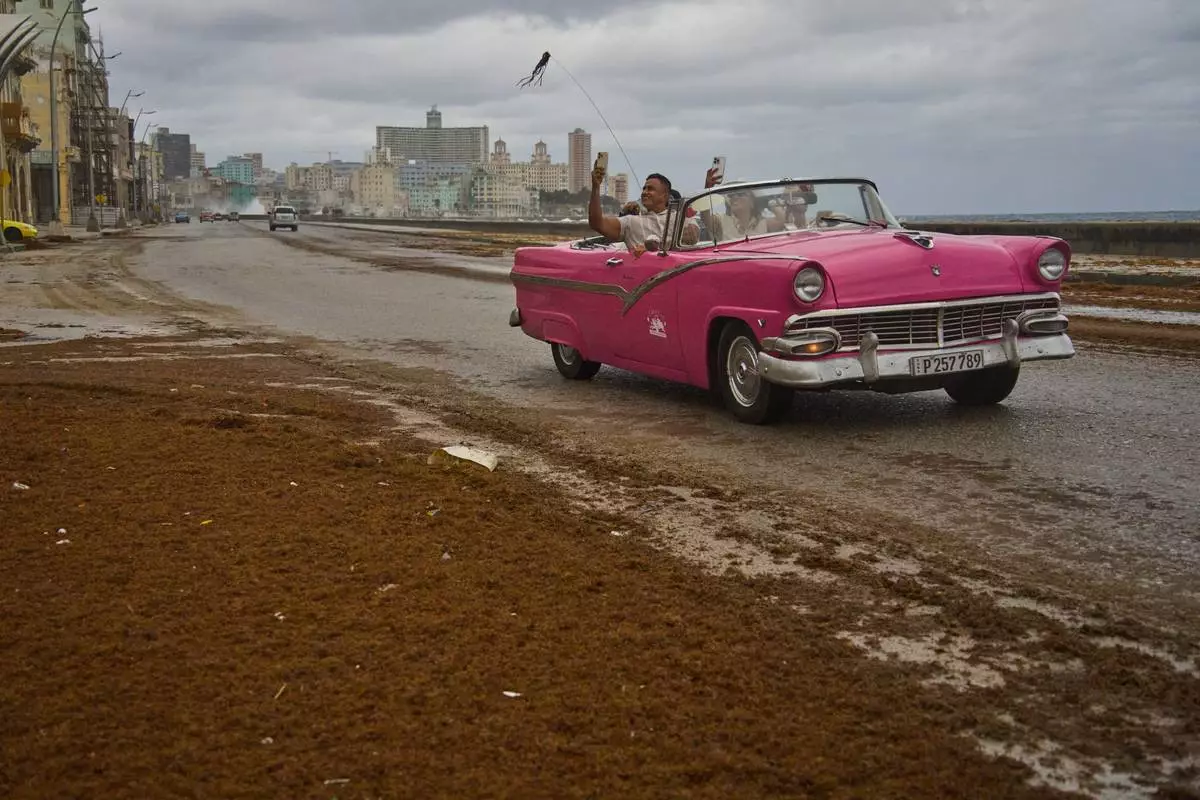
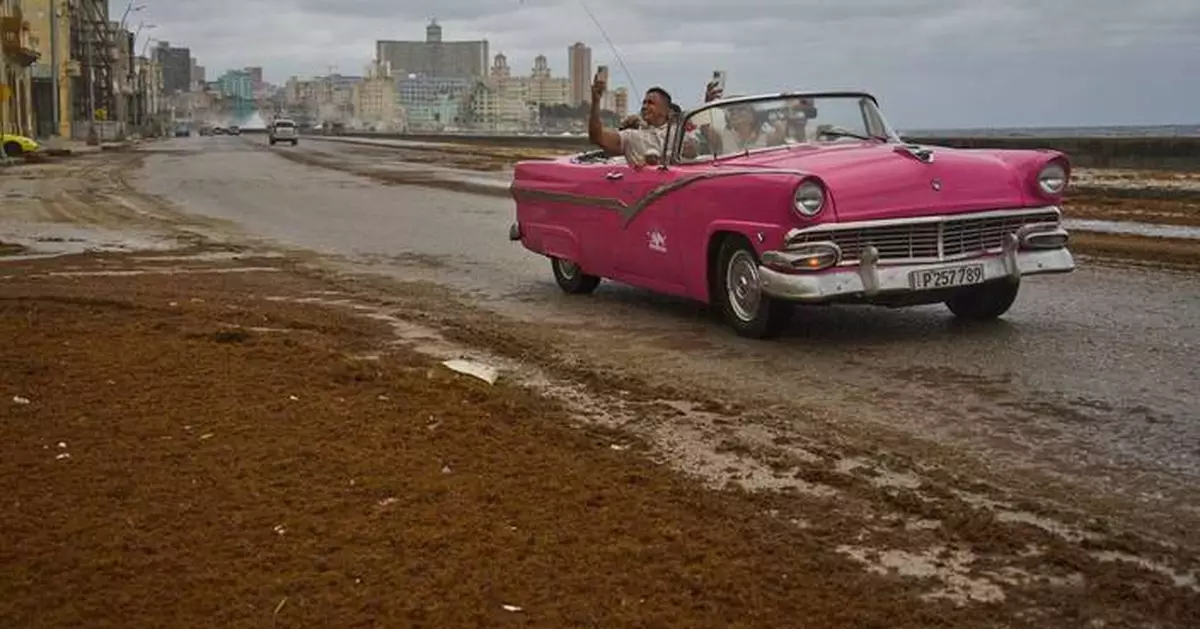
Tourists travel in a classic American car along the Malecon littered with sargassum seaweed, in Havana, Cuba, Wednesday, Jan. 28, 2026. (AP Photo/Ramon Espinosa)
NEW YORK (AP) — This is not the run-up to the midterm elections that Republicans wanted.
A year and a half after winning the White House by promising to lower costs and end wars, Donald Trump is a wartime president overseeing surging energy costs and an escalating overseas conflict.
The war in Iran was largely unpopular even before an American fighter jet was shot down in Iran, a development that dominated headlines on Friday and contradicted Trump’s claim that Tehran's military capabilities have been all but destroyed. One crew member has been rescued.
Earlier in the week, the Republican president offered little clarity to a nation eager for answers during a prime-time address from the White House, his first since the U.S. and Israel attacked Iran more than a month ago, simultaneously suggesting that the war was ending and expanding.
“Thanks to the progress we’ve made, I can say tonight that we are on track to complete all of America’s military objectives shortly, very shortly,” Trump said. “We’re going to hit them extremely hard over the next two to three weeks.”
Trump's comments come roughly six months before voters across the nation begin to cast ballots in elections that will decide control of Congress and key governorships for Trump’s final two years in office. For now, Republicans, who control all branches of government in Washington, are bracing for a painful political backlash.
“You’re looking at an ugly November,” warned veteran Republican pollster Neil Newhouse. “At a point in time when we need every break possible to hold the House and Senate, our edge is being chipped away.”
It’s hard to overstate how dramatically the political landscape has shifted.
At this time last year, many Republican leaders believed there was a path to preserve their narrow House majority and easily hold the Senate. Now they privately concede that the House is all but lost and Democrats have a realistic shot at taking the Senate.
Republicans are also struggling to coalesce around a clear midterm message on Iran.
The Republican National Committee has largely avoided the war in talking points issued to surrogates over the last month. The leaders of the party's campaign committees responsible for the House and Senate declined interview requests. Many vulnerable Republican candidates sidestep the issue, unwilling to defend or challenge Trump publicly.
The president remains deeply popular with Republican voters, and he has vocal supporters like Sen. Lindsey Graham of South Carolina.
“That was the best speech I could’ve hoped for,” he wrote on social media after Trump's address on Wednesday evening. Graham said Trump “gave the American people a clear and coherent pathway forward.”
Trump made little effort to sell the conflict to Americans before the initial attack. Five weeks later, at least 13 U.S. service members have been killed and hundreds more injured. Thousands more troops have converged on the region, and the Pentagon requested $200 billion in new funding.
The Strait of Hormuz, a key passage for a fifth of the world’s oil, remains closed. The average price for a gallon of gasoline in the U.S. was $4.08 on Thursday, according to AAA, almost a full dollar higher than on President Joe Biden's last day in office.
On Wednesday, Trump insisted that gas prices would fall quickly once the war concluded but offered no solution for reopening the Strait of Hormuz. Instead, he invited skeptical U.S. allies to do it themselves.
He insisted that the war would be worth it.
“This is a true investment in your grandchildren and your grandchildren’s future,” Trump said. “When it’s all over, the United States will be safer, stronger, more prosperous and greater than it has ever been before.”
Former Rep. Marjorie Taylor Greene, a Georgia Republican who was once among Trump's most vocal allies in Congress, lashed out against his Iran policy.
“I wanted so much for President Trump to put America First. That’s what I believed he would do. All I heard from his speech tonight was WAR WAR WAR,” she wrote on social media. “Nothing to lower the cost of living for Americans.”
About 6 in 10 U.S. adults say the U.S. military action in Iran has “gone too far,” according to AP-NORC polling from March. Roughly a third approve of how he’s handling Iran overall.
The possibility of sending U.S. forces into Iran also appears politically unpalatable.
About 6 in 10 adults are “strongly” or “somewhat” opposed to deploying U.S. troops on the ground to fight Iran. That includes about half of Republicans. Only about 1 in 10 favor deploying troops.
At the same time, Trump’s approval ratings have remained consistently weak. About 4 in 10 Americans approve of how he’s handling the presidency, roughly in line with how it’s been throughout his second term.
Republican strategist Ari Fleischer, a senior aide in former President George W. Bush’s administration, acknowledged that Trump has not received the polling bump in this war that Bush got after invading Iraq.
Bush, of course, worked to build public backing for the Iraq War before going in. Immediately after the 2003 invasion, Bush's popularity soared, as did the stock market.
Public sentiment and the economy soured only after the conflict stretched on. It ultimately spanned more than eight years, spawning a generation of anti-war Republicans — and sowing the seeds of Trump's “America First” foreign policy.
“My hope is that the Trump experience is the exact opposite of the Bush experience,” Fleischer said.
He said Trump must win the war decisively and quickly to avoid a further backlash, saying there could be a “very significant political upside if things end well, oil comes down and markets rally.”
Fleischer added that Trump's actions will matter much more than his words.
“Ultimately, he is not going to get judged on his persuasion or his explanations or his assertions, he’s going to get judged on results,” he said.
Associated Press writer Linley Sanders in Washington contributed to this report.
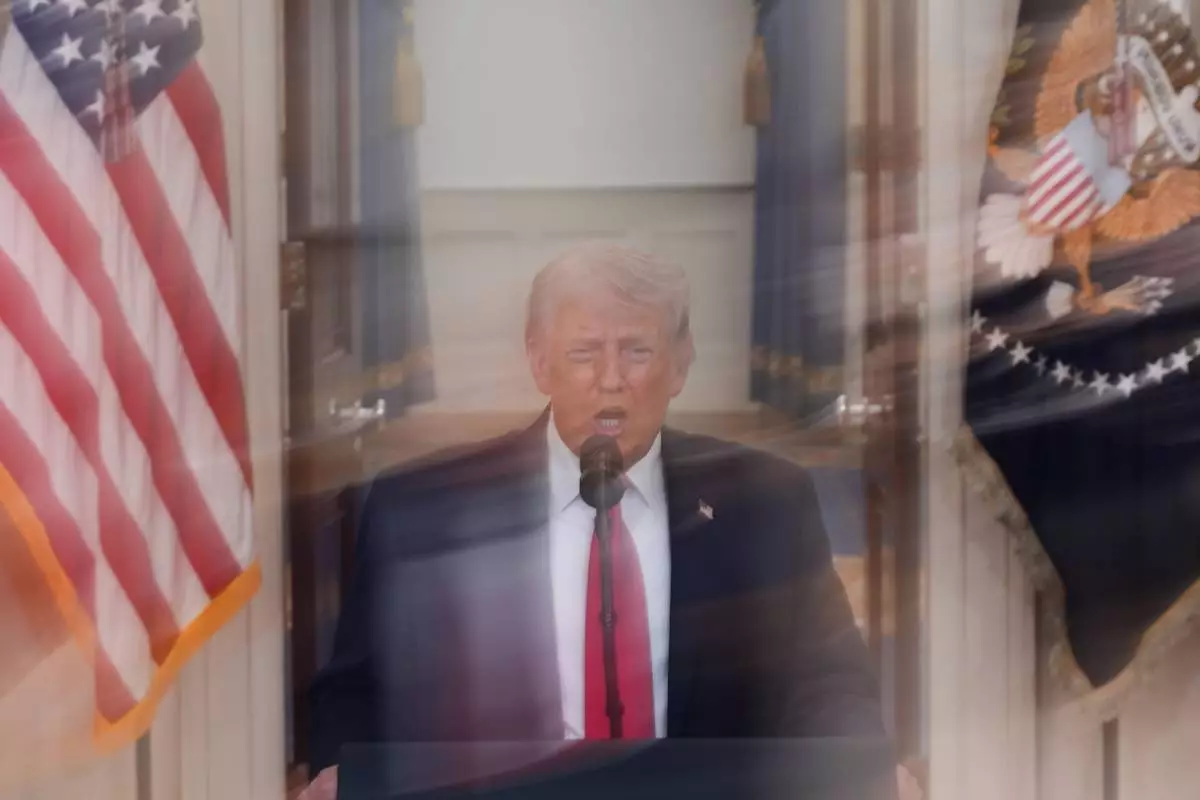
In this image made with a long exposure, President Donald Trump speaks about the Iran war from the Cross Hall of the White House on Wednesday, April 1, 2026, in Washington. (AP Photo/Alex Brandon, Pool)