British business leaders on Friday expressed strong confidence in China's economic development momentum, with many indicating plans to expand investment and deepen cooperation with Chinese partners.
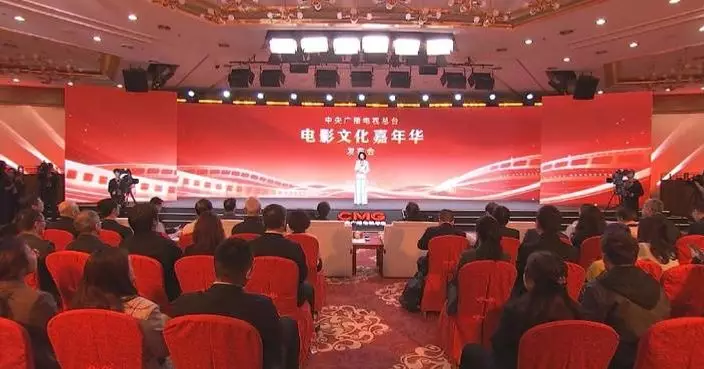
On the day, executives of major British companies and representatives of industry groups attended a business forum, co-organized by the China Council for the Promotion of International Trade and the British government.
British Prime Minister Keir Starmer, on a state visit to China, was a guest at the forum, along with his accompanying delegation of nearly 60 senior representatives from some of the United Kingdom's largest businesses and cultural institutions who joined the event to seek new opportunities in one of the world's largest markets.
The event brought together participants from a wide range of sectors, including finance, energy, culture, and professional services.
According to attendees, further investment in China is increasingly viewed as a key gateway for enterprises and organizations hoping to tap into the Asian market and beyond
"From our point of view that whereas we've done in the past a lot of touring in Europe, the Asian market has really opened up and China in particular. I see lots of future development here," said David Butcher, chief executive of Halle Concerts Society, an English symphony orchestra based in Manchester, UK.
"The size and the growth of the Chinese market is undeniable. We cannot afford to ignore China. I think it's important that especially UK companies recognize that and that we partner now with Chinese companies," said Chris Torrens, chair of British Chamber of Commerce in China.
Crucially for investors, China's economic performance has continued to show stability, while policymaking has exhibited high predictability.
"China has established itself as a predictable and stable player in the global economy and the global financial markets and that's very, very important. The fact that China is the second largest economy in the world, it's growing well, it's very engaged and connected to the rest of the world, means that China has the opportunity to just to help smooth through this transition, shall we say, in the global economy and do that to the benefit of China and to the rest of the world," said Bill Winters, group chief executive of Standard Chartered.
"We can place a lot of confidence in the five-year plan. We expect the growth of the China economy to be aligned with the five-year plan, which is a continuing important level of growth. China will continue to grow in our opinion very clearly," said Stuart Chambers, Chairman of Anglo American plc, a London-based multinational mining giant.
The shared confidence has prompted many companies to step up their investments in China. Among them is PwC, a London-based global consultancy firm that has continually expanded its partnerships with Chinese companies in recent years.
"We're very focused on continuing to invest in China. China's investing in AI and is growing and I think that's exciting. I think the world can benefit from Chinese technology getting stronger and stronger," said Rob Derrett, Board member of PwC China and PwC Global network Board of Partners.
Octopus Energy, a major financial services and energy firm in the UK, announced on Friday that it would partner with China's PCG Power, forming a joint venture, Bitong Energy, to trade renewable energy in China.
"We'll be investing more in China and I'm excited that over the course of 2026 we'll have a number of partnerships to announce and I hope they'll make a difference for China and for us. And I think to work with Chinese companies enables us to do more," said Greg Jackson, founder and CEO of Octopus Energy.
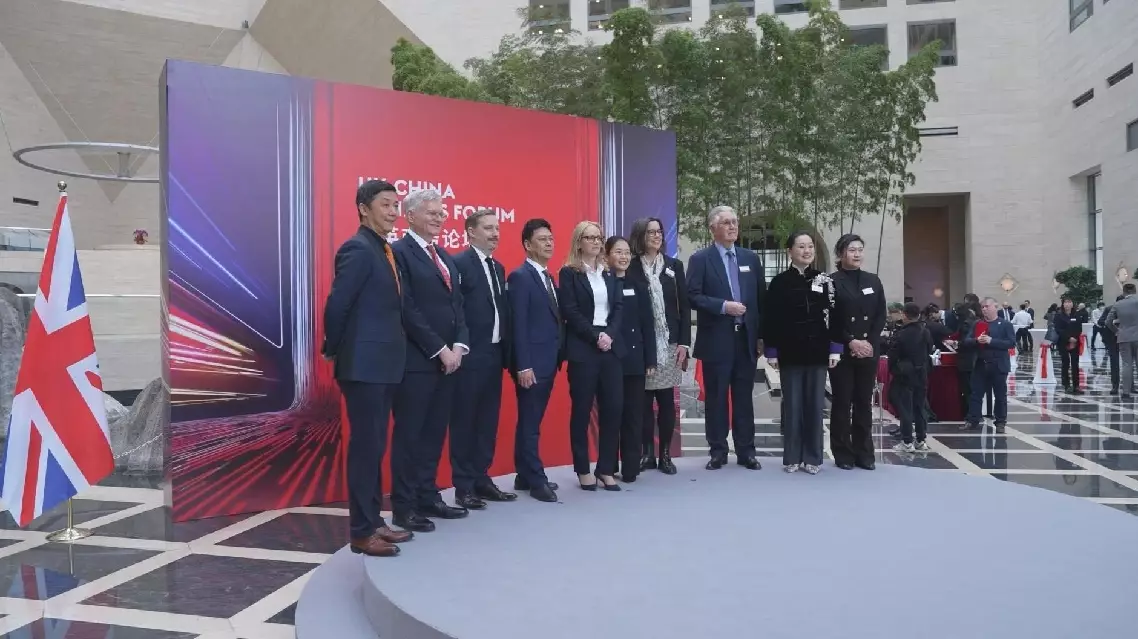
UK enterprises express hopes to expand cooperation with China at business forum