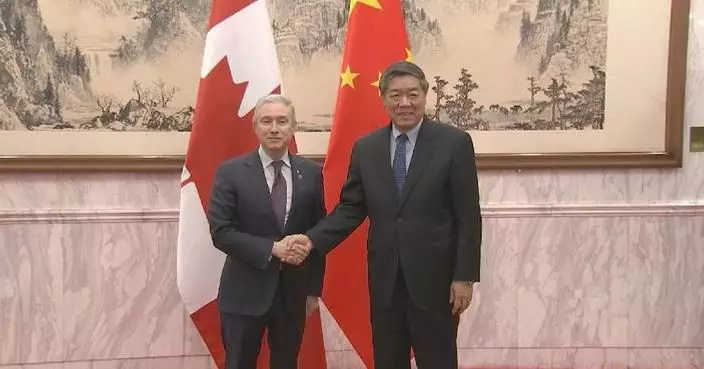
As Uruguayan President Yamandu Orsi arrived in Beijing on Sunday for a state visit, Mario Lubetkin, the country's foreign minister, also voiced his expectations to further cooperation with China across all sectors.
At the invitation of Chinese President Xi Jinping, President of the Oriental Republic of Uruguay Yamandu Orsi is on a seven-day visit to China until Feb 7.
The president is accompanied by a high-level delegation that includes multiple cabinet ministers and deputy ministers, directors of public enterprises and state agencies, representatives from over 90 companies, and dozens of business leaders spanning diverse sectors, with the total number reaching a record high. The huge delegations, according to the foreign minister, marks a shared expectation among all sectors to seek more opportunities in China.
"It is about continuing to develop that intense cooperation we have with Chinese authorities in fundamental sectors such as commerce, economy, infrastructure, environment, education, in short, no shortage of areas. That strategic alliance we are advancing with Chinese authorities, not only during the period since we took office with President Orsi on March 1st, but throughout the history since diplomatic relations, we reestablished between the two countries," he said.
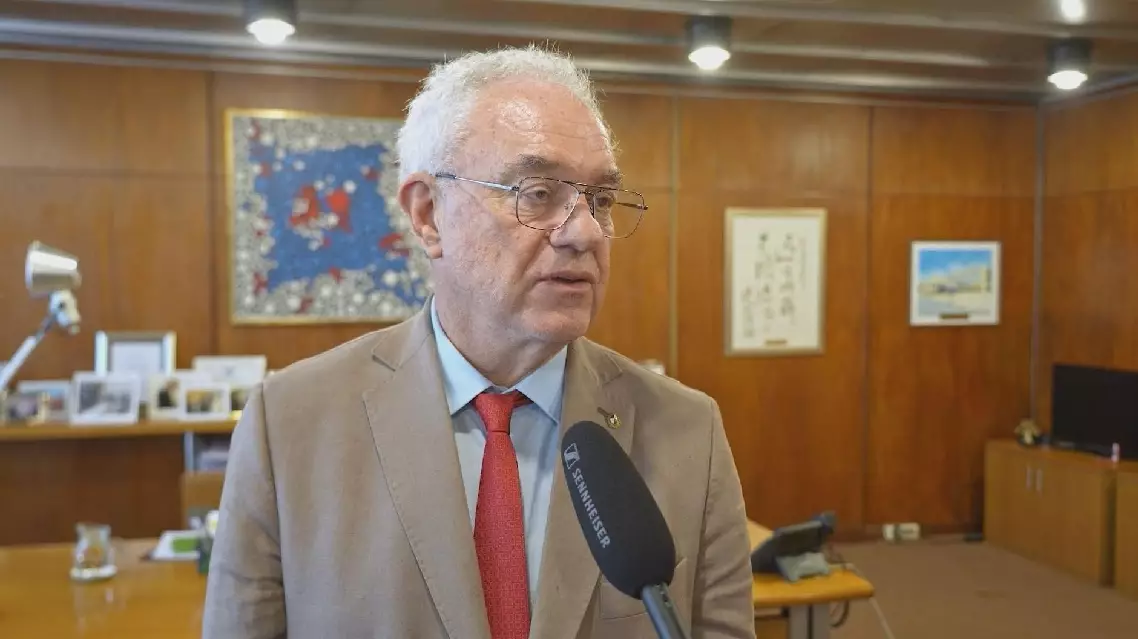
Uruguay seeks to further cooperation with China: Uruguay FM
Uruguay seeks to further cooperation with China: Uruguay FM
Global food commodity prices climbed for a second consecutive month in March, driven mainly by higher energy costs linked to escalating conflict in the Middle East, the Food and Agriculture Organization of the United Nations (FAO) said in report released on Friday.
The FAO Food Price Index, which tracks monthly changes in the international prices of a basket of globally traded food commodities, averaged 128.5 points in March, up 2.4 percent from February and 1.0 percent above its level a year ago.
According to the report, the FAO Vegetable Oil Index and Sugar Price Index showed the largest increases, up 5.1 percent and 7.2 percent, respectively.
The FAO Cereal Price Index increased by 1.5 percent from the previous month, driven primarily by higher world wheat prices, which rose 4.3 percent.
The FAO Meat Price Index rose by 1.0 percent from the previous month, and the FAO All-Rice Price Index declined by 3.0 percent in March, according to the report.
FAO stated that rising energy and fertilizer prices have been driving up agricultural input costs.
If the conflict stretches beyond 40 days, farmers will have to choose to farm the same with fewer inputs, plant less, or switch to less intensive fertilizer crops, according to FAO Chief Economist Maximo Torero.
These choices will hit future yields and shape food supply and commodity prices for the rest of this year and beyond, Torero said.
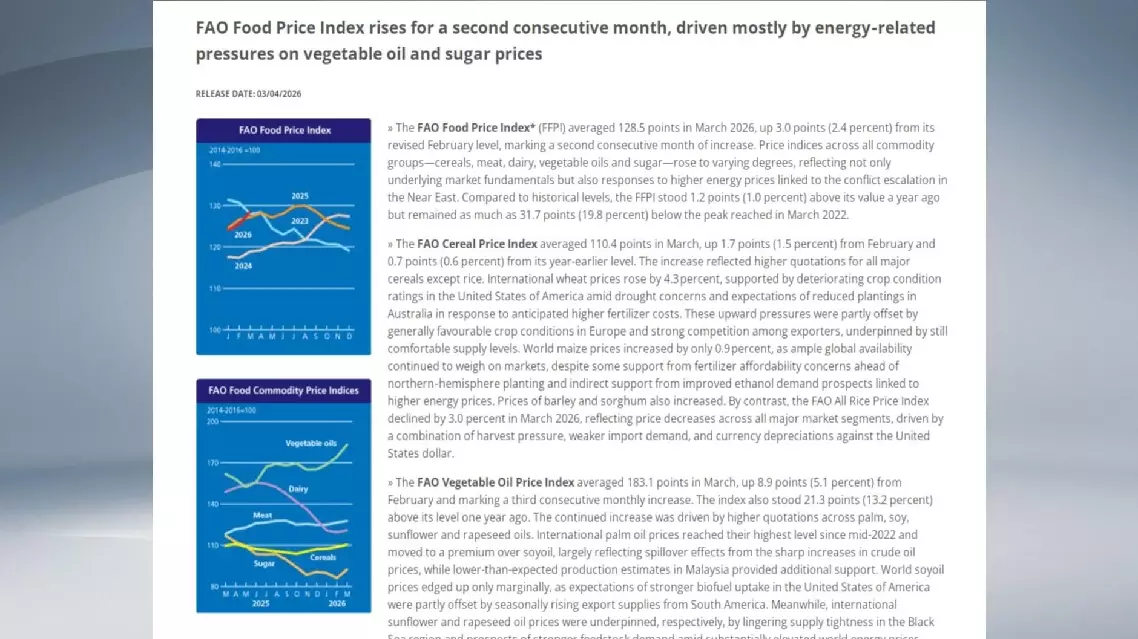
Global food prices rise for 2nd consecutive month in March amid Middle East conflict: FAO