NEW DELHI (AP) — Prime Minister Narendra Modi’s government presented its annual budget to Parliament on Sunday, focusing on sustaining the country’s economic growth despite volatile financial markets and trade uncertainty.
In a speech introducing the budget, Finance Minister Nirmala Sitharaman said the governments plans to boost investments in infrastructure and domestic manufacturing while sticking to fiscal prudence.
Click to Gallery

A vegetable vendor carries a sack of vegetables at a local market in Mumbai, India, Sunday, Feb. 1, 2026. (AP Photo/Rafiq Maqbool)
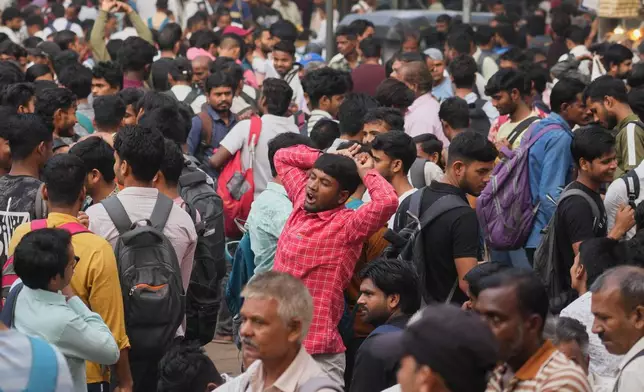
Indian daily wage laborers wait to get hired in Mumbai, India, Sunday, Feb. 1, 2026. (AP Photo/Rafiq Maqbool)
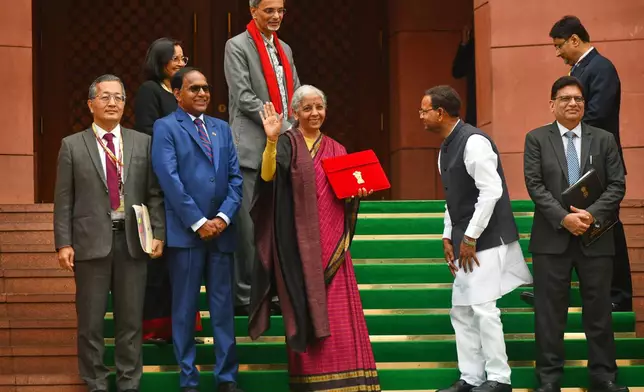
Indian Finance Minister Nirmala Sitharaman, center, displays a red folder containing the Union Budget 2026-27 at the steps of the parliament house before tabling it, in New Delhi, India, Sunday, Feb. 1, 2026. (AP Photo)
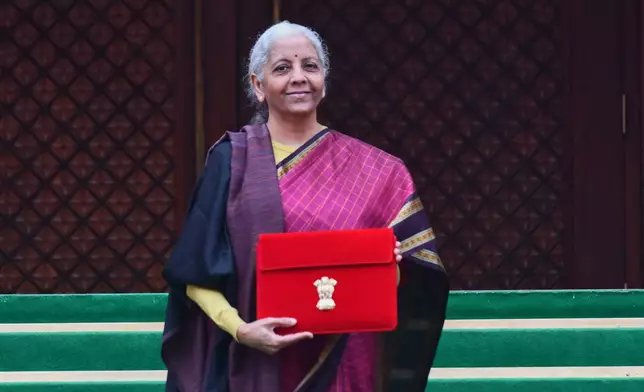
Indian Finance Minister Nirmala Sitharaman displays a red folder containing the Union Budget 2026-27 at the steps of the parliament house before tabling it, in New Delhi, India, Sunday, Feb. 1, 2026. (AP Photo)
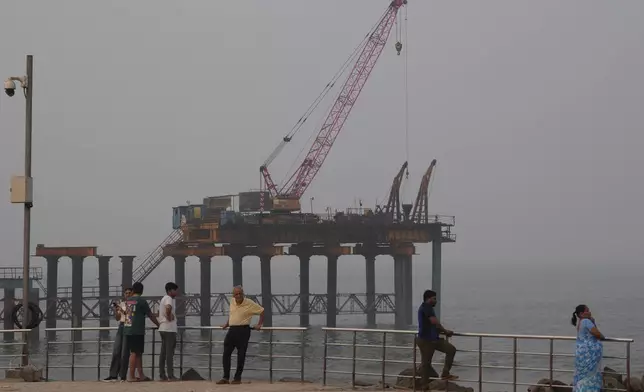
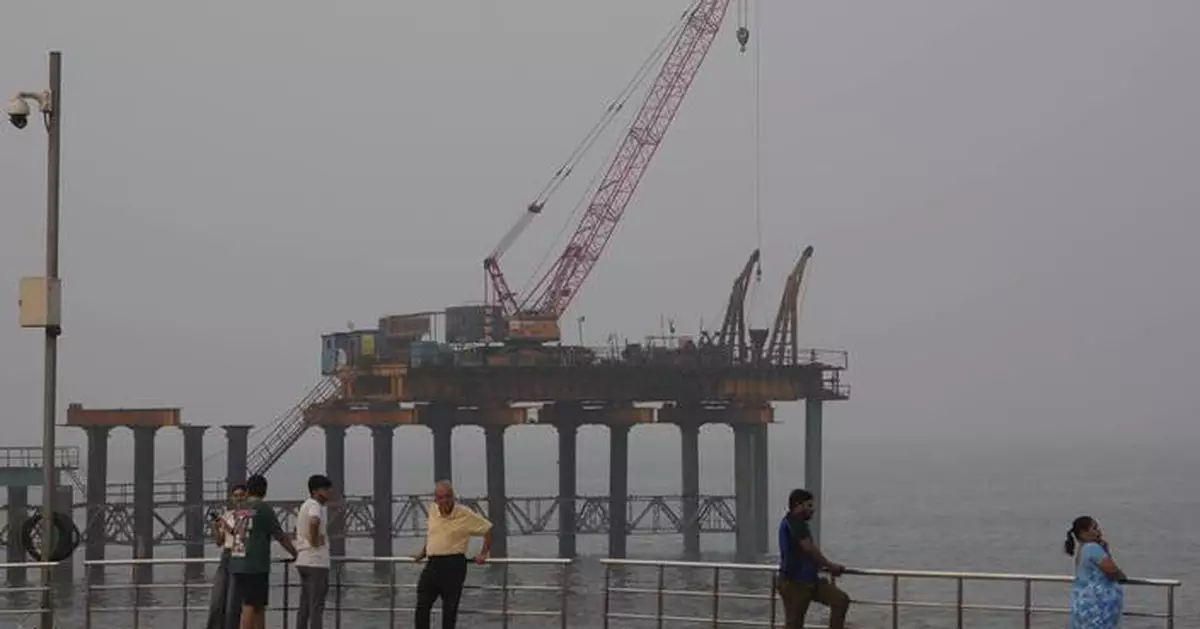
People stand near the site of the under-construction coastal road in Mumbai, India, Sunday, Feb. 1, 2026. (AP Photo/Rafiq Maqbool)
The budget for the 2026-27 financial year, which starts April 1, comes as major economies grapple with high interest rates, geopolitical tensions and renewed protectionism that has weighed on global trade and capital flows.
India has so far withstood high tariffs imposed by the U.S., largely by frontloading some exports and diversifying shipments to new destinations.
The finance ministry’s economic survey, which was released on Thursday ahead of the budget, forecast India’s economy to grow between 6.8% and 7.2% in the next fiscal year buoyed by increasing domestic consumption.
Despite plans for higher spending in some areas, the government reiterated its commitment to fiscal consolidation, targeting a deficit of 4.3% of the GDP next year, down slightly from the 4.4% of GDP deficit the government is on track to achieve in the fiscal year ending in March.
Here are some key takeaways from the budget:
Sitharaman offered no populist giveaways, saying New Delhi will focus on building resilience at home while positioning itself more firmly in the global supply chain.
Last year’s budget wooed the salaried middle class with steep tax cuts after Modi secured a landslide victory in the national polls.
“India will continue to take confident steps towards Viksit Bharat (Developed India), balancing ambition with inclusion,” Sitharaman said.
The focus will be on structural reforms, mainly in the manufacturing sector, while also stepping up investments in niche industries such as biopharma and artificial intelligence, she added.
The budget call for the government’s capital expenditure for the next fiscal year to reach 12.2 trillion rupees ($133 billion), mainly on infrastructure, up from 11.2 trillion rupees last year.
This comes at a time when many advanced economies are cutting back public investments due to high debt and tightened monetary policy. India will use state spending to prop up growth.
Sitharaman said the government will scale up manufacturing in seven strategic sectors including biopharma, semiconductors, electronics components and rare earth magnets. To reduce import dependency, three chemical production parks will be set up.
Recognizing global concerns over slowing job creation, especially in manufacturing, the budget announced additional credit support and a growth fund for micro, small and medium enterprises.
Sitharaman outlined steps to deepen India’s financial markets, including measures to strengthen the corporate bond market and ease certain rules for foreign investors.
With global capital increasingly selective amid higher interest rates in the West, emerging markets are competing for stable and long-term investment.
“I propose a comprehensive review of the Foreign Exchange Management (Non-debt Instruments) Rules to create a more contemporary, user-friendly framework for foreign investments, consistent with India’s evolving economic priorities,” Sitharaman said.
Sitharaman said India plans to promote environmentally sustainable travel with seven high-speed rail corridors between key cities such as Mumbai-Pune, Hyderabad-Bengaluru, Pune-Hyderabad, and Chennai-Bengaluru.
For cargo movement, an unspecified number of new dedicated freight corridors will be set up and 20 new waterways operationalized over the next five years, she said.
Dedicated freight corridors will also be set up for rare earths to promote mining, processing, research and manufacturing.
In addition, she said that the government will develop ecologically sustainable mountain and coastal trails to promote ecological tourism.

A vegetable vendor carries a sack of vegetables at a local market in Mumbai, India, Sunday, Feb. 1, 2026. (AP Photo/Rafiq Maqbool)
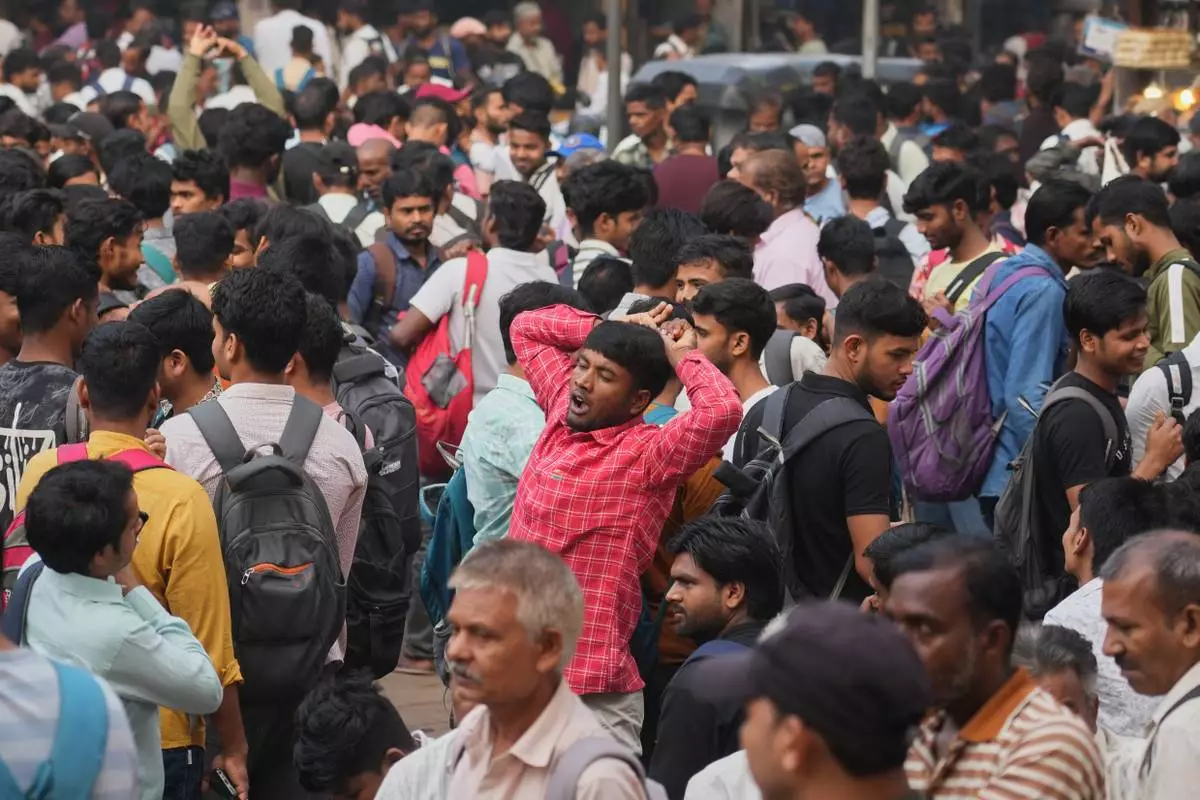
Indian daily wage laborers wait to get hired in Mumbai, India, Sunday, Feb. 1, 2026. (AP Photo/Rafiq Maqbool)
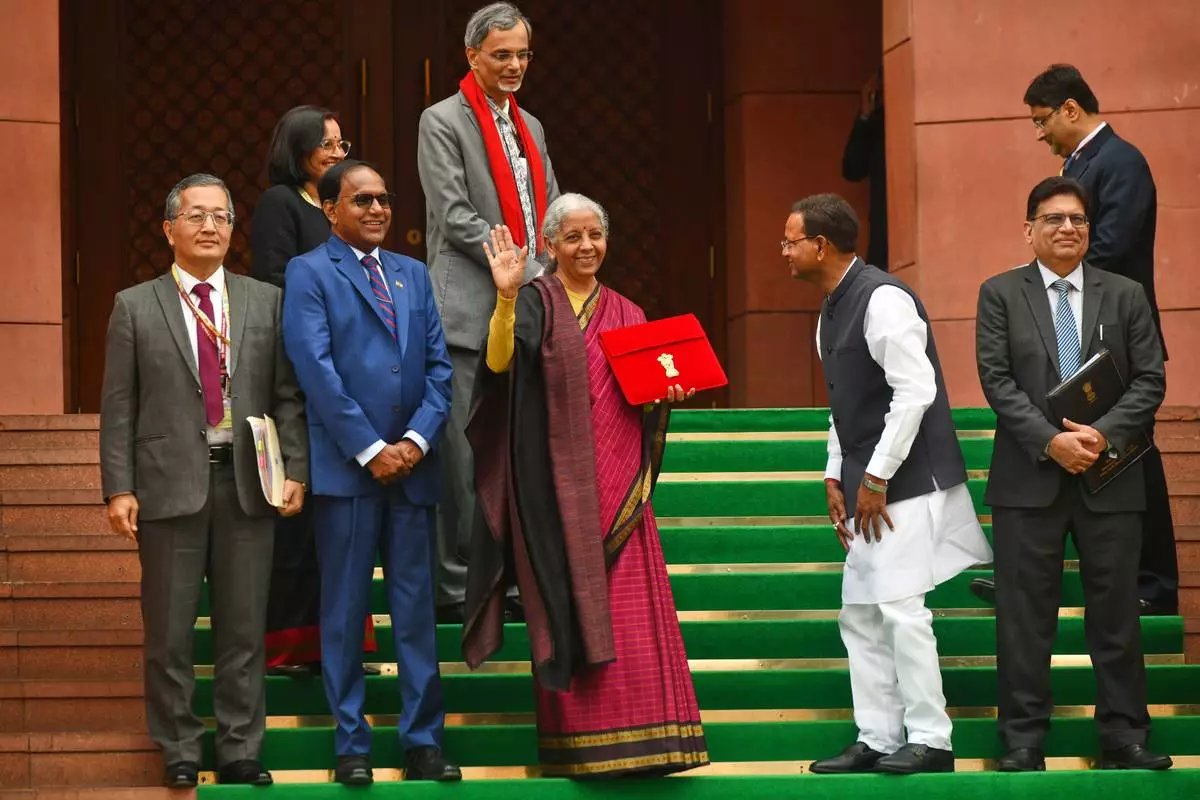
Indian Finance Minister Nirmala Sitharaman, center, displays a red folder containing the Union Budget 2026-27 at the steps of the parliament house before tabling it, in New Delhi, India, Sunday, Feb. 1, 2026. (AP Photo)
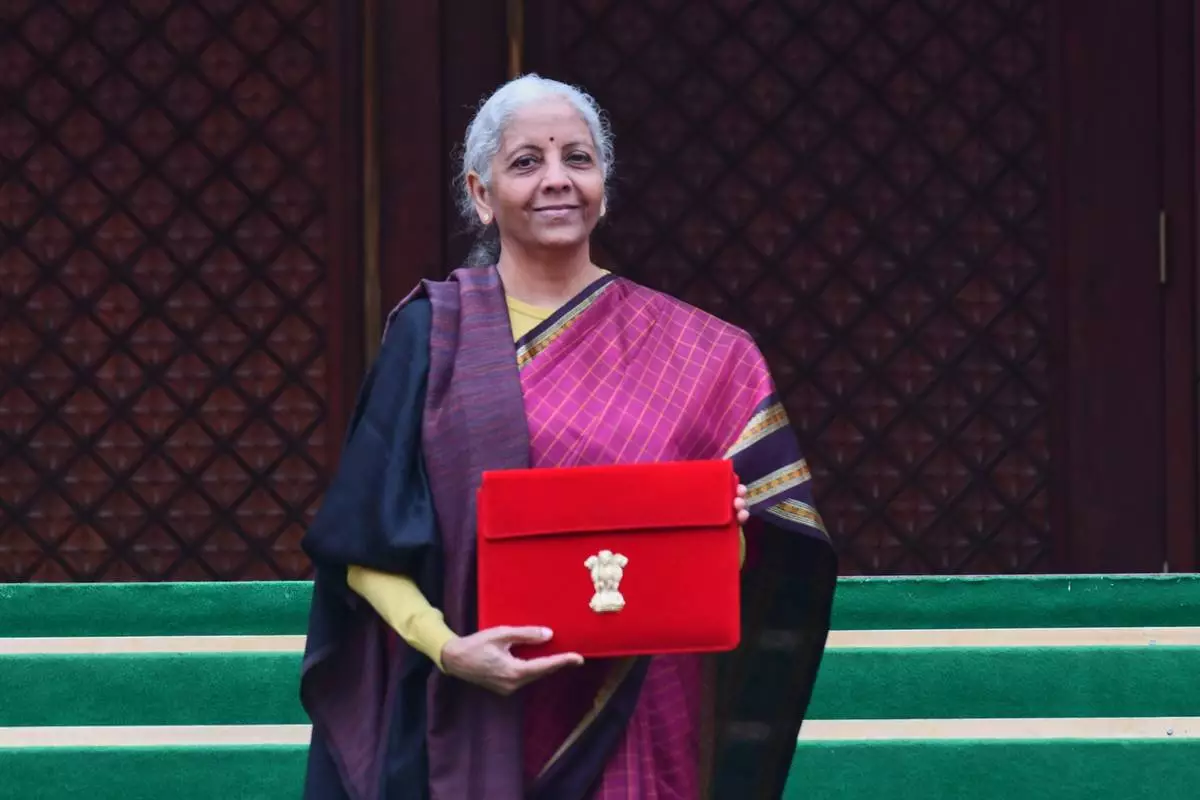
Indian Finance Minister Nirmala Sitharaman displays a red folder containing the Union Budget 2026-27 at the steps of the parliament house before tabling it, in New Delhi, India, Sunday, Feb. 1, 2026. (AP Photo)
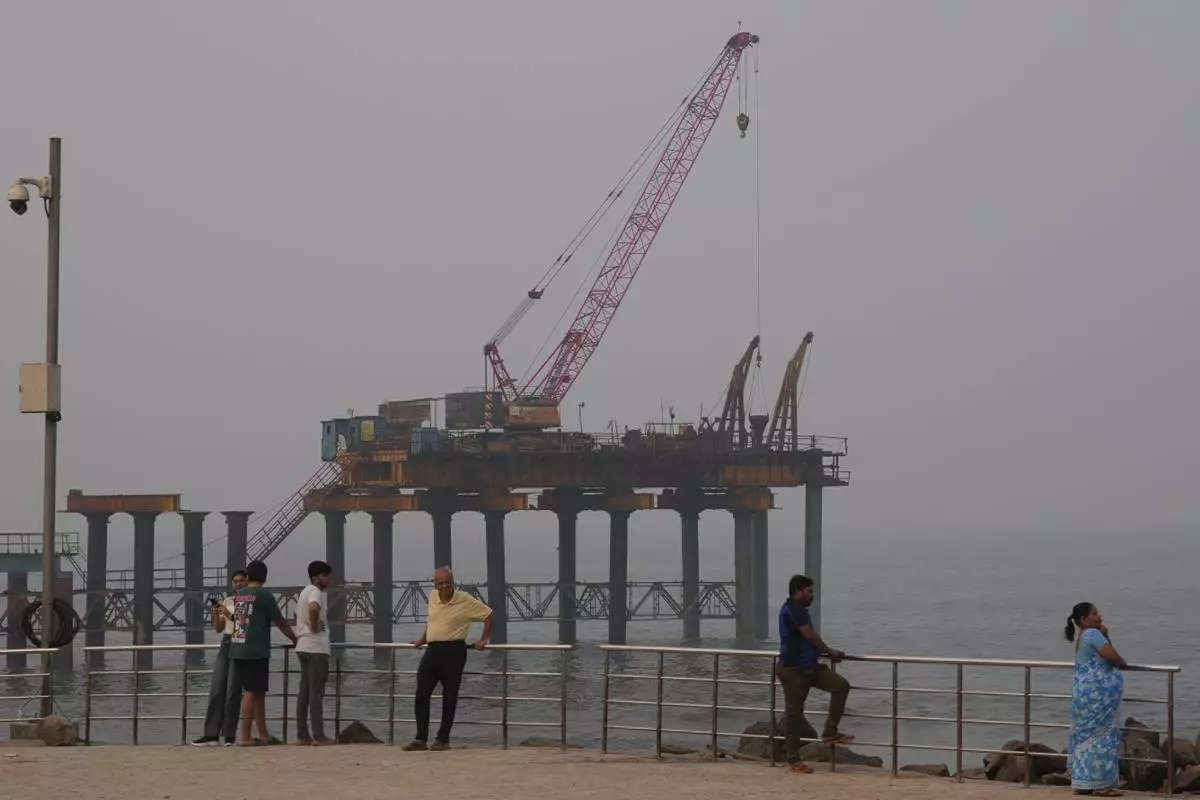
People stand near the site of the under-construction coastal road in Mumbai, India, Sunday, Feb. 1, 2026. (AP Photo/Rafiq Maqbool)