As global demand for AI computing power soars, China's transformer industry is operating at full capacity, with orders flooding in from domestic and international data centers.
While AI infrastructure fuels a rapid increase in global computing capacity, the demand for a reliable and high-capacity electricity supply has grown increasingly critical. In China, transformers, long a cornerstone of traditional power grids, are now emerging as essential infrastructure for AI data centers.
Across major industrial regions such as Guangdong and Jiangsu, transformer manufacturing plants are ramping up production to meet skyrocketing demands. Many facilities have reported being fully booked, with some data center-related orders already scheduled into 2027.
In Foshan City, south China's Guangdong Province, one electrical equipment company is running at full speed, with warehouses and parking lots filled with transformers waiting for delivery.
"Less than a month into the year, our order volume has already increased by 70 to 80 percent compared to the same period last year. From day one, our production lines have been running at full capacity," said Wang Lixin, head of the company's research and development center.
Worldwide competition for transformers is intensifying. In the United States, soaring demands have pushed delivery timelines from 50 weeks to 127 weeks. Meanwhile, Chinese suppliers are emerging as a faster alternative.
At another Foshan-based transformer company, dry-type transformers, primarily used in data centers, are seeing a spike in global interest.
"Compared to delivery timelines in Europe and the U.S., we can deliver in less than one-fifth of the time. Our current order volume is solid, and we aim to raise overseas revenue to 50 percent or higher of our total sales," said Li Xia, marketing director at the firm.
The trend extends to the Yangtze River Delta. At a plant in east China's Jiangsu Province, product orders have been scheduled through the end of 2027, including the recent shipment of China's first fully insulated, ultra-high-voltage, large-capacity transformer to the North American market.
"We're running three shifts around the clock. Our custom-made transformers have a delivery cycle of just three to six months, far faster than the 18-month average in other countries. Even so, we still have a long queue of pending orders," said Mei Yong, head of production at the Jiangsu facility.
According to industry data, China now hosts around 3,000 transformer manufacturers. In 2025, transformer exports hit 64.6 billion yuan (9.29 billion U.S. dollars), a nearly 36 percent increase from 2024.
"China has become the world's largest transformer manufacturer. We've established the most complete production system globally, with an independent and fully controllable industrial chain. Our capacity accounts for around 60 percent of the global total," said Cai Yiqing, secretary general of the Power Equipment Branch of the China Electricity Council.
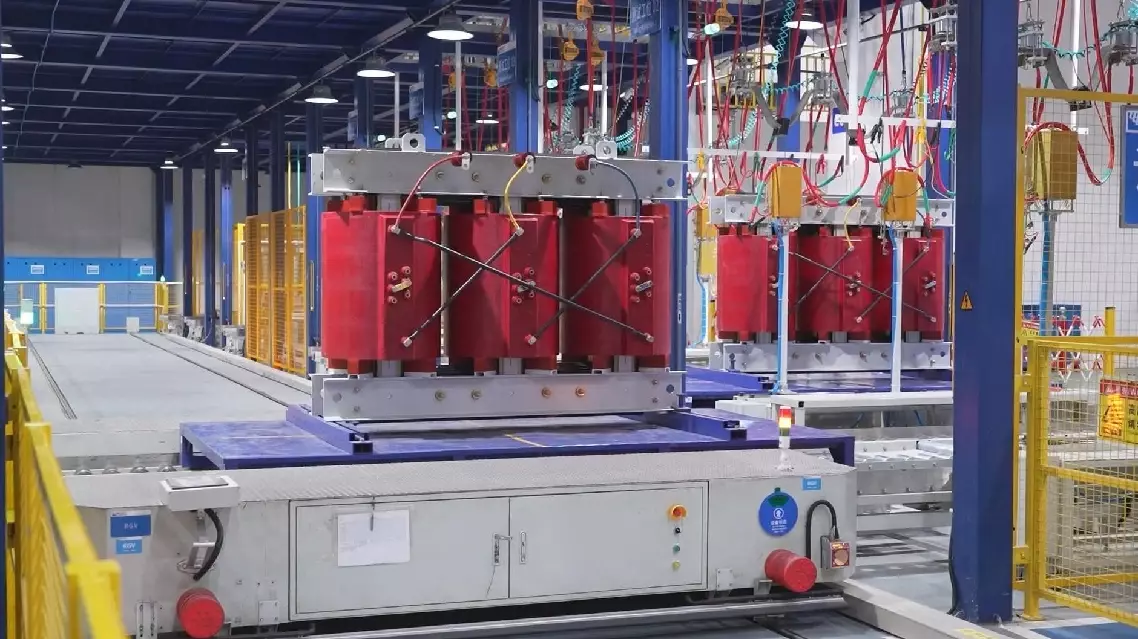
China's transformer output surges amid AI boom
The launch of SMILE, a cutting-edge observation satellite jointly developed by China and Europe, shows China has now become a front-runner in global space science, said Wang Chi, the Chinese principal investigator of the satellite.
SMILE, or Solar wind Magnetosphere Ionosphere Link Explorer, satellite was launched by a Vega-C rocket at the Kourou launch center in French Guiana.
The mission is the first all-round, in-depth collaborative space science exploration project between the Chinese Academy of Sciences (CAS) and the European Space Agency (ESA), aiming to reveal the mysteries of the interaction between the solar wind and Earth's magnetosphere.
According to the plan, after approximately 42 days of orbital maneuvering following its entry into orbit, the satellite will reach its observation orbit. It will then undergo two months of in-orbit testing before entering a three-year routine scientific observation phase.
The core scientific objective of the SMILE mission is to achieve, for the first time, global imaging observations of solar wind-magnetosphere interactions, presenting the complete chain of how solar wind energy enters, propagates through, and dissipates within Earth's space, according to Wang, who is also an academician at the Chinese Academy of Sciences (CAS) and director of the National Space Science Center (NSSC) under the CAS.
Since the launch of China's Dark Matter Particle Explorer (DAMPE) satellite "Wukong" in 2015, the first in a series of space science missions under CAS's Strategic Priority Program on Space Science, China has launched a number of space science satellites and achieved a series of original scientific results in areas including dark matter detection and quantum science research.
In the course of about 10 years, China has sent a series of scientific satellites into space, including the Shijian-10 retrievable satellite, the Quantum Experiments at Space Scale (QUESS), the Hard X-ray Modulation Telescope (also called Insight-HXMT), the Taiji-1 satellite, the Gravitational Wave High-energy Electromagnetic Counterpart All-sky Monitor (GECAM), the Advanced Space-based Solar Observatory (ASO-S), nicknamed Kuafu-1 in Chinese, and the Einstein Probe (EP) astronomical satellite.
Through these missions, Chinese scientists have used domestically developed equipment to create the country's first all-sky X-ray map, obtain the world's most precise fine structure of cosmic ray electron and proton energy spectra, directly measure the strongest magnetic field in the universe for the first time, and detect high-speed jets closest to black holes. These achievements have allowed China to secure a series of important original results in studying cosmic transients, cosmic ray propagation, and solar flares, accelerating the country's space science innovation and development.
Wang described the SMILE satellite as the final satellite in CAS' strategic plan for space science, which it first laid out in 2011.
"SMILE, as the last satellite of the Strategic Priority Program on Space Science, is a concluding achievement. Its launch ushers in a new stage for China in the development of space science, and indicates that China has evolved from lagging behind to keeping up, then to leading the pack in this field. It also signifies that China's space science development has entered a stage of seeking development through original innovation," Wang said.
Looking ahead, China will implement a space exploration science satellite program focusing on major scientific questions such as the origin of the universe, the origin of space weather, and the origin of life. This program will deploy important satellite missions including the Hongmeng Project, Kuafu-2, Earth 2.0 (ET), and the enhanced X-ray Timing and Polarimetry mission (eXTP).
Among these, Kuafu-2 will conduct a precise exploration of the solar polar regions, complementing the SMILE satellite and Kuafu-1, to continuously deepen research into the solar-terrestrial space environment and space weather.
"Space science is very important for China to achieve its goal of becoming a space power. We must pursue original breakthroughs in space science. We need to strengthen our research of crucial technologies, and work faster to build an original innovation cradle, in the interest of enhancing our nation's aerospace strength at a faster pace," said Wang.
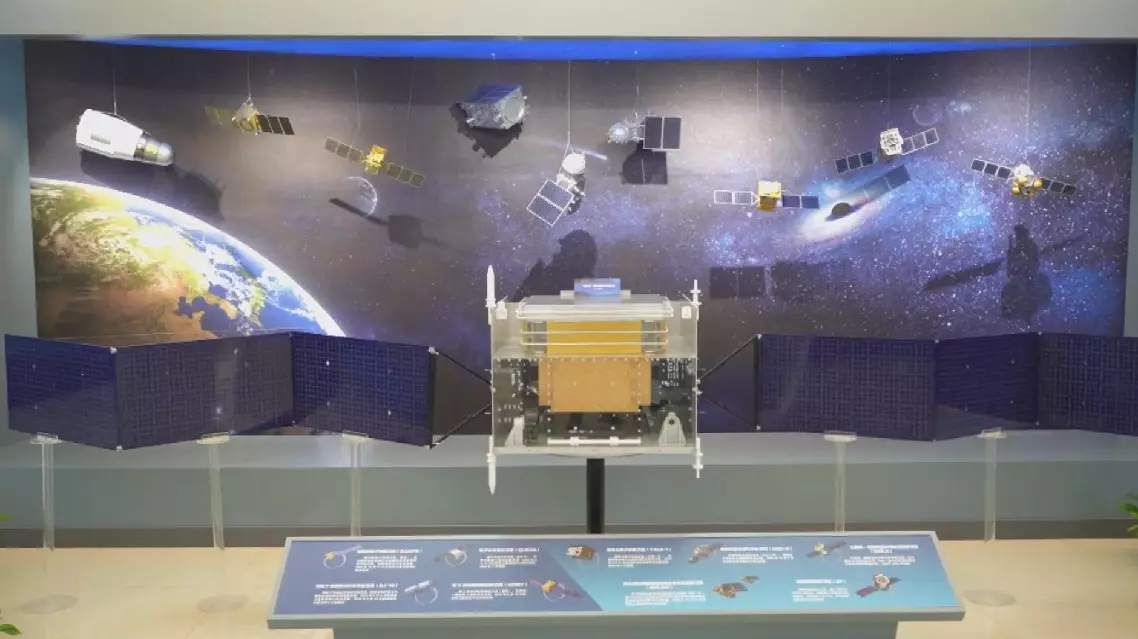
SMILE satellite launch shows China has become front-runner in global aerospace: scientist