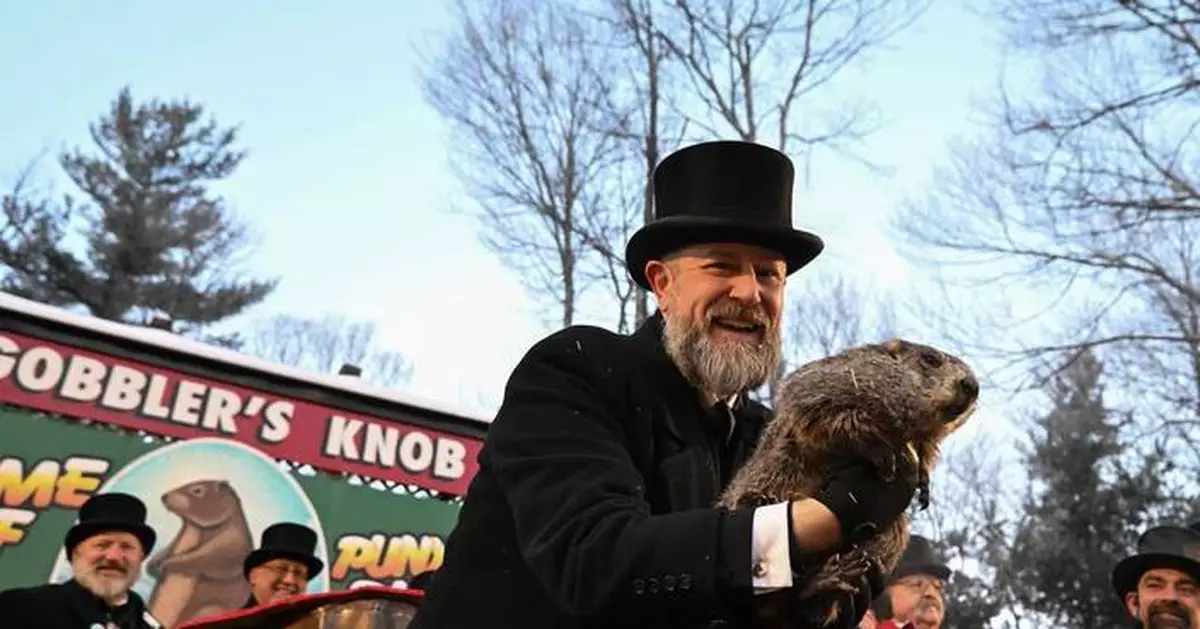
The handlers of a groundhog named Punxsutawney Phil at Gobbler's Knob in western Pennsylvania announced that he saw his own shadow Monday morning, thereby predicting six more weeks of winter and not an early spring.
Thousands attended the annual event that exploded in popularity after the 1993 Bill Murray movie, “Groundhog Day.”
Click to Gallery
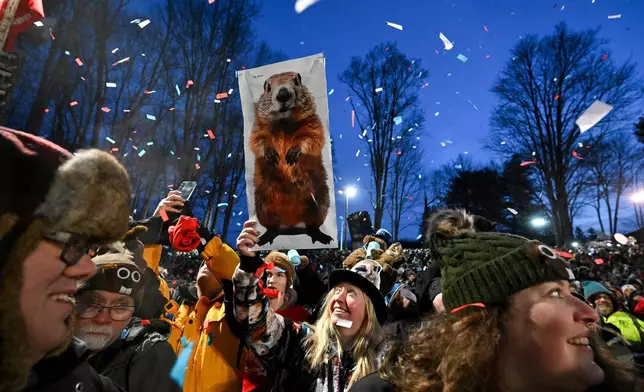
FILE - The crowd watches the festivities while waiting for Punxsutawney Phil, the weather prognosticating groundhog, to come out and make his prediction during the 139th celebration of Groundhog Day on Gobbler's Knob in Punxsutawney, Pa., Feb. 2, 2025. (AP Photo/Barry Reeger, File)
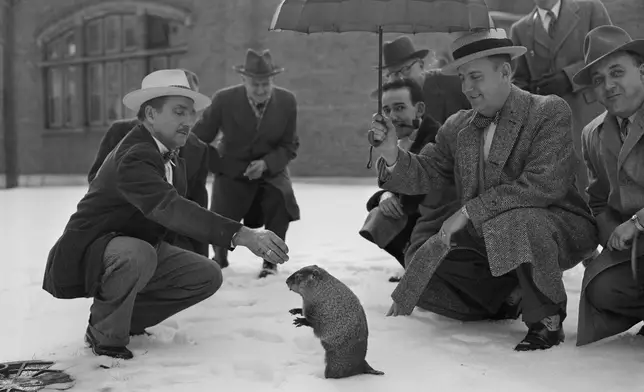
FILE - The groundhog saw his shadow, Feb. 2, 1954, as the sun peeked through an overcast sky at Washington Park Zoo in Milwaukee, Wis. (AP Photo/Dwayne Newton, File)
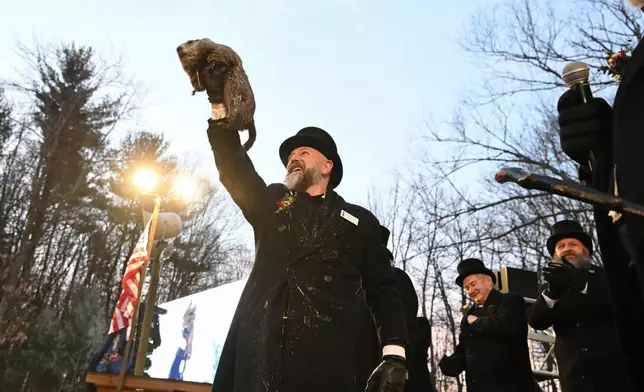
FILE - Groundhog Club handler A.J. Dereume holds Punxsutawney Phil, the weather prognosticating groundhog, during the 139th celebration of Groundhog Day on Gobbler's Knob in Punxsutawney, Pa., Feb. 2, 2025. (AP Photo/Barry Reeger, File)

FILE - Groundhog Club handler A.J. Dereume holds Punxsutawney Phil, the weather prognosticating groundhog, during the 137th celebration of Groundhog Day on Gobbler's Knob in Punxsutawney, Pa., Feb. 2, 2023. (AP Photo/Barry Reeger, File)
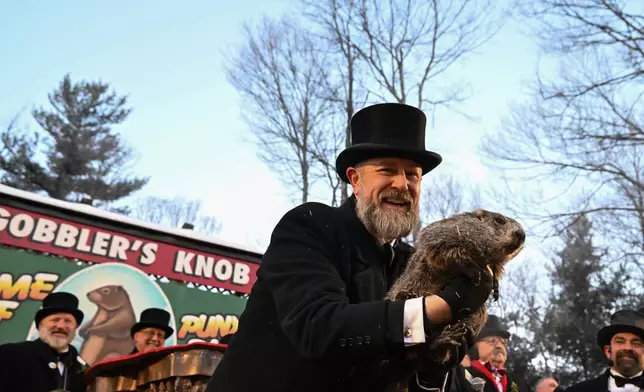
Groundhog Club handler A.J. Dereume holds Punxsutawney Phil, the weather prognosticating groundhog, during the 140th celebration of Groundhog Day on Gobbler's Knob in Punxsutawney, Pa., Monday, Feb. 2, 2026, Phil's handlers said that the groundhog has forecast six more weeks of winter. (AP Photo/Barry Reeger)
It’s part of a tradition rooted in European agricultural life, marking the midpoint between the shortest day of the year on the winter solstice and the spring equinox.
And in eastern and central Pennsylvania, where people of German descent have been watching the groundhog’s annual emergence from hibernation for centuries, there’s a tradition of groundhog clubs and celebrations that are independent of Phil.
Some dismiss the Punxsutawney event held every Feb. 2 as an unworthy rival to their own festivities, which they say forecast more accurate weather predictions. There have been weather-predicting groundhogs in many U.S. states and Canadian provinces, and less formal celebrations far and wide.
One thing it’s not: serious business.
“We know this is silly; we know this is fun,” said Marcy Galando, executive director of the Punxsutawney Groundhog Club. “We want people to come here with a sense of humor.”
Celtic people across Europe marked the four days that are midway between the winter solstice, the spring equinox, the summer solstice and the fall equinox. What the Celts called Imbolc is also around when Christians celebrate Candlemas, timed to Joseph and Mary’s presentation of Jesus at the Temple in Jerusalem.
Ancient people would watch the sun, stars and animal behavior to guide farming practices and other decisions, and the practice of watching an animal’s emergence from winter hibernation to forecast weather has roots in a similar German tradition involving badgers or bears. Pennsylvania Germans apparently substituted the groundhog, endemic to the eastern and midwestern United States.
Historians have found a reference in an 1841 diary to groundhog weather forecasts in early February among families of German descent in Morgantown, Pennsylvania, according to the late Don Yoder, a University of Pennsylvania professor whose book about Groundhog Day explored the Celtic connection.
Yoder concluded the festival has roots in “ancient, undoubtedly prehistoric, weather lore.”
Punxsutawney is an area that Pennsylvania Germans settled — and in the late 1880s started celebrating the holiday by picnicking, hunting and eating groundhogs.
The Bill Murray movie caused such a resurgence of interest that two years after it came out, event organizers voiced concern about rowdy crowds drinking all night, people climbing trees and others stripping to their underwear. In 1998, a groundhog club leader wearing a $4,000 groundhog suit reported being assaulted by a half-dozen young men.
Alcohol is now prohibited at Gobbler’s Knob, Phil’s spot some 80 miles (123 kilometers) northeast of Pittsburgh.
The early festivities in Punxsutawney were followed in 1907 by folks in Quarryville, a farming area in Lancaster County in Pennsylvania’s southeastern corner. The roughly 240 members of the Slumbering Groundhog Lodge there report the winter forecast from Octoraro Orphie, or least via his well-preserved remains.
Quarryville lodge board chair Charlie Hart credits Orphie as a far better forecaster than Phil. “Octoraro Orphie has never been wrong,” he claimed.
The groundhog is a member of the squirrel family and related to chipmunks and prairie dogs. It’s also known as a woodchuck, a whistle pig — or in the parlance of Pennsylvania Dutch, a language with German roots, a “grundsau.”
Groundhogs are herbivores that are themselves edible to humans, although they are not widely consumed. Their lifespan in the wild is typically two or three years.
The Pennsylvania Game Commission says tens of thousands of hunters take more than 200,000 groundhogs in a year.
Game Commission spokesperson Travis Lau found groundhog a bit stinky to clean, with thick skin.
“It was actually really good, no doubt about it — and to my taste, more like beef than venison is,” Lau said. “The whole family ate it and liked it, and everybody had apprehensions.”
Starting in the 1930s, groundhog lodges opened in eastern Pennsylvania. They were social clubs with similarities to Freemasonry.
Intended to preserve Pennsylvania German culture and traditions, clubs would sometimes fine those who were caught speaking anything but their Pennsylvania Dutch language at meetings. A dozen or more such clubs remain active.
They all share the unifying feature of a groundhog’s weather prognostication, said William W. Donner, a Kutztown University anthropology professor who has written about efforts to preserve German heritage.
“I think it’s just one of these traditional rituals that people enjoy participating in, that maybe take them away from modern life for 15 minutes,” Donner said.
Some well-meaning efforts have sought to determine Phil’s accuracy, but what “six weeks of winter” means is debatable. Claims that a groundhog has or has not seen its shadow — and that it’s able to communicate that to a human — are also fair territory for skeptics and the humor-impaired.
By all accounts, Phil predicts more winter far more often than he predicts an early spring.
Groundhogs are mostly solitary creatures who start to emerge in midwinter to find a mate. The science behind whether they can make any accurate weather predictions is problematic at best.
Among the skeptics is the National Centers for Environmental Information. The government agency has compared Phil’s record with U.S. national temperatures and concluded he was right only three of the past 10 years.
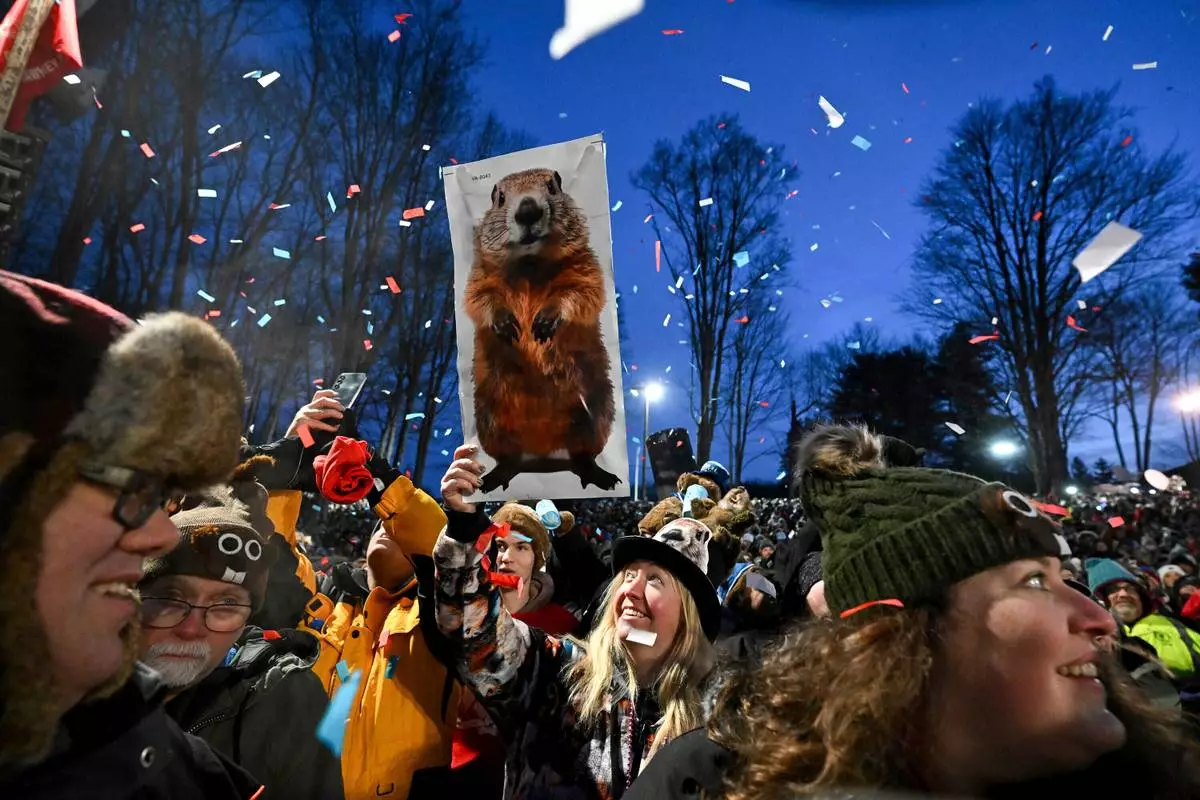
FILE - The crowd watches the festivities while waiting for Punxsutawney Phil, the weather prognosticating groundhog, to come out and make his prediction during the 139th celebration of Groundhog Day on Gobbler's Knob in Punxsutawney, Pa., Feb. 2, 2025. (AP Photo/Barry Reeger, File)
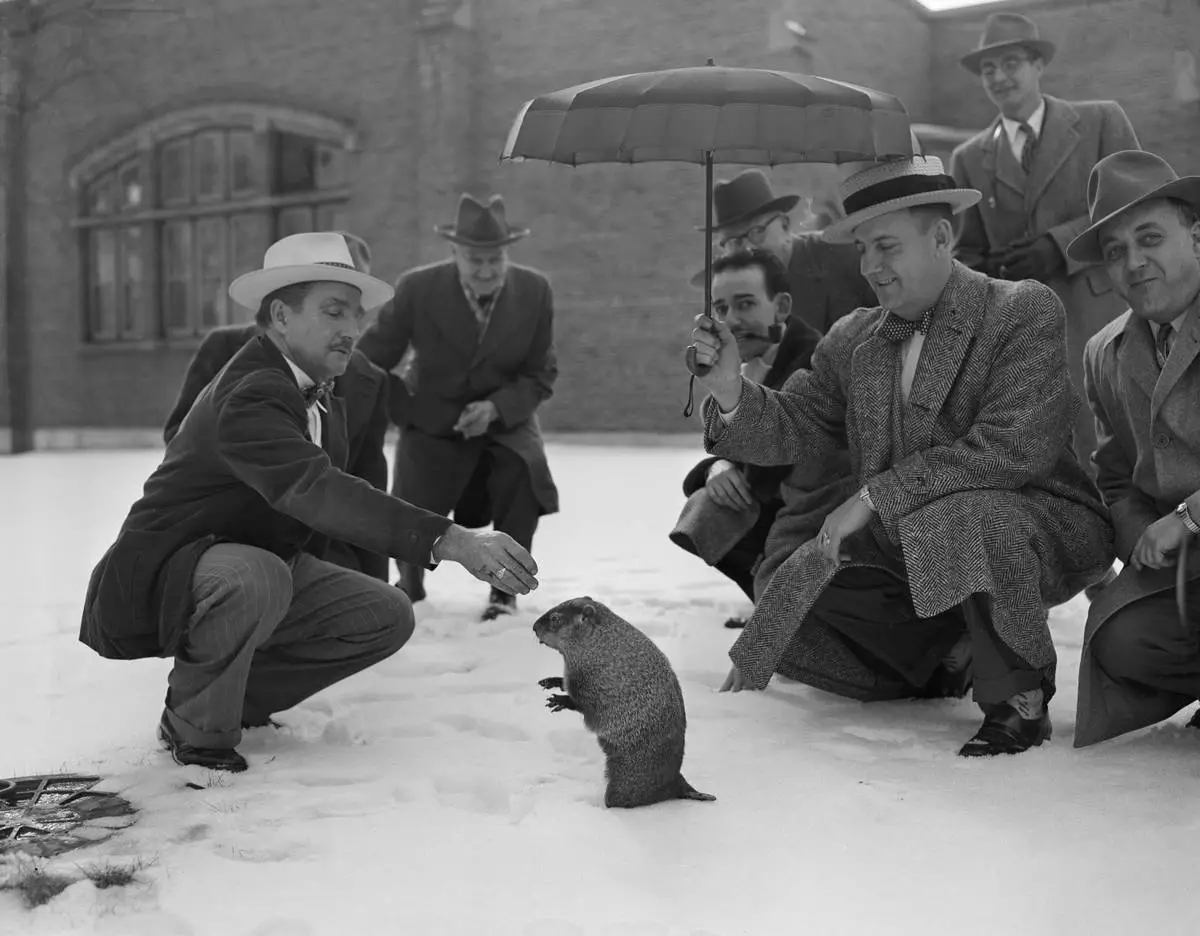
FILE - The groundhog saw his shadow, Feb. 2, 1954, as the sun peeked through an overcast sky at Washington Park Zoo in Milwaukee, Wis. (AP Photo/Dwayne Newton, File)
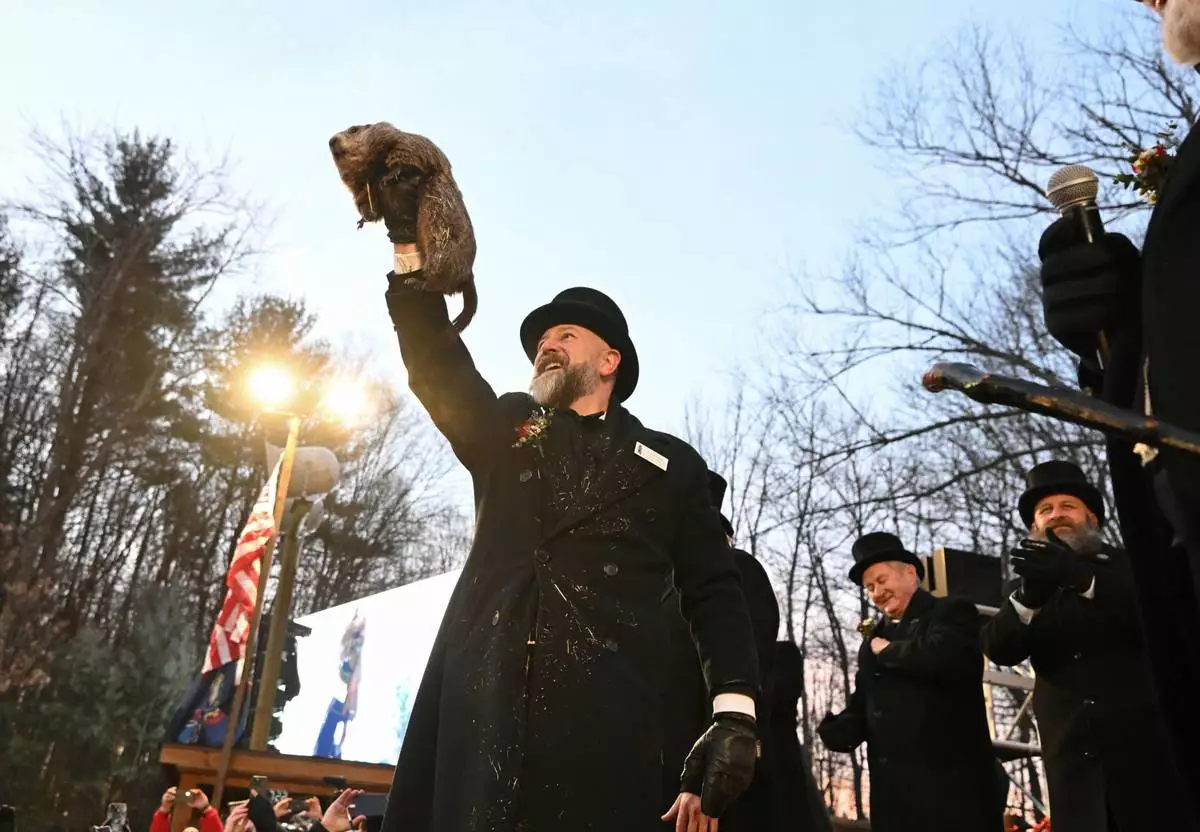
FILE - Groundhog Club handler A.J. Dereume holds Punxsutawney Phil, the weather prognosticating groundhog, during the 139th celebration of Groundhog Day on Gobbler's Knob in Punxsutawney, Pa., Feb. 2, 2025. (AP Photo/Barry Reeger, File)

FILE - Groundhog Club handler A.J. Dereume holds Punxsutawney Phil, the weather prognosticating groundhog, during the 137th celebration of Groundhog Day on Gobbler's Knob in Punxsutawney, Pa., Feb. 2, 2023. (AP Photo/Barry Reeger, File)
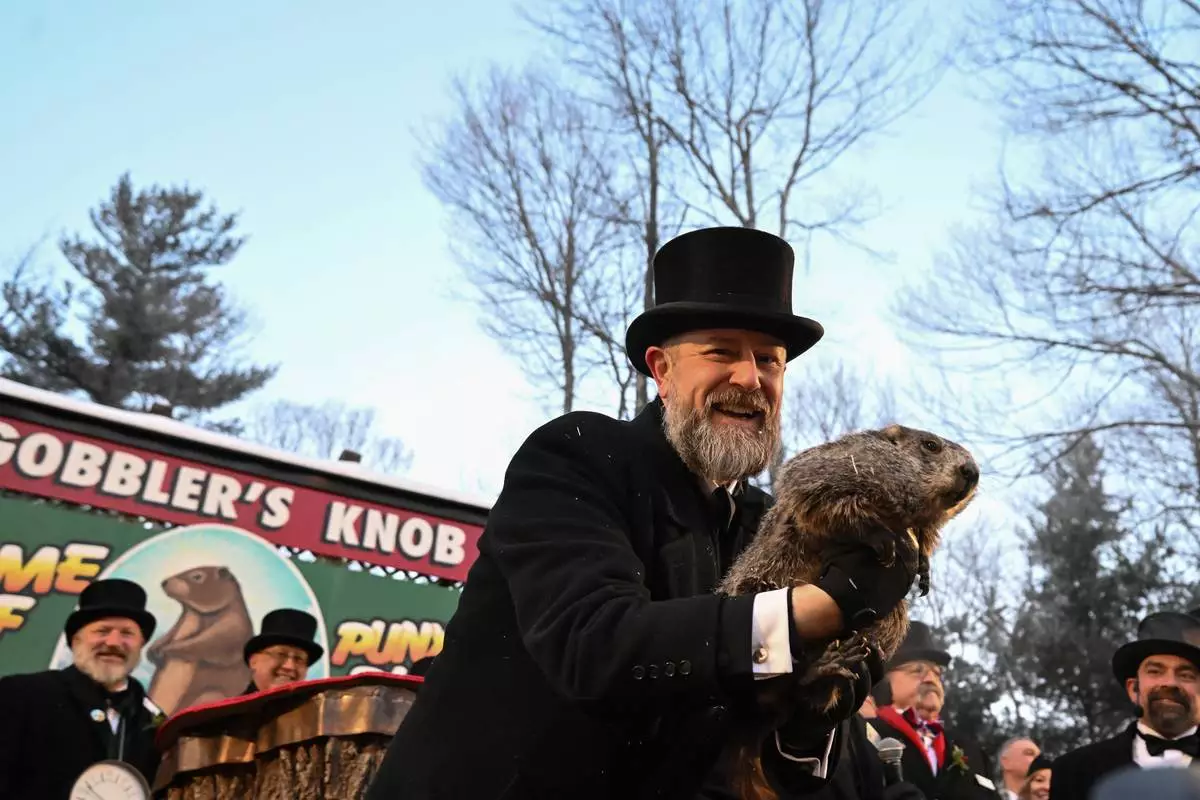
Groundhog Club handler A.J. Dereume holds Punxsutawney Phil, the weather prognosticating groundhog, during the 140th celebration of Groundhog Day on Gobbler's Knob in Punxsutawney, Pa., Monday, Feb. 2, 2026, Phil's handlers said that the groundhog has forecast six more weeks of winter. (AP Photo/Barry Reeger)