BRUSSELS (AP) — European Union foreign policy chief Kaja Kallas on Monday rejected calls for a Europe-wide army, warning that it could be “extremely dangerous” as the bloc considers ways to provide its own security after the United States warned that its priorities lie elsewhere.
Talk of a European army has resurfaced amid tensions within NATO over President Donald Trump’s threats to annex Greenland, the semiautonomous territory of NATO-ally Denmark.
“Those who say that we need a European army, maybe those people haven’t really thought this through practically,” Kallas said. “If you are already part of NATO then you can’t create a separate army.”
Kallas told a security conference in Norway that the most important military asset during a crisis “is the chain of command — who gives orders to whom.”
She added: “And if you have, like the European army and then you have the NATO (one), then, you know, the ball just falls between the chairs. And this is extremely, extremely dangerous.”
NATO’s military operations are overseen by a Supreme Allied Commander, who is always a top U.S. officer. The role is currently held by Airforce Lt. Gen. Alexus Grynkewich.
Norway's Prime Minister Jonas Gahr Støre said: “NATO is there with the decision-making process among allies, which is in itself complex, but it is trained to work.” He rejected calls for a European army, saying that “it is not a road we should travel.” Norway is not a member of the EU.
NATO Secretary-General Mark Rutte said last week that Europe is incapable of defending itself without U.S. military support and would have to more than double current military spending targets to be able to do so.
“If anyone thinks here … that the European Union or Europe as a whole can defend itself without the U.S., keep on dreaming. You can’t,” Rutte told EU lawmakers in Brussels.
Europe and the United States “need each other,” he said.

Norway's Prime Minister Jonas Gahr Store, left, and EU Foreign Affairs Chief Kaja Kallas talk during their meeting in Oslo, Monday, Feb. 2, 2026. (Ole Berg-Rusten/NTB Scanpix via AP)
CAIRO (AP) — Gaza’s Rafah border crossing with Egypt reopened on Monday for limited traffic, a key step in the Israel-Hamas ceasefire but a mostly symbolic development on the ground as few people will be allowed to travel in either direction and no goods will pass through it.
Within the first few hours of the opening, however, no one was seen crossing in or out of Gaza. An Egyptian official said 50 Palestinians were expected to cross in each direction on the first day of Rafah's operation. About 20,000 Palestinian children and adults needing medical care hope to leave the devastated Gaza via the crossing, according to Gaza health officials.
Thousands of other Palestinians outside the territory hope to enter and return home.
State-run Egyptian media and an Israeli security official also confirmed the reopening. The officials spoke to The Associated Press on condition of anonymity because they were not authorized to talk to the media.
Before the war, Rafah was the main crossing for people moving in and out of Gaza. The territory’s handful of other crossings are all shared with Israel. Under the terms of the ceasefire, which went into effect in October, Israel’s military controls the area between the Rafah crossing and the zone where most Palestinians live.
Violence still continued across the coastal territory Monday, and Gaza hospital officials said an Israeli navy ship had fired on a tent camp, killing a 3-year-old Palestinian boy. Israel’s military said it was looking into the incident.
Rajaa Abu Mustafa stood Monday outside a Gaza hospital where her 17-year-old son Mohamed was awaiting evacuation. He was blinded by a shot to the eye last year as he joined desperate Palestinians seeking food from aid trucks east of the city of Khan Younis.
“We have been waiting for the crossing to open,” she said. “Now it’s opened and the health ministry called and told us that we will travel to Egypt for (his) treatment.”
About 150 hospitals across Egypt are ready to receive Palestinian patients evacuated from Gaza through Rafah, authorities said. Also, the Egyptian Red Crescent said it has readied “safe spaces” on the Egyptian side of the crossing to support those evacuated from the Gaza Strip.
Israel has banned sending patients to hospitals in the Israeli-occupied West Bank and east Jerusalem since the war began — a move that cut off what was previously the main outlet for Palestinians needing medical treatment unavailable in Gaza.
Israel has said it and Egypt will vet people for exit and entry through the Rafah crossing, which will be supervised by European Union border patrol agents with a small Palestinian presence. The numbers of travelers are expected to increase over time, if the system is successful.
Fearing that Israel could use the crossing to push Palestinians out of the enclave, Egypt has repeatedly said it must be open for them to enter and exit Gaza. Historically, Israel and Egypt have vetted Palestinians applying to cross.
A 3-year-old Palestinian was killed Monday when Israel navy hit tents sheltering displaced people on the coast of Gaza’s southern city of Khan Younis, Palestinian hospital authorities said.
According to the Nasser hospital, which received the body, the attack happened in Muwasi, a tent camp area on the Gaza Strip’s coast. The boy was the latest among Palestinians in Gaza since the October ceasefire in Gaza.
More than 520 Palestinians were killed by Israeli fire since the ceasefire went into effect on Oct. 10, according to Gaza's health ministry. The casualties since the ceasefire, which UNICEF said include more than 100 children, are among the over 71,800 Palestinians killed since the start of Israel’s offensive, according to ministry, which does not say how many were fighters or civilians.
The ministry, which is part of Gaza's Hamas-led government, keeps detailed casualty records that are seen as generally reliable by U.N. agencies and independent experts.
Israeli troops seized the Rafah crossing in May 2024, calling it part of efforts to combat arms-smuggling for the militant Hamas group. The crossing was briefly opened for the evacuation of medical patients during a ceasefire in early 2025.
Israel had resisted reopening the Rafah crossing, but the recovery of the remains of the last hostage in Gaza cleared the way to move forward.
The reopening is seen as a key step as the U.S.-brokered ceasefire agreement moves into its second phase. In time, Rafah is expected to ramp up operations if the ceasefire holds.
The truce halted more than two years of war between Israel and Hamas that began with the Hamas-led attack on southern Israel on Oct. 7, 2023. Its first phase called for the exchange of all hostages held in Gaza for hundreds of Palestinians held by Israel, an increase in badly needed humanitarian aid and a partial pullback of Israeli troops.
The second phase of the ceasefire deal is more complicated. It calls for installing the new Palestinian committee to govern Gaza, deploying an international security force, disarming Hamas and taking steps to begin rebuilding.
Federman reported from Jerusalem. Associated Press writer Julia Frankel in Jerusalem contributed to this report.
Find more of AP’s coverage at https://apnews.com/hub/israel-hamas-war
This story has been corrected to show that the latest figure from Gaza's Health Ministry says 71,800 Palestinians have been killed.
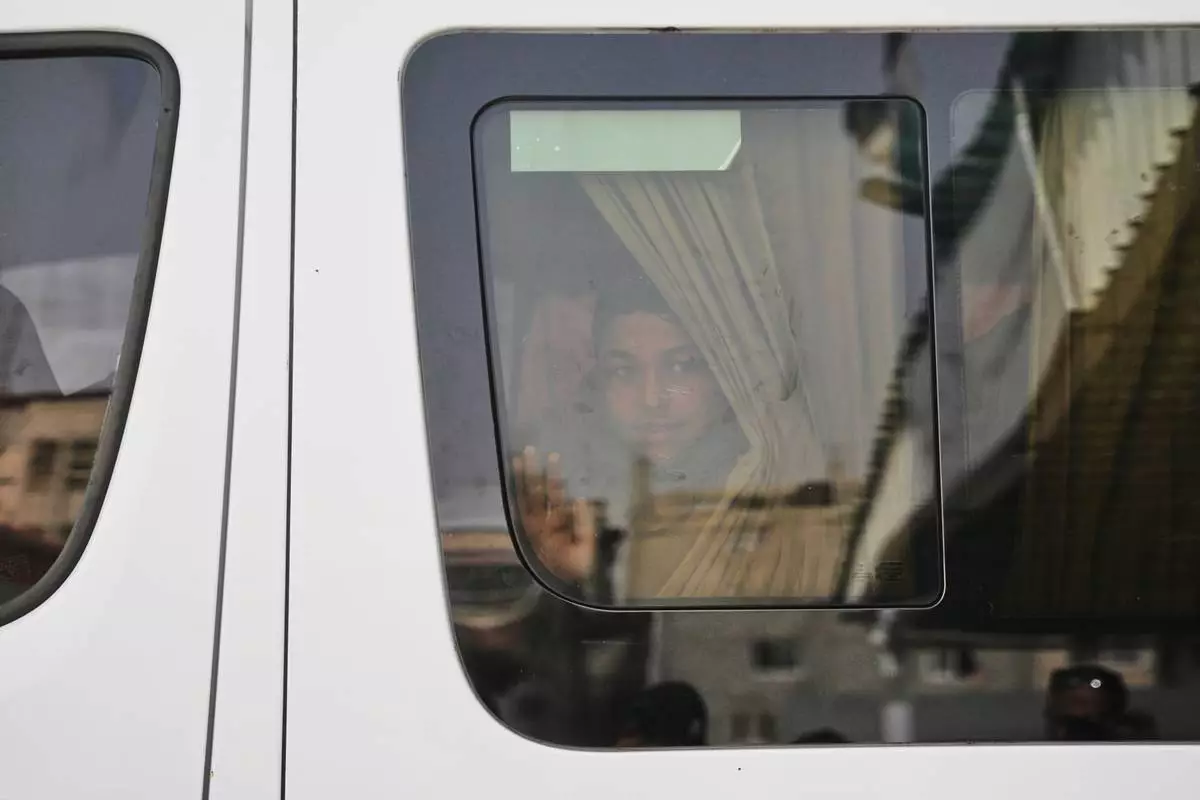
Palestinian patients wave from a vehicle in Khan Younis on their way to the Rafah crossing, as they leave the Gaza Strip for medical treatment abroad, Monday, Feb. 2, 2026. (AP Photo/Abdel Kareem Hana)
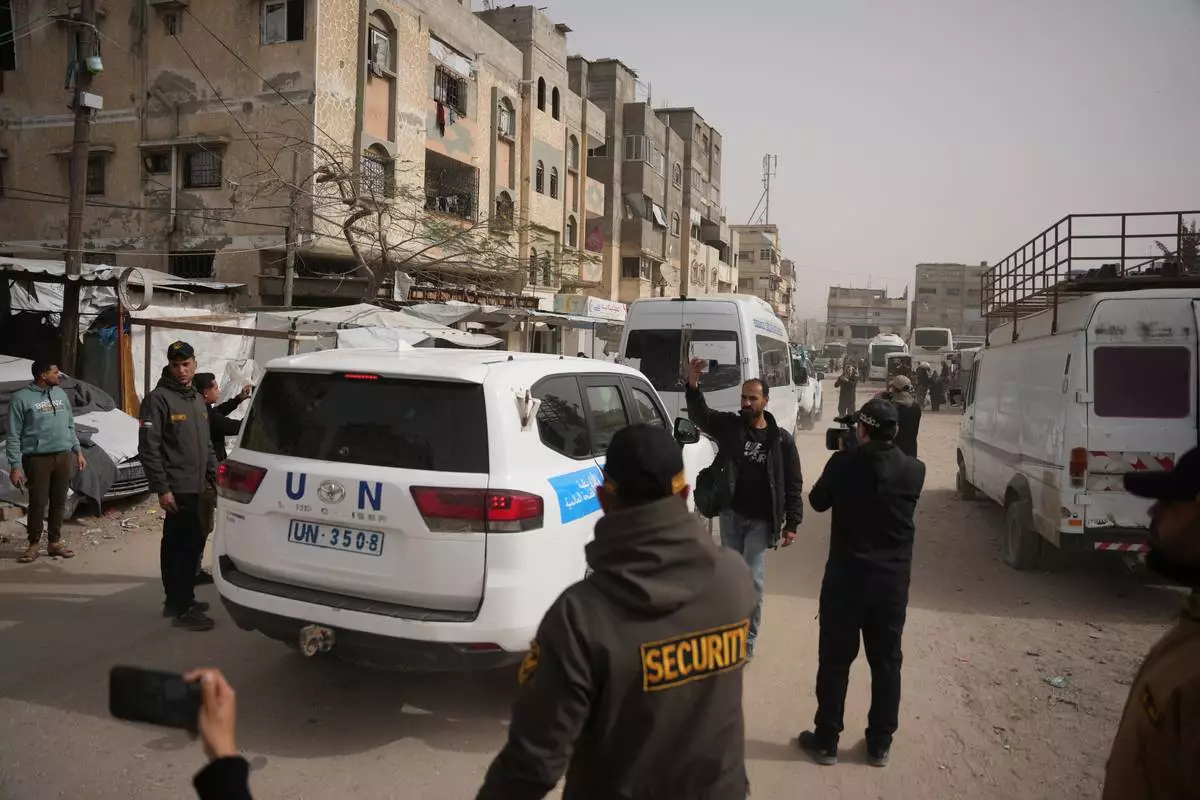
A U.N. vehicle escorts a bus carrying Palestinian patients in Khan Younis as they head to the Rafah crossing, leaving the Gaza Strip for medical treatment abroad, Monday, Feb. 2, 2026. (AP Photo/Abdel Kareem Hana)
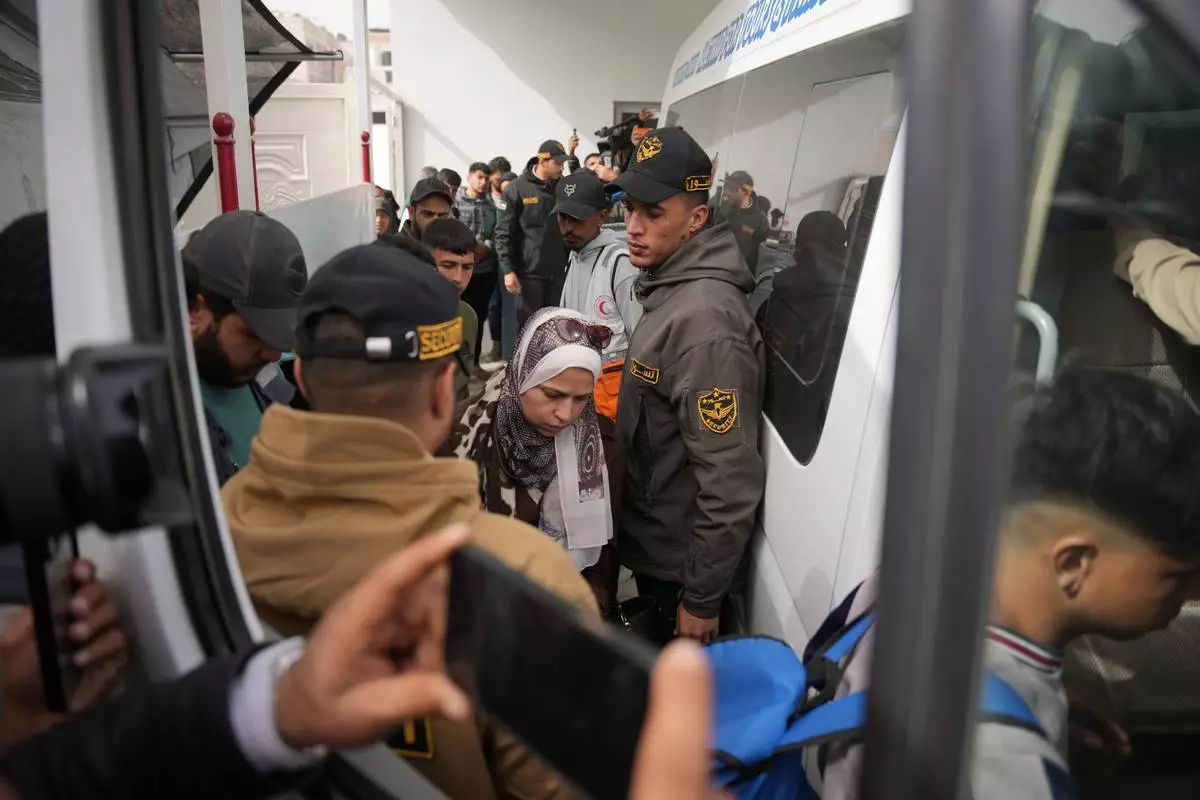
Palestinian patients board a vehicle in Khan Younis on their way to the Rafah crossing, as they leave the Gaza Strip for medical treatment abroad, Monday, Feb. 2, 2026. (AP Photo/Abdel Kareem Hana)
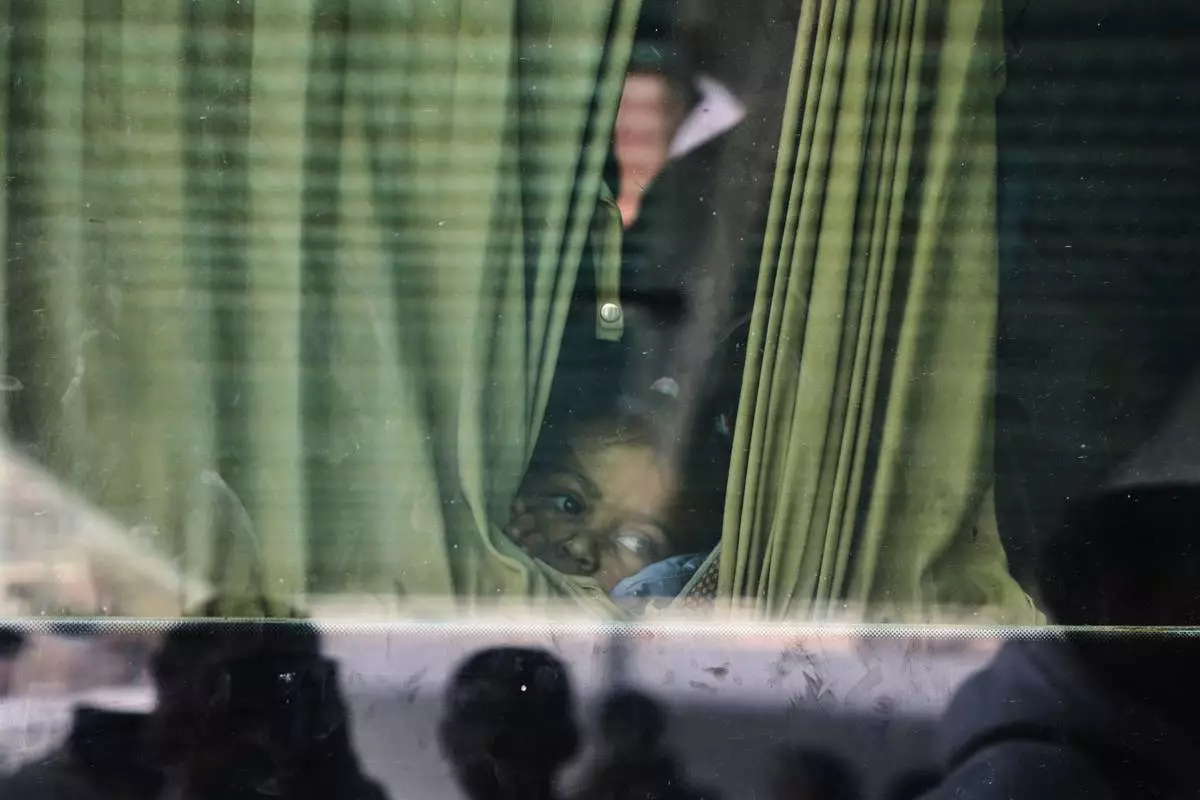
Juman Al-Najjar, a 3-year-old Palestinian patient, looks out from a vehicle with other patients in Khan Younis as they head to the Rafah crossing, leaving the Gaza Strip for medical treatment abroad, Monday, Feb. 2, 2026. (AP Photo/Abdel Kareem Hana)
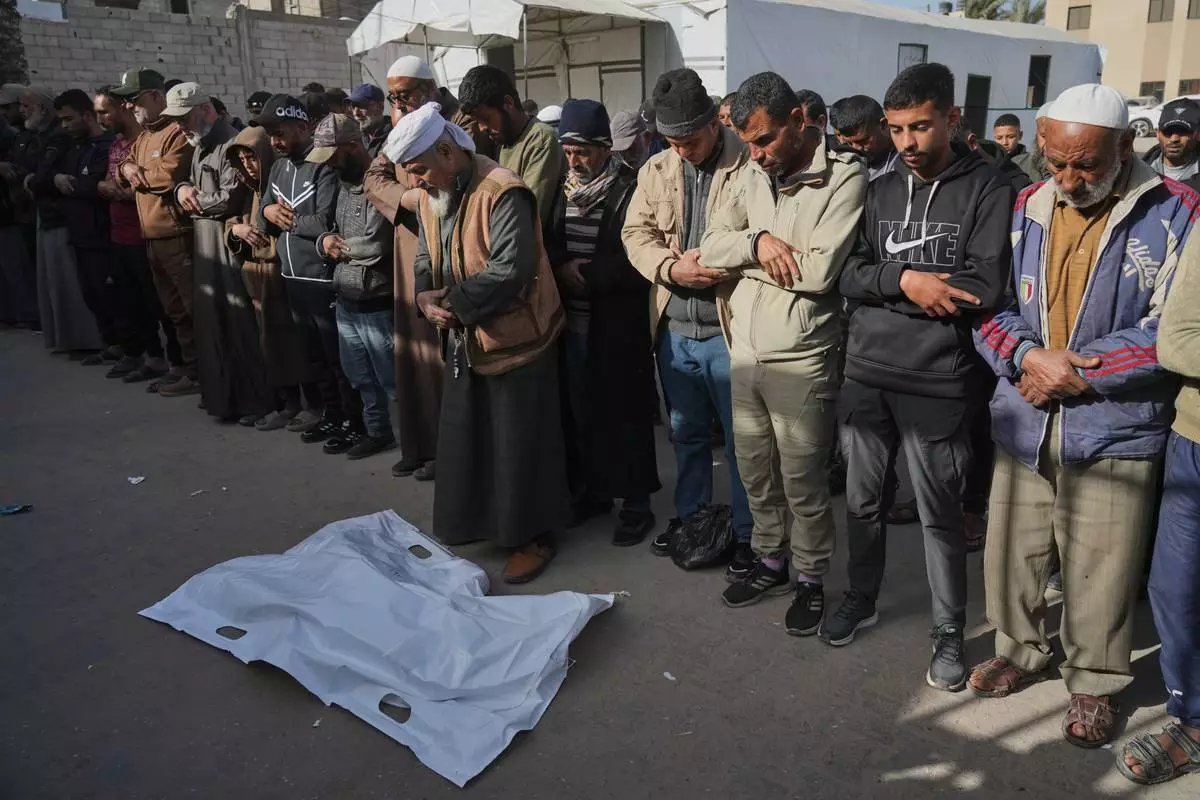
Mourners pray beside the body of Iyad Abu Rabi, 3, who was killed when an Israeli strike hit tents sheltering displaced people along the coast of Khan Younis, according to hospital officials, at Nasser Hospital in Khan Younis, Gaza Strip, Monday, Feb. 2, 2026. (AP Photo/Jehad Alshrafi)
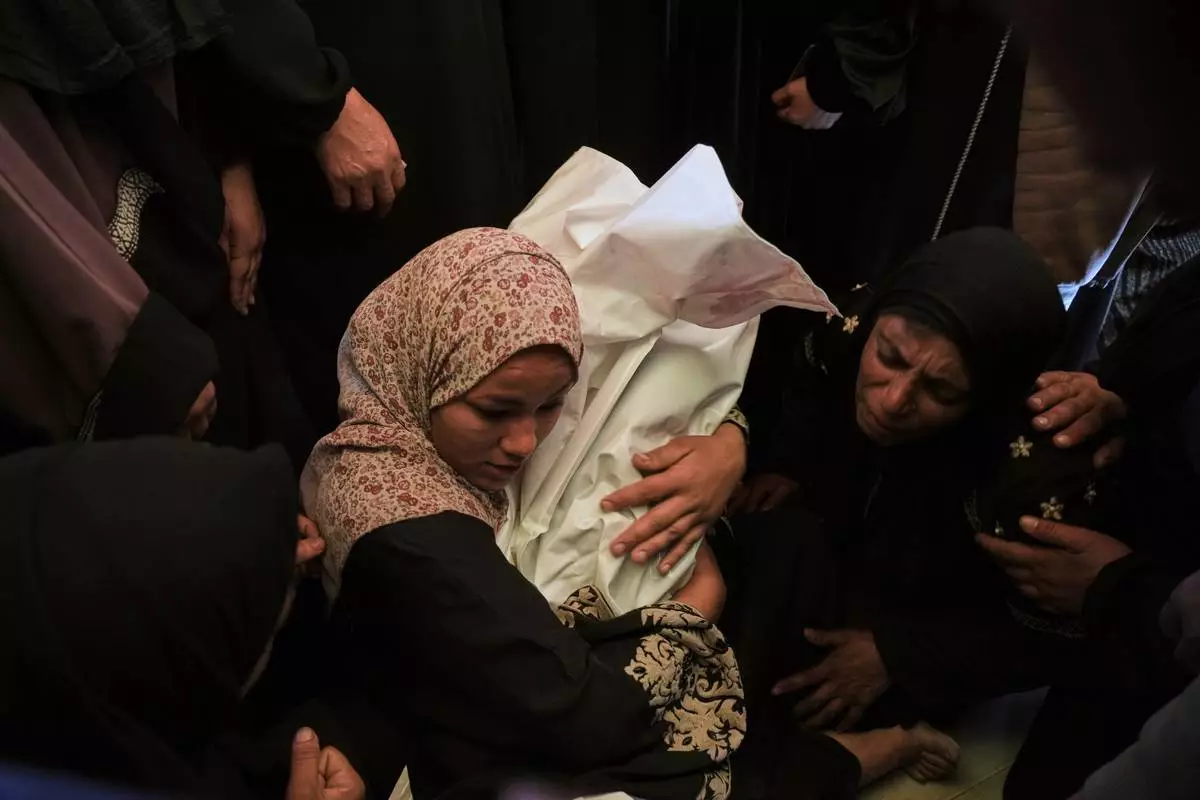
Khadija Abu Rabi cradles the body of her son, Iyad, 3, who was killed when an Israeli strike hit tents sheltering displaced people along the coast of Khan Younis, according to hospital officials, at Nasser Hospital in Khan Younis, Gaza Strip, Monday, Feb. 2, 2026. (AP Photo/Jehad Alshrafi)
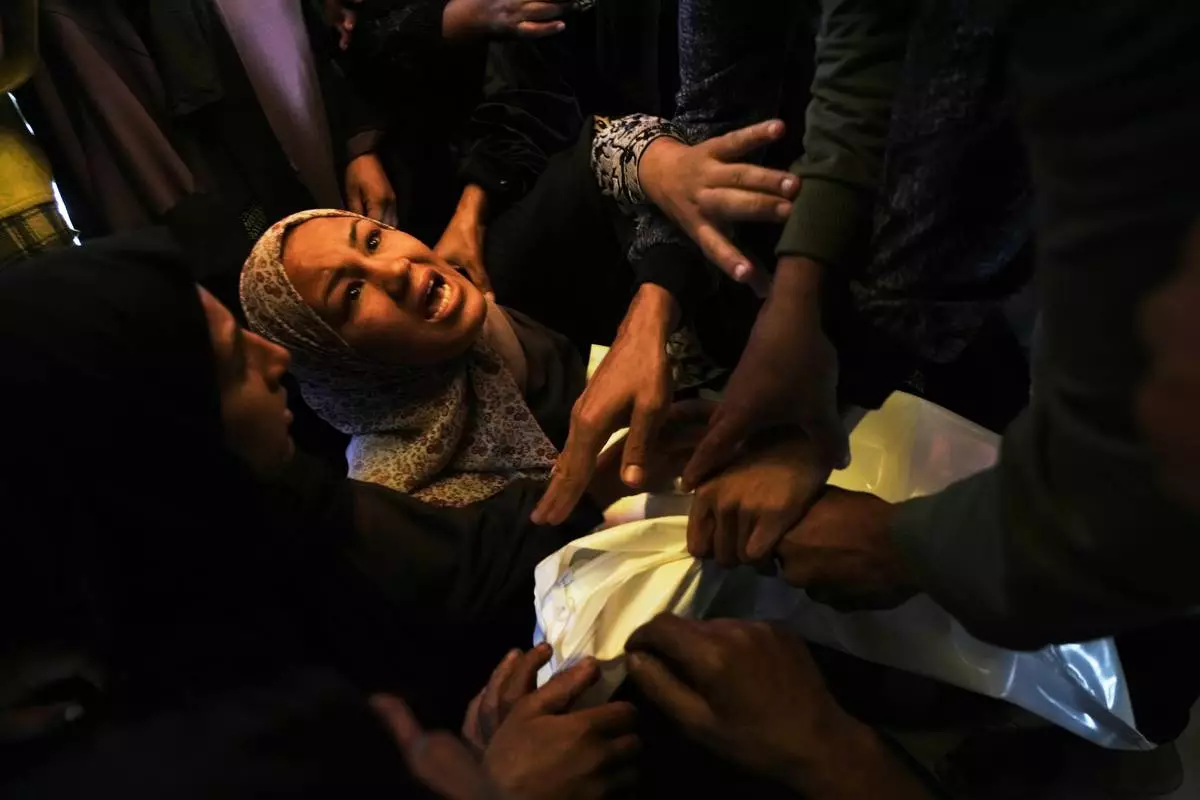
Khadija Abu Rabi mourns over the body of her son, Iyad, 3, who was killed when an Israeli strike hit tents sheltering displaced people along the coast of Khan Younis, according to hospital officials, at Nasser Hospital in Khan Younis, Gaza Strip, Monday, Feb. 2, 2026. (AP Photo/Jehad Alshrafi)
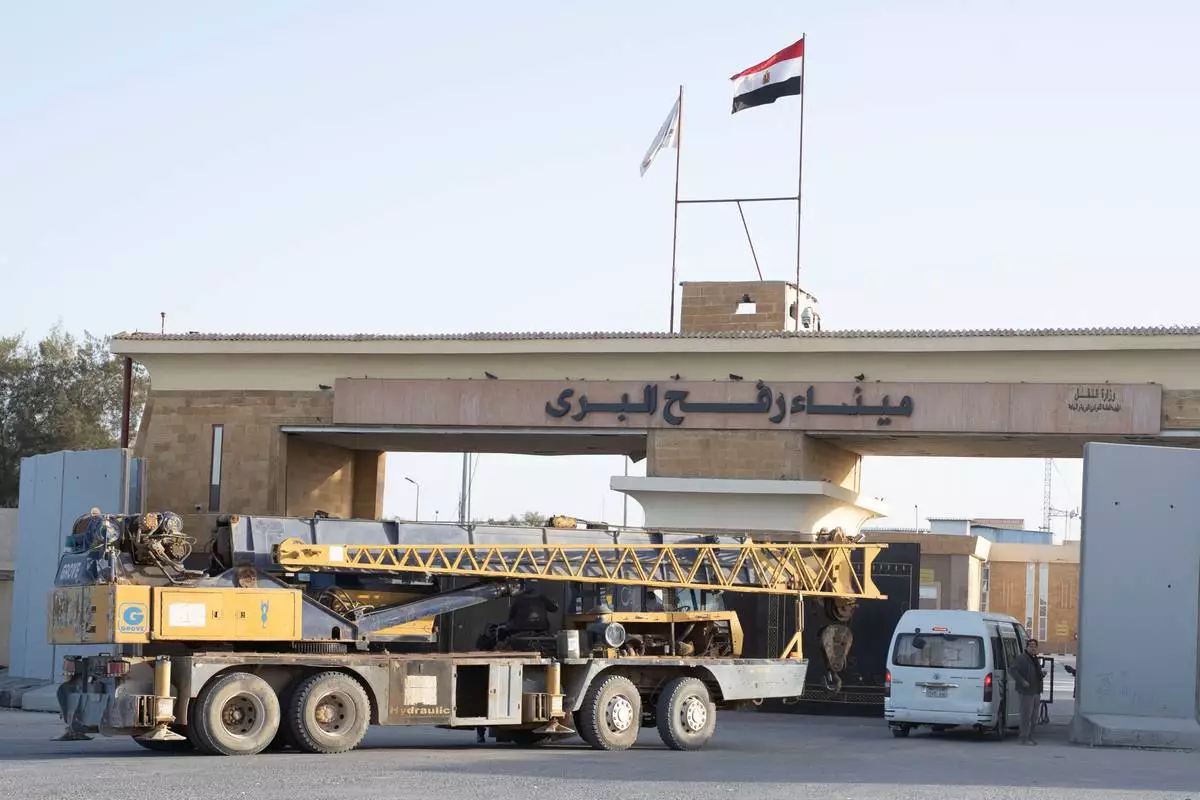
A crane enters the Egyptian gate of the Rafah crossing to the Gaza Strip, in Rafah, Egypt, Sunday, Feb. 1, 2026. (AP Photo/Mohamed Arafat)
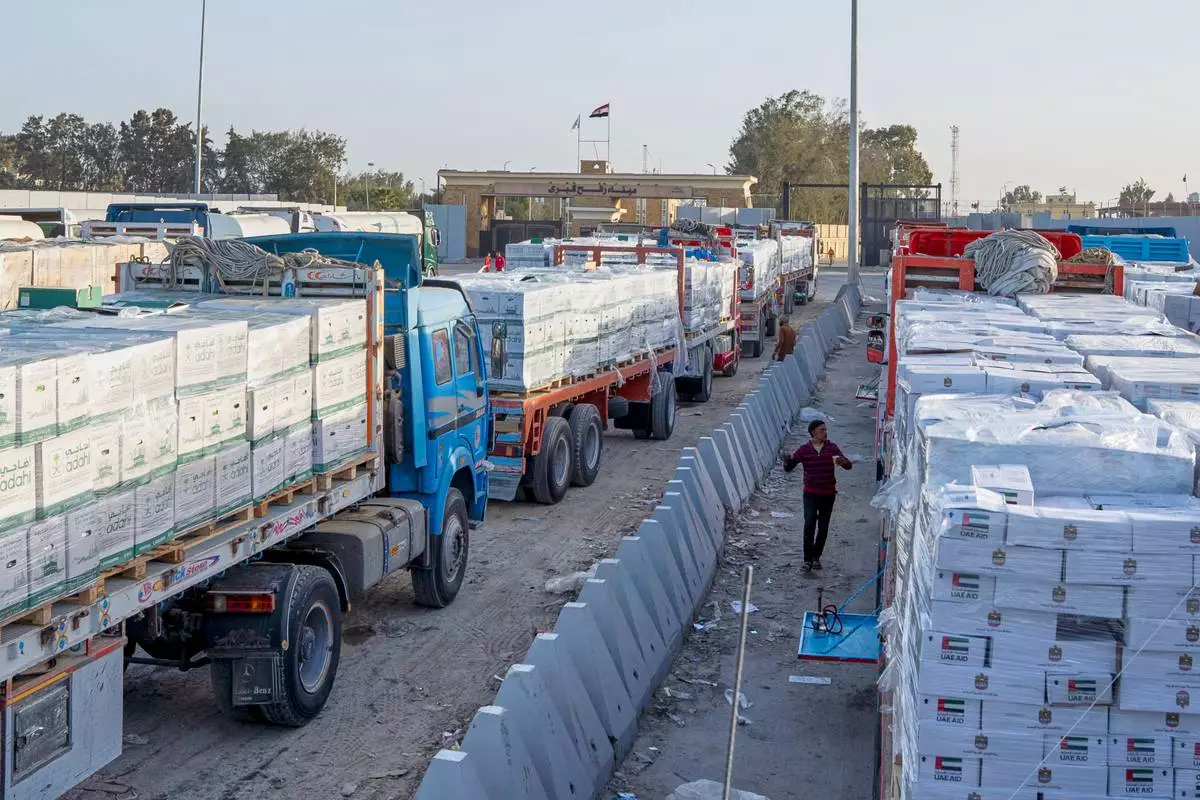
Trucks carrying humanitarian aids line up to enter the Egyptian gate of the Rafah crossing, heading for inspection by Israeli authorities before entering the Gaza Strip, in Rafah, Egypt, Sunday, Feb. 1, 2026. (AP Photo/Mohamed Arafat)
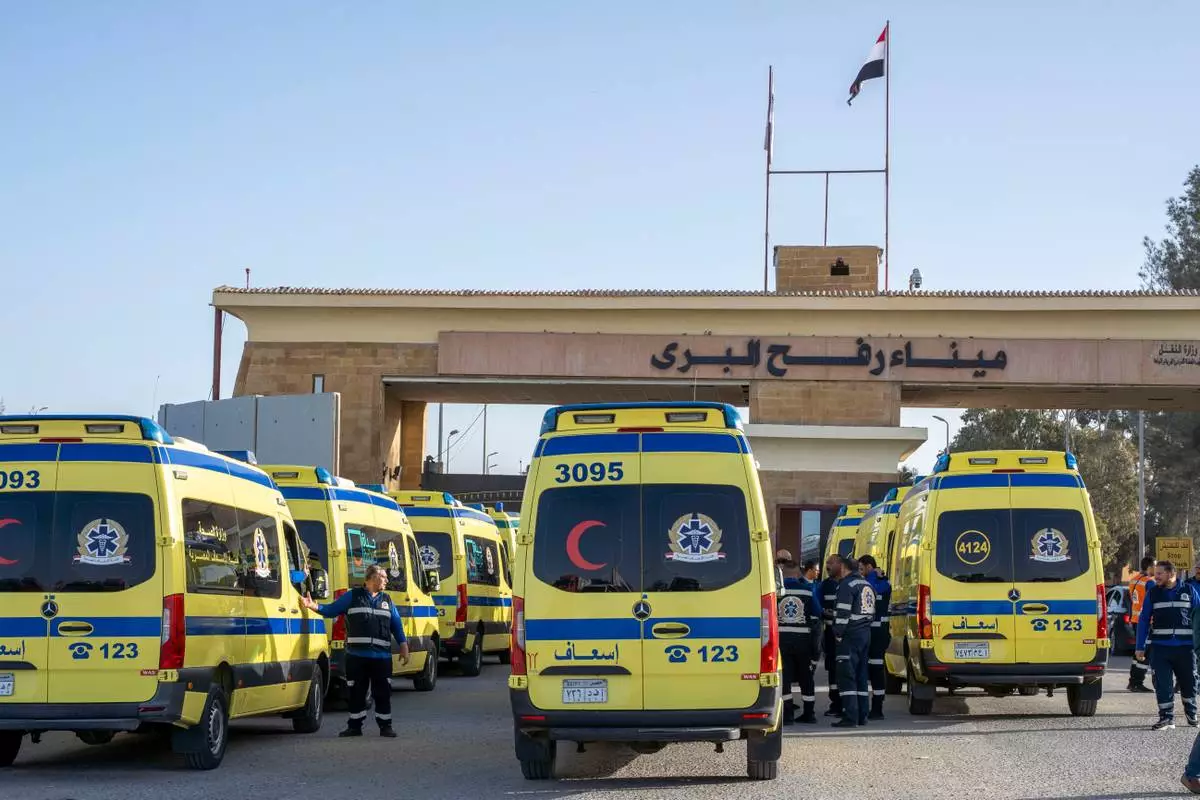
Ambulances line up to enter the Egyptian gate of the Rafah crossing on the way to the Gaza Strip, in Rafah, Egypt, Sunday, Feb. 1, 2026. (AP Photo/Mohamed Arafat)