Alaeddin Boroujerdi, a member of the National Security Commission of Iran's Consultative Assembly, has shed light on his country's red lines for negotiations with the United States, saying that Iran has no plans to compromise on its basic and legitimate rights.
Iranian President Masoud Pezeshkian has ordered the start of negotiations with the United States within the framework of the nuclear issue, Iran's Fars news agency reported Monday, citing an unnamed government source.
Fars, quoting Iranian Foreign Ministry spokesman Esmaeil Baghaei's remarks earlier in the day, said that talks between Iran and the United States will probably be held in Türkiye in the next few days.
In an interview with China Global Television Network (CGTN), Boroujerdi described the right to uranium enrichment as a "basic and legitimate right" of Iran, highlighting the nation's three red lines on this issue.
"Our red lines are clear. We will certainly continue our peaceful nuclear activities within the framework of the NPT (Nuclear Non-Proliferation Treaty). We will continue enrichment, as it is the basic and legitimate right of our nation. We have accepted that we will not possess nuclear bombs. We are capable of making them, but based on our religious beliefs and the opinion of our Supreme Leader, we do not seek nuclear weapons He noted that such requirements for nuclear activities should apply to Iran's missile and drone capabilities, which is the second red line," said Boroujerdi.
"The third red line concerns regional issues. These are our own affairs, and we consider the U.S. an uninvited guest in the region. As we have seen, the U.S. has openly declared that it attacked Venezuela for its oil. Is the rule of the jungle governing the world? Is it not the responsibility of the UN Security Council, of which China is also a member, to ensure international security?" he said.
"We will not accept pressure under the pretext that the United States wants to be present in the region for our oil and gas resources. The JCPOA was the result of a compromise, in which Iran accepted certain limitations on enrichment. Therefore, limitations in some areas, such as enrichment, are negotiable, because we are not seeking anything beyond our rights. However, denying Iran the right to enrichment is a red line," said Boroujerdi.
The JCPOA, or the Joint Comprehensive Plan of Action, also known as the Iran nuclear deal, was an agreement to limit the Iranian nuclear program in return for sanctions relief and other provisions. It was finalized in Vienna, Austria on July 14, 2015, between Iran and the five permanent members of the UN Security Council -- China, France, Russia, the U.K., and the U.S. -- plus Germany alongside with the European Union.
Speaking of how Iran would respond to possible U.S. attacks, Boroujerdi said that his country is currently in a much better position, and has been fully prepared to fight back.
"e are definitely in a much better position compared to where we were before the imposed 12-day war with Israel. Many of our shortcomings have been addressed, and we are fully prepared. We will display capabilities that were not previously revealed. We will use weapons that will bring clear consequences," he said.
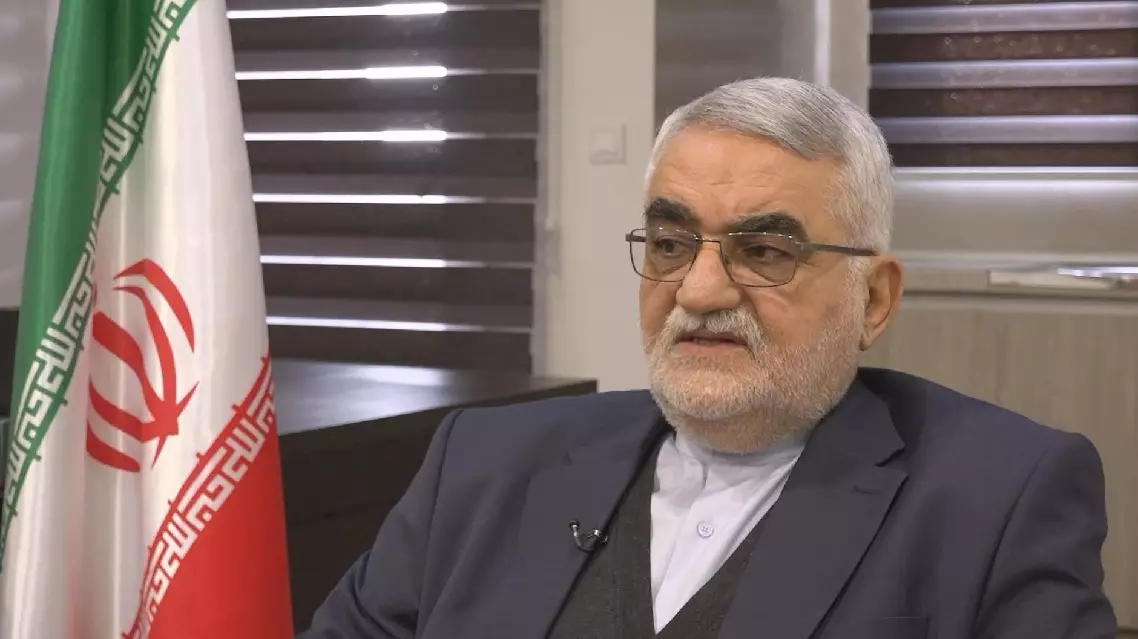
Iranian Consultative Assembly member highlights Teheran's red lines for talks with U.S.
Iranian Consultative Assembly member highlights Teheran's red lines for talks with U.S.