IRVING, Texas--(BUSINESS WIRE)--Feb 3, 2026--
Vizient ® today released its Winter 2026 Spend Management Outlook, projecting a 2.78% overall increase in healthcare supply chain prices between July 2026 and June 2027. The report finds that, for the first time in more than a decade, pharmacy is no longer the fastest-growing non-labor expense: IT and facilities-related costs now lead projected inflation, signaling a shift in how hospitals must approach budget planning.
This press release features multimedia. View the full release here: https://www.businesswire.com/news/home/20260203151847/en/
Beyond aggregate inflation, the report highlights several emerging cost drivers reshaping utilization, capital planning and care delivery, including the expansion of theranostics and the downstream effects of GLP-1 weight loss medications on surgical volumes.
“This is not a uniform inflation environment,” said Carina Dolan, associate vice president, clinical oncology, pharmacoeconomics and market insights, Vizient. “Some cost pressures are moderating, while others are accelerating or shifting location. The challenge for health system leaders is managing that divergence and reallocating resources accordingly.”
Pharmacy growth moderates
Pharmacy price growth is projected at 2.84%, down from 3.35% just six months ago. The moderation reflects increased biosimilar adoption and initial impacts of the Inflation Reduction Act’s Medicare Drug Price Negotiation Program. Based on Vizient purchasing data, this reduction represents substantial avoided growth in drug spend across participating health systems over a single year.
IT, facilities management and food accelerate
As pharmacy growth moderates, indirect spend categories and purchased services have emerged as the fastest-rising non-labor cost category. IT hardware and software show the steepest projected increase at 5.66%, with continued inflation across IT services (4.5%), facilities management (4.13%), construction (3.7%), food (3.63%) and medical gases (5%). These categories are increasingly central to digital transformation, cybersecurity, infrastructure resilience and regulatory compliance, limiting organizations’ ability to defer or downsize.
Theranostics accelerates as a growth and capital priority in oncology
Health systems are rapidly expanding theranostic capabilities that combine diagnostic imaging and targeted radiopharmaceutical therapy, allowing clinicians to visualize and treat disease through the same biological mechanism. Radiopharmaceutical utilization increased 24% between 2023 and 2024, with an additional 15% growth projected at end of year 2025. Capital investment in positron emission tomography/computed tomography and single-photon emission computed tomography/computed tomography system purchases rose 42% from 2023 to 2024, with an additional 24% increase expected through 2025 as organizations expand capacity to meet rising demand.
GLP-1s, pulsed field ablation reshape utilization and site-of-care strategy
Widespread adoption of GLP-1 therapies has reduced bariatric surgery volumes by roughly 20% since 2022 and may further dampen long-term demand for procedures such as hernia repair, orthopedics and certain cardiac interventions, while potentially increasing demand for cosmetic and reconstructive services. Another new technology, pulsed field ablation, is moving from early adoption to routine use, with shorter procedure times and lower complication rates enabling higher case volumes for organizations with sufficient perioperative capacity.
“Overall inflation rates provide an important benchmark,” Dolan said. “Long-term success and effective planning depends on understanding how cost pressures, utilization and care delivery patterns are evolving.”
The Winter 2026 Spend Management Outlook is produced for Vizient clients and is designed to support executive decision-making across finance, supply chain, pharmacy and operations.
About Vizient, Inc.
Vizient, Inc., the nation’s largest provider-driven healthcare performance improvement company, provides solutions and services to more than two-thirds of the nation’s acute care providers and more than one-third of ambulatory providers. Vizient offers proprietary data and analytics to deliver unique clinical and operational insights and a contract portfolio representing $156 billion in annual purchasing volume enabling the delivery of cost-effective care. With its acquisition of Kaufman Hall in 2024, Vizient expanded its advisory services to help providers achieve financial, clinical and operational excellence. Headquartered in Irving, Texas, Vizient has offices throughout the United States. Learn more at www.vizientinc.com.

The Vizient Winter 2026 Spend Management Outlook.
MILAN (AP) — The Milan Cortina Winter Games are the most spread-out in Olympic history.
For the organizers of the Feb. 6-22 Games, it was a choice to use existing infrastructure as much as possible, but this means no central hub and strategic choices for spectators. The Games will span over 22,000 square kilometers (8,500 square miles).
Here is what it means in practical terms.
For any visitor to the Games, it would be extraordinary difficulty to see ice sports in Milan, men’s Alpine skiing in Bormio, snowboarding in Livigno, cross-country skiing in Predazzo, biathlon in Anterselva and women’s Alpine skiing in Cortina, before heading to the closing ceremony in Verona.
It's a circuit that covers over 850 kilometers (530 miles) and would amount to nearly 13 hours of non-stop driving.
Organizers sought to take advantage of existing infrastructure but there still been hiccups getting the Cortina sliding venue and the Santagiulia ice hockey arena in the city of Milan finished on time.
Spreading out the Games reduced the number of new structures, and allowed more areas in northern Italy to benefit from the investments and tourim that come with such big events.
But it also deprives the Games of one emotional center, meaning spectators must make hard choices about which events to attend, and athletes will have difficulty cheering on teammates in far-flung disciplines.
Mona Patel, a Los Angeles-based lawyer, and her partner worked out an itinerary months in advance to attend men’s downhill skiing and snowboarding in the Valtellina cluster near the Swiss border, as well as bobsled and luge in Cortina d’Ampezzo.
They hope to catch skating events in Milan on the way in and out of Italy. If they pull it all off, they will have hit three of the four Olympic clusters.
To make it work, they booked one accommodation in Valtellina and another in South Tyrol, putting them in range for their selected mountain events and allowing them to hit the slopes themselves.
Patel said the complex itinerary was made affordable through HomeExchange — she used points she had built up by putting her own real estate in California on the exchange platform, and spending them for places in Italy.
“Our priority is to see Olympic events,” Patel said. “If there is going to be a powder day, we would love to get out. Sometimes if there is an event in the afternoon or evening, we can do both. We are not daunted by the distances.”
This will be Lars Thorn’s sixth Olympics, but the first for his wife and two young children. Coming from southern California, he ruled out outdoor competitions because of the cold weather and decided to focus on ice sports in Milan. Distance was another factor — though he is sorry to miss Lindsey Vonn, who is still hoping to compete in Cortina despite a weekend knee injury.
“With two little kids, being outside in the elements doesn’t lend itself to a family experience,” Thorn said.
He’s planning to take his 5-year-old son to long track speed skating and men’s and women’s hockey — all reachable by public transport in Milan — while his wife and daughter take in Milan’s sights.
His next Olympics will be close to home in Los Angeles, where he will be able to walk to four venues from home and reach another seven by a quick ferry ride — a logistical contrast from Milan Cortina.
The headliners of Friday’s opening ceremony, like Mariah Carey and Andrea Bocelli, will perform in Milan’s San Siro Stadium. But to ensure that all competitors from the far-flung venues can participate in the Parade of Athletes, elements of the ceremony will be broadcast from Livigno, Predazzo and Cortina.
With these also being the first Olympics with two hub cities and with events clustered in four areas, organizers also had to find housing not only in Milan and Cortina, but in four other sites: Anterselva near the Austrian border, Bormio and Livigno near the Swiss border, and the Val di Fiemme in the Trentino autonomous province.
Milan is the only city getting a legacy Olympic Village, which will become housing for 1,700 students after the Games. A temporary village was built in Cortina; existing hotels and facilities were adapted in the other locations.
The last time Italy hosted the Winter Games, in Turin 2006, spectators buzzed about the medals ceremony each day in the center of the city, which became a focal point of the Olympic spirit. Because of the distances, medal ceremonies in Milan Cortina will be held at the venues immediately after the competitions.
“If you have tickets to an event, it’s nice to see the crowning of the champion,” Thorn said. But he added that the Olympic Plaza in Salt Lake City, as in Turin, created a unique atmosphere.
“That, I think, is one of the highlights, for the city to feel like they are part of it,” Thorn said.
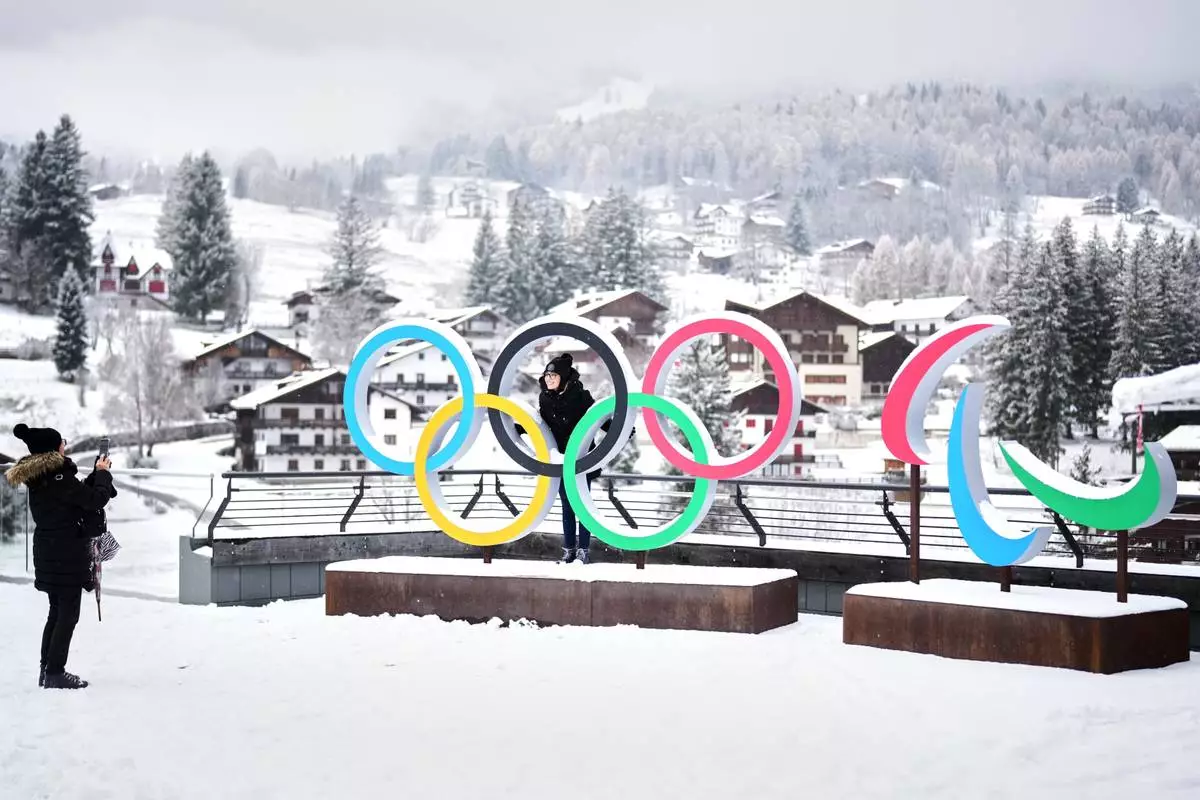
FILE - People take photos in front of the Milan Cortina Winter Olympics and Paralympics rings, in Cortina D'Ampezzo, Nov. 20, 2025. (AP Photo/Andrew Medichini, File)
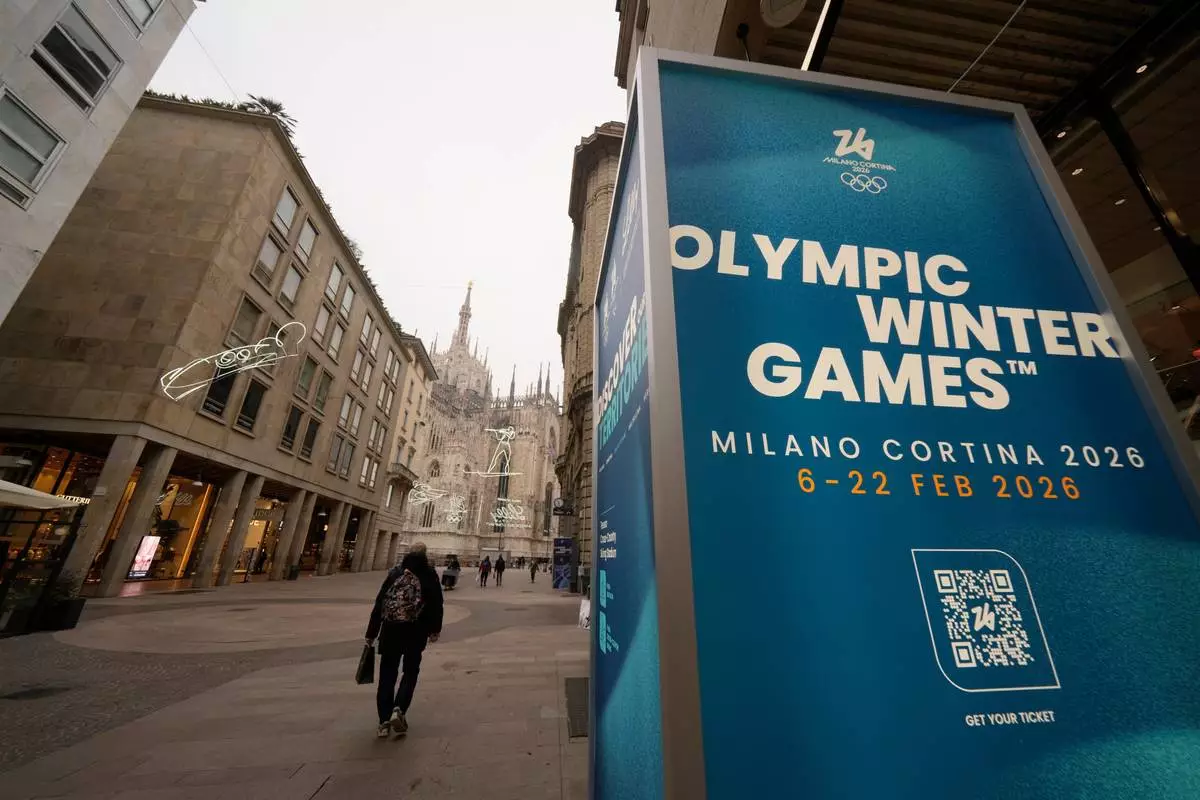
FILE - People walk along the Corso Vittorio Emanuele II, the main downtown street, near a sign for the upcoming Milan-Cortina Winter Olympics in Milan, Italy, Jan. 9, 2026. (AP Photo/Luca Bruno, File)

FILE - Olympic Iconic neon rings hang next to the Duomo gothic cathedral for the upcoming Milan Cortina Winter Olympics in Milan, Italy, Friday, Jan. 9, 2026. (AP Photo/Luca Bruno, File)
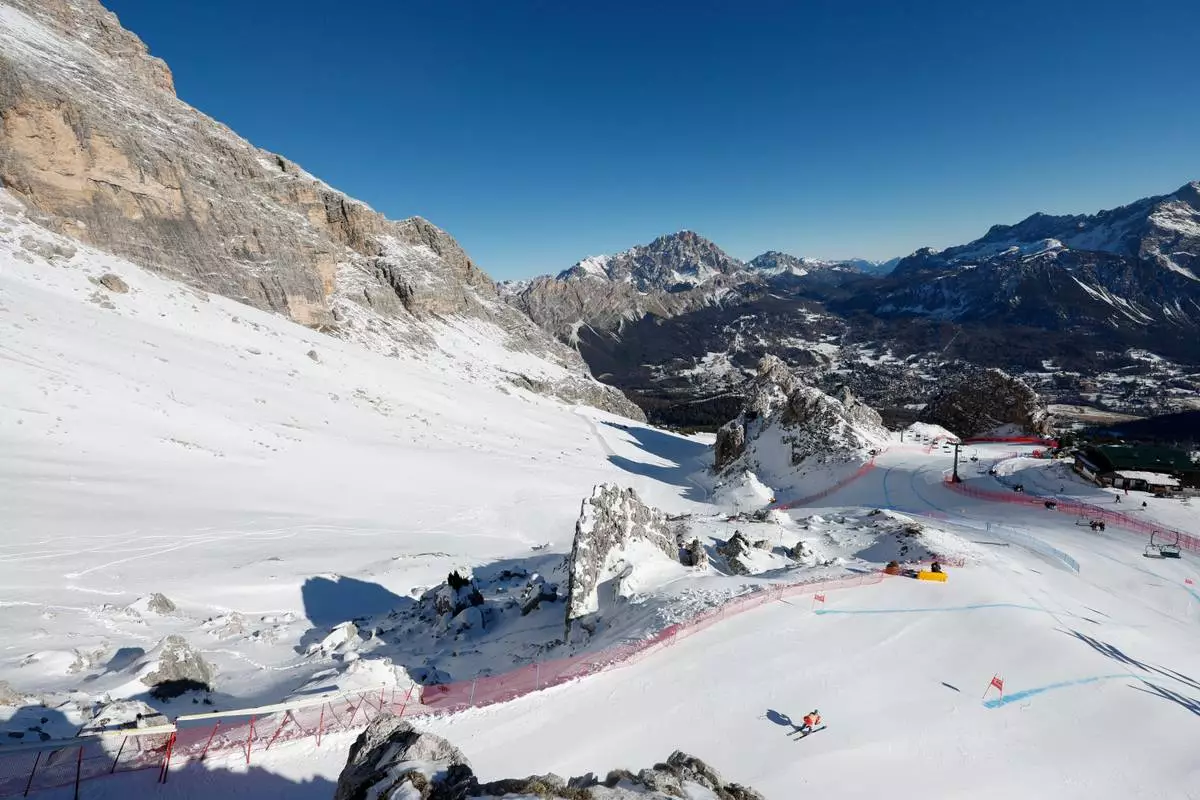
FILE - A skier trains at the Milan Cortina 2026 Winter Olympics venue in the Dolomite Mountains in Cortina d'Ampezzo, Italy, on Jan. 17, 2025. (AP Photo/Alessandro Trovati, File)