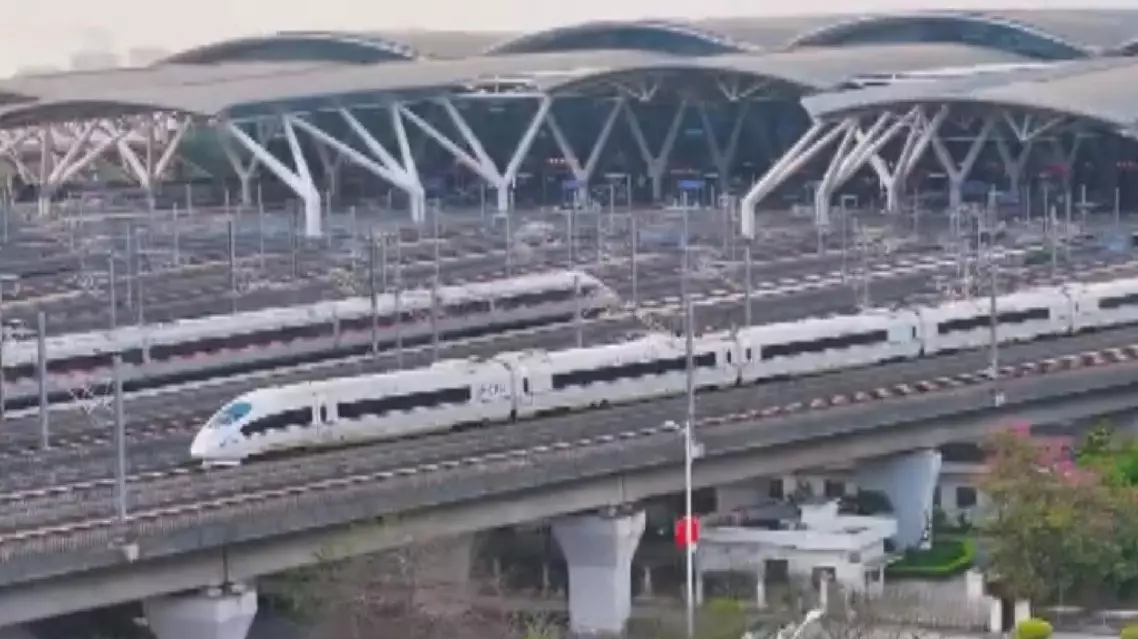
Rail and road authorities across China have introduced a range of measures to facilitate passenger travel during this year’s Spring Festival travel rush.
The Spring Festival, or the Chinese New Year, falls on Feb 17 this year. This year’s official Spring Festival holiday lasts nine days, while the travel rush, which started on Monday, continues through March 13.
Each year during the Spring Festival travel rush, also known as "Chunyun," millions of people who work, study or live away from their hometowns travel home to celebrate China’s most important traditional holiday, creating the world’s largest annual human migration.
On Monday, the first day of this year’s Spring Festival travel rush, China’s railway network handled 12.235 million passenger trips, up 17.8 percent from the same day of last year’s Spring Festival travel season.
The country's railway network was estimated to have handled 11.15 million passenger trips on Tuesday, the second day of the landmark "Chunyun," with 879 additional passenger trains arranged to meet demand.
China Railway Beijing Group was expected to transport 900,000 passenger trips on the day, while the Yangtze River Delta railway network was projected to handle 2.25 million passenger trips. Meanwhile, China Railway Guangzhou Group was expected to operate 2,890 high-speed trains on Tuesday.
The Beijing-Tianjin-Hebei region, the Yangtze River Delta region, the Guangdong-Hong Kong-Macao Greater Bay Area, and the Chengdu-Chongqing economic zone were among the most popular departure and arrival areas.
"We have established a green channel for passengers in need of special assistance and increased guidance staff to provide assistance throughout the entire process, from ticket inquiries and station entry to the waiting area," said Yang Chaoyue, station head of Linyi North Station in east China’s Shandong Province.
On the highways, the second day of the Spring Festival travel season saw smooth and orderly traffic nationwide, with roads bustling with students, migrant workers, and freight vehicles.
In many areas, passenger flows have increased on routes exceeding 600 kilometers, as more travelers embark on longer journeys across the country.
China rolls out measures to ease Spring Festival travel rush